Can You Paint MDF? Yes, With Sealed Edges and the Right Primer
Yes, you can paint MDF, and it takes paint well once the edges are sealed and the surface is primed. The risk is not the paint, it is the raw edges and skipped primer, which cause swelling, bubbling and a blotchy finish. This page answers the can-you question, shows what separates a good MDF paint job from a failed one, and compares the three primer types with current prices. For a full board-by-board walkthrough, see our guide on how to paint MDF board, and if you are choosing between a brush, roller and sprayer, read the best way to paint MDF.
Can You Paint MDF? Yes, and the Edges Decide the Result
Best Oil-Based Primer Pick for MDF
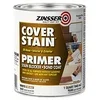 |
Zinsser Cover-Stain Oil-Based Primer (1 Quart) – $20.47 An oil-based primer-sealer that gives raw MDF edges and faces a sealed, sandable base before any topcoat.
|
MDF (medium-density fiberboard) is wood fiber bonded with resin under heat and pressure. That process leaves a dense, smooth skin on both faces and a softer, more open core. The faces accept paint almost like a prepared panel. The cut edges expose the core, and the core drinks primer and paint far faster than the face does.
That single difference explains most painted-MDF complaints. If you roll paint over a whole panel and the face looks fine while the edges look dull, rough or dark, the edges simply absorbed the coat. The fix is not more topcoat. It is sealing the edges first, then priming the whole piece so the finish dries at the same rate everywhere.
A quick way to see it on your own piece: put a drop of water on a scrap face and another on a scrap edge. The face holds the bead for a while; the edge pulls it in. Paint behaves the same way, and water is also what makes raw MDF swell, which is why unsealed edges are the failure point in damp rooms.
Which MDF Painting Jobs Work Well (and Which Do Not)
- Works well: cabinet doors, shelving, built-ins, trim, wall paneling, craft projects and furniture panels in dry interior rooms.
- Works with extra care: kitchens and bathrooms. Use moisture-resistant MDF where possible, seal every edge, hole and the back face, and keep painted panels away from standing water. Our page on how much MDF moves with humidity shows why the edges matter so much.
- Poor fit: outdoor use, floors and anything that will sit in water. Paint slows moisture down; it does not make MDF waterproof.
- Already primed MDF: pre-primed boards and trim still need their cut edges sealed. Primer from the factory covers the faces, not the ends you cut.
Painting cabinets specifically is its own project because of hinges, hardware and heavy daily wear. We cover it in can you paint MDF kitchen cabinets and how to repaint MDF cabinets.
The Right Prep, Step by Step
1. Fill and Smooth Damaged Spots
Fill dents, chipped corners and screw holes with a sandable wood filler or a lightweight spackle and let it dry fully. Sand flush with fine paper. On edges, a thin skim coat of filler applied after the first primer coat is a common way to hide the open fiber texture on visible edges such as shelf fronts and door edges.
2. Sand Lightly, Not Aggressively
The pressed face is what makes MDF paint so smoothly, so do not sand through it. A light scuff with 180 to 220 grit is enough on the face. Edges can take a little more since they are already fibrous. Wear a respirator or at least a well-fitted dust mask: MDF dust is very fine, and the boards are bonded with resins. Our page on whether MDF is toxic explains where the real concern is.
3. Wipe Off the Dust
Vacuum first, then wipe with a tack cloth or a barely damp cloth and let the surface dry. Dust trapped under primer shows up as rough texture in the final coat.
4. Prime the Edges First, Then the Whole Piece
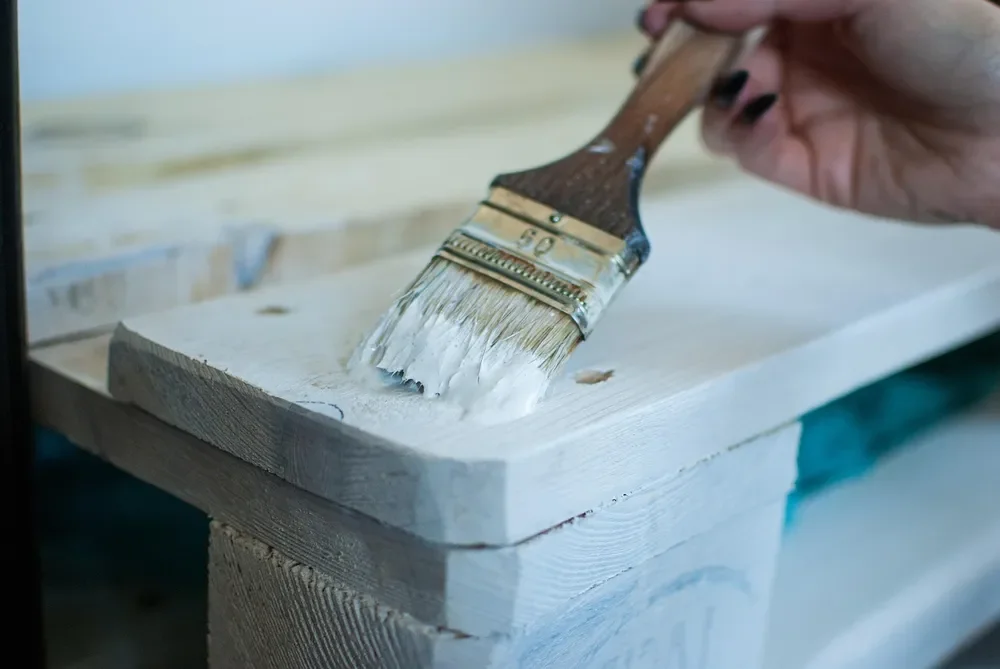
Work primer into the cut edges with a brush before you coat the faces, and give them a second coat if they still look thirsty. Then prime all faces. Skipping this step is the most common cause of failure, and we break down what actually goes wrong in what happens if you don’t prime MDF. There are also a couple of edge cases covered in should you prime MDF before painting.
5. Sand the Primer, Then Paint in Thin Coats
Primer, especially water-based, can leave a slightly rough or fuzzy surface. Sand it lightly with 220 to 320 grit, wipe clean, then paint. Two thin coats beat one thick coat: thick paint sags, holds brush marks and takes far longer to cure. Let each coat dry as the label directs before recoating, and go easy on the piece while the paint cures, since it takes far longer to harden fully than to feel dry.
Do You Really Need Oil-Based Primer? A Common Myth
A frequently repeated rule is that MDF must be primed with oil-based primer or it will swell. That is only partly true. What causes swelling is water reaching unsealed fibers, and any primer that fully seals the surface reduces that risk. The real difference between primer types is how they behave on the raw edges.
- Water-based primer is the cheapest and cleans up with water, but the water in it can lift loose fibers on bare edges. Sand lightly after the first coat and apply a second.
- Shellac and oil-based primers do not carry water into the fibers, seal quickly and sand smooth, at the cost of stronger odor and solvent cleanup.
- Whichever you choose, the topcoat can be water-based latex or acrylic enamel. Oil primer under water-based paint is a normal combination.
| Primer type | Example (quart) | Price | Cost per fl oz | What to expect on MDF |
|---|---|---|---|---|
| Water-based | Zinsser Bulls Eye 1-2-3, gray | $11.99 | about $0.37 | Cheapest and easiest cleanup. Water can lift bare edge fibers, so plan on a sanding pass after the first coat. |
| Shellac-based | Zinsser B-I-N, white | $22.82 | $0.71 | Seals fast and does not soak in like water. Strong odor, denatured-alcohol cleanup. |
| Oil-based | Zinsser Cover-Stain, white | $20.47 | $0.64 | Soaks into edges and sands smooth. Strong odor, mineral-spirits cleanup, slower to dry. |
For a small project with a few raw edges, the cheapest water-based option is often enough if you sand between coats. For doors and furniture that will be handled daily, an oil-based or shellac primer on the edges is the safer choice. A light-colored topcoat over a white primer gives the best coverage.
Which Paint to Use Over the Primer
Use a durable enamel, a urethane-modified acrylic or a cabinet-grade paint for surfaces that get touched, such as doors, shelves and desks. Standard wall paint works for wall paneling and low-contact pieces but scuffs more easily. Satin and semi-gloss are easier to wipe clean than flat, and gloss shows every flaw in the surface, so it demands a nearly perfect base.
If you are painting with a wall-style latex and wonder whether it counts, our page on painting MDF with emulsion covers that specific question. If you would rather keep the wood look, see whether you can stain MDF instead.
Common Problems and Fixes
- Fuzzy or rough edges after priming: the fibers lifted. Sand lightly with 220 grit, wipe clean and prime the edge again.
- Edges look darker or duller than the face: the edges are still absorbing. Add another primer coat to the edges only, then repaint.
- Bubbling or swelling: moisture got in, usually through an unsealed edge, hole or back. Light swelling can sometimes be sanded down after the piece dries out; badly swollen MDF has to be replaced.
- Brush marks: the coat was too thick or was worked while it was setting. Sand lightly between coats and apply thinner coats.
- Peeling: the surface was dusty, glossy or unprimed. Sand back, clean, prime and repaint.
FAQ: Painting MDF
Can you paint MDF without primer?
You can, but you should not. Paint applied straight to raw MDF soaks unevenly into the edges, leaves a blotchy sheen and can lift the surface fibers. One sealed, sanded coat of primer fixes all three problems.
What is the best primer for MDF?
A shellac-based or oil-based primer seals raw MDF edges best and sands smooth. A water-based primer is cheaper and works too, but expect it to raise the fibers on bare edges, so sand lightly after the first coat.
Can you paint MDF with regular wall paint?
Yes, over a proper primer. Wall paint is softer than cabinet or trim enamel, so for doors, shelves and tabletops use a urethane-modified or enamel paint that resists scuffs.
Why does painted MDF swell or bubble?
Water or moisture got into unsealed fibers, almost always through a raw cut edge, a screw hole or the back face. Seal every cut edge before painting and keep painted MDF away from standing water.
Do you have to sand MDF before painting?
Only lightly. The factory face is already smooth and hard sanding can break through it into the fuzzy core. Scuff the face if needed, and sand the edges and each primer coat lightly. Wear a respirator or dust mask.
More ideas for what to build or refresh with MDF are in our roundup of MDF board ideas.
Sponsored / affiliate links. As an Amazon Associate I earn from qualifying purchases. I may earn additional commission from eligible campaigns.