Table Saw Motor Upgrades: How Much HP Do You Need?
Table saw motor upgrades only pay off when the new motor’s horsepower, frame size, and RPM actually match your saw’s drive type – direct-drive saws top out around 2 HP, while belt-drive cabinet saws run 3 to 5 HP single-phase. Buying more HP than your drive system can use just trips breakers and strains bearings. This guide covers matching motor type to drive style, sizing horsepower to your actual cuts, and installing the upgrade safely.
How Much Horsepower Does Your Table Saw Actually Need?
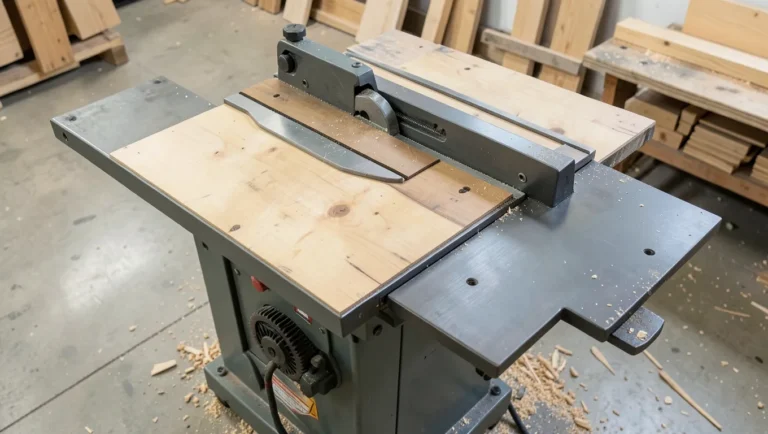
Cabinet-style table saws typically run single-phase induction motors in the 3 to 5 HP range, while jobsite and contractor saws with direct-drive motors max out around 2 HP because the motor shaft connects straight to the arbor with no pulley reduction. Belt-drive saws can use a pulley system up to roughly 5 HP on single-phase power before manufacturers switch to three-phase motors for anything larger.
| Project Type | Recommended HP | Typical RPM |
|---|---|---|
| Softwood, general cuts | 1.5 – 2 HP | 3450 RPM |
| Hardwood, ripping thick stock | 2 – 3 HP | 3450–4000 RPM |
| Laminate, sheet goods | 1 – 1.5 HP | 3000–3450 RPM |
Going bigger than your drive type supports doesn’t add cutting power – a direct-drive saw fed a 3 HP motor just draws more amperage without spinning the blade any faster, since RPM (not raw horsepower) is what the arbor actually sees on a direct-drive setup.
Best Table Saw Motor Upgrade Pick
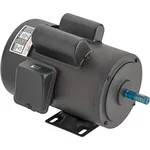 |
Grizzly Industrial G2535 Heavy-Duty Motor – $313.95 A 1-1/2 HP dual-voltage (110V/220V) TEFC induction motor – the enclosed design keeps sawdust out of the windings, matching the belt-drive HP range this guide covers for general woodworking.
|
Universal vs. Induction Motors: Which Belongs in Your Saw
Most table saws use one of two motor types, and swapping the wrong one in changes how the saw sounds, wears, and performs over time.
| Feature | Universal Motor | Induction Motor |
|---|---|---|
| Power source | AC or DC | AC only |
| Typical speed | High RPM (10,000+ no-load) | Lower, fixed RPM (3450/1725) |
| Size & weight | Compact, lighter | Bulkier, heavier |
| Durability | Brushes wear out over time | No brushes – longer service life |
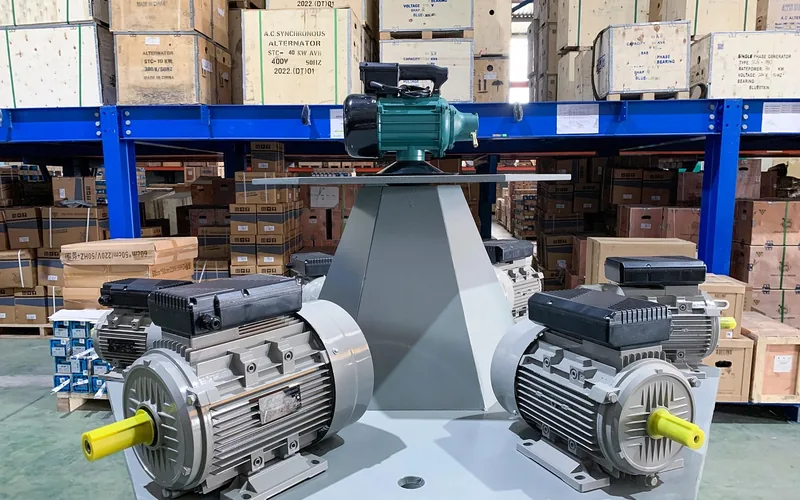
Jobsite and benchtop saws almost always ship with universal motors because they’re light and cheap to produce; cabinet and most contractor saws use induction motors because the constant RPM and brushless design hold up better under continuous shop use. If your saw is bogging down or losing power under load, check belt tension and blade sharpness before assuming the motor itself is the problem – a weak-feeling cut is more often a dull blade or a slipping belt than a failing motor.
Direct-Drive vs. Belt-Drive: Why It Changes Your Upgrade Options
Direct-drive saws connect the motor shaft straight to the arbor, so motor RPM is blade RPM – there’s no pulley ratio to adjust, which is why these saws are capped near 2 HP. Belt-drive saws use a pulley system between motor and arbor, so a motor with a slightly different RPM can still hit the right blade speed by changing the pulley ratio, giving more flexibility when an exact RPM match isn’t available.
This guide is about upgrading for more cutting power on a saw that still runs. If your motor has actually failed – it hums but won’t start, won’t turn by hand, or smells burnt – you don’t need a bigger motor, you need one that matches the original’s exact nameplate specs. See our table saw replacement motor guide for reading the nameplate and choosing OEM vs. generic replacements.
Wiring: 110V vs. 220V and Capacitor Start Motors
Most home-shop table saw motors are capacitor-start, single-phase induction motors that ship dual-voltage capable – meaning the same motor can run on either 110V or 220V depending on how its internal windings are wired at the junction box, not on the outlet alone. Switching a dual-voltage motor from 110V to 220V roughly halves the running amperage for the same horsepower, which matters if you’re on a shared circuit that already trips breakers under load.
The start capacitor is what gives these motors the extra torque needed to get the blade spinning from a dead stop; it’s also the single most common failure point. A motor that hums loudly but won’t spin up on its own almost always has a failed or weakening start capacitor rather than a burned-out motor – worth checking with a multimeter before assuming the whole motor needs replacing. Never rewire a dual-voltage motor’s voltage without following the wiring diagram printed on its own junction box lid; guessing the connection can damage the windings or trip the breaker instead of just running the saw slowly.
When a Motor Upgrade Isn’t the Right Fix
Not every underpowered-feeling cut means the motor needs more horsepower. Before spending $200–$400+ on a new motor, rule out these cheaper causes first:
- Dull or wrong blade: A dull carbide blade, or a general-purpose blade used for ripping thick hardwood, causes the same bogging-down symptoms as an underpowered motor – a $20–$40 blade swap often fixes it outright.
- Loose or worn belt (belt-drive saws): A slipping belt transfers less torque to the arbor even from a perfectly good motor. Check belt tension and look for glazing or cracking before blaming the motor.
- Undersized extension cord or shared circuit: A long, thin extension cord causes voltage drop at the motor, which reads exactly like an underpowered motor under load.
- Weak start capacitor: As covered above, a motor that struggles to start but runs fine once spinning usually needs a $10–$20 capacitor, not a full replacement.
If you’ve ruled out all of these and the saw genuinely can’t keep up with the cuts you’re making – stalling on hardwood rips it used to handle, or you’ve moved up to thicker or denser stock than the saw was speced for – that’s when a real horsepower upgrade is worth the cost.
Installing the New Motor Safely
Tools and Materials Needed
- Wrench set – for loosening and tightening motor mount bolts
- Screwdriver – for removing the saw’s motor cover
- Multimeter – for confirming the new motor’s wiring before power-on
- Replacement motor matched to your drive type and voltage
- Safety goggles, dust mask, and work gloves
Installation Steps
- Unplug the saw: Disconnect power at the outlet, not just the switch.
- Remove the cover: Take off the motor housing panel with a screwdriver.
- Document the wiring: Note or photograph how the old motor’s wires connect before disconnecting anything.
- Remove the old motor: Unbolt it from the mount and set it aside.
- Mount the new motor: Bolt it into the same mounting position, confirming the frame size matches.
- Reconnect the wiring: Match connections to your notes, then check them against the new motor’s own wiring diagram.
- Replace the cover and test: Plug in and run the saw briefly without a workpiece to confirm smooth rotation before cutting anything.
Reinstall any safety components – including the blade splitter and guard – before running the saw again; these are easy to leave off after motor work but shouldn’t be skipped.
An induction motor is a type of AC motor that spins using electromagnetic induction rather than brushes, which is why it runs quieter and lasts longer than a universal motor under continuous use. It’s the standard choice for cabinet and mid-range contractor saws, but it’s heavier and typically limited to a fixed RPM (usually 3450 or 1725) rather than the variable high-RPM range a universal motor offers.
📊 Single-phase induction motors on cabinet saws typically run 3–5 HP, while three-phase motors in the 5–7.5 HP range are more common on commercial/industrial saws – Source: Wikipedia, Table saw
Maintenance to Keep Your New Motor Running
- Clean monthly: Unplug the saw, brush dust from the housing, and check air vents for blockage – blocked vents are the most common cause of motor overheating.
- Lubricate per the manufacturer’s schedule: Most sealed induction motors don’t need lubrication at all; check your specific motor’s documentation rather than assuming.
- Watch for symptoms of an underpowered or failing motor: slow cutting speed, frequent stalling, burn marks on the workpiece, or difficulty with thicker material can all point to a motor that’s undersized for the job – or, if the saw used to handle the same cuts fine, a sign something else (belt, blade, capacitor) needs attention first.
Frequently Asked Questions
What type of motor is best for a table saw?
For most woodworking, a direct-drive or belt-drive induction motor in the 1.5 to 3 HP range gives reliable power without excessive noise. Induction motors are generally preferred over universal motors for regular shop use because they run quieter and last longer under continuous duty.
How do I choose a table saw motor?
Match horsepower and RPM to your drive type first – direct-drive saws top out near 2 HP, belt-drive saws can go higher. Most hobbyists use a 120V single-phase motor for convenience; a 240V motor delivers more power for heavier use but needs the matching outlet and wiring.
Can I upgrade my table saw motor?
Yes, as long as the new motor’s mounting pattern, frame size, and drive type are compatible with your saw. A higher-horsepower motor can improve cutting efficiency on a belt-drive saw, but always confirm your saw’s wiring can handle the added amperage before installing it.
How much power does a table saw motor need?
Most table saw motors fall between 1.5 and 5 horsepower. General woodworking and softwood cutting need 1.5 to 2 HP; ripping hardwood or running a cabinet saw regularly justifies 3 HP or more.
Choosing the right motor for your table saw comes down to matching horsepower and RPM to your drive type – not just buying the biggest motor available. Confirm compatibility, follow safe installation practices, and keep up with basic maintenance to get the most life out of the upgrade.
Sponsored / affiliate links. As an Amazon Associate I earn from qualifying purchases. I may earn additional commission from eligible campaigns.