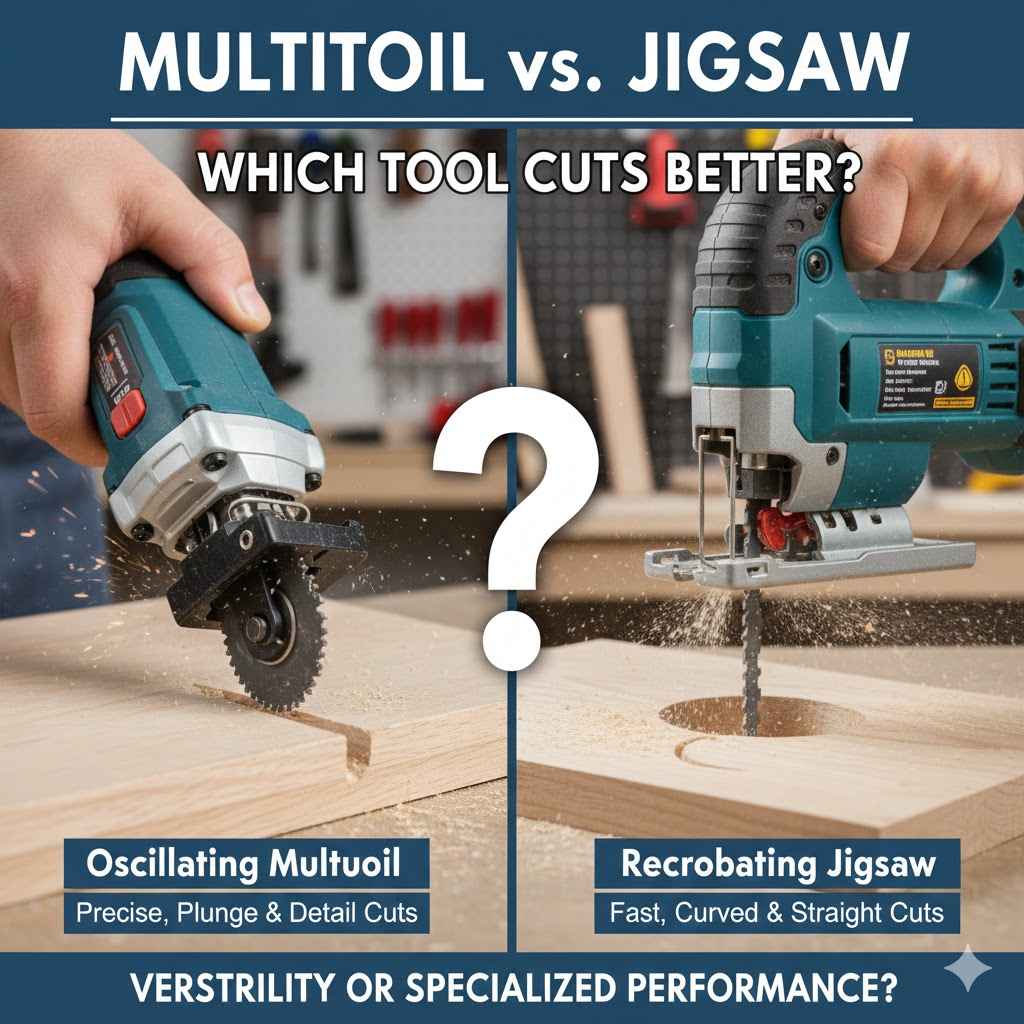
Multitool vs Jigsaw: Which Tool Cuts Better?
Choosing the right power tool can feel tricky when you’re starting out. You look at a Multitool and a Jigsaw and wonder, “Which one is best for cutting?” It’s a common question, and it’s easy to get confused. But don’t worry, we’re going to break it down simply.
We will walk through each tool step-by-step so you can easily figure out which one fits your project. Let’s get started on understanding the Multitool vs Jigsaw: Which Tool Cuts Better? so you can make the best choice for your DIY needs.
Understanding the Multitool
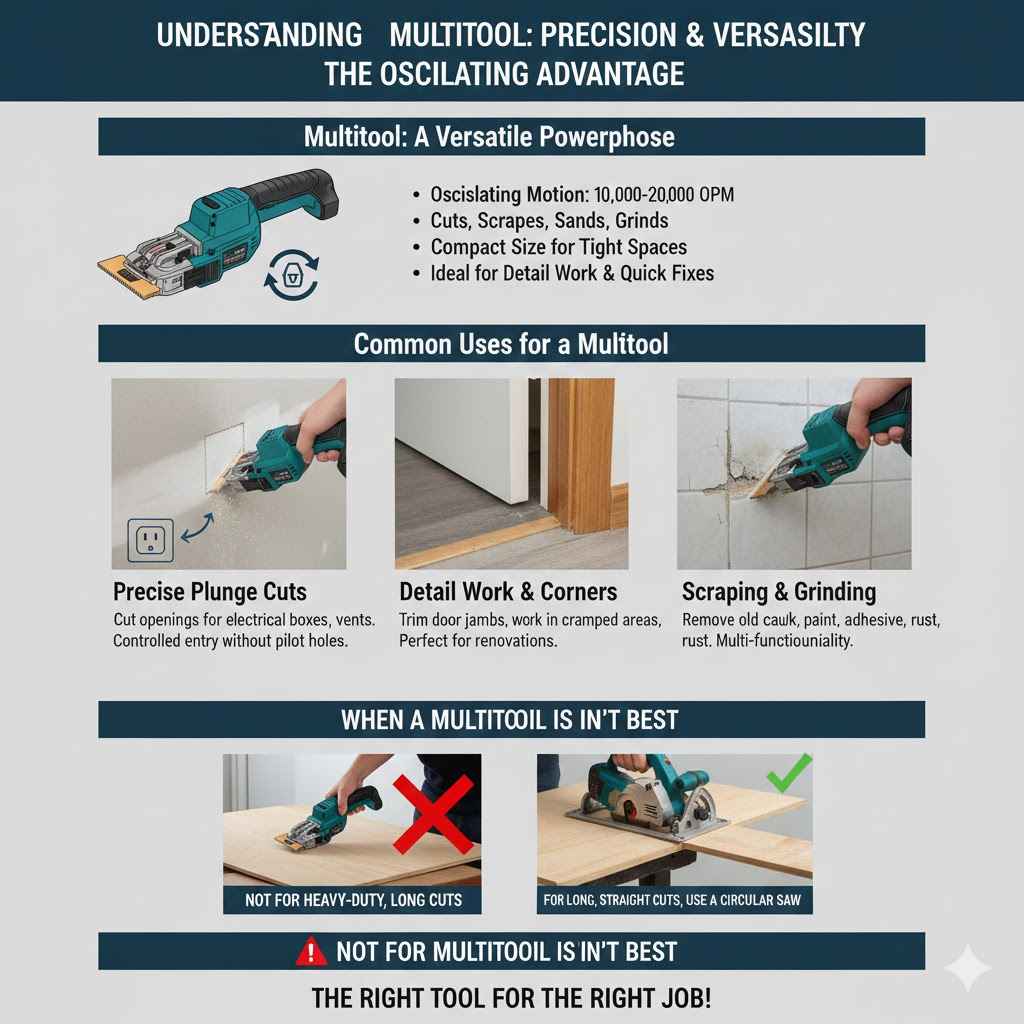
The Multitool, sometimes called a oscillating tool, is a versatile power tool known for its back-and-forth, or oscillating, motion. This rapid movement allows it to cut, scrape, sand, and grind with a variety of attachments. Its small size and ability to get into tight spaces make it incredibly handy for detailed work and quick fixes.
Unlike a saw, it doesn’t spin or reciprocate in a long stroke, which gives it a unique cutting action that excels in specific applications. This tool is ideal for plunge cuts, making small openings, and working in corners where larger tools can’t reach. It’s often the go-to for tasks like cutting drywall for outlets or removing grout.
What Makes a Multitool Unique
The core of a Multitool’s functionality lies in its oscillating head. This head moves incredibly fast, vibrating between 10,000 and 20,000 oscillations per minute. This high-frequency vibration, combined with different blade shapes and materials, enables it to perform a range of tasks.
For instance, a wood-cutting blade can saw through small pieces of wood, while a metal-cutting blade can trim nails or screws. A scraper attachment can remove old paint or adhesive, and a sanding pad can smooth surfaces. The tool’s shape, often like a D-handle or a slim pistol grip, allows for precise control, letting you guide it with one or two hands.
This makes it less intimidating for beginners compared to some other power tools.
Common Uses for a Multitool
Multitools shine in situations requiring precision and access. They are perfect for making plunge cuts, which means starting a cut in the middle of a material rather than from an edge. Imagine needing to cut a hole for an electrical box in a wall; a Multitool can start the cut right where you need it.
They are also excellent for trimming door jambs when installing new flooring, allowing you to cut just enough to slide the flooring underneath. Another popular use is removing grout between tiles without damaging the tiles themselves. This is a task that would be very difficult and time-consuming with other tools.
- Precise Plunge Cuts: Making cuts into the middle of a material is easy. This is useful for tasks like cutting openings for electrical boxes or vents. The oscillating action allows for controlled entry without needing to drill a starting hole, reducing mess and effort. This precision is vital when working with delicate materials or when accuracy is paramount, ensuring clean lines and minimal damage to surrounding areas.
- Detail Work and Corners: Getting into tight spots is a Multitool’s specialty. It can cut close to edges, trim door frames, and work in cramped areas where larger tools cannot fit. This makes it ideal for renovations and repairs where space is limited. For example, when fitting trim or baseboards, a Multitool can make those final, precise adjustments to get a perfect fit against existing structures.
- Scraping and Grinding: With the right attachments, a Multitool can remove old caulk, paint, adhesive, or even rust. This multi-functionality means one tool can handle multiple steps of a project, saving time and tool investment. The scraping blades are designed to efficiently lift and remove stubborn residues, making cleanup tasks much simpler and less physically demanding.
When a Multitool Might Not Be the Best Choice
While versatile, Multitools are not designed for heavy-duty, long cuts or breaking down large materials. Their blades are typically small and their oscillating motion, while good for control, doesn’t offer the speed or depth needed for ripping long planks of wood or cutting through thick slabs of material. If you need to cut a 4×8 sheet of plywood in half or make multiple long, straight cuts, a Multitool will be very slow and inefficient.
For these tasks, a circular saw or a table saw would be far more appropriate and effective. Trying to force a Multitool to do work it wasn’t designed for will likely result in slow progress, excessive wear on the tool, and a less-than-ideal finish.
Exploring the Jigsaw
A Jigsaw is a power saw that uses a short, up-and-down reciprocating blade to cut through various materials. It’s best known for its ability to make curved cuts and intricate shapes. The blade moves vertically, allowing for continuous cutting action.
Jigsaws typically have a base plate that rests on the material being cut, providing stability and allowing the user to guide the saw with precision. They are a step up from hand saws for curved cuts and offer more control than some other power saws for detailed work. This tool is a favorite for crafters, woodworkers, and DIYers tackling projects that involve decorative elements or non-straight lines.
How a Jigsaw Operates
The Jigsaw’s cutting action comes from a motor that drives a blade up and down. The speed of this action can often be adjusted, allowing you to control the cutting rate based on the material and the desired finish. Many jigsaws also feature a “pendulum” or orbital action.
This means that in addition to the up-and-down motion, the blade also moves slightly forward on the downstroke and backward on the upstroke. This action can make cuts faster, especially in wood, but it can also result in a rougher edge. For cleaner cuts, especially in materials like acrylic or thin metal, turning off the pendulum action is often recommended.
The footplate, or shoe, of the jigsaw slides along the surface of your workpiece, and the depth of cut is determined by the length of the blade that extends below it.
Typical Applications for a Jigsaw
Jigsaws are fantastic for a wide range of cutting tasks. They are the go-to tool for creating curves, circles, and irregular shapes in wood, plastic, and even thin metal. This makes them invaluable for projects like cutting out sink or stovetop openings in countertops, creating decorative patterns in furniture, or making custom shelving.
If you need to cut a rounded corner on a shelf or make a freehand design on a piece of plywood, a Jigsaw is your tool. It’s also capable of making straight cuts, although achieving perfectly straight lines can require a guide or a steady hand, and it’s not as efficient for long rips as a circular saw.
- Curved and Intricate Cuts: The Jigsaw excels at making flowing lines and complex shapes. This is where it truly stands out from other saws. Whether you are cutting out a star for a holiday decoration or shaping a piece of wood for a sign, the Jigsaw allows for artistic freedom. The ability to pivot and turn the saw makes it easy to follow intricate patterns, transforming flat material into detailed designs with relative ease.
- Cutting Various Materials: With the correct blade, a Jigsaw can cut through wood up to a few inches thick, plastics, drywall, and even thin metals like aluminum. This versatility means that a single Jigsaw can be used for many different types of projects. Choosing the right blade is crucial, as a wood blade won’t cut metal effectively, and a metal blade will be slow on wood. Manufacturers offer a wide variety of blades designed for specific materials and cutting speeds.
- Making Cutouts: Jigsaws are perfect for making precise cutouts within a larger piece of material. This is commonly seen when installing sinks, cooktops, or electrical outlets. You can often plunge the blade directly into the material (especially wood) to start the cut without needing a pilot hole, although drilling a pilot hole can make starting easier and cleaner. The baseplate helps keep the cut stable and controlled.
Limitations of a Jigsaw
While versatile, a Jigsaw has its limits. It is not designed for making very long, straight cuts. While it can cut straight, it requires a guide or a lot of skill to keep the line perfectly true, and the blade can sometimes wander, especially in thicker materials.
The reciprocating blade can also cause tear-out or a rougher finish on the edges, particularly on the top surface of the material. For very thick materials, a Jigsaw might struggle to cut through cleanly or quickly. It’s also generally not the best tool for breaking down large sheets of material like plywood or MDF for basic construction needs.
Multitool vs Jigsaw Which Tool Cuts Better Direct Comparison
When we look at Multitool vs Jigsaw: Which Tool Cuts Better?, the answer isn’t about one being universally superior, but about which tool is better suited for specific jobs. A Multitool excels at precision, detail work, and making plunge cuts in tight spaces. Its oscillating action is perfect for controlled material removal and working in confined areas.
Think of it as a scalpel for your DIY projects, ideal for tasks like trimming door jambs or making small openings. In contrast, a Jigsaw is built for making curves and more significant cuts. Its reciprocating blade and ability to maneuver make it the champion of decorative shapes and cutouts.
It’s more like a versatile saw for creative shaping.
Speed and Efficiency
In terms of speed for general cutting, a Jigsaw will almost always be faster than a Multitool, especially for longer cuts or when cutting through thicker materials. The longer stroke and continuous blade movement of a Jigsaw allow it to remove material more rapidly. A Multitool, with its short oscillating stroke, is much slower for continuous cutting.
However, for very specific tasks, like making a plunge cut into a piece of drywall, the Multitool is far more efficient because a Jigsaw would require drilling a pilot hole and would be more cumbersome. So, for speed, it depends entirely on the application. If you need to cut a circle quickly, a Jigsaw wins.
If you need to cut a small notch without starting from an edge, the Multitool is the speed champion.
Precision and Control
The Multitool generally offers superior precision for detail work and intricate maneuvers. Its compact size and the way you can hold and guide it allow for very fine control. The oscillating action, while slow for large cuts, is excellent for not over-cutting or creating splintering when working near edges.
The Jigsaw also offers good control, especially with its base plate resting on the material, but it can be harder to keep perfectly on a fine line, and the blade can sometimes wander. For tasks where accuracy to the millimeter is key, especially in confined spaces, the Multitool often has the edge in terms of pure control and the ability to make very delicate adjustments.
Versatility and Attachments
Both tools are quite versatile, but they offer different types of versatility. The Multitool’s versatility comes from its wide array of snap-on attachments. You can switch from cutting wood to scraping paint to grinding metal with the same basic tool.
This makes it a multi-purpose wonder for many small jobs. The Jigsaw’s versatility comes from its ability to cut different materials with various blade types and its capacity for making different kinds of cuts (straight, curved, bevel). While a Jigsaw can cut wood, plastic, and metal, a Multitool can do those and scrape, sand, and even polish.
However, for the core task of cutting shapes, the Jigsaw is generally more specialized and effective.
Material Thickness and Depth of Cut
When it comes to cutting thicker materials, the Jigsaw is the clear winner. Its longer blade and powerful reciprocating action allow it to cut through wood several inches thick with relative ease. The depth of cut on a Jigsaw is typically greater than what a Multitool can achieve.
A Multitool is designed for shallower cuts, usually an inch or less, and struggles with thick lumber or metal. If you need to cut through a substantial piece of wood, a Jigsaw is the appropriate tool. Trying to cut thick material with a Multitool would be extremely slow, potentially damage the tool, and yield poor results.
| Feature | Multitool | Jigsaw |
|---|---|---|
| Primary Action | Oscillating (back-and-forth) | Reciprocating (up-and-down) |
| Best For | Detail work, plunge cuts, tight spaces, scraping | Curved cuts, shapes, cutouts, general sawing |
| Speed for Long Cuts | Slow | Moderate to Fast |
| Precision | Very High for detail | Good for curves, requires practice for straight lines |
| Material Thickness | Thin to Moderate (approx. 1 inch max) | Moderate to Thick (several inches) |
| Versatility | High through attachments (cut, scrape, sand) | High through blade types and cut variety |
Real-Life Examples
Consider a homeowner installing a new kitchen sink. They need to cut a circular hole in their laminate countertop. A Jigsaw with a fine-tooth blade is the perfect tool.
It can start the cut with a plunge (after drilling a pilot hole) and smoothly follow the marked circle, creating a clean opening for the sink. The baseplate helps keep the saw steady, and the blade’s action is designed for this type of material.
Now, imagine that same homeowner needing to remove old caulk around their bathtub before regrouting. They might try a Multitool with a scraping attachment. The Multitool’s oscillating motion and small profile allow it to get right into the corner where the tub meets the tile, efficiently scraping away the old caulk without damaging the surrounding surfaces.
A Jigsaw would be too large and unwieldy for this detailed cleanup task.
Another scenario involves a woodworker building a custom birdhouse. They need to cut decorative arched windows and small dowel holes. A Jigsaw is ideal for the arched windows, allowing for smooth, flowing curves.
For the small dowel holes, a Multitool with a small wood-cutting blade could be used for precision plunge cuts, especially if the holes need to be made near edges or in tight spots.
Choosing the Right Tool for Your Project
Deciding between a Multitool and a Jigsaw for your project boils down to the primary function you need the tool to perform. If your project involves a lot of intricate detail, tight spaces, or tasks that go beyond just cutting like scraping or sanding, the Multitool is likely your best bet. It’s your versatile workhorse for small, precise jobs and quick fixes where other tools might be too cumbersome.
On the other hand, if you’re aiming to create curves, decorative shapes, or need to make cutouts in materials like wood, plastic, or countertops, the Jigsaw is the specialized tool designed for those jobs. It’s your go-to for shaping and making openings with a saw.
When to Choose a Multitool
You should reach for a Multitool when your project demands precision in awkward places or requires multiple functions. This includes tasks like trimming the bottom of door frames to fit new flooring, cutting precise holes for electrical boxes in drywall, removing grout between tiles without damaging the tile, or even sanding small, hard-to-reach areas. If you have a job that involves a lot of detailed work, like fitting trim or making adjustments in tight corners, a Multitool offers control and access that other saws simply can’t match.
Its ability to switch between cutting, scraping, and sanding makes it incredibly handy for home repair and renovation tasks.
- Trimming Door Jambs: When installing new flooring, you often need to trim the bottom of door jambs so the flooring can slide underneath. A Multitool with a wood blade can make a clean, precise cut along the bottom of the jamb, allowing for a perfect fit without damaging the surrounding door frame.
- Electrical Box Cutouts: For installing electrical boxes or outlets in drywall, a Multitool is excellent. You can make plunge cuts directly into the drywall to create the opening, offering more control than a drywall saw and less mess than a larger saw.
- Grout Removal: Removing old grout between tiles can be a tedious task. A Multitool with a grout blade attachment can efficiently remove the grout, minimizing the risk of chipping or damaging the tiles themselves.
When to Choose a Jigsaw
Opt for a Jigsaw when the main task involves cutting shapes, curves, or making openings in materials. This is the tool for cutting out patterns for decorative furniture pieces, creating a rounded edge on a shelf, or cutting the opening for a sink in a kitchen countertop. If your project requires making a specific shape from a piece of wood or plastic, the Jigsaw provides the flexibility and control needed to follow your lines accurately.
It’s the better choice for any job where the cut isn’t a simple straight line across a large piece of material.
- Decorative Woodworking: If you’re building custom furniture or crafting decorative items, the Jigsaw is essential for creating curves, intricate patterns, and unique shapes. It allows for freehand cutting of designs that would be impossible with a straight-cutting saw.
- Countertop Cutouts: Installing sinks or stovetops requires cutting precise openings in countertops. A Jigsaw is the ideal tool for this, allowing you to carefully cut out the required shape from laminate, solid surface, or even stone with the right blade.
- Building Custom Shelves: When building shelves with rounded corners or unique profiles, a Jigsaw makes it easy to achieve these custom shapes. You can easily cut curves and angles to create shelves that fit your specific design needs.
Can You Use Both Tools Together?
Absolutely! In many DIY projects, a Multitool and a Jigsaw complement each other perfectly. You might use a Jigsaw to make the main cuts for a project, like cutting out a shape for a shelf or a stencil.
Then, you might use a Multitool for the finer details, like cleaning up the edges of the cut, trimming a small section that’s slightly off, or making adjustments in tight corners where the Jigsaw couldn’t reach. For example, when installing new baseboards, you might use a Jigsaw to cut the main lengths, and then use a Multitool to make precise notched cuts where the baseboard meets a door frame or an uneven wall. This combined approach leverages the strengths of both tools for a more efficient and professional result.
Tips for Safe and Effective Use
Both Multitools and Jigsaws are powerful tools that require careful handling to ensure safety and achieve the best results. Always start by reading the manufacturer’s manual for your specific tool. This will give you detailed instructions on operation, maintenance, and safety precautions.
Wearing appropriate personal protective equipment (PPE) is non-negotiable. This includes safety glasses to protect your eyes from flying debris, hearing protection to safeguard your hearing from the tool’s noise, and work gloves to protect your hands and improve grip.
Safety First
Before you even pick up the tool, make sure your work area is clear. Remove any clutter that could cause you to trip or that could get caught in the tool. Secure your workpiece firmly using clamps or a workbench vise.
This is crucial because a shifting workpiece can lead to inaccurate cuts and dangerous situations. Ensure that the blade or attachment is properly installed and tightened according to the tool’s instructions. Never force the tool; let the tool do the work.
Applying too much pressure can lead to overheating, damage to the tool, or a loss of control.
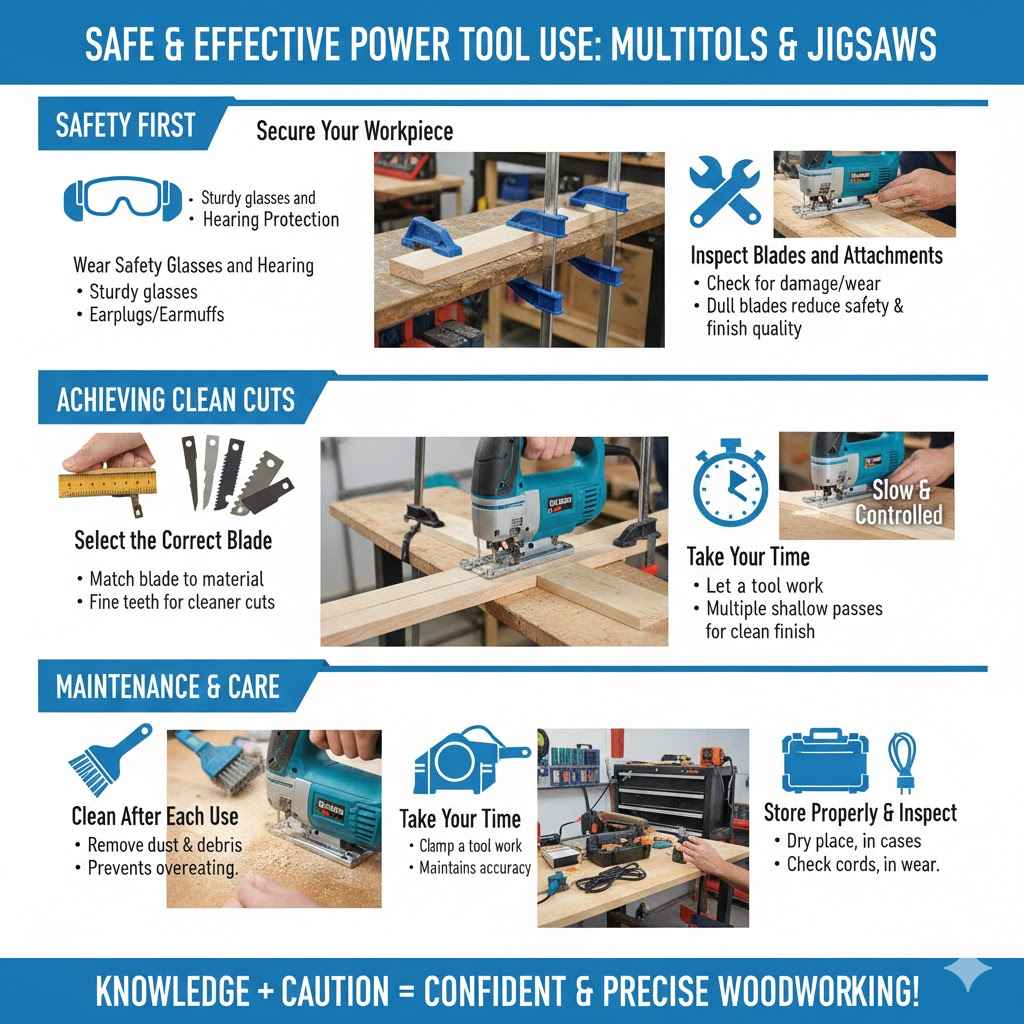
- Wear Safety Glasses and Hearing Protection: Always wear sturdy safety glasses to protect your eyes from sawdust and debris. Power tools can be noisy, so using earplugs or earmuffs is important to prevent hearing damage.
- Secure Your Workpiece: Use clamps to firmly hold your material in place. This prevents it from moving during cutting, which is essential for safety and accuracy. A loose piece can kick back or cause the tool to bind.
- Inspect Blades and Attachments: Before each use, check blades and attachments for damage or wear. Dull or damaged blades can make cutting harder, increase the risk of kickback, and produce a poor finish. Replace them as needed.
Achieving Clean Cuts
To get the cleanest possible cuts, several techniques can be employed. For both tools, choosing the right blade for the material you are cutting is paramount. Different materials require different tooth counts and blade designs.
For jigsaws, reducing or turning off the orbital action can lead to a smoother cut, especially in materials like acrylics or finished wood. For very clean edges on wood with a jigsaw, some users score the cut line with a utility knife first, which helps to prevent splintering. With a Multitool, taking shallow, controlled passes, especially on harder materials, will yield better results than trying to cut too deep at once.
Practicing on scrap material before working on your project is always a good idea to get a feel for how the tool cuts.
- Select the Correct Blade: Use blades specifically designed for the material you are cutting (wood, metal, plastic, tile). Different tooth pitches and materials (bi-metal, carbide) offer varying performance. A fine-tooth blade will generally give a cleaner cut but may be slower.
- Use Guides for Straight Cuts: While jigsaws are best for curves, for straight cuts, you can use a straight edge or clamp a piece of wood alongside your cut line as a guide for the jigsaw’s baseplate to follow. This helps maintain accuracy over longer distances.
- Take Your Time: Rushing a cut will almost always result in a less precise and rougher finish. Let the tool’s speed and the blade do the work. For Multitools, multiple shallow passes are often better than one deep, forced cut.
Maintenance and Care
Proper maintenance ensures your tools last longer and perform better. After each use, clean your Multitool and Jigsaw to remove dust and debris. Pay attention to ventilation ports; keeping them clear prevents overheating.
Store your tools in a dry place, preferably in their original cases, to protect them from dust and damage. Regularly check the power cords for any signs of wear or damage. For jigsaws, ensure the blade clamp mechanism is clean and free of debris so blades can be changed easily and securely.
For Multitools, regularly inspect the oscillating head and keep it free from buildup.
One common statistic shows that over 70% of power tool repairs are due to lack of basic cleaning and maintenance. Keeping your tools clean also helps you spot potential problems early before they become serious issues. For example, if you notice that a jigsaw blade is becoming difficult to insert or remove, it might be due to dust or grime in the clamp.
Addressing this promptly can prevent future problems.
Frequently Asked Questions
Question: Can a Multitool replace a Jigsaw for cutting curves
Answer: Generally, no. While a Multitool can make small, very precise curves, it is not designed for making long, flowing curves or intricate shapes as effectively or efficiently as a Jigsaw. A Jigsaw is the tool specifically built for cutting curves.
Question: Which tool is better for removing old paint from wood
Answer: A Multitool with a scraping attachment is typically better for removing old paint from wood. Its oscillating motion and specialized attachments are designed for scraping and material removal tasks.
Question: Can I use a Jigsaw to cut metal
Answer: Yes, with the correct blade. Jigsaws can cut through various metals, including thin steel and aluminum, by using a metal-cutting blade. The speed and type of blade will depend on the thickness and type of metal.
Question: Is a Multitool easier for a beginner to use
Answer: For very small, precise tasks and detail work in tight spaces, a Multitool might feel more intuitive and less intimidating due to its size and controlled motion. However, for general cutting tasks, a Jigsaw, with its stable base plate, can also be quite manageable for beginners.
Question: Which tool is faster for cutting a piece of plywood
Answer: For cutting a large piece of plywood, a Jigsaw will be significantly faster than a Multitool, especially if you are making long, straight cuts or large curves. A circular saw would be even faster for straight cuts.
Summary
Choosing between a Multitool and a Jigsaw depends on the job. The Multitool excels at detailed work, plunge cuts, and versatility with attachments for scraping and sanding. The Jigsaw is the go-to for making curves, shapes, and cutouts in wood, plastic, and metal.
For many projects, using both tools together offers the best approach. Always prioritize safety by wearing protective gear and securing your workpiece. Understanding each tool’s strengths helps you pick the right one for faster, cleaner, and safer results.