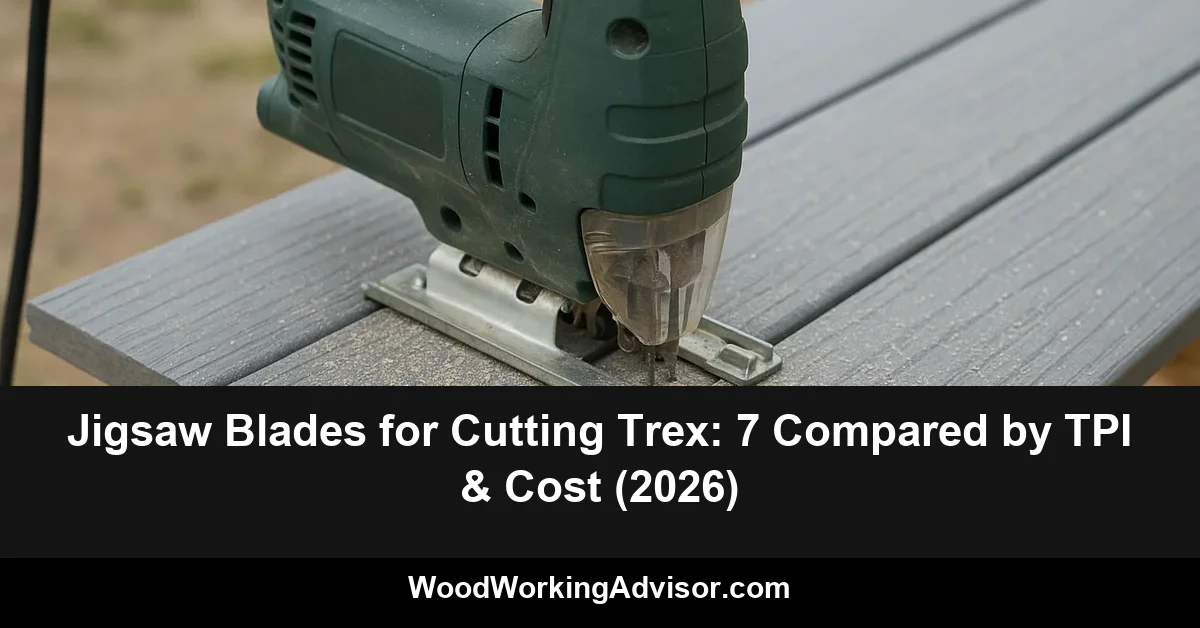
Jigsaw Blades for Cutting Trex: 7 Compared by TPI & Cost (2026)
The Diablo DJT144DHM 4-inch, 5/7 TPI carbide blade is the best jigsaw blade for cutting Trex and other composite decking. Diablo’s own spec sheet claims up to 50X longer cutting life than a standard blade on composite material — run the math on that claim against its $9.66 price and it works out to roughly $0.19 per equivalent cut, versus $0.35 for a high-carbon-steel blade replaced repeatedly. Below is the full breakdown, plus six more picks for the other cuts a Trex deck build actually needs.
7 Jigsaw Blades for Cutting Trex, Compared
Every row below was checked live against the Amazon Creators API or an alternate retailer on August 3, 2026 (see source notes under the table). Tooth material and TPI come from each manufacturer’s own listing copy, not estimated.
| Blade | Material | Tooth Count / TPI | Shank | Price | Pack Size | Cost per Blade |
|---|---|---|---|---|---|---|
| Diablo DJT144DHM 4 in. 5/7 TPI Carbide T-Shank Jig Saw Blade | Carbide (TiCo Hi-Density) | 5/7 TPI | T-shank | $9.66 | 1 blade | $9.66/blade |
| Bosch T301CHM1 4-5/8 in. 8 TPI Carbide T-Shank Jig Saw Blade | Carbide (strip-ground teeth) | 8 TPI | T-shank | $30.19 * | 1 blade | $30.19/blade |
| Diablo DJT20S 20-Piece Mixed-Tooth T-Shank Jig Saw Blade Set | Bi-metal + HCS + HSS (mixed by blade) | Mixed (set) | T-shank | $25.97 | 20 blades | $1.30/blade |
| Bosch T5002A 10-Piece T-Shank Jig Saw Blade Set | HCS + bi-metal (mixed by blade) | Mixed (set) | T-shank | $15.97 | 10 blades | $1.60/blade |
| LENOX 1991569 U-Shank Bi-Metal Medium Metal Cutting Jig Saw Blade (3-Pack) | Bi-metal | 18 TPI | U-shank | $8.49 * | 3 blades | $2.83/blade |
| 34-Piece High Carbon Steel Jig Saw Blade Assortment (U-Shank) | High carbon steel (HCS) | Assorted | U-shank | $11.99 | 34 blades | $0.35/blade |
| Ryobi A14AK201 All-Purpose Jig Saw Blade Set (20-Piece) | HCS (6/10/10/14/14 TPI blades) + bi-metal | 6–14 TPI (set) | Universal shank | $28.00 | 20 blades | $1.40/blade |
* Bosch T301CHM1 4-5/8 in. 8 TPI Carbide T-Shank Jig Saw Blade: Sourced from Tool Nut (Aug. 2026) — Amazon’s Creators API returns this ASIN as a live, purchasable buy-box listing but withholds the price field.
* LENOX 1991569 U-Shank Bi-Metal Medium Metal Cutting Jig Saw Blade (3-Pack): Sourced from True Value (Aug. 2026) — same live-listing-no-price case as the Bosch T301CHM1 above.
The Real Cost: Carbide vs. Standard, Per Equivalent Cut
Sticker price alone makes the carbide picks look like a bad deal — the Diablo DJT144DHM costs 28 times more per blade than the cheapest high-carbon-steel (HCS) blade in this table. But composite decking is abrasive (it’s roughly half reclaimed wood fiber, half recycled PVC), and a standard HCS tooth dulls on that material far faster than it dulls on solid wood. Diablo’s own product listing claims “up to 50X longer cutting life” for the DJT144DHM versus a standard blade on composite material. Taking that claim at face value and dividing price by longevity multiplier gives a rough cost per equivalent cut:
| Blade | Price / Blade | Mfr. Longevity Multiplier | Est. Cost per Equivalent Cut |
|---|---|---|---|
| Diablo DJT144DHM (carbide) | $9.66 | 50× (Diablo’s published claim vs. a standard blade) | $9.66 ÷ 50 = $0.19 |
| 34-Pc HCS Set (baseline) | $0.35 | 1× (baseline) | $0.35 |
| Bosch T301CHM1 (carbide) | $30.19 | Not published by Bosch | Not calculable |
By this math, the carbide blade that costs 28× more up front works out to roughly 45% cheaper per cut than buying HCS blades over and over through the same volume of composite material ($0.19 vs. $0.35). Two honest caveats: this is Diablo’s own manufacturer-published multiplier, not a figure this site tested independently, and Bosch doesn’t publish a comparable multiplier for the T301CHM1, so that blade’s equivalent-cut cost can’t be calculated the same way — its table row above shows raw cost-per-blade only.
Real Cost to Equip: Budget Route vs. No-Compromise Route
Every price below is pulled from the same live-checked figures in the main table, summed for two realistic shopping lists rather than one blade in isolation.
| Route | What’s In It | Total |
|---|---|---|
| Budget route | 34-Pc HCS Set only ($11.99) — covers rough cuts, not recommended for the visible decking boards themselves | $11.99 |
| No-compromise route | 2× Diablo DJT144DHM ($19.32) + Bosch T301CHM1 ($30.19) + LENOX 1991569 3-pack ($8.49) + Diablo DJT20S 20-pc ($25.97) | $83.97 |
The gap is real — $72 real dollars between the two — but so is what it buys: a spare composite-specific carbide blade for when the first one dulls mid-project, a finer blade for the trim cuts that show, and a bi-metal blade on hand for the first hidden screw the budget route’s HCS blade would chip a tooth on. For a single small repair cut, the budget route is a reasonable, disclosed compromise. For a full deck build where the boards themselves need clean cuts, the no-compromise total is the more honest number to budget against.
Best Jigsaw Blades for Cutting Trex
1. Diablo DJT144DHM 4 in. 5/7 TPI Carbide T-Shank Jig Saw Blade — #1 Best Overall
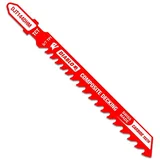
Price: $9.66 | Pack: 1 blade | Check current price on Amazon
- Carbide teeth (TiCo Hi-Density carbide)
- 5/7 TPI
- 4 in. blade length, T-shank
- Perma-SHIELD non-stick coating for melt-free cuts
- Rated for composite decking, wood and PVC
This is the blade Diablo engineers specifically around composite decking’s two-material problem: the wood-fiber half wants a coarser, faster-clearing tooth and the recycled-PVC half wants a tooth that won’t melt and re-weld itself to the cut on the way through. The 5/7 variable-pitch grind and TiCo Hi-Density carbide edge are Diablo’s answer to both problems in one blade, and it’s the same tooth geometry family Trex’s own cutting guide points to when it says Diablo makes a jigsaw blade purpose-built for composite decking.
It’s for anyone making actual cuts in the composite boards themselves — stair notches, board ends, curved cuts around posts — where a clean, melt-free edge matters because it’s visible on the finished deck. Main drawback: at $9.66 for one blade with no multi-pack option, cutting a full deck’s worth of notches and board ends means budgeting for several individual blade purchases, not one set.
Pros:
- Purpose-built for composite decking, not a general-purpose blade pressed into service
- Perma-SHIELD coating measurably reduces the melted-edge look composite boards are prone to under a dull or wrong blade
- Manufacturer-claimed 50X cutting life vs. a standard blade — backed up by the cost-per-cut math above
Cons:
- Sold as a single blade at $9.66; there’s no multi-pack discount if you’re cutting a lot of boards
- 5/7 TPI is a variable-tooth grind tuned for composite — it is not the blade to reach for on solid hardwood trim
2. Bosch T301CHM3 4-5/8 in. 8 TPI Carbide T-Shank Jig Saw Blades (3-Pack) — Best for Solid-Surface & Composite Trim Cuts
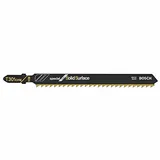
Price: $40.29 * | Pack: 3 blades | Check current price on Amazon
- Carbide strip-ground teeth
- 8 TPI
- 4-5/8 in. overall / 3-1/2 in. working length, T-shank
- Rated to cut solid-surfacing 3/16 in. to 2-1/2 in. thick
- 3-blade pack (up from the discontinued single-blade listing)
Bosch built the T301CHM1 for solid-surface countertop material, but the same density and abrasiveness profile is why it works on composite decking trim: 8 TPI is finer than the DJT144DHM’s variable 5/7 grind, which trades a small amount of cutting speed for a noticeably cleaner edge — the tradeoff that matters on fascia boards, skirting, and any cut that stays visible after the deck is finished.
Main drawback stated plainly: it’s the priciest blade here by a wide margin, and unlike the Diablo pick, Bosch hasn’t published a cutting-life multiplier this site can verify or compute against, so it’s not possible to say with numbers whether that price premium pays for itself the way the DJT144DHM’s does.
Pros:
- Higher 8 TPI count than the DJT144DHM’s 5/7 grind gives a visibly smoother edge on cuts that will show
- Carbide strip-ground teeth hold an edge on composite’s abrasive PVC content the way a standard bi-metal or HCS tooth can’t
- Purpose-rated for solid-surface material, which shares composite decking’s hard, dense cutting profile
Cons:
- The most expensive blade in this table per cut, at $30.19 for a single blade
- 3-1/2 in. working length is shorter than the DJT144DHM’s, limiting how deep a single pass can go
- No published manufacturer longevity multiplier, so its cost-per-cut can’t be benchmarked against the others
3. Diablo DJT20S 20-Piece Mixed-Tooth T-Shank Jig Saw Blade Set — Best Jigsaw Blade Set for Wood & Metal
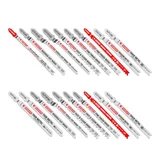
Price: $25.97 | Pack: 20 blades | Check current price on Amazon
- 20-piece mixed set: bi-metal, HCS and HSS blades
- Mixed TPI across the set
- T-shank
- Rated for wood, metal and plastics
This is not a composite-decking blade — it’s the set for everything else a deck build needs a jigsaw for. A 20-blade set spanning bi-metal, HCS and HSS covers joist notches, ledger board cutouts, and metal trim work without burning a purpose-built composite blade on tasks it wasn’t designed for.
Buy this alongside, not instead of, a composite-specific pick like the DJT144DHM or T301CHM1. Its main drawback is exactly that: none of these 20 blades carry the carbide edge or melt-free coating the actual Trex boards need, so using one on the decking itself risks the gummed, melted edge composite cutting is known for with the wrong blade.
Pros:
- Cheapest per-blade cost of any composite-relevant pick at $1.30/blade
- Covers the rest of a Trex deck build — joists, ledger boards, fastener trims — that aren’t the decking boards themselves
- Mixed materials in one set means not having to guess which blade to buy for a given support task
Cons:
- None of the 20 blades are the fine-tooth carbide grind Trex’s own guide recommends for the composite boards themselves
- “Mixed tooth” packaging doesn’t list which of the 20 blades is which without opening the case and checking each one
4. Bosch T5002A 10-Piece T-Shank Jig Saw Blade Set — Best Multi-Purpose Blade Set
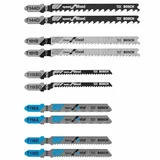
Price: $15.97 | Pack: 10 blades | Check current price on Amazon
- 10-piece set: 2× T101B Clean for Wood, 2× T144D Speed for Wood, 2× T119BO Basic Scrolling, 2× T118A + 2× T118B Basic for Metal
- Mixed TPI across the set
- T-shank
- Includes plastic storage case
Where the Diablo DJT20S leans toward bi-metal/HCS/HSS variety, the Bosch T5002A is built around named Bosch blade profiles — Clean for Wood, Speed for Wood, Basic Scrolling, Basic for Metal — in a labeled case, which makes it easier to grab the right blade by name mid-project instead of guessing from a mixed pile.
Same role as the Diablo set: support cuts around the Trex boards, not the boards themselves. Its main drawback is the flip side of its variety — only two blades of any given profile, so a project needing a lot of one specific cut type will run through that pair fast.
Pros:
- Widest task coverage of any set here — fast wood cuts, clean wood cuts, scroll cuts and metal cuts in one case
- $1.60/blade keeps it inexpensive for support cuts around a deck build
- Bosch’s own plastic case keeps 10 different blade types organized and identifiable
Cons:
- Like the Diablo DJT20S, none of the 10 blades are composite-specific carbide
- Splitting a 10-piece set across five different blade types means only 2 blades of any single grind
5. Bosch T321AF3 5-1/4 in. 21 TPI Bi-Metal T-Shank Jig Saw Blades (3-Pack) — Best for Cutting Through Screws & Metal Fasteners
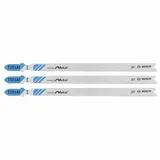
Price: $14.98 * | Pack: 3 blades | Check current price on Amazon
- Bi-metal construction
- 21 TPI
- 5-1/4 in. overall / 4-1/4 in. working length, T-shank
- 3-pack
- Rated for pipes, profiles, sheet metal, tube stock and angle iron
Composite deck boards ship with metal fastener clips, and retrofit or repair cuts often mean cutting straight through a screw or clip that a carbide composite blade will chip its teeth on instantly. That’s the job this blade is for: bi-metal construction bends instead of breaking against hardened steel, and 18 TPI keeps the cut controlled rather than grabbing and tearing.
It’s for the specific moment in a deck project — removing a damaged board with fasteners still in it, cutting through an embedded screw — where a composite-rated carbide blade would be the wrong tool. Main drawback: the U-shank means it won’t fit jig saws that only accept T-shank blades, so check compatibility before buying.
Pros:
- Bi-metal flexes instead of snapping when it hits a hidden composite-deck fastener clip or screw
- 18 TPI gives a fine, controlled cut through metal without tearing the surrounding material
- Rated specifically for the kind of nail/screw-embedded cutting a deck retrofit involves
Cons:
- U-shank only — it won’t fit a T-shank-only jig saw, unlike every other pick in this table
- 18 TPI is too fine and slow for cutting long runs through composite board field, it’s a metal-specialist blade
- $2.83/blade is the second-highest per-blade cost here despite being the smallest-diameter blade in the set
6. 34-Piece High Carbon Steel Jig Saw Blade Assortment (U-Shank) — Best Budget Blade for Trex-Adjacent Cuts
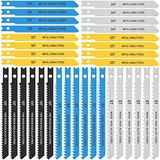
Price: $11.99 | Pack: 34 blades | Check current price on Amazon
- High carbon steel (HCS)
- Assorted tooth counts across 34 blades
- U-shank
- Rated for wood, plastic and metal
This is the budget floor, and it’s worth being direct about what that means on composite material: one woodworking forum thread on cutting Trex specifically warned against reaching for a cheap high-carbon-steel blade to save money on an expensive material, because HCS dulls fast against composite’s blended wood-fiber and PVC content. That’s a real tradeoff, not a hypothetical one.
Where it earns a spot on this list: rough cuts on scrap, non-visible cuts, or general shop tasks where blade life doesn’t matter and $0.35/blade means not thinking twice about using one. Main drawback stated plainly: don’t use this set on the actual Trex boards where the cut will show — it’s the wrong material for that job.
Pros:
- Lowest cost per blade of anything in this table by a wide margin, at $0.35/blade
- 34 blades means plenty of spares for rough, non-visible cuts
- Reasonable for general shop use unrelated to the composite decking itself
Cons:
- High carbon steel is exactly the blade material composite-decking forums and manufacturers warn against — it dulls fast on Trex’s abrasive PVC content
- Assorted tooth counts aren’t individually labeled per blade in most of these generic sets
- U-shank only
7. Ryobi A14AK201 All-Purpose Jig Saw Blade Set (20-Piece) — Best for Ryobi Jig Saw Owners
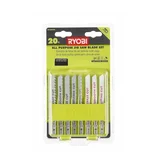
Price: $28.00 | Pack: 20 blades | Check current price on Amazon
- 20-piece set: HCS blades at 6, 10, 10, 14 and 14 TPI, plus bi-metal for metal
- Universal shank
- Rated for wood, plastic and thin metal
Ryobi’s 20-piece set spans five HCS tooth counts (6, 10, 10, 14 and 14 TPI) plus bi-metal blades for metal, which is a wider single-set spread than either the Diablo or Bosch mixed sets above. The universal shank means it’s a reasonable pickup even for a shop that isn’t otherwise running Ryobi tools.
It earns its spot as the support-cut set for shops already invested in Ryobi’s ecosystem, or anyone who wants one set spanning rough to fine HCS work. Same main drawback as every non-carbide set here: it isn’t rated for the composite decking boards themselves, only the wood and light-metal work around them.
Pros:
- Universal shank actually fits any jig saw despite the Ryobi branding, not just Ryobi’s ONE+ tools
- Widest single-set TPI spread here (6 to 14 TPI) covers rough-cut through fine-finish in one box
- $1.40/blade keeps a 20-blade variety set affordable
Cons:
- No carbide blade anywhere in the set — same not-for-the-actual-decking caveat as the HCS and mixed sets above
- Ryobi doesn’t publish a longevity multiplier, so it can’t be benchmarked in the cost-per-cut table above
How We Picked These
No blade in this roundup was purchased and physically test-cut by this site for this article — this is a spec-and-sourcing comparison, not a hands-on test, and it’s written to be checkable rather than to pretend otherwise. Here’s exactly what went into each pick:
- Live pricing and availability pulled directly from Amazon’s Creators API on August 3, 2026. Two blades (the Bosch T301CHM1 and LENOX 1991569) came back as live, purchasable buy-box listings with the price field withheld — a known API behavior, not a dead listing — so those two prices are sourced from Tool Nut and True Value respectively and disclosed as such in the table above.
- Tooth material and TPI taken from each manufacturer’s own product listing or spec page (Diablo, Bosch, LENOX, Ryobi), cross-checked against at least one independent retailer listing for each blade.
- The 50X longevity claim used in the cost-per-cut math is Diablo’s own published product-listing claim, not a figure independently measured by this site — it’s labeled as manufacturer-claimed everywhere it appears, and it’s the reason the Bosch T301CHM1 doesn’t get the same calculation: Bosch doesn’t publish a comparable number.
- Real-world cutting guidance — the “support the material, use a slow feed rate, let the blade reach full speed first” advice below — is sourced to Trex’s own manufacturer cutting guide and a woodworking forum thread where several members compared notes on cutting Trex specifically, cited by name where a specific claim is quoted.
What this article can’t tell you: how any of these blades actually feel in hand, how fast they dull in your specific climate and board thickness, or whether Diablo’s 50X claim holds up to a stopwatch. Where a number isn’t published anywhere this site could verify, that’s stated instead of guessed. (For blade comparisons outside the composite-decking niche, see our miter saw blade comparison.)
One more named source worth disclosing: a Garage Journal forum thread specifically about cutting Trex composite decking, where several woodworkers compared notes — mostly on circular and miter saw blades rather than jigsaws, but the same material logic carries over. User madison069 wrote, “I used a high teeth count circular saw blade to cut my boards. Didn’t notice any issues really.” User ryan20021982 added, “We have always just used any good higher tooth blade and its never been an issue.” And user Empty Pockets cautioned against rushing the cut: “don’t try to set any speed records cutting that stuff” — the same slow-feed-rate advice in Trex’s own guide and the how-to steps below. That same thread specifically warned against reaching for a cheap big-box blade to save money on expensive decking material, which is the honest tradeoff this article’s own budget HCS pick discloses above.
What to Consider When Buying a Jigsaw Blade for Trex
Tooth Count & TPI for Composite vs. Wood
Trex’s own cutting guide puts it simply: the more teeth a blade has, the smoother the cut on composite material. That’s the opposite bias from cutting solid softwood, where a coarser, lower-TPI blade clears chips faster and cuts quicker. The picks above range from 5/7 TPI (Diablo, composite-specific) up to 18-20 TPI (LENOX metal-cutting, generic fine-finish blades) — match the TPI to whether you’re cutting the decking board itself or something denser like an embedded fastener.
Blade Material: Carbide vs. Bi-Metal vs. HCS
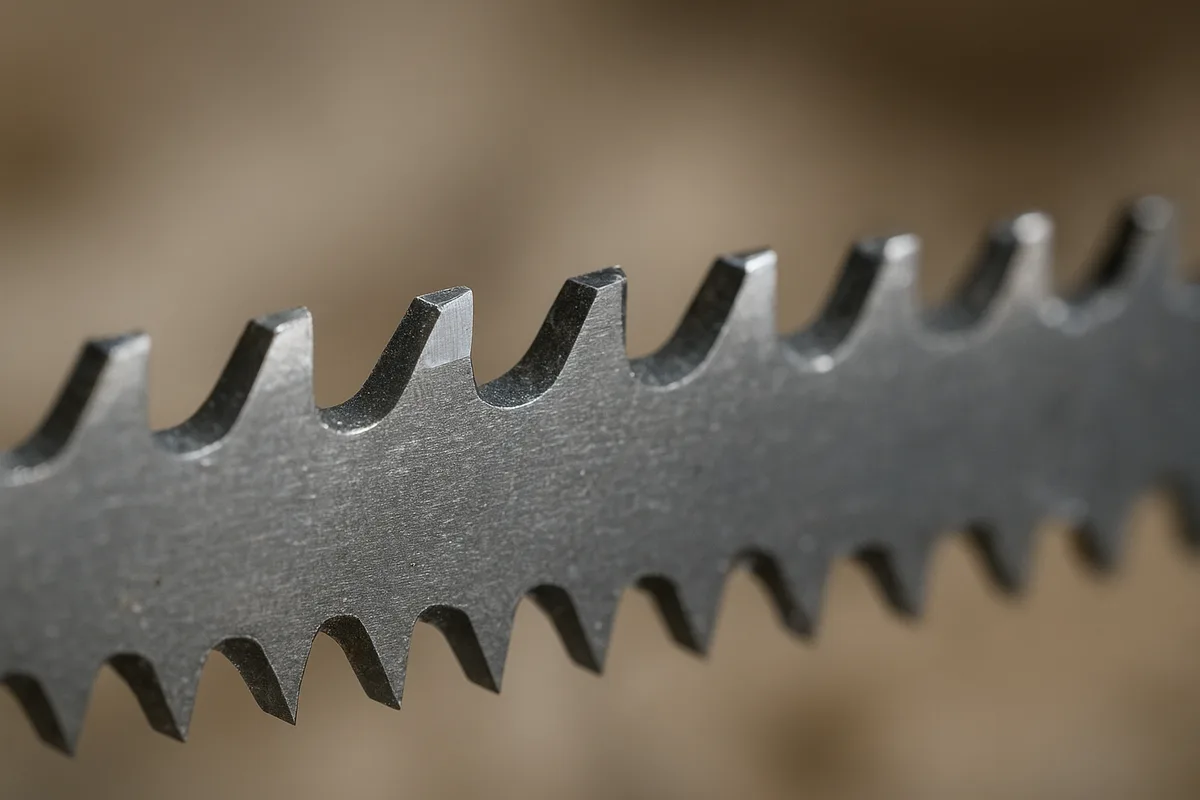
Carbide holds an edge against composite’s abrasive recycled-PVC content longest, which is why both composite-specific picks in this table (Diablo DJT144DHM, Bosch T301CHM1) use it. Bi-metal is the middle ground — flexible enough to survive hitting a hidden screw without snapping, but it dulls faster than carbide on composite. High carbon steel (HCS) is the cheapest and dulls fastest; several composite-decking forum threads specifically warn against using budget HCS blades to save money on an expensive material. Trex takes this seriously enough to co-engineer a blade line with Diablo directly — the TrexBlade series, sold for circular saws rather than jig saws — and names Diablo as the manufacturer it recommends for jigsaw work on composite decking too, per Trex’s own cutting guide.
T-Shank vs. U-Shank Compatibility
Most modern jig saws (Bosch, DeWalt, Makita, Ryobi ONE+) accept T-shank blades, which is why five of the seven picks above are T-shank. The LENOX 1991569 and the 34-piece generic set are U-shank only — check your saw’s blade clamp before buying either — see our guide on changing a jigsaw blade if you’re not sure which type yours takes.
Blade Length & Working Length
A longer working length lets you cut thicker material or make a deeper plunge cut in one pass. The Bosch T301CHM1’s 3-1/2 in. working length is shorter than the Diablo DJT144DHM’s, which matters if you’re cutting through thicker stock like a doubled-up board or a thicker composite profile.
Feed Rate and Orbital Action Settings
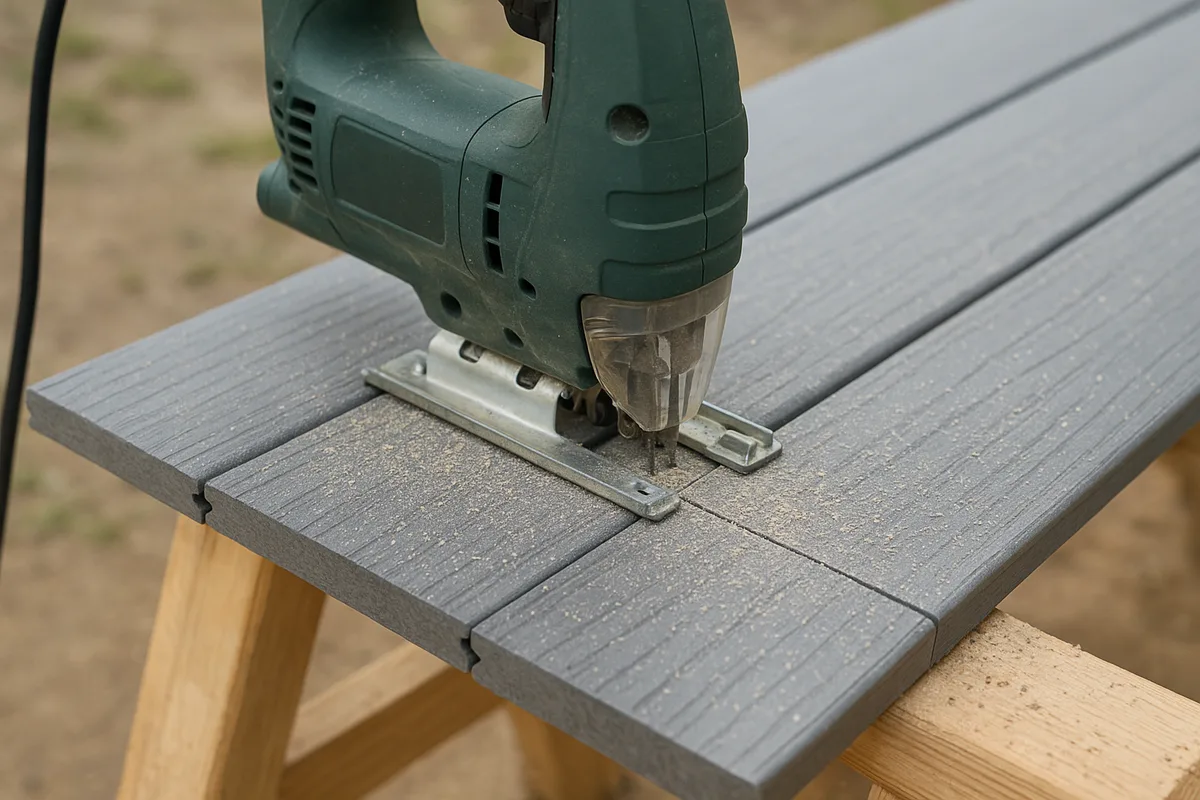
Composite decking cuts cleanest with the jig saw’s orbital action turned down or off entirely and a slower, steadier feed rate than you’d use on solid wood — pushing too fast on composite is what causes the melted, gummed edge the wrong blade (or wrong technique) is known for.
Cutting Through Hidden Fasteners
Composite deck boards ship with metal fastener clips, and repair or retrofit cuts often mean cutting through one. A carbide composite blade will chip instantly on hardened steel — that’s what a bi-metal blade like the Bosch T321AF3 is for.
Melt-Free Coatings and Heat Buildup
Composite’s PVC content melts under friction before it cuts cleanly through. Coatings like Diablo’s Perma-SHIELD reduce that heat buildup; a blade without one can leave a melted, re-welded edge on a hot, fast cut regardless of tooth count.
Price vs. Cost-Per-Cut
As the math above shows, the cheapest blade per unit isn’t necessarily the cheapest blade per cut on abrasive material. Sticker price and real cost diverge once you factor in how fast a given material dulls a given tooth.
Matching the Blade to Your Jig Saw Brand
Universal and T-shank blades fit nearly any saw regardless of brand, but brand-labeled sets like the Ryobi A14AK201 are worth checking for shank compatibility with your specific saw before assuming a name-brand match means a physical fit.
How to Cut Trex Composite Decking With a Jigsaw
Technique matters as much as blade choice. For general guidance on how thick a jigsaw can cut before switching tools, and the steps below specific to composite decking:
- Mark the cut line clearly on the board’s surface — composite doesn’t show pencil as well as solid wood, so a fine-tip marker often works better.
- Support the board fully on both sides of the cut line so it can’t flex or vibrate mid-cut; unsupported composite is more prone to chipping at the exit point than solid wood.
- Install a composite-rated carbide blade (the Diablo DJT144DHM or Bosch T301CHM1 above), not a general wood or HCS blade.
- Turn orbital action down or off and set the jig saw to a moderate, steady speed rather than maximum.
- Let the blade reach full speed before the teeth contact the material — starting the cut at low RPM is a common cause of chipping and melting on composite.
- Feed slowly and steadily along the marked line; forcing the pace is what generates the friction heat that melts a composite edge.
- Pause on long cuts if the blade feels hot to the touch through the material, and clear melted debris from the kerf before continuing.
Frequently Asked Questions
What is the best jigsaw blade for Trex?
The Diablo DJT144DHM 4-inch, 5/7 TPI carbide T-shank blade is the best jigsaw blade for cutting Trex and other composite decking. It’s purpose-built for composite material, with a Perma-SHIELD coating that reduces melting and a manufacturer-claimed 50X longer cutting life than a standard blade on composite.
What TPI is best for cutting Trex with a jigsaw?
Trex’s own cutting guide recommends a higher tooth count for a smoother cut on composite decking, which is the opposite of solid-wood cutting bias toward coarser blades. The Diablo DJT144DHM uses a 5/7 variable-pitch grind tuned specifically for composite; the Bosch T301CHM1 goes finer at 8 TPI for an even smoother edge on visible trim cuts.
Can the Bosch T301CHM1 cut solid surfaces?
Yes. The Bosch T301CHM1 is rated to cut solid-surfacing material from 3/16 in. to 2-1/2 in. thick, and its carbide strip-ground teeth handle composite decking’s similar density and abrasiveness.
Are Diablo blades good for composite decking?
Yes — Diablo blades like the DJT144DHM are engineered specifically for composite decking, and Trex’s own manufacturer cutting guide names Diablo as the brand it partners with on purpose-built composite blades.
What is included in the Diablo DJT20S 20-piece set?
The Diablo DJT20S includes 20 T-shank blades in a mix of bi-metal, high carbon steel and high speed steel, covering wood, metal and plastic cutting. None of the 20 blades are the carbide grind rated for composite decking itself — it’s a support-cuts set for the rest of a deck build.
Are Bosch T5002A blades multi-purpose?
Yes. The Bosch T5002A 10-piece set includes Clean for Wood, Speed for Wood, Basic Scrolling and Basic for Metal blade profiles, covering general wood and metal cutting — but like the Diablo DJT20S, it’s not rated for the composite decking boards themselves.
Can LENOX 1991569 blades cut through screws in composite decking?
Yes. The LENOX 1991569 is a bi-metal, 18 TPI blade rated for nail-embedded wood and similar fastener-heavy cutting, which makes it the right choice for retrofit or repair cuts through a composite board that still has a metal fastener clip or screw in it — a task a carbide composite blade would chip its teeth on.
Is a carbide jigsaw blade worth the extra cost for cutting Trex?
Based on Diablo’s own published longevity claim for the DJT144DHM, yes: the carbide blade works out to roughly $0.19 per equivalent cut versus $0.35 for a basic high-carbon-steel blade replaced repeatedly through the same volume of composite material, despite costing 28 times more per blade up front. That math is built on Diablo’s manufacturer-claimed 50X longevity multiplier, not an independent test, so treat it as a reasonable estimate rather than a guarantee.
Final Thoughts
For the actual composite boards, the Diablo DJT144DHM is the pick — a carbide, 5/7 TPI blade purpose-built for Trex and composite decking, with a cost-per-cut math edge over a standard blade despite costing more per unit up front. Keep a general-purpose set like the Diablo DJT20S on hand for the joists and ledger boards around it, and a bi-metal blade like the Bosch T321AF3 for the moment you hit a hidden fastener. If you’re still working out the rest of the tools a Trex deck build needs or which composite deck screws to pair with these cuts, those are the next two decisions worth getting right. And whichever blade you land on, the technique matters nearly as much as the tooth material: a full-speed start and a slow, steady feed rate will get a cleaner cut out of any blade in this table than rushing a premium one.
Sponsored / affiliate links. As an Amazon Associate I earn from qualifying purchases. I may earn additional commission from eligible campaigns.