Murphy’s Oil Soap Vs Wood Cleaner: Proven Best Choice
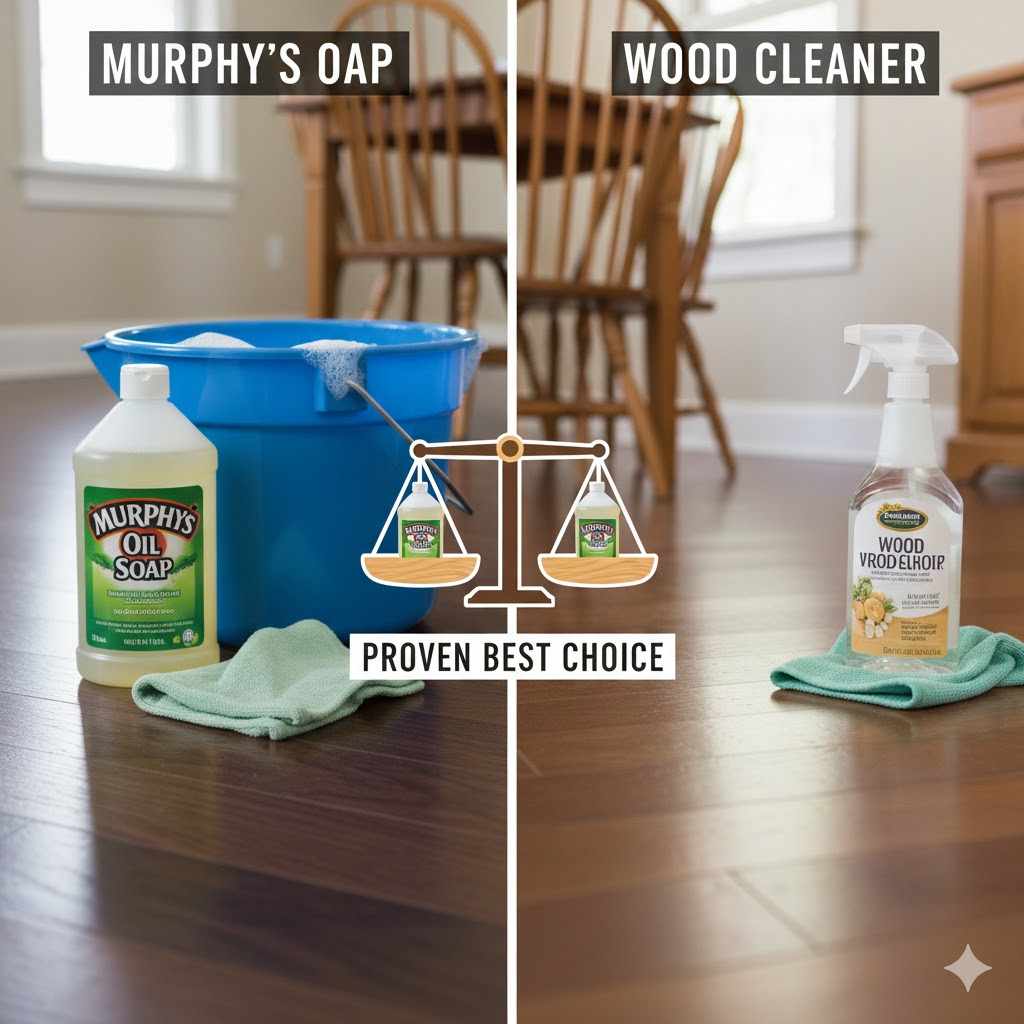
For most modern wood furniture and floors, a pH-neutral wood cleaner is the proven best choice. Murphy’s Oil Soap is an alkaline, all-purpose cleaner that can leave a residue, potentially dulling or damaging sealed wood finishes over time. Reserve it for specific, limited applications and always choose a dedicated wood cleaner for your most prized pieces.
Hello there, fellow wood enthusiasts! Md Meraj here. I’ve spent countless hours in the workshop, and one question I hear all the time is about cleaning wood. You finish a beautiful project, or you want to care for a family heirloom, and you reach for what you know. For many of us, that’s a bottle of Murphy’s Oil Soap. It’s been a household name for generations! But is it really the best choice for your wood?
It’s easy to get confused. The bottle says it’s for wood, right? Well, the truth is a little more complex. Choosing the wrong cleaner can lead to a sticky, dull finish or even long-term damage. Don’t worry, though. Today, we’re going to clear up the confusion. We’ll break down the difference between Murphy’s Oil Soap and a dedicated wood cleaner, so you can clean with confidence. Let’s get started!
What Exactly is Murphy’s Oil Soap?
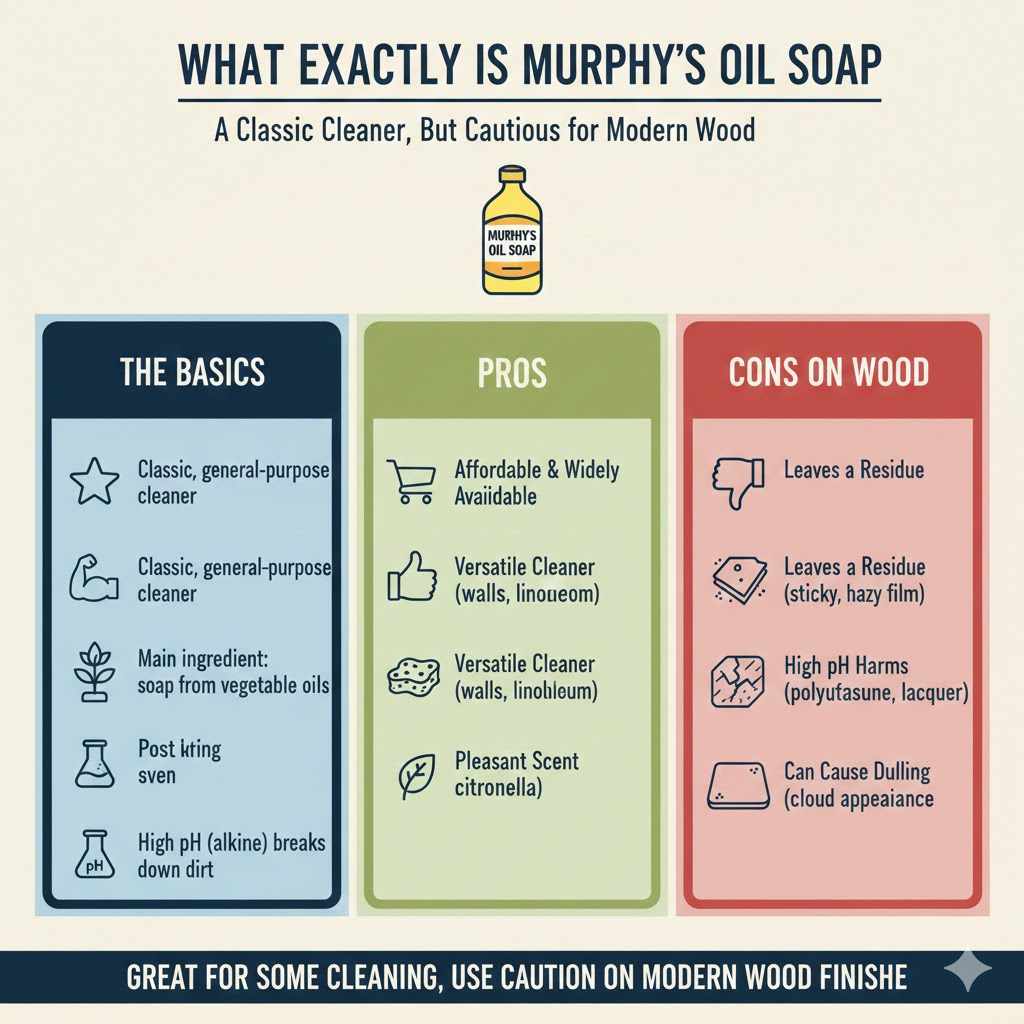
Murphy’s Oil Soap is a classic, general-purpose cleaner that’s been around for over a century. The main ingredient is potassium soap made from vegetable oils, which is why it has “oil soap” in its name. Think of it less as a wood “feeder” and more as a simple, powerful soap.
Its key characteristic is its high pH level, which means it’s an alkaline cleaner. This makes it effective at breaking down dirt and grime on a variety of surfaces. While it can be used on wood, it was not specifically designed for the delicate, modern finishes we see on most furniture and flooring today.
Pros of Using Murphy’s Oil Soap
- Affordable and Widely Available: You can find it in almost any grocery or hardware store at a low price.
- Versatile Cleaner: It can be used on many surfaces, not just wood. Think painted walls, linoleum, and even laundry stains.
- Pleasant Scent: Many people enjoy the classic, clean citronella smell.
Cons of Using Murphy’s Oil Soap on Wood
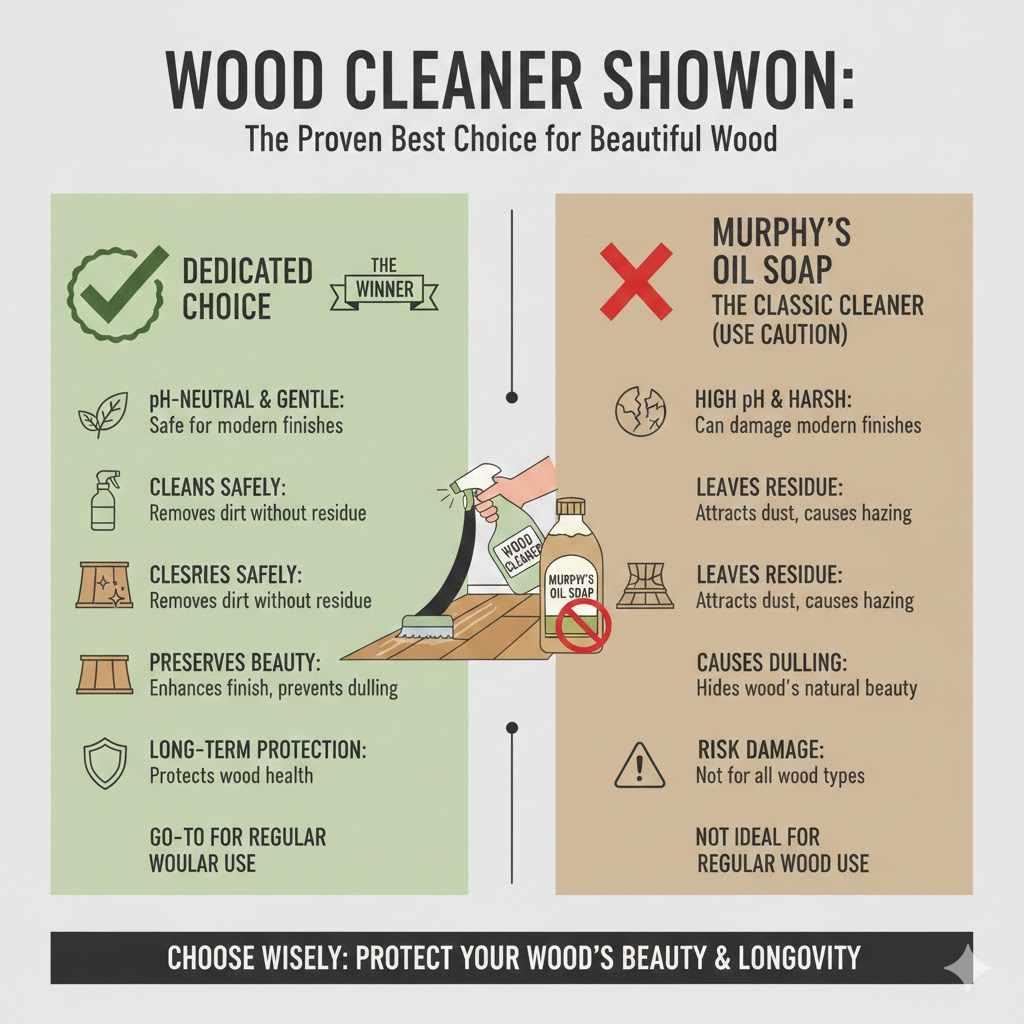
- Leaves a Residue: Because it’s a true soap, it can leave behind a sticky or hazy film if not rinsed thoroughly. This film can attract more dust and dirt.
- High pH Can Harm Finishes: Its alkaline nature (pH around 11) can be harsh on modern wood finishes like polyurethane and lacquer, potentially weakening them over time.
- Can Cause Dulling: The residue buildup is a common cause of a dull, cloudy appearance on wood floors and furniture.
What is a Modern Wood Cleaner?
Modern wood cleaners are a completely different animal. They are specially formulated products created with one job in mind: to safely and effectively clean wood surfaces without damaging their protective finish.
Instead of being soap-based, these cleaners are usually water-based formulas with gentle, pH-neutral detergents. A pH-neutral formula (around 7) is much safer for the vast majority of wood finishes, from polyurethane on your floors to the lacquer on your dining table. According to experts at the Michigan State University Extension, using mild, pH-neutral cleaners is key to preserving wood furniture.
Pros of Using a Modern Wood Cleaner
- pH-Neutral and Safe: It won’t strip or dull common wood finishes. It cleans without attacking the protective layer.
- No Residue: These cleaners are designed to evaporate cleanly, leaving behind nothing but a clean surface. No rinsing is required.
- Effective Cleaning: They are formulated to lift dirt, dust, and grime without harsh chemicals.
Cons of Using a Modern Wood Cleaner
- Less Versatile: It’s specifically for wood. You won’t be using it to mop your kitchen floor (unless it’s wood!).
- Can Be More Expensive: Specialty products often come with a slightly higher price tag than all-purpose cleaners.
Murphy’s Oil Soap Vs Wood Cleaner: A Head-to-Head Comparison
Sometimes, the best way to see the difference is to put them side-by-side. This simple table breaks down the most important features to help you decide.
| Feature | Murphy’s Oil Soap | Dedicated Wood Cleaner |
|---|---|---|
| pH Level | Alkaline (around 11) | Neutral (around 7) |
| Main Ingredient Type | Vegetable Oil Soap | Water-based with mild detergents |
| Residue | Can leave a dulling, sticky residue | Typically leaves no residue |
| Safety on Finishes | Can potentially weaken polyurethane and other modern finishes over time | Safe for most sealed wood finishes like polyurethane, lacquer, and varnish |
| Best For | General, heavy-duty cleaning on durable, non-wood surfaces or well-sealed painted wood | Regular cleaning of finished wood furniture, cabinets, and floors |
| Rinsing Required? | Yes, for best results to avoid residue | No, usually a simple spray-and-wipe formula |
When Should You Use Murphy’s Oil Soap?
So, does this mean you should throw your bottle of Murphy’s away? Not at all! It’s a great cleaner, but it needs to be used for the right jobs. Think of it as a heavy-duty tool, not an everyday duster.
Here are a few situations where Murphy’s Oil Soap can be a good choice, if used correctly:
- Deep Cleaning Very Dirty, Durable Surfaces: For greasy, grimy buildup on things like old painted wood porch swings or heavily sealed outdoor furniture, a diluted Murphy’s solution can work well.
- Cleaning Woodwork Before Painting: Its ability to cut through grease and grime makes it a decent prep cleaner before you scuff-sand and paint trim or doors.
- Non-Wood Surfaces: It works great on linoleum, tile, and for general cleaning tasks around the house.
How to Use Murphy’s Oil Soap Safely on Wood
If you decide to use it, follow these steps to minimize the risks:
- Dilute It Heavily: Never use it straight from the bottle on wood. A good starting point is 1/4 cup of soap in a gallon of warm water.
- Always Test First: Find a hidden spot, like the back of a table leg, and test the solution. Let it dry completely and check for any dullness or stickiness.
- Wipe, Don’t Soak: Use a well-wrung-out cloth. You never want to saturate a wood surface with water.
- Rinse Afterward: Go over the area with a second cloth dampened with plain water to remove any soap residue.
- Dry Thoroughly: Immediately dry the surface with a clean, soft cloth.
When is a Dedicated Wood Cleaner the Proven Best Choice?
For almost all of your regular wood care, a dedicated wood cleaner is the safer, more effective option. Its gentle, residue-free formula is exactly what modern wood finishes need.
You should always reach for a pH-neutral wood cleaner for:
- Fine Wood Furniture: Your dining room table, coffee tables, dressers, and treasured heirlooms deserve a cleaner that won’t harm their finish.
- Kitchen Cabinets: Cabinets get splattered with grease and food. A wood cleaner is designed to cut through that grime without leaving a residue that attracts more dirt.
- Hardwood Floors: Most hardwood floors have a polyurethane or similar finish. Using an alkaline cleaner like Murphy’s is a leading cause of dull, hazy floors. A product specifically made for hardwood floors is a must.
- Any Wood with an Unknown Finish: If you’re not sure what kind of finish is on a piece of wood, play it safe. A pH-neutral cleaner is the least likely to cause damage.
Caring for finishes properly is critical. As the USDA Forest Service points out in its research on wood finishing, the finish is the wood’s primary line of defense against moisture and wear. Using the wrong cleaner can compromise that defense.
The Verdict: Your Go-To Choice for Beautiful Wood
So, after looking at all the evidence, what’s the proven best choice in the Murphy’s Oil Soap vs wood cleaner debate?
For the health and beauty of your wood, a pH-neutral, dedicated wood cleaner is the hands-down winner for regular use. It safely removes everyday dust and grime without the risk of residue buildup or chemical damage to the protective finish.
Think of it like washing your hair. You could use a harsh dish soap—it would certainly get the grease out! But it would also strip your hair of its natural oils and leave it dry and brittle. You use a pH-balanced shampoo because it’s formulated to clean gently and protect. The same logic applies to your wood. Murphy’s is the strong soap; a wood cleaner is the protective shampoo.
By choosing the right tool for the job, you’re not just cleaning your wood—you’re preserving its beauty and strength for years to come. That’s a goal every wood lover can stand behind.
Frequently Asked Questions (FAQ)
1. Can I use Murphy’s Oil Soap on unfinished wood?
It’s not recommended. Unfinished wood is like a sponge. The soap and water will soak deep into the grain, which can raise the grain, cause swelling, and lead to discoloration. It will also be impossible to rinse out the residue, leaving the wood sticky.
2. Is Murphy’s Oil Soap good for kitchen cabinets?
A dedicated wood cabinet cleaner is a much better choice. While Murphy’s can cut grease, its residue can create a sticky film that attracts new grease and dust, making your cabinets look dull and feel tacky over time. A pH-neutral cleaner cleans without this buildup.
3. What’s a good alternative to Murphy’s Oil Soap for wood floors?
Look for a pH-neutral, water-based hardwood floor cleaner from a reputable brand like Bona, Bruce, or Method. These are specifically designed to clean polyurethane-finished floors without leaving a haze or damaging the finish.
4. How often should I clean my wood furniture?
For dusting, a dry microfiber cloth once a week is usually enough. For a deeper clean with a wood cleaner, aim for every few months or as needed when you see grime or fingerprints. Over-cleaning can be just as bad as not cleaning at all.
5. Why does my floor look dull and cloudy after using Murphy’s Oil Soap?
That dull, cloudy, or hazy look is the classic sign of soap residue. Because Murphy’s is a true soap, it can leave a film behind, especially if it wasn’t diluted enough or rinsed thoroughly. This film builds up over time and scatters light, making the finish look dull.
6. Can I mix vinegar with Murphy’s Oil Soap?
No, you should not mix them. Murphy’s is alkaline and vinegar is acidic. Mixing them will cause a chemical reaction that neutralizes both cleaners, making them ineffective. You’ll be left with a cloudy, separated mixture that won’t clean well.
7. Does Murphy’s Oil Soap remove wax or furniture polish?
Its alkaline nature can soften and strip some waxes and polishes, but it’s not a dedicated stripper. If you use it on a waxed piece, it could result in a splotchy, uneven finish. For removing old wax, it’s better to use a product made for that specific task, like mineral spirits.
Your Next Step to Perfectly Clean Wood
I hope this clears up the confusion for you. It’s not about one product being “bad” and the other being “good.” It’s about understanding what they are and using the right tool for the job. That’s the secret to good craftsmanship in everything we do, from building a bookcase to simply caring for it.
For your prized furniture, your beautiful floors, and your hard-working cabinets, make the switch to a pH-neutral wood cleaner. Your wood will thank you with a long-lasting, beautiful shine. Keep that bottle of Murphy’s for the tough, occasional jobs it handles so well. Happy cleaning, and as always, feel free to reach out with any questions!