Remove Acetone from Wood: Fix Finish Damage by Finish Type
Acetone does not stay in wood: it evaporates within minutes, so there is nothing to wash out. The lasting damage is to the finish, which acetone can soften, cloud or strip, especially shellac and lacquer. Blot the spill, wait, identify the finish, then match the repair to it. This guide covers the first minute, a finish-by-finish damage table, and fixes for haze, soft spots and bare wood.
Acetone on Wood: The Finish Is the Problem, Not the Acetone
Best Spot-Repair Clear Coat Pick
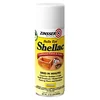 |
Zinsser Bulls Eye Shellac, Clear, 12 oz Spray – $14.98 The patch coat for the repair section below: after you sand a stripped acetone spot, thin sprayed coats of clear shellac rebuild the finish layer. The can’s own label lists touch-ups on floors and furniture among its uses.
|
As an Amazon Associate we earn from qualifying purchases.
Acetone is a very volatile liquid. One safety data sheet lists a boiling point of 133°F (about 56°C), a vapor pressure of 184 mm Hg at 68°F, and a flash point of -4°F, and notes the vapor is heavier than air (acetone SDS, Hubbard-Hall). Put simply, a thin spill leaves the surface fast and the vapor is highly flammable. Popular Woodworking calls acetone the fastest evaporating of the common solvents.
That changes what you should do. Older advice, including an earlier version of this very article, tells you to scrub the spot with dish soap, a baking soda paste or a polish to “remove” the acetone. There is no residue to neutralize, and water is a bad idea on any spot where the finish has been dissolved because it can reach bare wood. What you are actually dealing with is a finish that was briefly turned back into a liquid.
Myth corrected: the smell lingering after a spill is vapor leaving the room, not acetone trapped in the wood. Ventilate and give it time; do not add water, paste or more solvent to chase it.
What to Do in the First Minute
- Open windows and remove ignition sources. Switch off pilot lights, heaters and anything that can spark. The SDS tells you to ventilate and shut down ignition sources during spill cleanup.
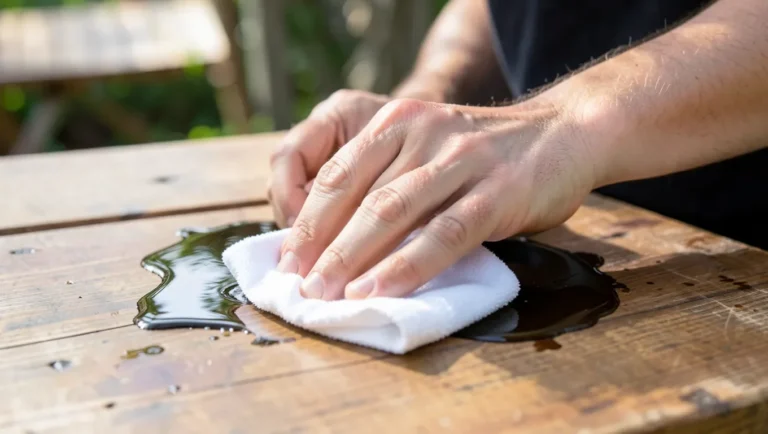
- Blot, do not wipe. Lift the liquid with a dry cloth or paper towel using straight-down pressure. Wiping spreads dissolved finish over a wider area.
- Do not add water, soap or polish. If the finish has been dissolved, moisture can reach the bare wood underneath and make a mark of its own.
- Hands off for a while. A softened finish is fragile. Do not buff, rub or set anything on it until it has fully hardened again.
- Store the used rags safely. Keep acetone-soaked rags in a closed container away from heat until you can dispose of them properly. Institutions treat solvent rags as flammable waste in closed containers (Missouri State EHS); check your local household hazardous waste rules.
Safety: acetone vapor can travel along the floor to an ignition source and flash back, so air movement matters as much as speed. Wear gloves and eye protection if you are cleaning up a large spill, and never use a heat gun or open flame to hurry the drying.
What Acetone Does to Each Finish Type
Acetone dissolves some finishes and barely touches others, so the same spill can leave a dull haze on one table and a melted dent on the next. Popular Woodworking describes acetone as especially effective with shellac and every type of lacquer, which is exactly why those finishes fail first. Here is how the main finish types behave, combining that source with repair guides and the finish-maker behavior covered by Bob Flexner.
| Finish | What acetone does | Repair path |
|---|---|---|
| Shellac | Dissolves very quickly; spot can smear, dull or go bare | Alcohol-based finish: rewet and re-blend, or sand and recoat with shellac |
| Lacquer | Softens or melts; white haze (blush) and tacky patches | Re-blend with lacquer retarder or thinner on a dry day, or abrade and recoat |
| Oil-based varnish / polyurethane (cured) | Resists better, but a soaked spot can go tacky or dull | Wait for it to harden, then polish or abrade; solvents do not redissolve it |
| Water-based finish | Some water-based finishes react or coagulate with acetone; test first | Fix by abrading and recoating with a compatible water-based product |
| Two-part polyurethane, conversion varnish, UV-cured | Most resistant; usually unharmed by a quick spill | Blot and inspect; often no repair needed |
| Raw, unfinished wood | Nothing to dissolve; may dry out fibers and slightly raise the grain | Let it dry, then sand lightly with the grain and finish normally |
Not sure which row your table falls into? The three-solvent test in our guide to telling what finish is on wood furniture takes a few minutes on a hidden spot, and it tells you whether to reach for alcohol, retarder or sandpaper. The rows for cured varnish and polyurethane are cautious on purpose: how badly they dull depends on the product and how long the liquid sat, which is why a hidden-spot test beats any chart.
Data point: Popular Woodworking lists conversion varnish, two-part polyurethane, UV-cured finish and epoxy resin as solvent-resistant, and warns that some water-based finishes coagulate when acetone is added.
Is It Actually Damaged? Check After It Dries
Do not judge the spot at minute five. A dissolved finish can re-harden and look fine, or look much worse, once the last solvent leaves. Flexner notes that waiting overnight lets remaining solvent pack the finish molecules back down as moisture escapes. Inspect in raking light after the spot has sat undisturbed, then sort it into one of three groups:
- Dull or white haze, surface still hard: the top of the film is clouded but intact. This is the easiest fix.
- Tacky, soft or dented: the film melted and has not recovered. Leave it alone until it hardens before you sand.
- Bare, pale or rough ring: the finish is gone and the wood is exposed. This needs sanding and a new coat.
How to Fix White Haze After an Acetone Spill
A cloudy spot means the film is intact but its surface has been disturbed. According to Flexner on white marks, the remedies depend on the finish: abrasion removes the damaged surface layer, solvents redissolve the finish so it can level, and waiting lets it settle.
- Shellac: on a dry day, a light pass of denatured alcohol can redissolve the surface so the haze clears. Use very little: too much alcohol softens the finish and smears it.
- Lacquer: lacquer retarder (a slow-evaporating thinner) can redissolve the surface so trapped moisture escapes. Fine steel wool is the non-solvent option.
- Varnish or polyurethane: abrasion is the main option, since these do not redissolve in solvents. Use very fine abrasive and stop as soon as the haze is gone.
- Mild cloudiness on any finish: repair guides suggest mineral oil, petroleum jelly or a fine rubbing compound, polished gently, to blend the clouded spot into the surrounding sheen.
Alcohol, retarder and thinner are solvents too, so the ventilation and ignition rules from the first minute apply again. If the haze looks more like a ring left by a wet glass, our guide to removing water marks from wood furniture covers that different problem.
How to Fix a Soft, Sticky or Stripped Spot
- Wait until it is hard. Sanding a tacky finish just gums up the paper.
- Sand the damaged patch smooth with 400 to 600 grit paper, working with the grain and feathering the edges into the good finish.
- Fix the color if bare wood shows. A stain marker or gel stain applied in thin layers evens out a pale patch.
- Apply a thin, compatible clear coat. Repair guides name shellac or lacquer as the usual choices. Spray two or three light coats instead of one heavy one, and feather the edge. This is where a can of clear shellac spray earns its place.
- Let it cure, then blend. Buff the patch lightly so its sheen matches the rest of the surface.
Masking the area around the patch and spraying with the window open keeps overspray off the good finish. If the whole top is tired rather than one spot, a full refinish is a better path: our walkthrough on how to remove finish from wood compares stripping, sanding and heat, and repairing furniture finish covers scratches and cloudy haze beyond solvent damage.
Acetone on Raw or Unfinished Wood
Unfinished wood has no film to dissolve, so acetone mostly evaporates and leaves the wood alone. The one visible effect repair guides mention is a slightly dried, raised grain. Let the spot dry completely, sand lightly with the grain using fine paper, and finish it like the rest of the piece. If a stain or dye sat in the same spot, test any lightening step on scrap first, because you cannot undo it.
Nail Polish Remover and Other Look-Alikes
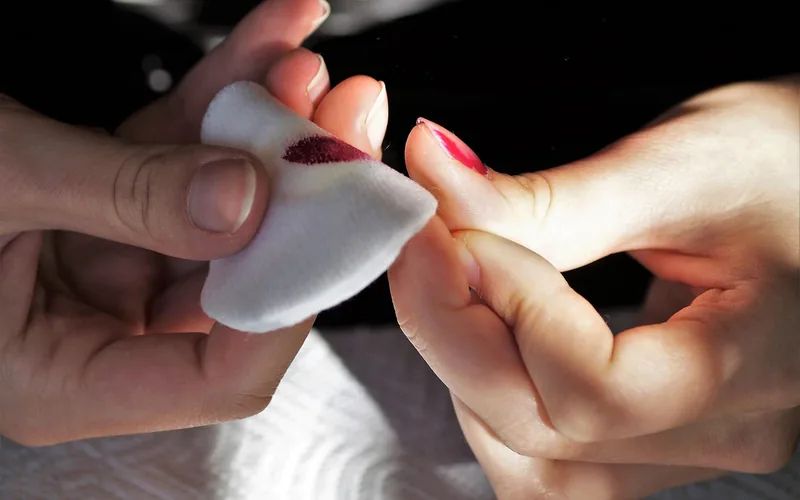
Many nail polish removers are acetone-based, but not all, and the label is the only reliable way to tell. Treat any nail polish remover spill like an acetone spill: blot, ventilate, wait and inspect. Two warnings apply when you are removing dried nail polish from a table. First, the old advice to dab it with rubbing alcohol is risky on a shellac finish, because alcohol dissolves shellac (see our finish identification guide). Second, a solvent that is gentle on one finish can cut straight through another, so test before you commit.
Do not confuse an acetone spill with chemical stripper residue. Stripper leaves a waxy or gummy film that needs its own cleanup, covered in cleaning off Citristrip residue. And if you are thinking of using acetone on purpose, read whether acetone is safe to use on brushes first, since the same flammability limits apply.
How to Prevent the Next Spill
- Work over a tray, a sheet of foil or a glass top instead of directly on a finished surface.
- Cap the bottle after every use and pour away from the table edge.
- Keep solvent bottles on a shelf, not on the piece you are working on.
- Wipe drips immediately; a spill caught in seconds does far less damage.
For routine upkeep of finished pieces, the wood care and protection guide covers cleaning, repair and everyday protection.
Frequently Asked Questions
Does acetone ruin wood?
Acetone does not ruin raw wood; it evaporates and may leave the grain slightly raised. The risk is to the finish. On shellac and lacquer it can dissolve the surface fast, while two-part polyurethane and UV-cured finishes usually survive a quick spill. Blot immediately and inspect once the spot dries.
How long does acetone take to evaporate from wood?
A thin spill usually evaporates within minutes because acetone is the fastest evaporating of the common solvents. We have no sourced figure for a specific time, and a pool sitting in a groove or joint takes longer. The finish may need hours or overnight to harden again before you judge the damage.
Should I use soap, water or baking soda on an acetone spill?
No. Acetone leaves no residue for soap or baking soda to neutralize, and water can reach bare wood where the finish has dissolved. Blot with a dry cloth, let the spot dry and then fix the finish according to its type.
How do you fix a white spot left by acetone?
Identify the finish first. Redissolve shellac with a light touch of denatured alcohol, re-blend lacquer with retarder, and abrade varnish or polyurethane lightly. For mild cloudiness, mineral oil or fine rubbing compound polished in gently can blend the spot into the surrounding sheen.
Is acetone dangerous to use around wood furniture?
It is highly flammable, with a flash point of -4°F on the SDS we reviewed, and its vapor settles low and can reach distant ignition sources. Ventilate, remove flames and sparks, keep rags in a closed container and never use heat to speed drying.
Bottom Line
Treat an acetone spill as a finish problem. Blot, ventilate, let the spot harden, identify the finish, then pick the lightest fix that works: re-blend a haze, or sand and recoat a stripped patch. Avoid the soap-and-baking-soda routine, because it solves a problem acetone does not create.
Sponsored / affiliate links. As an Amazon Associate I earn from qualifying purchases. I may earn additional commission from eligible campaigns.