Painting a Tree Stump to Stop Regrowth: What Actually Works
Painting a tree stump with ordinary paint will not stop it from sprouting. Paint seals the top of the wood but does nothing to the living roots below. What does work, according to university extension guidance, is a cut-stump herbicide applied to the living outer ring of the stump right after the tree is cut. This guide explains what to use, how fast you need to move, how to stay safe, and where common shortcuts like Epsom salt fall short.
Does Painting a Tree Stump Stop It from Growing?
Best Brush-On Stump Pick
|
Fertilome Brush Killer & Stump Killer, 32 oz
|
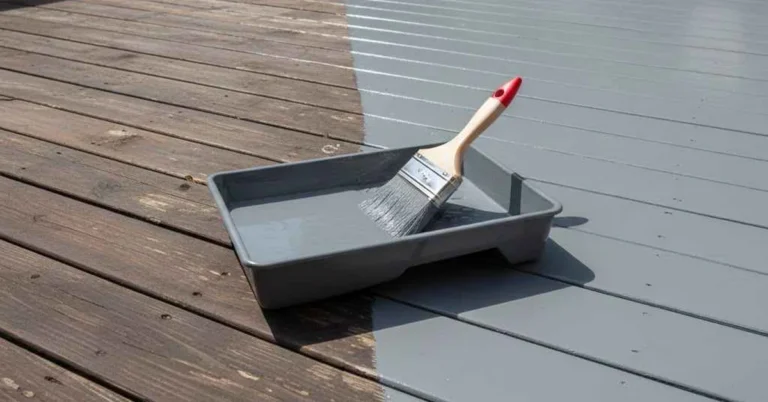
Not with ordinary paint. Sprouts come from living tissue in the stump and roots. A coat of house paint, varnish, or deck stain protects the cut surface from weather but contains nothing that kills that tissue. The only products that stop regrowth are herbicides labeled for cut-stump use, brushed on like paint. Regular paint belongs at the end of the job, as decoration, once the stump is dead.
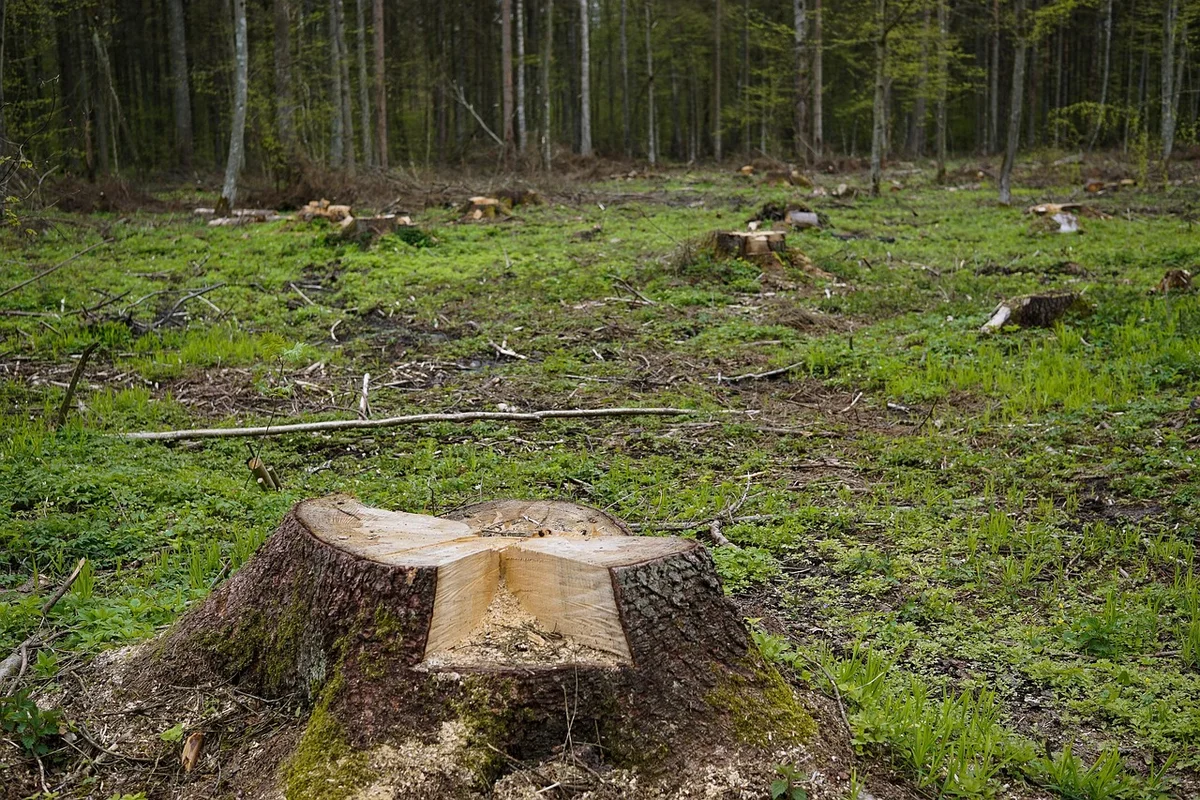
University of Florida extension guidance on woody plant control explains why the application site matters: in larger stems the only living tissue is around the outer edge, so the herbicide needs to wet that outer ring rather than the dead center. UC Integrated Pest Management says the same for large stumps, where it is only necessary to wet the cambium, the outer ring of wood next to and including the bark.
What Works and What Does Not: Stump Treatments Compared
This table summarizes how each common approach holds up against what the extension sources say. Treat it as a starting point and always read the label on whatever product you buy.
| Approach | Stops sprouting? | What the sources say |
|---|---|---|
| Glyphosate cut-stump treatment | Yes, if applied fresh | UF/IFAS lists glyphosate at 50-100% for cut stumps and says it is not effective on stumps that have started to dry |
| Triclopyr cut-stump treatment | Yes | UC IPM and UF/IFAS describe a 25% triclopyr solution; the ester form can go on in basal oil if the surface has dried |
| Exterior paint, stain, varnish | No | No herbicide in it, so living roots are untouched |
| Epsom salt | Not supported | An Ask Extension expert could not recommend it for lack of credible research |
| Pruning paint or wound sealant | No | Made for wounds on living trees, not stumps |
| Tarp or light blocking | Partial at best | Extension answers describe it as possibly partially effective |
| Cutting sprouts as they appear | Slowly exhausts the root | Extension suggests this plus waiting; dead roots rot over time |
The Timing Problem Most Guides Skip
Every source agrees on one thing: speed matters. They differ on how much time you really have, and that gap is useful to know.
- UC IPM: apply the herbicide immediately after cutting.
- UF/IFAS: apply as quickly as possible after sawdust is removed. If applied immediately, an herbicide and water solution is sufficient. Once the cut surface has begun to dry, an herbicide and basal oil mixture is needed instead, and glyphosate does not mix with basal oil.
- The product we picked: its Amazon listing states to apply within 45 minutes of cutting.
The practical takeaway: the label of your specific product overrides everything else, but a “within minutes” mindset is the safest. Open the container, set up the brush, and plan to clear sawdust right at the final cut, not an hour later.
How to Treat a Stump So It Does Not Resprout
Step 1: Cut low and clear the sawdust
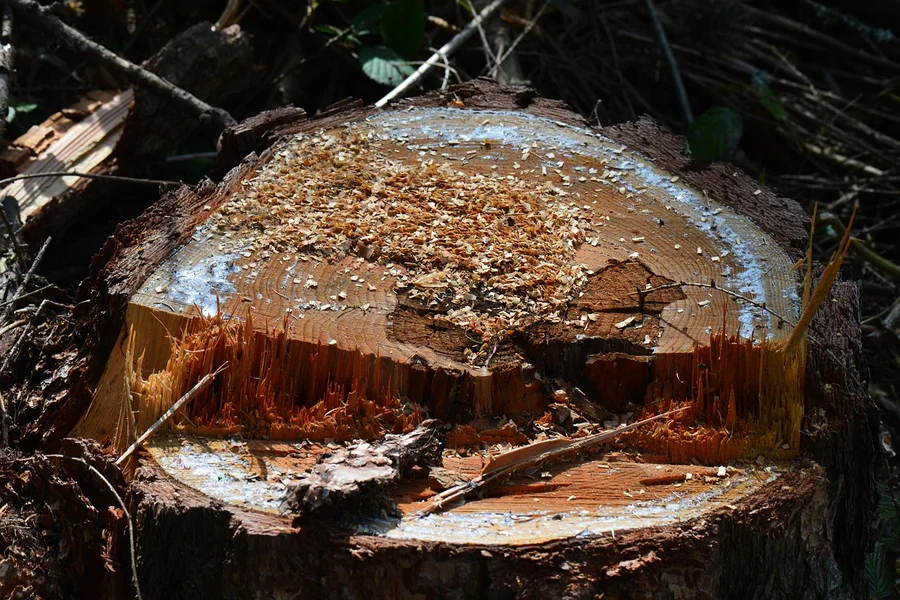
Cut the stump close to the soil with a flat surface, then brush off loose sawdust so the herbicide reaches live wood. Wear eye protection and chaps for the saw work. If you are choosing a saw for this, see our guide to battery chainsaws.
Step 2: Brush on the herbicide right away
Use a disposable foam or paint brush to coat the outer ring of living wood, working to the bark edge. On a large stump the dead center does not need coverage. For ready-to-use products like the one in our pick box, follow the label directions; for concentrates, the label tells you whether to dilute and by how much. UC IPM, for example, cites 25% triclopyr or 50% glyphosate solutions made from high-concentrate products, but consumer products vary, so use the label on yours.
Step 3: Keep the area undisturbed and dry
Rain right after application can wash product off the surface before it is absorbed, so pick a dry stretch. Keep pets and children away until the label says the area is safe and the product is dry.
Step 4: Watch for sprouts and re-treat
Some species send up suckers from roots. If green shoots appear, cut them back and spot-treat the fresh cuts according to the label. UC IPM notes cut-stump treatments are most effective during periods of active growth, so a stump cut in deep winter may need closer watching in spring.
Step 5: Paint it only when it is dead
Once you are sure the stump is no longer sprouting and the product has fully dried, you can finish it as a garden planter base or seat. Use exterior primer and paint; our guide to painting outdoor wood covers prep that applies here too.
Pruning Paint Is a Different Product
Pruning paint or tree wound dressing is meant for pruning cuts on living trees, so it has no effect on a stump. Extension sources also say it generally should not be used at all: Iowa State University states that a pruning paint or wound dressing does not prevent wood decay and may interfere with natural wound responses of the tree. The one exception it gives is oak wilt: if oaks must be pruned in the growing season, paint the cuts with latex house paint within 15 minutes. An earlier version of this page said sealants are recommended for elm as well; these sources do not support that, so it has been removed.
Safety, Pets, and Runoff
- Read the whole label first. It is the legal instruction for the product and lists protective equipment, re-entry guidance, and where it can and cannot be used.
- Wear gloves and eye protection as the label directs. Use a disposable brush so no residue goes into household sinks.
- Keep pets and children out of the area until the product is dry and the label says it is safe. Store leftover product sealed and out of reach.
- Protect desirable plants. UC IPM advises keeping the material from contacting desirable plants. Roots can connect to neighboring trees of the same species, so ask a local arborist if the stump is near a tree you want to keep.
- Think about water. Do not apply near wells, ponds, streams, or storm drains unless the label allows it, and never pour leftovers on the ground or down a drain.
- Do not improvise mixes. Do not add bleach, salt, or other chemicals to a herbicide product.
If your stump is close to a property line, a water source, or a valuable tree, call a licensed arborist or your local extension office rather than guessing.
Common Myths: Epsom Salt, Bleach, and Rock Salt
Epsom salt is the most repeated home remedy. An expert answering on Ask Extension said she cannot recommend it because there is no credible research behind it, adding that Epsom salt is magnesium sulfate (a fertilizer ingredient) and that dissolved material stops moving through a plant shortly after the leafy top is removed. Bleach is not a systemic herbicide, and rock salt can damage surrounding soil and nearby plants. If you want a no-chemical route, the same expert suggested removing shoots as they emerge and letting the roots slowly die and rot.
If you are trying to kill a living tree rather than treat a stump, see our guides on killing an oak tree and killing a maple tree.
FAQ: Painting Tree Stumps to Stop Growth
Does painting a tree stump with regular paint stop it from growing back?
No. Regular exterior paint, stain, or varnish contains no herbicide, so it does not affect the living roots. Use a cut-stump herbicide per its label, and paint only for decoration afterward.
How soon after cutting do I need to apply stump killer?
As soon as possible. Extension guidance says immediately, and the product we picked states within 45 minutes on its listing. Once the surface has dried, glyphosate loses effectiveness and a different product or oil carrier may be required, so follow the label.
Does Epsom salt kill a tree stump?
It is not supported by research. An Ask Extension expert could not recommend it, noting that Epsom salt is a magnesium sulfate fertilizer ingredient and may not reach the roots.
What if sprouts are already coming up from my stump?
Cut the sprouts back to the stump and treat the fresh cuts with a labeled product, or keep cutting them as they emerge. Extension advice is that roots without leaves eventually die and rot.
Is stump killer safe for pets and kids?
Not until the product has dried and the label says it is safe. Keep pets and children away from the area, follow all label directions, and store the product out of reach.
Can I use pruning paint on a stump?
No. Pruning paint is for wounds on living trees and has no herbicide. Extension sources generally advise against it, except latex paint on oak cuts made during the growing season to reduce oak wilt risk.
Sources and Review Note
- UC Statewide IPM Program: Woody Weed Invaders (cut-stump treatment)
- UF/IFAS Extension AG245: Herbicide Application Techniques for Woody Plant Control
- Iowa State University Extension: painting pruning wounds
- Ask Extension: Epsom salts on felled tree roots
This page is general information, not a substitute for the product label or local advice. Rules for herbicide use vary by state and product.
Conclusion: Paint will not stop a stump from sprouting; a labeled cut-stump herbicide applied fast to the living outer ring will. Have the product ready before the last cut, follow the label for safety, and paint only after the stump is dead.
Sponsored / affiliate links. As an Amazon Associate I earn from qualifying purchases. I may earn additional commission from eligible campaigns.