Best Tung Oil for Furniture (2026): Based on Specs and Reviews
For wood furniture, polymerized tung oil is the best tung oil for the fastest cure and the lowest failure risk; choose pure tung oil only for small projects where you can wait days between coats. A poor match can leave sticky surfaces, weak protection, and delays that stretch a simple finishing job into weeks. This guide compares tung oil choices by furniture type, cure time, protection level, and where failure risk is highest.
Quick comparison
| Product | Badge | Best for | Price | ||
|---|---|---|---|---|---|
 |
Hope’s 100% Pure Tung Oil, Food Safe Wood Finish, 16 Fl OzHOPE’S | Our pick | 16 Fl Oz · pure tung oil · food safe | $17.99
Price as of 25 Oct 2026
|
View |
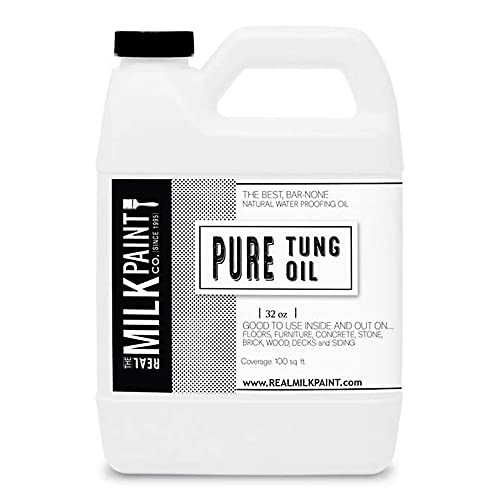 |
Real Milk Paint, Pure Tung Oil for Wood Finishing, CuttingReal Milk Paint | Also great | 32 oz · pure tung oil · food grade | $42.95
Price as of 25 Oct 2026
|
View |
 |
8oz 100% Pure Tung Oil for Wood, Food-Safe Waterproof TungGodora | Budget pick | 8oz · pure tung oil · low odor | $9.99
Price as of 25 Oct 2026
|
View |
 |
Ecoxall Pure Tung Oil – 32 Fl Oz – 1 Quart – 100% Pure TungEcoxall | Pair with it | 32 Fl Oz · pure tung oil · furniture polish | $35.99
Price as of 25 Oct 2026
|
View |
 |
OLASIR 1 Gallon 100% Natural Pure Tung Oil for WoodOLASIR | Upgrade pick | 1 Gallon · pure tung oil · food grade | $54.14
Price as of 25 Oct 2026
|
View |
The main split is simple: pure tung oil gives the most natural look but cures slowly, while blends and polymerized formulas are easier to live with on furniture that gets handled often. Use the least complicated finish that still fits the wear, the climate, and your deadline.
| Formula | Drying and cure | Protection level | Best furniture use |
|---|---|---|---|
| 100% pure tung oil | 24–48 hours per coat; full cure can take 7 to 14 days, and some products need several days between coats | Low to moderate; penetrating oil finish, not a surface film | Heirloom furniture, display pieces, walnut, cherry, maple |
| Tung oil finish | Varies by formulation | Varies; often a wipe-on finish with mixed protection | Fast refresh jobs where label details are verified first |
| Polymerized tung oil | Faster than pure tung oil; often better for high-use surfaces | Moderate to higher water resistance | Tabletops, chairs, frequent-handling furniture |
| Oil-varnish blend | Faster drying than pure tung oil | Higher surface protection than pure oil | Beginners, busy furniture, harder-working indoor pieces |
How we chose
Choice here depends on furniture use, not brand name. The strongest filter is whether the finish can handle the wear pattern without turning sticky, blotchy, or too slow for the schedule.
We compared cure window, likely failure mode, coverage expectations, and how much protection each formula can realistically add on furniture surfaces. That matters more than bottle size alone.
Coverage also affects cost per usable coat. A larger bottle can still be the wrong buy if the project only needs a few small, thin coats and the finish has a short shelf life once opened.
100% pure tung oil: best for indoor heirlooms
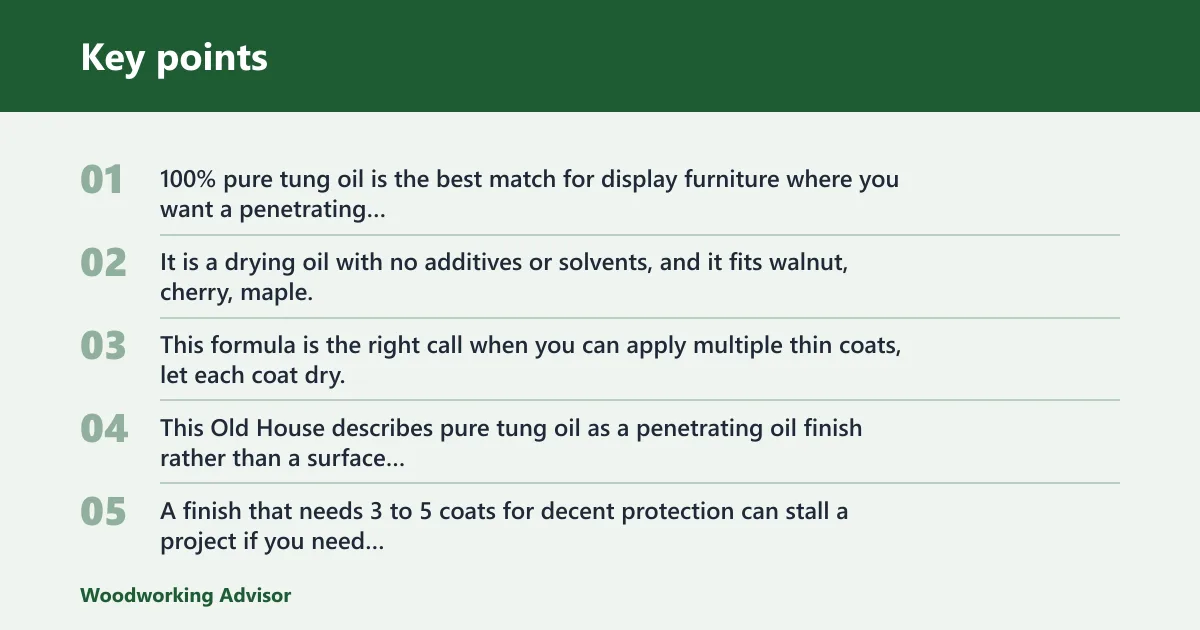

100% pure tung oil is the best match for display furniture where you want a penetrating finish, a warm look, and time to wait out a slow cure. It is a drying oil with no additives or solvents, and it fits walnut, cherry, maple, and similar hardwoods better than rushed projects or damp rooms.
This formula is the right call when you can apply multiple thin coats, let each coat dry, and accept that a full finish can take 7 to 14 days, with some products taking several days between coats. This Old House describes pure tung oil as a penetrating oil finish rather than a surface film, which is why the protection stays modest.
Its main drawback is pace. A finish that needs 3 to 5 coats for decent protection can stall a project if you need furniture back in service fast.
Say your maple side table has a dry, sanded top and you want a low-sheen hand-rubbed look. Pure tung oil can fit that job if you can keep dust off the surface and wait for each coat to dry before the next one goes on.
Tung oil finish: best for fast furniture refresh
Tung oil finish is the hardest label to read because it can mean pure oil or a blended wipe-on product. That means the name alone does not tell you cure time, protection level, or whether the bottle contains tung oil plus resin and solvent.
For furniture buyers, that label can be useful only if the ingredient list is clear. If the product dries much faster than pure tung oil, it is likely not the same material, and the handling window will be different.
This type works best for quick refreshes on indoor furniture where a wipe-on finish is more important than long-term repairability. The drawback is uncertainty: without clear formulation details, you can end up with a finish that behaves very differently from what the name suggests.
A common first-timer mistake is buying a “tung oil finish” for an antique chair and assuming it will behave like pure tung oil. If the formula includes resin and solvent, the dry time and final surface feel can change a lot.
Polymerized tung oil: best for high-use tabletops
Polymerized tung oil is heat-processed tung oil, and that processing changes how fast it cures and how it performs on handled surfaces. For chairs, tabletops, and other frequent-touch furniture, it offers a better mix of speed and water resistance than pure tung oil. (Wikipedia)
This is the strongest all-around choice when you want tung oil’s look but cannot accept the slowest cure. It usually gives you a tougher finish than straight pure oil without jumping all the way to a film finish.
The drawback is cost and label confusion. Some products are marketed as tung oil, but the cure behavior depends on whether they are truly polymerized and how much other material is in the can.
Picture a dining table that needs to return to daily use soon. Polymerized tung oil makes more sense than pure tung oil because the finish has less risk of staying tacky under normal handling.
Oil-varnish blend: best for beginners
An oil-varnish blend contains tung oil plus resin and solvent, and it dries faster than pure tung oil. It also adds more surface protection than pure oil, which makes it a safer choice for a first furniture project where forgiveness matters more than strict authenticity.
This type is a good fit for indoor furniture that gets regular handling, especially if you want easier application and less waiting. It is also the better call when pure tung oil’s slow cure would create dust issues or a long open project window.
The drawback is that it is no longer a pure penetrating oil. If you want the cleanest tung oil-only result, this is the wrong product class.
Tung oil furniture decision table
| Project type | Indoor or outdoor exposure | Pure vs blended formula | Expected coats | Typical cure window | Likely failure mode | Fit verdict |
|---|---|---|---|---|---|---|
| Walnut display cabinet | Indoor | Pure tung oil | 3 to 5 | 7 to 14 days full cure | Slow finish, dusty surface, uneven sheen | Good fit |
| Cherry side table | Indoor | Polymerized tung oil | 2 to 4 | Faster than pure oil; depends on product | Over-application, tacky spots if excess is left on | Good fit |
| Pine bench | Indoor | Oil-varnish blend | 2 to 3 | Varies by formula | Blotching from softwood absorption | Fair fit |
| Poplar chair | Indoor | Polymerized tung oil or blend | 2 to 4 | Varies by formula | Wear-through on high-contact edges | Good fit |
| Outdoor patio table | Outdoor | Blended formula only, if used at all | Depends on product | Depends on product | UV weathering, water spotting, frequent maintenance | Poor fit for long-term exposure |
| Cutting board | Food-contact after full cure | Pure tung oil only, with product-specific confirmation | Multiple thin coats | Full cure before use | Premature use before cure completion | Conditional fit |
Is tung oil good for exterior wood?
Tung oil can be used outdoors, but it is not the best answer for exposed furniture that takes strong sun and weather. UV exposure and repeated moisture cycles are the usual failure points, and pure tung oil is especially likely to need frequent maintenance.
For a covered porch stool or a sheltered bench, a tung oil product may be workable if you accept upkeep. For direct-sun patio furniture, the better choice is usually a finish designed for exterior weathering rather than a simple penetrating oil.
Outdoor tables and chairs fail when the finish cannot resist UV damage, chalking, or water intrusion at edges and fasteners. Tung oil is therefore a poor fit for time-sensitive exterior work.
Do not use tung oil if the piece lives in a humid space, sits in high-UV exposure, or must be ready for use right away. Those are the projects most likely to expose tung oil’s slow cure and limited weather resistance.
Which one should you buy?
Choose by the job, not the label. If you want the lowest risk on furniture that gets handled often, polymerized tung oil is the strongest starting point. If you want a slower, more traditional finish on an indoor heirloom, pure tung oil still has a place.
Buy pure tung oil when the surface is small, the wood is dry, and you can wait for multiple thin coats to cure. Buy a blended formula when you need faster handling, better surface protection, or a simpler first project.
For food-contact pieces, such as cutting boards, butcher blocks, and utensils, cured tung oil is not automatically appropriate just because the bottle says food-safe. Use only a product that is specifically labeled and intended for that context, and wait for full cure before service.
Cost per usable coat matters more than bottle price. A 16 fl oz bottle can be enough for small furniture parts, while a 32 oz size may fit a table or multiple chairs better; a gallon makes sense only when you have larger projects or several pieces to finish. One source lists a 32 oz bottle as a top pick, while another notes that a gallon suits larger wood projects.
If you are choosing between a small bottle and a larger container, estimate the number of thin coats first. A finish that needs 3 to 5 coats can make a cheap bottle expensive if it does not cover the whole project without forcing a second purchase.
How to apply tung oil to furniture
Use thin wipe-on coats, then buff off excess before it can pool. The surface should be clean, dry, and free of dust. Light sanding between coats helps even out raised grain and improves the look on hardwoods and softwoods alike.
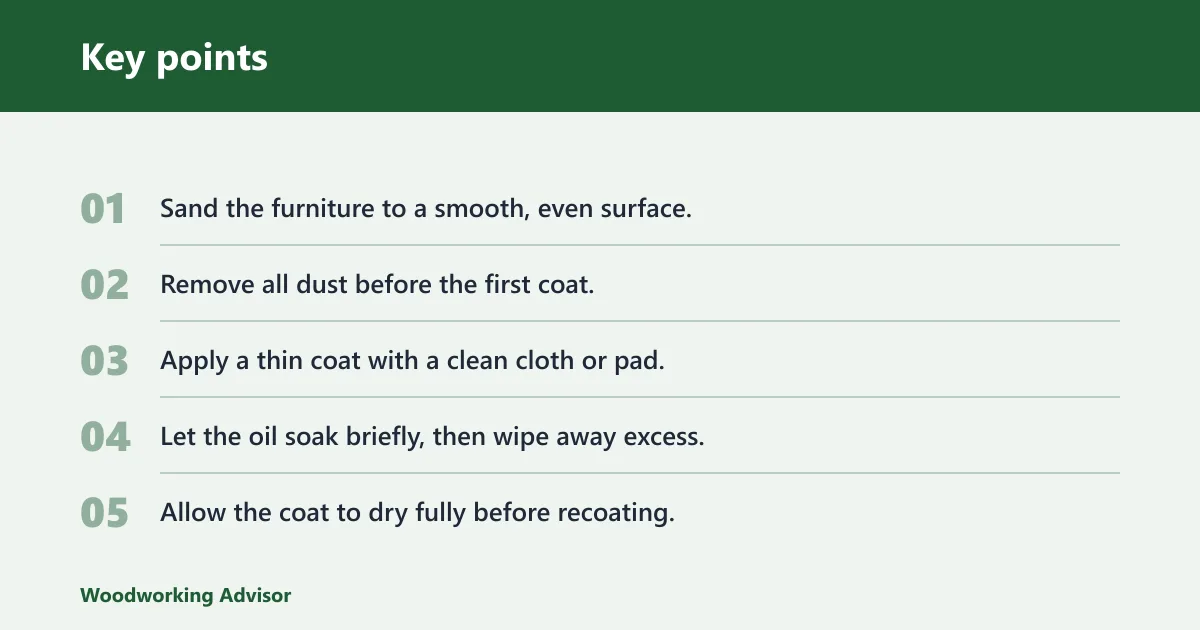
- Sand the furniture to a smooth, even surface.
- Remove all dust before the first coat.
- Apply a thin coat with a clean cloth or pad.
- Let the oil soak briefly, then wipe away excess.
- Allow the coat to dry fully before recoating.
- Lightly sand between coats if the surface feels rough.
- Dispose of oily rags safely in a sealed metal container or a water-filled disposal method approved for oily waste.
Ventilation matters during application and cure. Oil-soaked rags can self-heat, so do not leave them crumpled in a pile or hanging loose in a warm shop corner.
How to remove tung oil from wood
Removing failed tung oil is usually a sanding and solvent-wipe job, not a quick cleanup. If the surface is sticky from excess finish, start by wiping it with a clean cloth, then move to careful abrasion once the coating has had time to harden.
For uneven absorption, level the surface before adding more finish. On softwoods such as pine and poplar, blotching often comes from the wood itself, so you may need to strip back and restart rather than keep adding coats.
If the finish never fully cured, the problem is usually excess material or poor drying conditions. A failed coat should be removed before a new system goes on top, or the new finish can inherit the same tacky spots.
Say your chair seat still feels gummy a week later. That usually means too much oil stayed on the surface, so the fix is removal and a thinner recoat schedule, not simply adding another thick coat.
Frequently asked questions
Is tung oil good for wood?
Yes, tung oil is a good choice for wood when you want a penetrating finish and a hand-rubbed look. It works best on furniture where you can accept multiple coats and a slow cure. It is less suitable when you need heavy surface protection or quick return to service.
How do you use tung oil on furniture?
Apply it in very thin coats, let each coat dry, and wipe away all excess. Light sanding between coats helps keep the finish even. Keep the area ventilated and handle oily rags safely, because leftover finish on cloth can heat up.
Tung oil vs mineral oil for wood?
Mineral oil does not cure; it stays in the wood and needs frequent reapplication. Tung oil is a drying oil that hardens as it cures, so it gives more lasting protection. For furniture, tung oil is usually the stronger finish. For some food-contact items, mineral oil is chosen for simplicity, not durability.
How do you apply tung oil on wood?
Use a lint-free cloth or pad, spread a thin coat, and do not leave puddles behind. After a short soak, buff off the excess so the finish dries evenly. Repeat until you reach the protection level the piece needs.
How do you remove tung oil from wood?
If the finish is still sticky, wipe away as much as possible and let the surface harden longer before sanding. For a failed finish, sanding or stripping is usually needed before you start over. Do not seal sticky tung oil under another topcoat.
Sponsored / affiliate links. As an Amazon Associate I earn from qualifying purchases. I may earn additional commission from eligible campaigns.