Can You Put Pressure Treated Wood Directly on the Ground?
Only ground-contact pressure-treated wood is generally intended to touch soil. Above-ground PT belongs off the dirt. Using the wrong grade speeds decay, shortens fastener life, and can force an early rebuild. This guide separates soil contact, wetness, and installation method so you know what can sit on grade and what needs clearance.
Can pressure treated wood touch the ground?


Yes, but only when the lumber is rated for ground contact. Direct soil contact is different from splash, mulch, or occasional dampness. If the board, post, or sleeper will stay buried or sit in wet soil, choose ground-contact lumber; standard above-ground treated stock is not made for that exposure.
Direct soil contact versus occasional wetting
Soil contact means the wood stays against dirt, not merely near it. Mulch splash, wet leaves, and brief puddles are less severe than a buried section, but they still keep moisture against the wood. The more often water stays trapped, the faster decay begins at cut ends, end grain, and joints.
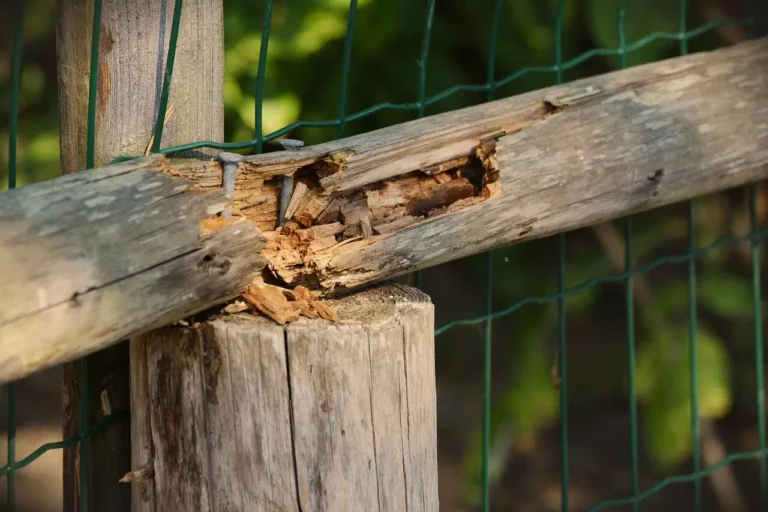
A common first-timer mistake is setting a treated 4×4 post directly into a tight clay hole because the label says “pressure-treated.” The post may look fine for a while, then fail at the soil line where water lingers and oxygen stays low. The treatment helps, but it does not cancel poor drainage.
Ground-contact lumber decision table

| Application | Exposure level | Required treatment type | Drainage risk | Expected failure mode | Preferred install detail |
|---|---|---|---|---|---|
| Fence posts | Prolonged soil contact | Ground-contact pressure-treated lumber | High if set in tight soil or concrete without drainage | Rot at the soil line and at cut ends | Set with drainage at the base; keep backfill loose enough to shed water |
| Deck framing near soil | Intermittent wetting, splash, low clearance | Ground-contact lumber if clearance is limited; above-ground lumber only when it stays clear of soil | Moderate to high near grade | Bottom-edge decay, fastener corrosion, end-grain rot | Raise framing clear of soil and keep airflow under the structure |
| Garden beds | Constant soil contact on the inside face | Ground-contact lumber | High from wet fill and irrigation | Inside-face rot, corner failure, fastener loosening | Use ground-contact stock, separate wood from saturated soil where possible, and avoid standing water |
| Retaining walls | Buried sections and backfill pressure | Ground-contact lumber | High if drainage behind the wall is poor | Hidden rot behind the face boards and at posts | Build in free-draining backfill and drainage relief behind the wall |
| Sleepers | Low profile, often near damp soil or concrete | Ground-contact lumber if resting on or near grade | High where water can pool underneath | Bottom-surface decay and trapped moisture | Use a gravel base or another draining layer, and keep wood off persistently wet soil |
| Concrete set posts | Embedded in or beside concrete | Ground-contact lumber | High if concrete holds water at the base | Rot at the post base even when the top looks sound | Use gravel under the post and prefer brackets where the design allows |
Ground-contact versus aboveground lumber
Ground-contact pressure-treated lumber is made for prolonged soil contact and carries higher preservative retention than above-ground stock. Non-ground-contact lumber is intended for aboveground exposure and is not made for direct soil contact. That difference matters because the treatment level is matched to the severity of the exposure, not just to outdoor use. (Villageofmarcellusny)
What the rating means
Ground-contact lumber is generally the safer choice for fence posts and dock piers because those parts often spend years in wet, low-airflow conditions. Above-ground lumber is commonly used for decking boards, porches, and outdoor furniture, where the wood can dry between wettings and stays off the dirt.
Why retention levels differ
The key difference is preservative retention. Ground-contact stock has more treatment to resist decay and insects in harsher conditions. Above-ground stock has less because it is meant to dry more often. That is why a deck board can be acceptable above grade while the post holding it up needs a stronger rating if it is buried.
Modern residential lumber commonly uses ACQ or copper azole. Copper azole Type A contains copper, boric acid, and tebuconazole. Copper azole Type B contains only copper and tebuconazole. Old CCA lumber was phased out in 2003 for residential settings, and legacy stock may still be present on older projects. CCA contains chromium, copper, and arsenic.
How moisture changes service life
Soil moisture and drainage matter as much as the treatment label. Wet conditions can speed up wood rot, and trapped moisture shortens service life. Even ground-contact lumber can fail early if water stays at the base, if end grain is exposed, or if a buried section cannot dry after rain or irrigation.
End grain and cut ends
End grain drinks water faster than face grain. Cut ends, drilled holes, notches, and checks are common weak points because preservative coverage may be lower there unless the exposed wood is re-treated per the product directions. Inspect these areas wherever wood meets soil, mulch, or concrete.
Why drainage matters more than the label alone
Picture a 6×6 post in a post hole that was filled tightly with clay. The label may be correct, but water can still sit around the base after a storm. That is why drainage details matter: a suitable treatment grade helps, but the base must also shed water and allow drying.
Under normal conditions, pressure-treated wood in the ground typically lasts around 8-10 years. Properly treated and installed pressure-treated wood may last as long as 40 years in the ground. Those two figures are not a promise; the spread shows how much drainage, soil wetness, and installation quality change service life.
Can treated posts go in concrete?
They can, but concrete does not automatically protect the post. Wet conditions can speed up wood rot in concrete installations because concrete can hold moisture against the base. If the hole or footing traps water, the post can fail at the point where it disappears into the concrete or soil.
Why concrete can trap moisture
Concrete is not a drain. It can wick or hold water against the wood, especially when the bottom of the hole lacks a free-draining layer. The problem is worse when the post is embedded tightly and cannot dry. The top may look solid while the hidden base is already soft.
Using gravel for drainage
A coarse gravel base improves drainage under posts and is commonly recommended before concrete in a post hole. The gravel reduces trapped water at the bottom, which helps the base dry after rain or runoff. That small detail often does more for service life than switching from one treated label to another.
When steel brackets are better
Steel post brackets are often preferred for longevity when feasible because they keep the wood off concrete and reduce wood-to-concrete contact. That separation lowers the chance of trapped moisture at the base. If the design allows it, keeping the post out of direct contact is usually the cleaner detail.
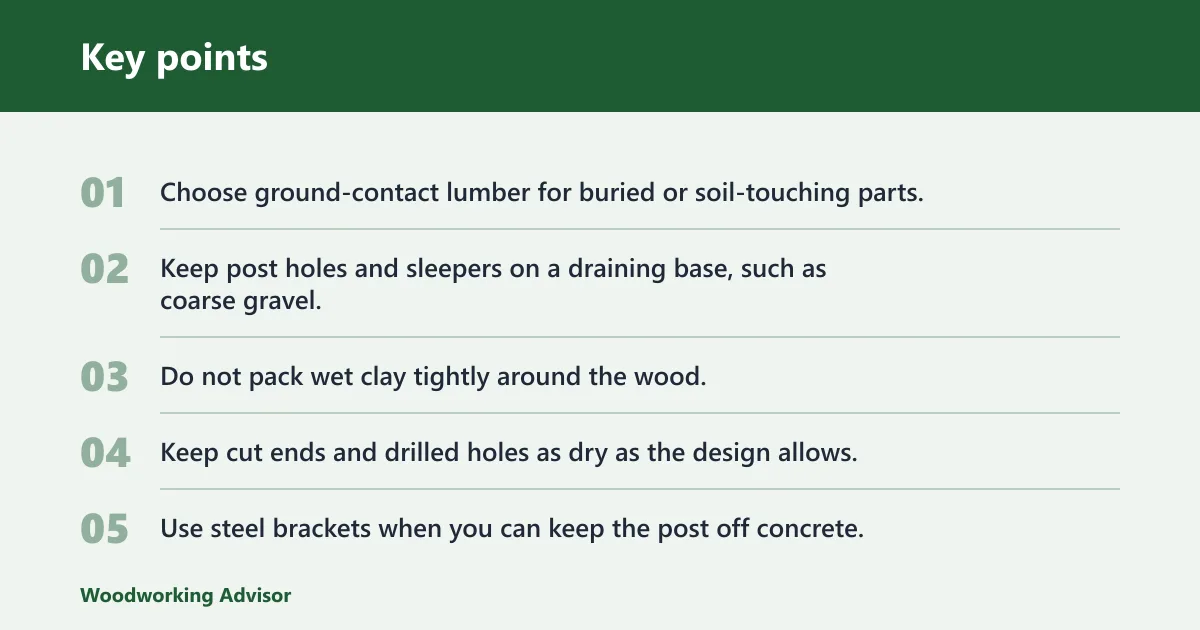
- Choose ground-contact lumber for buried or soil-touching parts.
- Keep post holes and sleepers on a draining base, such as coarse gravel.
- Do not pack wet clay tightly around the wood.
- Keep cut ends and drilled holes as dry as the design allows.
- Use steel brackets when you can keep the post off concrete.
Is treated wood okay for garden beds and retaining walls?
Yes, if you use the right treatment and detail the assembly for drainage. Garden beds and retaining walls keep wood in constant contact with damp soil, so ground-contact lumber is the right choice. Above-ground stock should not be treated as a direct-burial solution in either application.
Soil contact in raised beds
Raised beds hold moist soil against the inside face for long periods, especially when irrigation is frequent. That makes the bed walls a soil-contact application, not an above-ground one. If the bed sits on compacted soil or concrete, drainage under and around the frame still matters.
Retaining walls and buried sections
Retaining walls are harder on wood because backfill stays damp and hidden sections are difficult to inspect. Ground-contact lumber is the baseline choice. Drainage behind the wall is just as important, because a wall that holds water will rot faster even if the lumber itself is properly treated.
Sleepers near wet soil
Sleepers are often placed close to grade, where splash and runoff can stay under the wood. If the sleeper touches soil or rests on a surface that stays damp, use ground-contact stock and a draining base. If the assembly can be lifted clear, above-ground lumber becomes more reasonable.
Say your 2×8 garden-bed boards sit on bare soil and get watered from the inside every week. That is a soil-contact detail, so ground-contact lumber is the safer choice. If the same boards are mounted on a framed deck, away from dirt and with airflow underneath, the exposure changes completely.
Frequently asked questions
Can you put pressure treated wood directly on the ground?
Only ground-contact pressure-treated wood should sit directly on the ground. Standard above-ground lumber is not made for soil contact, even though it is treated. If the wood will be buried, rest on damp soil, or stay against mulch for long periods, choose the ground-contact grade and protect cut ends.
Can pressure treated lumber directly on the ground?
The short answer is that the lumber must be rated for that use. Ground-contact stock is acceptable for direct soil contact; above-ground stock is not. The difference is more than a label. It reflects how much preservative the wood received and how long it is expected to stay wet.
Can pressure treated wood go in the ground?
Yes, if it is ground-contact lumber and the installation sheds water. Fence posts, dock piers, retaining walls, and some sleepers are common examples. The buried section, end grain, and any cut face still need careful attention because those areas are the first to fail when drainage is poor.
Does pressure treated wood rot in soil?
It can. Treatment slows rot, fungi, and insect damage, but it does not stop decay forever. Wet soil, standing water, and trapped moisture shorten service life. Posts often fail first at the soil line, where oxygen, moisture, and exposed end grain combine to create the worst conditions.
How long will pressure treated wood last in the ground?
Under normal conditions, pressure-treated wood in the ground typically lasts around 8-10 years. Properly treated and installed wood may last as long as 40 years in the ground. The spread depends on drainage, soil wetness, and whether the base can dry instead of staying trapped in water.
Do you need ground-contact pressure treated lumber for posts?
Yes, for posts that will be buried or stay in contact with soil. Fence posts and similar structural posts need the higher-retention ground-contact rating because the wood stays wet for long periods. If the design uses a bracket that keeps the post off concrete and soil, the exposure changes.
How does concrete affect pressure treated wood?
Concrete can trap moisture against the base of a post instead of protecting it. That trapped moisture can speed rot in concrete installations, especially when drainage is poor. A gravel base helps, and steel post brackets are better where the design allows because they reduce wood-to-concrete contact.
What is the difference between ground-contact and non-ground-contact lumber?
Ground-contact lumber is designed for prolonged soil contact and has higher preservative retention. Non-ground-contact lumber is intended for aboveground exposure and should not be used as a direct-burial solution. The distinction matters most where the wood will stay wet, buried, or difficult to inspect.
Sponsored / affiliate links. As an Amazon Associate I earn from qualifying purchases. I may earn additional commission from eligible campaigns.