How to Treat a New Deck: First Finish Choices
Wait to treat a new deck until the wood is dry to the touch and ready to absorb finish. For most pressure-treated lumber, that often means about 3 to 12 months. Cedar and redwood may be ready sooner if the moisture content is about 15% or lower. Treating too early traps moisture, shortens finish life, and can lead to peeling, blotching, or mildew. This guide shows how to choose stain or sealer, when to wait, and how to avoid early coating failure.
Treat a new deck when moisture stops beading



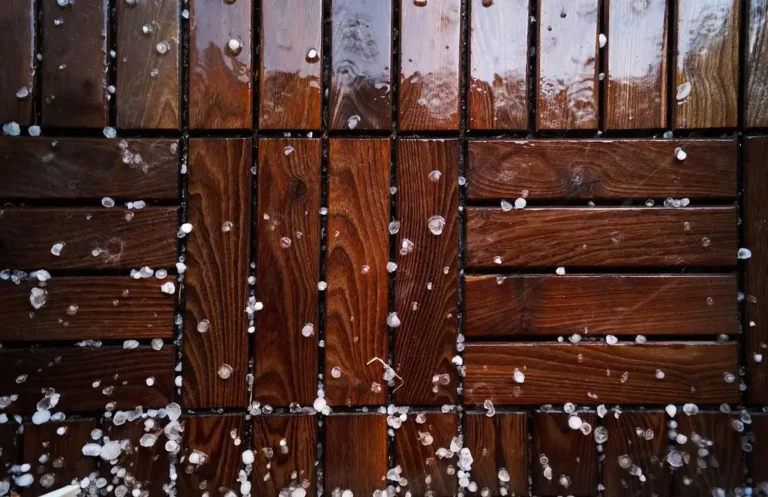
Let the deck dry until it accepts water instead of beading it, and until the surface looks even, fasteners are dry, and end grain no longer feels damp. Pressure-treated lumber often arrives with elevated moisture content, so timing should be based on dryness and weather, not the install date alone.
Why new wood often needs a wait period
Fresh pressure-treated lumber can hold a lot of water from the treatment process. If you coat it too soon, the finish can trap that moisture and raise the risk of warping, cracking, peeling, and mildew. A bare deck is not automatically a problem for a short time; a wet-coated deck usually is.
How climate and install season change drying time
Spring installs often dry more slowly because nights stay cool and damp. Late-summer installs usually dry faster, especially in low-humidity weather with good sun and airflow. Humid regions can extend the wait period well past what a dry inland climate needs. SiOO:X notes treatment when timber is dry and temperatures stay above +5 °C.
When a deck can stay bare for now
You can leave a new deck untreated for a short period if it stays clean and dry while waiting for proper moisture levels. That is safer than forcing a first coat onto damp wood. Waiting too long, though, invites graying, checking, dirt buildup, and more surface weathering before protection starts.
How to tell if the wood is ready
Use a simple readiness check before any first coat: the color should look more even, the end grain should be less damp, and the wood should absorb a water drop instead of beading it. If droplets sit on top, the deck is still too wet for most finishes.
Use the water drop test
Place a few drops of water on several boards to see whether the wood absorbs the water instead of beading it. Absorption suggests readiness. Beading suggests the wood is still too wet or still has a surface that will resist coating. Check more than one spot, especially near cut ends, stairs, shaded corners, and areas close to the house.
Check color, end grain, and fasteners
Dry wood usually looks more uniform across boards. Wet boards often show darker patches, especially at end grain and around screw heads or nails. Fasteners and joints should also be dry. If water lingers in seams or around hardware, keep waiting.
Look for fuzz, mill glaze, or trapped dampness
Some new lumber has raised fibers or a slick mill glaze that can block penetration. If the surface looks fuzzy after weathering or cleaning, a light sanding may help. If the deck still has trapped dampness under boards or in shaded ends, do not coat yet.
Deck cleaning and prep before the first coat
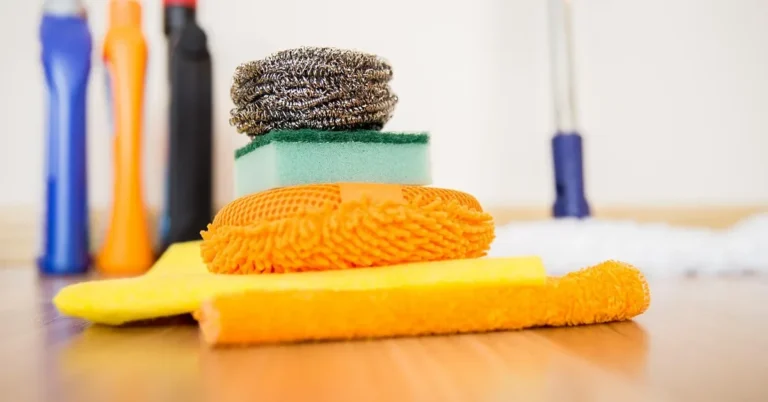
Clean the deck before the first treatment. Sweep away leaves, dirt, and loose grit, clear the gaps between boards with a putty knife or narrow scraper, wash away dirt, mold, algae, and oxidation, and let the surface dry fully. Prep matters because finish failures often start with residue, moisture, or a dirty surface that blocks penetration.
Sweep debris and clear the gaps between boards
Leaves, pine needles, and packed grit hold moisture against wood. Clear the seams so air can move through the deck. Check for construction debris, sawdust, and fastener shavings too. These small leftovers can interfere with even absorption and later cleaning.
Use deck cleaner for dirt, mold, algae, and oxidation
Wood deck cleaners are used to remove dirt, mold, algae, and oxidation. Some formulas use detergent and bleach for dirt and mildew. Oxygen bleach and hydrogen peroxide alternatives are also used in some systems. Chlorine bleach is not recommended for treated wood, and it can leave an unnatural whitewashed appearance.
When to use deck brightener after cleaning
Deck brightener helps restore wood to a neutral state after cleaning, especially when the cleaner leaves the surface alkaline. Many brighteners are commonly reported to use oxalic acid or citralic acid. Oxalic acid is also used for tannin streaks and stains around nail heads in cedar and redwood.
New deck finish decision table
Use this first-treatment guide to match wood type, wait cues, finish choice, and the most common failure if you rush or pick the wrong product.
| Wood type | Minimum wait cues | Best finish choice | Common failure mode |
|---|---|---|---|
| Pressure-treated pine | Wait until color is more even, water absorbs instead of beads, and fasteners and joints are dry. | Water-repelling sealer with mildewcide; add UV protection if the deck gets strong sun. | Sealing too soon traps moisture and can cause peeling, warping, or early mildew. |
| Cedar | Wait until the wood is dry, the surface no longer feels cool or damp, and the water drop test shows absorption. | Transparent or semi-transparent stain if you want color control; sealer if you want a lighter look and simpler upkeep. | Finishing before the wood stabilizes can cause blotching or uneven absorption. |
| Merbau | Wait for dry boards and clean end grain; check for oily or dark extractives before coating. | Penetrating stain or oil-based/hybrid product made for dense hardwoods. | Poor absorption can leave sticky residue, patchy color, or early wear. |
| Already-weathered new deck | Clean, brighten if needed, then confirm absorption with the water drop test. | Stain or sealer chosen for the current condition and desired maintenance interval. | Skipping prep can lock in dirt and oxidation, leading to weak adhesion and blotching. |
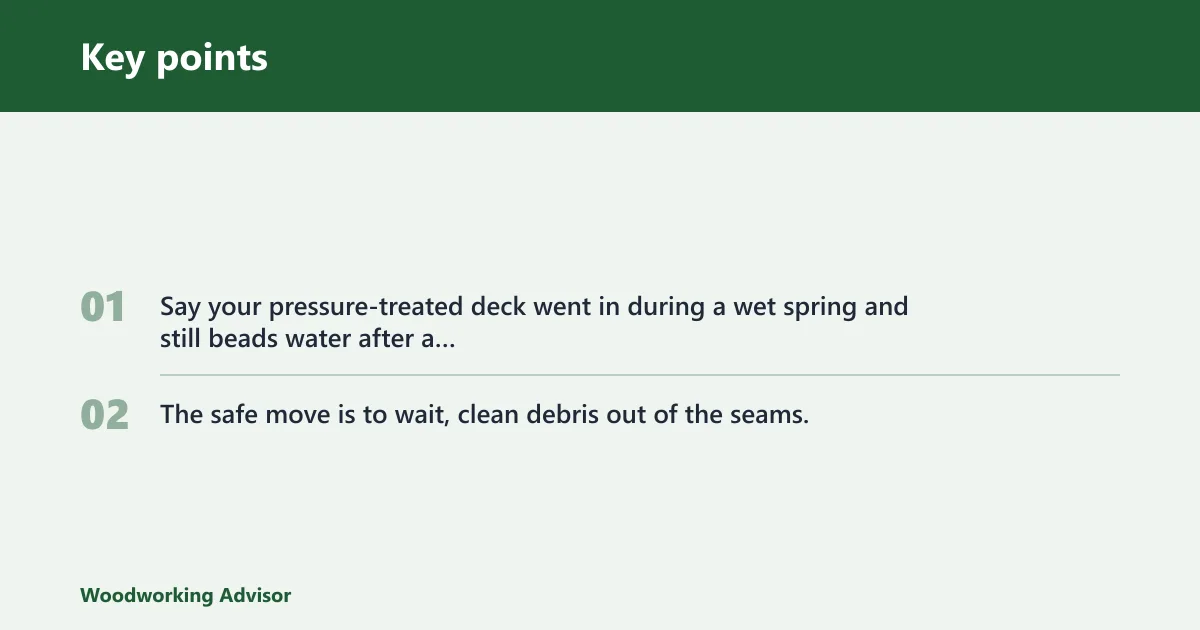
Say your pressure-treated deck went in during a wet spring and still beads water after a test two weeks later. The safe move is to wait, clean debris out of the seams, and retest later rather than force a first coat onto damp lumber.
Should you seal or stain a new deck?
Choose a sealer when you want water repellency and the most natural wood look. Choose stain when you want more color control and a different balance of appearance, UV resistance, and upkeep. The best choice depends on species, exposure, and how often you want to recoat.
When a deck sealer is the better choice
A deck sealer repels water and helps limit swelling, warping, and rot. The ideal sealer should also contain a mildewcide, and it should offer UV protection if the deck gets strong sun. Sealers fit many pressure-treated decks and any project where you want the grain to stay visible.
When deck stain makes more sense
Deck stain comes in transparent, semi-transparent, and solid finishes. Transparent and semi-transparent products show more grain, while solid-color finishes hide more of the wood and usually last longer. A stain also changes maintenance burden: clear finishes may need annual reapplication, semi-transparent stains can last 2 to 3 years, and solid-color finishes typically last 3 to 5 years before reapplication. (Thisoldhouse)
Where oil-based and hybrid products fit
Oil-based and hybrid stains can penetrate well and are often chosen for decks that need color plus protection. They can be a good fit for cedar and some hardwoods, but only if the wood is dry enough to absorb them. Dense woods that resist absorption may need a product made for that species.
How to protect a new deck in wet or sunny weather
Strong sun and frequent rain call for a finish that blocks both UV and moisture. UV exposure drives graying and surface breakdown. Water exposure drives swelling, warping, and rot. If the deck sits in open sun or catches blowing rain, choose a product that addresses both.
Why UV exposure changes the finish choice
Sunlight breaks down exposed wood fibers over time. That matters most on south- and west-facing decks, stair treads, and railing tops. In those spots, a finish with UV protection is more useful than a bare water repellent alone. On sheltered decks, appearance may matter more than strong UV defense.
Why water repellency matters on exposed boards
Water-repelling finish helps stop repeated wetting and drying cycles that swell and shrink wood. Those cycles are hard on pressure-treated lumber in particular, because the wood already starts with more moisture risk. If your deck gets wind-driven rain or heavy morning dew, water repellency should be near the top of the list.
What mildewcide does
Mildewcide helps slow visible mold growth on damp, shaded boards. It is especially useful where airflow is poor or where the deck stays wet after rain. It does not replace cleaning. It adds a layer of defense after the wood is prepared and dry.
Can you leave a deck untreated?
Yes, for a short period. You can leave a new deck bare while it dries, especially if the boards still fail the water drop test. The risk grows with time, though. The longer you wait, the more UV damage, dirt buildup, and surface checking you can expect before the first coat.
Short delays versus long delays
A short delay is often the safer choice if the wood is still too wet. A long delay can be a problem if the deck sits through sun, rain, pollen, and foot traffic without protection. Once the surface starts to weather unevenly, the first treatment often needs more prep.
What happens if you coat too soon
Coating wet wood can trap moisture under the finish. That leads to peeling, blotching, poor adhesion, and a shorter service life. On pressure-treated lumber, trapped moisture also raises the chance of warping and cracking as the boards dry out unevenly.
What happens if you wait too long
Waiting too long can let the surface gray, collect oxidation, and develop uneven absorption. In some cases, a new deck that sits unfinished for months needs extra cleaning, brightening, or light sanding before the first coat. A common first-timer mistake is assuming bare wood is harmless while the weather steadily changes the surface.
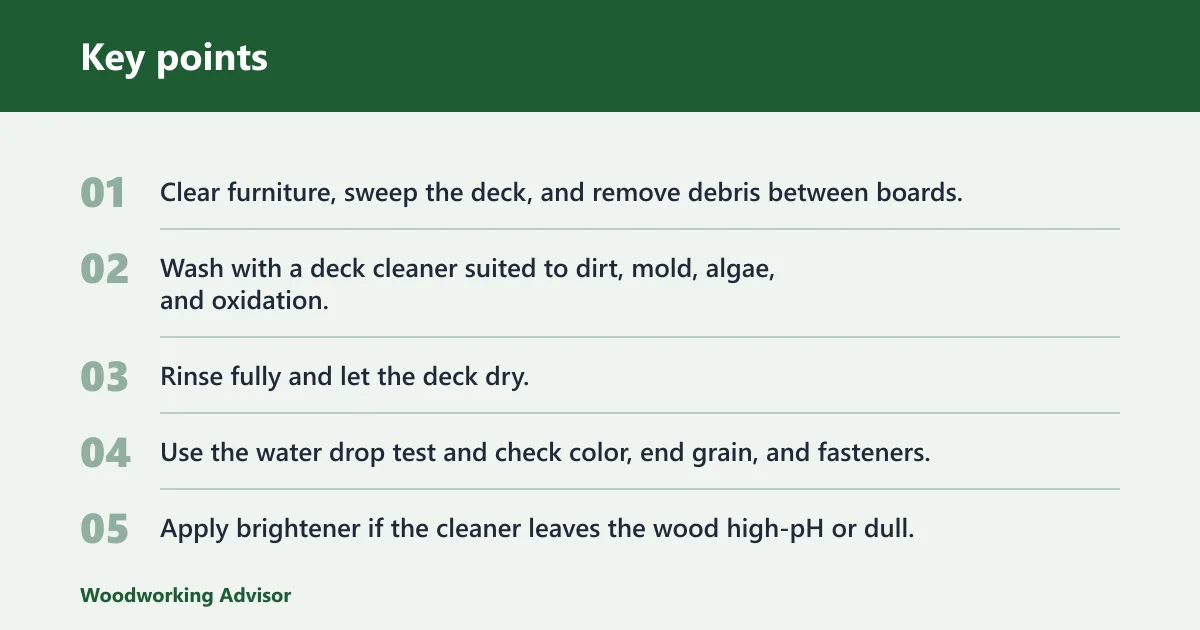
- Clear furniture, sweep the deck, and remove debris between boards.
- Wash with a deck cleaner suited to dirt, mold, algae, and oxidation.
- Rinse fully and let the deck dry.
- Use the water drop test and check color, end grain, and fasteners.
- Apply brightener if the cleaner leaves the wood high-pH or dull.
- Choose a sealer or stain based on wood type, sun, and upkeep needs.
- Follow the product’s application and drying instructions exactly.
Frequently asked questions
How long should you wait to treat a new deck?
Wait until the wood absorbs water instead of beading it and the surface feels dry throughout, not just on top. For many pressure-treated decks, that takes months, not days. Cedar and redwood often dry sooner. Climate, season, and board thickness can change the schedule a lot.
How to seal a new deck for the first time
Clean the deck, clear debris between boards, let it dry fully, then check for absorption with a water drop test. Use a sealer that repels water and contains a mildewcide when possible. Apply only when the wood is ready, and follow the product label for spread rate and dry time.
Sponsored / affiliate links. As an Amazon Associate I earn from qualifying purchases. I may earn additional commission from eligible campaigns.