Brick and Wood Fence Ideas That Boost Your Curb Appeal
A fence that mixes brick and wood does something neither material pulls off alone: it reads as permanent and welcoming at the same time. Brick pillars or a low brick wall anchor the design with real mass and texture, while wood panels, pickets, or slats add warmth, adjustable privacy, and a lot more design flexibility than an all-brick wall allows. The combination shows up on everything from traditional colonial homes to sleek modern builds, which says something about how versatile the pairing actually is.
A brick and wood fence combines the permanence and texture of masonry with the warmth and adjustability of wood, producing a high-end look that typically outperforms either material used alone on curb appeal per dollar spent. This guide covers the popular design styles, what each material actually contributes, and the real considerations – cost, maintenance, climate – before you commit.
Understanding the Appeal of Brick and Wood Fences
Protect The Wood Half Of Your Fence
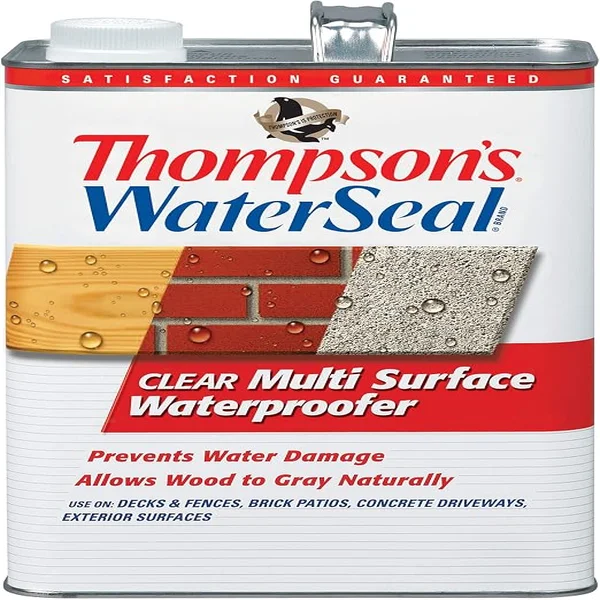 |
Thompson’s WaterSeal Multi-Surface Waterproofer, Clear, 1 Gal – $17.97 The brick half of this fence needs almost no upkeep – the wood half is where a real sealer actually earns its cost.
|
A fence is the first thing most visitors actually see, well before they reach your front door, and it frames the whole property in the process. Brick contributes permanence, thermal mass, and a texture that photographs well from any angle. Wood contributes warmth and near-total design flexibility – different species, stains, board orientations, and picket profiles all change the character of the same basic layout. Together they read as both rugged and refined, which is exactly the combination that a single material struggles to pull off on its own.
Why Choose a Combination?
Mixing materials isn’t just about looks – it’s a practical way to get brick’s durability and wood’s adaptability in the same structure rather than choosing one and giving up the other. A sturdy brick base or pillar system does the structural heavy lifting, while wood panels or pickets fill the spans between them, adding visual interest and softening what would otherwise be a solid, monolithic wall. It’s a design that lets you change the wood’s stain color or picket style later without touching the brick at all, which is a real advantage if your taste (or your home’s exterior color) changes down the road.
Popular Brick and Wood Fence Design Styles
The style you pick should follow your house’s architecture more than any current design trend. For an all-wood alternative, see our full wood fence designs comparison guide; for the brick-and-wood combination specifically, four layouts cover most of what homeowners actually build.
The Classic Brick Pillars with Wooden In-fills
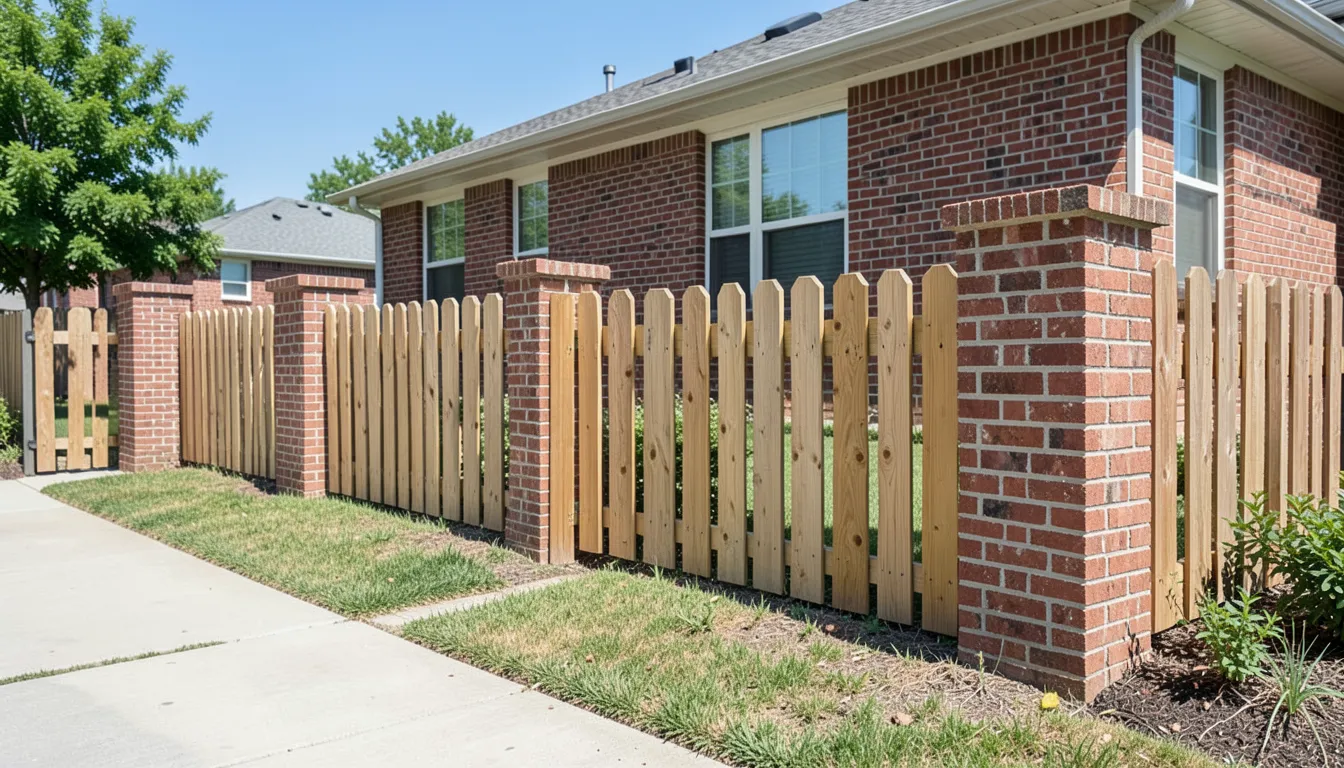
This is the most common layout for good reason: solid brick pillars anchor the fence at regular intervals, and wood panels or pickets fill the spans between them. The pillars carry the structural load and give the fence a foundation that won’t lean or sag the way an all-wood post line sometimes does over decades, while the wood panels handle privacy and let you pick a stain color that matches your home’s trim. It’s a versatile, traditional-leaning option that works on nearly any house style.
The Brick Wall with Integrated Wooden Gates
A low-to-mid-height brick wall borders the property, with one or more wooden gates marking the entrances. The contrast between solid masonry and a natural wood gate reads as upscale and secure at the same time, and the gate itself becomes the fence’s obvious focal point – worth investing extra design attention into, whether that means an arched top, decorative hardware, or a heavier plank profile than the rest of the fence uses.
The Brick Foundation with Wood Picket Tops
A short brick base – often just one to two feet tall – gives the fence stability and a finished bottom edge, while wood pickets rise above it in either a traditional pointed-top profile or a flatter, more modern cut. This layout trades some privacy for light and airflow, and works especially well on suburban lots where you want a clear property line without a wall that feels imposing from the street.
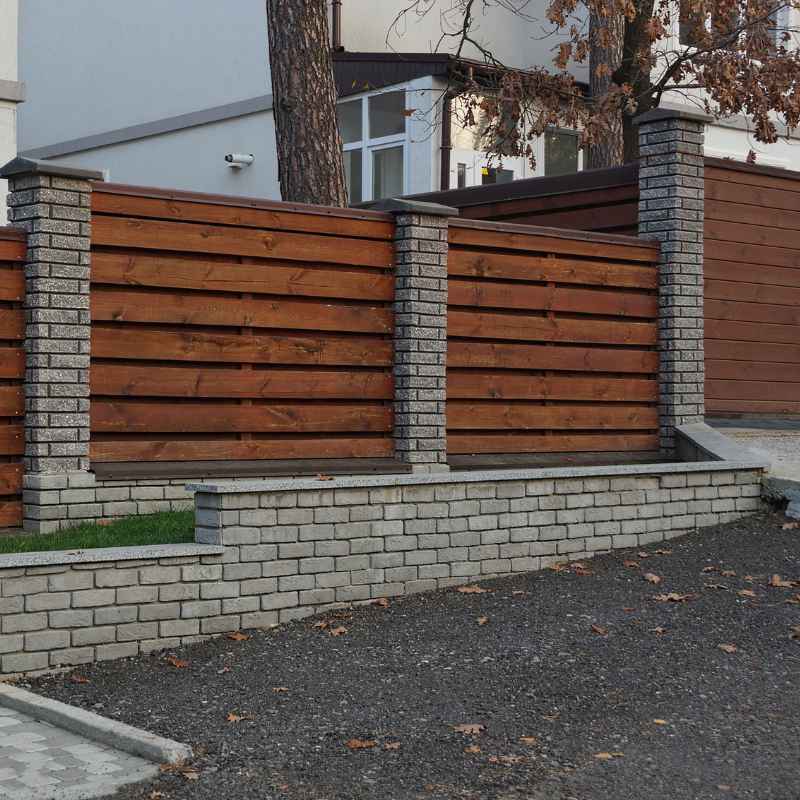
The Modern Stacked Stone or Brick with Horizontal Wood Slat Fencing
Clean-lined brick or stacked stone forms the base or pillars, and horizontal wood slats fill the panels instead of the vertical pickets used in more traditional styles. Horizontal slats read as distinctly contemporary and pair naturally with landscaping built around clean lines, which is why this combination shows up so often on newer builds rather than older colonial-style homes.
Choosing Your Wood Type
Durability Matters: Cedar and redwood resist rot and insects naturally, making them the stronger long-term choice against a brick base that stays put for decades. Pine costs less upfront but needs consistent sealing to hold up outdoors.
Look and Feel: Cedar typically shows a warm reddish-brown tone, redwood runs deeper red, and pine takes stain well enough to mimic either one at a lower material cost.
Maintenance: Every wood species used outdoors needs periodic cleaning and resealing or restaining to hold its color and keep water out – budget for that upkeep before you commit to a design.
Materials and Their Benefits
The Power of Brick
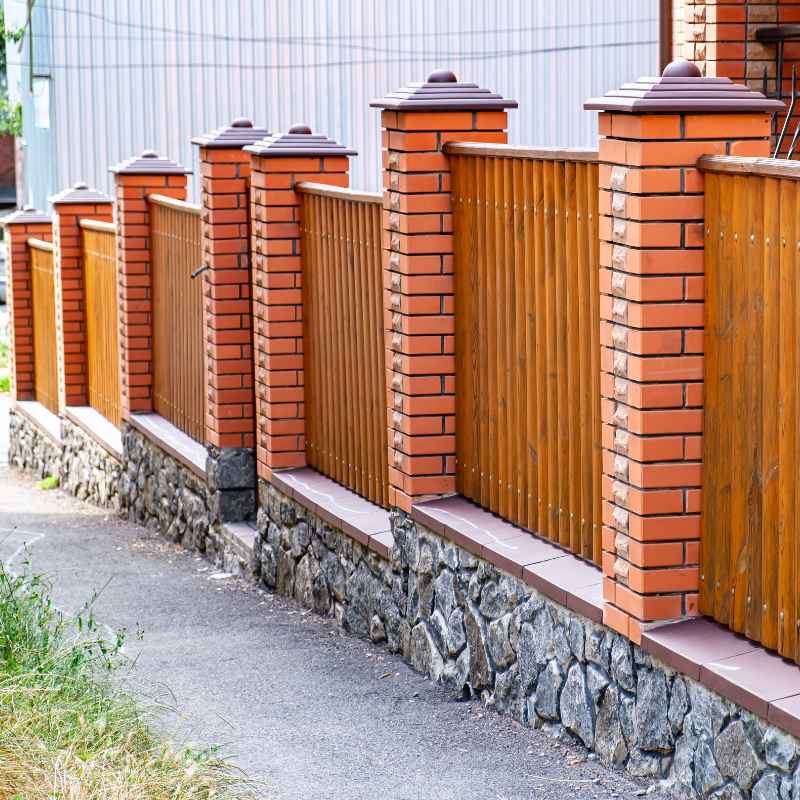
Brick doesn’t rot, warp, or attract termites, and a well-built brick fence section can genuinely last a century or more with minimal upkeep beyond occasional cleaning and repointing. It comes in enough colors and laying patterns to add real visual depth on its own, and its mass provides meaningfully better sound dampening than wood alone – a relevant detail if your property borders a busy street. It’s a bigger upfront investment than wood, but one that pays back in decades of near-zero maintenance.
The Charm of Wood
Wood is where the design flexibility lives – it can be shaped, stained any number of colors, or painted, and it typically costs less per linear foot than brick. The tradeoff is real maintenance: wood is exposed to weather, rot, and insect damage in a way brick simply isn’t, and it needs periodic sealing or staining to keep protecting the material underneath. Species choice matters here more than almost anything else – cedar and redwood’s natural oils make them meaningfully more rot-resistant than pine without any chemical treatment.
Mixing and Matching for the Best of Both
The real advantage of combining them isn’t just visual. A brick base physically lifts the wood components off the ground, which cuts the wood’s direct exposure to soil moisture and the insects that live in it – two of the biggest threats to a fence’s wood elements. The brick supplies the permanent structure and a high-end look; the wood adds the decorative and privacy elements on top of that structure. It’s a design that plays to each material’s actual strengths instead of asking one material to do a job it’s not suited for.
Designing Your Brick and Wood Fence
Matching Your Home’s Architecture
The fence should complement the house, not compete with it. A classic brick home takes naturally to a brick-and-wood fence in a similar brick tone; a modern home calls for cleaner lines and a more restrained material palette; a rustic cottage suits rougher wood textures and a stone-like brick finish. Look at your home’s existing brick, siding, and trim colors before picking anything, and aim for brick and stain tones that harmonize with what’s already there rather than introducing a clashing third color.
Considering Privacy Needs
Solid wood panels or a taller brick wall with few openings deliver real privacy; a picket-style wood top trades some of that privacy for light, airflow, and a friendlier look from the street. Picket spacing and profile do most of the work here – tighter spacing blocks more sightlines without going to a fully solid panel. It’s also worth thinking about what your neighbors see looking back at your yard, not just what you see looking out, since solid backyard sections and more open front-yard designs solve different problems.
Gateways and Entry Points
The gate is the fence’s focal point by default, since it’s where people actually interact with the structure. It can be built entirely of wood or incorporate brick pillars on either side to match the rest of the fence, and hardware – hinges, latches, handles – is worth choosing deliberately rather than defaulting to whatever’s cheapest, since it’s one of the few details people touch directly.
Style Inspiration Board
Classic Charm: Red brick pillars, white or natural wood picket in-fills. Timeless and low-risk.
Modern Edge: Grey or dark brick/stone, horizontal dark-stained wood slats. Sleek and minimalist.
Rustic Retreat: Earth-toned brick, rough-hewn or distressed wood. Natural and inviting.
Mediterranean Flair: Stucco-coated brick, wrought iron accents with wood. Warm and decorative.
Installation and Professional Help
Why Hire a Professional Installer?
Brick work requires real masonry skill – correct mortar mixes, proper coursing, and enough structural know-how that the wall doesn’t crack or lean within a few years. Wood fencing needs precise cutting, leveling, and post anchoring of its own. Get either wrong and you end up with a fence that sags, leans, or fails early, which costs more to fix than it would have to hire it out correctly the first time. Professionals also know local permit requirements and building codes that vary block to block in some municipalities.
DIY vs. Professional: What’s Right for You?
A DIYer genuinely experienced in both masonry and carpentry might tackle sections of this, but the combination is more complex than either material alone, and most homeowners are better served letting a crew handle at least the brick portion. Weigh your budget, actual skill level, and available time honestly – and factor in that a professional installer typically backs the work with a warranty, which a DIY build doesn’t come with.
Maintenance for Longevity
Caring for the Brickwork
Brick asks for very little: an occasional scrub with a soft brush and mild soap (or a diluted bleach solution for moss and algae in shady, damp spots), followed by a thorough rinse. Check the mortar joints periodically for cracking or crumbling – repointing a joint early is a simple fix, while ignoring it lets water into the wall and turns into a much bigger repair later.
Maintaining the Wood Components
Wood needs real attention on a schedule: check periodically for rot, mold, or insect activity, and keep vegetation trimmed back from the panels so air can actually circulate and dry the wood after rain. Plan to clean and reseal or restrain every two to five years depending on species and sun exposure – clean the wood first so the new coat actually bonds instead of sitting on top of dirt and old, degraded sealer.
Quick Maintenance Checklist
- Annual Check: Walk the fence line. Look for loose boards, cracked brick, or leaning posts.
- Wood Protection: Re-stain or seal wood every 2-5 years.
- Brick Cleaning: Wash brick as needed for dirt or algae.
- Weed Control: Keep plants from growing too close to the fence.
- Hardware Check: Ensure gates open and close smoothly. Tighten any loose hardware.
Real-World Scenarios and Considerations
Climate Factors
In climates with real freeze-thaw cycles, water that gets into mortar cracks and freezes can widen them over a few winters, so proper installation and periodic mortar checks matter more there than in a mild climate. High-humidity regions push mold and mildew risk on the wood components higher, which means ventilation and a consistent sealing schedule matter more. Coastal salt spray degrades some materials faster than inland weather does – brick generally tolerates it well, but ask about salt-tolerant wood species and finishes if you’re building near the coast.
Yard Size and Shape
A larger property can carry a taller, more substantial brick-and-wood fence without it feeling out of scale; a smaller yard usually looks better with a lower brick base and lighter picket top. Sloped lots need a stepped or terraced design to follow the land’s contour cleanly – a fence that just follows an uneven grade in a straight line reads as a mistake, not a design choice, so this is one detail worth leaving to a professional installer.
Budget and Value
Expect a higher upfront cost than a simple all-wood or chain-link fence, offset over time by brick’s durability and lower long-term maintenance need. A well-built brick-and-wood fence is also a visible, tangible upgrade that shows up in resale conversations in a way a chain-link fence never does. Weigh the upfront number against the maintenance savings and resale bump before deciding it’s out of budget.
What This Means for Your Home’s Curb Appeal
Elevating Your Home’s Look
Brick and wood together add texture and dimension that a single-material fence usually can’t match at the same price point, and that detail reads to visitors as a home that’s cared for. It also frames whatever landscaping sits behind it, which is a bigger visual effect than most homeowners expect from “just a fence.”
Security and Peace of Mind
Beyond looks, a solid brick-and-wood fence is a genuine physical deterrent and a real enclosure for kids and pets. Knowing the yard is actually bordered – not just visually defined – is worth something on its own, independent of how the fence looks from the street.
When is a Brick and Wood Fence the Right Choice?
This combination makes sense if you’re looking for:
- Lasting Beauty: You want a fence that looks good for decades, not just the first season.
- Enhanced Property Value: You plan to sell eventually and want the fence to help, not hurt, that conversation.
- Superior Durability: Your climate or budget for future repairs favors a material that shrugs off weather.
- High-End Aesthetics: You want the fence to read as an upgrade, not an afterthought.
- Privacy and Security: You want a genuinely strong barrier, not just a visual property line.
It’s a weaker fit if your budget or timeline is genuinely tight – both brick masonry and quality wood fencing take real time to install correctly, and neither is the cheapest option on the market. It also commits you to ongoing wood maintenance, which is a real cost some homeowners underestimate before choosing this combination.
Frequently Asked Questions
How much does a brick and wood fence typically cost?
The cost can vary greatly. It depends on the size of your property, the complexity of the design, the type of brick and wood used, and your location. Generally, you can expect to pay anywhere from $50 to $150 per linear foot, and sometimes more for elaborate designs. It’s wise to get several quotes from professional installers.
What is the best type of wood to use with brick?
For durability and resistance to rot and insects, hardwoods like cedar and redwood are excellent choices. Pine is a more budget-friendly option but requires regular sealing and maintenance to last. The key is choosing a wood that complements the brick and can withstand outdoor exposure.
How often does wood fencing need maintenance?
Wood fencing typically needs maintenance every 2 to 5 years. This involves cleaning, sanding (if necessary), and reapplying a sealant or stain. This protects the wood from UV rays, moisture, and other environmental factors. Regular inspections for damage are also crucial.
Can I mix different colors of brick and wood?
Yes, you can. Mixing colors can create a unique and striking design – for example, a grey brick paired with a darker stained wood. Always consider your home’s existing colors and overall style to ensure the combination is harmonious and appealing.
Is a brick and wood fence good for privacy?
Absolutely. Brick and wood fences are excellent for privacy. By using solid wood panels or a full brick wall, you can create a very effective barrier. The choice of wood type (solid planks vs. spaced pickets) will determine the exact level of privacy you achieve.
How long do brick and wood fences usually last?
A well-built and maintained brick and wood fence can last for many decades, often 50 years or more. The brick structure is incredibly durable, and with proper care, the wood components can also last a very long time, especially when protected by the brick base and regular sealing.
Conclusion
A brick and wood fence earns its higher price tag by doing two things separately that most fences try (and fail) to do at once: standing up to decades of weather while still looking genuinely designed rather than purely functional. From classic pillar-and-picket layouts to modern horizontal-slat panels, the same core rules decide whether it lasts – solid masonry work, correctly installed and anchored wood, and a real maintenance schedule for the wood half specifically.
Get quotes from more than one professional installer, match your brick and wood tones to your home’s existing exterior, and budget honestly for wood upkeep from the start – that’s most of what separates a fence that still looks sharp in fifteen years from one that doesn’t.
Sponsored / affiliate links. As an Amazon Associate I earn from qualifying purchases. I may earn additional commission from eligible campaigns.