Should You Soak Wood Chips Before Smoking? Why Dry Wins
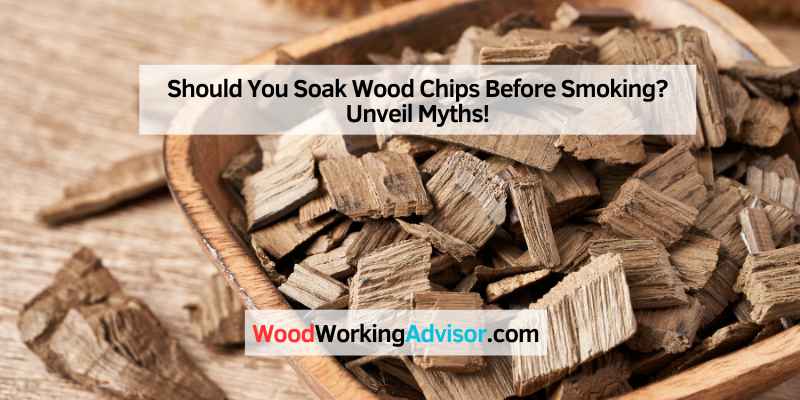
No, soaking wood chips before smoking doesn’t help. Water penetrates only about 1/64 inch into a chip (3-6% surface moisture), yet still delays ignition by 30-60 minutes as steam boils off before real smoke starts. On a gas grill, that delay can stall a smoker box completely. This guide covers the science, what to use instead by grill type, and the one long-smoke trick where a partial soak still helps.
Affiliate disclosure: this post contains Amazon affiliate links. As an Amazon Associate we earn from qualifying purchases, at no extra cost to you.
The Science: Why Soaking Doesn’t Work
Soaking wood chips before smoking is the most argued-about tip in barbecue, and the “pros” people cite — extended smoke time, added moisture, fewer flare-ups — don’t hold up against how wood actually absorbs water. Wood is mostly closed cell structure; water can’t force its way past the surface in the hour or two most recipes recommend.
How Little Water Actually Gets In
A dye-penetration test on soaked chips found water and color reached only about 1/64 inch into the wood after a 24-hour submersion, entering mainly through surface cracks rather than the wood itself. That’s why soaked wood chips still burn almost the same as dry ones once the surface moisture is gone — there was never much water in there to begin with.
📊 Wood chips soaked for 12 hours gain only about 6% of their weight in water; larger chunks gain closer to 3%. — Source: AmazingRibs.com, wood-soaking myth test
Steam First, Smoke Second
Dry wood chips climb straight to their combustion point (roughly 575°F) and start producing thin blue smoke almost immediately. Soaked chips have to boil off surface water first, which caps their temperature at 212°F — the boiling point of water — until that moisture is gone. Only then does the wood start climbing toward combustion. That stall is what causes the “steam, not smoke” complaint, and it’s also why soaked chips don’t extend real smoking time; they just delay when smoking starts.
“When you soak wood chips, the maximum temperature they’ll reach is about 212°F, the boiling point of water — the wood won’t climb higher until that moisture is gone, and that can stall the chips at boiling for nearly 30 minutes before real smoke starts.”
What to Use Instead, by Grill Type
The fix is the same everywhere: use dry chips, but change how you contain them depending on your setup so they smolder instead of flaring up.
Do You Need to Soak Wood Chips Before Smoking on a Gas Grill?
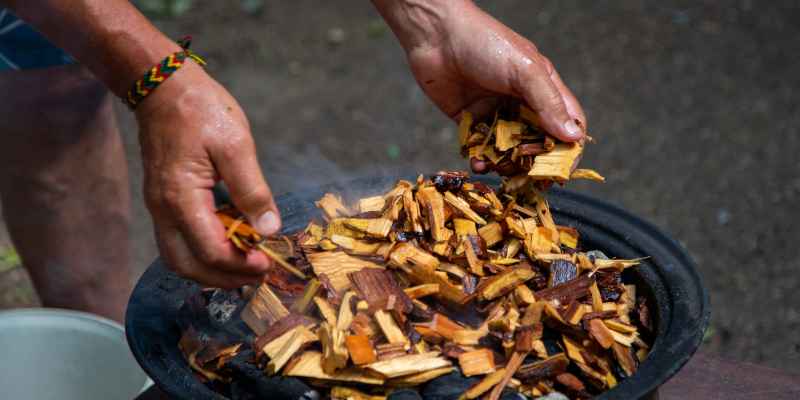
No. On a gas grill, dry chips work better — but only if they’re contained. Wrap a handful of dry chips in a heavy-duty foil pouch with a few vent holes poked in the top, or use a metal smoker box, and set it directly over one burner turned to high. The metal or foil holds in enough heat for the chips to smolder rather than catch fire, which is the real problem soaking was trying (and failing) to solve on a gas grill.
Best Gas Grill Smoker Box Pick
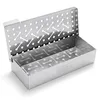
Weber Premium Universal Stainless Steel Smoker Box
Holds dry wood chips directly over a gas burner so they smolder instead of flaring up — no soaking required.
- Best for: Gas grill owners who want real smoke flavor without a dedicated smoker
- Why we picked it: Stainless steel holds up to repeated high heat and fits most grill grates
- Main drawback: Needs direct burner heat underneath — doesn’t work well on indirect zones
Compare more smoking wood options
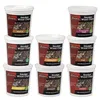 Option 1 Camerons Extra Fine BBQ Wood Chips, 8-Flavor Variety Pack
|
 Option 2 Mr. Bar-B-Q Hickory Wood Smoking Chips
|
 Option 3 GrillPro Cast Iron Smoker Box
|
As an Amazon Associate we earn from qualifying purchases.
Electric vs. Charcoal Smokers
Electric smokers hold a steady temperature with little attention, so dry chips in the built-in chip tray smolder reliably without flaring — this is actually the one setup where a brief soak (10-15 minutes, not hours) can help slow a very small tray from burning out too fast between refills. Charcoal smokers run hotter and less predictably, so dry chips laid straight on the coals or in a smoker box give a more authentic, consistent smoky flavor with less babysitting.
Matching Wood Species to Your Meat
Wood species matters more than soaking ever will. Dense hardwoods like oak and hickory burn slower and produce a stronger, more assertive smoke that suits beef and pork well; lighter fruitwoods like apple and cherry burn faster and add a milder, slightly sweet smoke that works better with poultry and fish. Mesquite is the strongest common option and is best used sparingly, or blended with a milder wood, on longer cooks.
The Two-Tray Method: When a Partial Soak Actually Helps
Soaking does not shorten preheating time — it’s the opposite. Soaked chips take 30 to 60 minutes longer to start smoking than dry chips because that time is spent boiling off surface moisture, not producing usable smoke. If you’re curious how little water wood actually holds compared to freshly cut, “green” lumber, our moisture content calculator shows just how small that 3-6% surface gain really is.
There is one legitimate use for a partial soak: very long cooks like brisket or pork shoulder, where you want smoke released steadily over many hours without constantly reloading. Layer a bed of dry chips at the bottom of your smoker box or foil pouch, then add a thin layer of soaked chips on top — see our soak times by wood type guide for exactly how long to wet that top layer. The dry layer starts smoking immediately; the soaked layer smolders more slowly once it dries out, stretching your smoke supply on a long, unattended cook. It is a scheduling trick, not a flavor trick — the smoke quality itself is not improved.
Dry vs. Soaked Wood Chips: Quick Comparison
| Factor | Dry Chips | Soaked Chips |
|---|---|---|
| Time to first smoke | Almost immediate | 30-60 min. delay (steam first) |
| Smoke flavor | Clean, consistent | No stronger — just delayed |
| Flare-up risk (uncontained) | Higher if placed loose on coals | Slightly lower, briefly |
| Best use case | Gas, charcoal, most cooks | Small electric-tray refills; two-tray long smokes |
Frequently Asked Questions
Are You Supposed to Soak Wood Chips for a Smoker?
No. Soaking wood chips before smoking is not necessary and can work against you — it delays ignition by 30 to 60 minutes and produces steam rather than smoke while it dries out. It’s a long-standing myth, not a required step; dry chips give more consistent results in almost every setup.
Does Soaking Wood in Water Make It Stronger?
No. Soaking wood in water does not make it stronger — it can slightly reduce stiffness while the wood is wet, since water fills the cell walls and causes them to swell. This is a woodworking fact as much as a BBQ one: wood is strongest dry and loses some rigidity, not gains it, when its moisture content rises.
How Long Should You Soak Wood Chips in Bourbon or Whiskey?
If you’re soaking for flavor infusion rather than smoke control, mix roughly 1 part bourbon or whiskey to 2 parts water and soak the chips for at least a day so the liquid has time to reach the wood’s surface. The key step people skip: let the chips air-dry afterward before using them. Using them wet still creates the same steam delay as soaking in plain water — the bourbon flavor comes from what soaked into the surface, not from burning the liquid itself.
Do You Soak Wood Pellets Before Smoking?
No — never soak wood pellets. Unlike chips, pellets are compressed sawdust with no internal binder holding them together once wet; they swell, break apart, and can jam an auger-fed pellet smoker. Use pellets dry, straight from a sealed bag, every time.
Do You Need to Soak Wood Chips Before Smoking on a Gas Grill?
No. Use dry chips in a foil pouch with vent holes or a metal smoker box set directly over a lit burner. The container — not water — is what keeps the chips from bursting into flame; soaking only adds an unnecessary steam delay before the smoke you actually want.
Conclusion
Soaking wood chips before smoking is one of the most persistent myths in barbecue, but the water-penetration numbers don’t support it: soaked chips gain only a few percent surface moisture, spend their first 30-60 minutes boiling off that moisture instead of smoking, and end up producing no more flavor than dry chips once they finally catch. Use dry chips matched to your grill type and meat, save the two-tray soak trick for genuinely long cooks, and never soak wood pellets.