Riving Knife for Delta Table Saw: What Actually Fits by Model
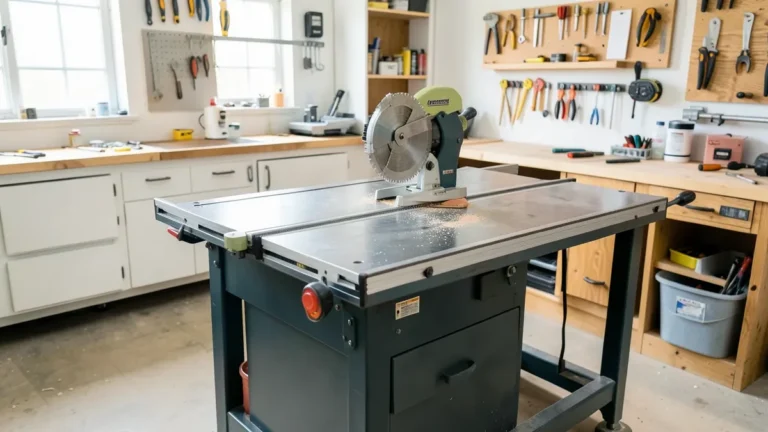
Not every Delta table saw can actually accept a true riving knife, and that catches a lot of owners off guard. The riving knife is the single most effective kickback-prevention device on a table saw, but whether your specific Delta model can use one, needs a splitter instead, or has an aftermarket option at all comes down to which trunnion design your saw was built on. Here’s what actually fits, model by model, and what to use instead when a true riving knife isn’t mechanically possible.
Riving Knife vs. Splitter vs. Anti-Kickback Pawls
Best Universal Kickback-Prevention Pick
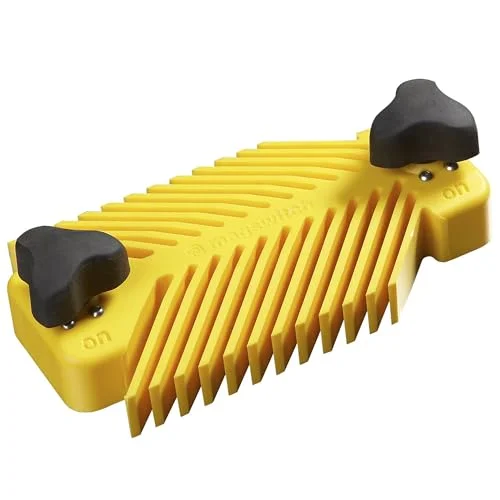 |
Magswitch Universal Featherboard for Table Saws & Router Tables – $74.00 Since a true riving-knife retrofit doesn’t exist for every Delta model, this magnetic featherboard is a genuinely universal kickback-prevention add-on that works alongside whatever splitter or riving knife your saw already has.
|
These three terms get used interchangeably, but they’re mechanically different devices, and the difference matters for how well each one actually stops kickback.
Riving Knife
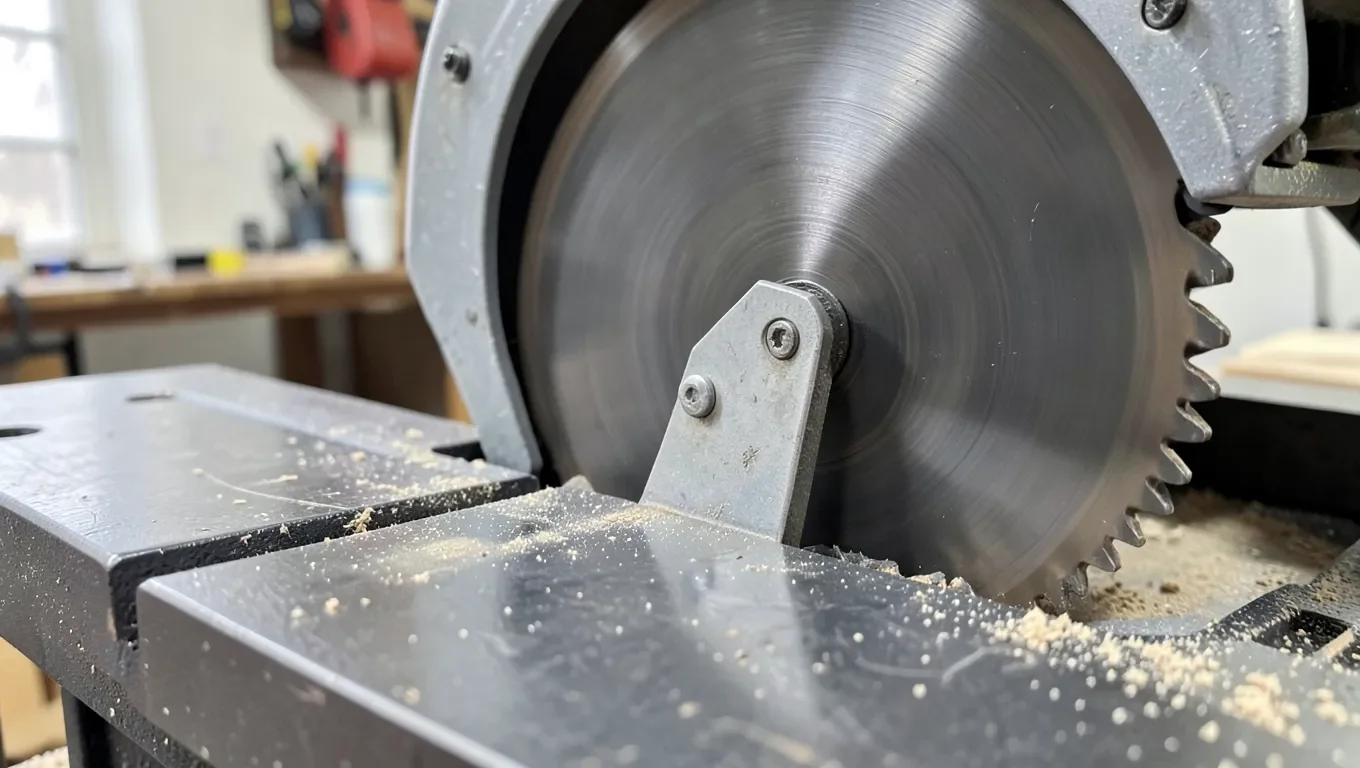
A riving knife is a curved metal plate mounted directly behind the blade that rises, drops, and tilts together with it. Because it stays locked to the blade’s exact height and angle at all times, it keeps the kerf (the cut) propped open no matter what cut you’re making, so the wood can’t pinch the blade and get thrown back at you. Underwriters Laboratories has required a riving knife on every newly designed table saw sold in the U.S. since 2009, which is why it’s now the standard safety device on new saws.
Splitter
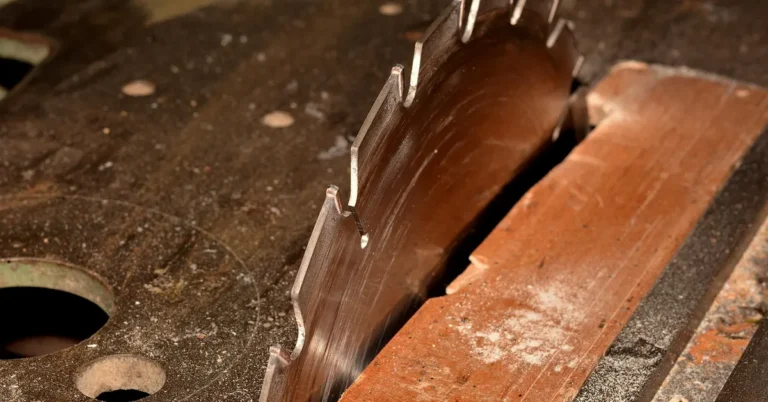
A splitter does the same basic job – holding the kerf open behind the blade – but it’s bolted to a fixed point on the trunnion or throat plate instead of moving with the blade. It sits a few inches further back than a riving knife and doesn’t follow the blade up, down, or through a bevel tilt. That fixed position is exactly why most pre-2009 Delta saws shipped with a splitter rather than a true riving knife: the blade wasn’t tracked by the guard system at all, it just had a stationary bar behind it.
Anti-Kickback Pawls
Pawls are a third, separate device – small spring-loaded teeth, usually mounted on the splitter or blade guard, angled to dig into the wood’s surface if it starts moving backward toward you. They’re a last-resort catch, not a kerf-spreader, and they don’t replace a riving knife or splitter. Most factory blade guard assemblies on older Delta saws combine a splitter with a set of pawls, which is why people sometimes call the whole assembly a “splitter” even though it’s really two devices working together.
Does Your Delta Table Saw Actually Have a Riving Knife?
This is where a lot of Delta owners get misled by generic advice. Whether your saw has, or can have, a true riving knife depends entirely on the trunnion and arbor design your specific model was built on — it isn’t a part you can just bolt onto anything with a 10-inch blade.
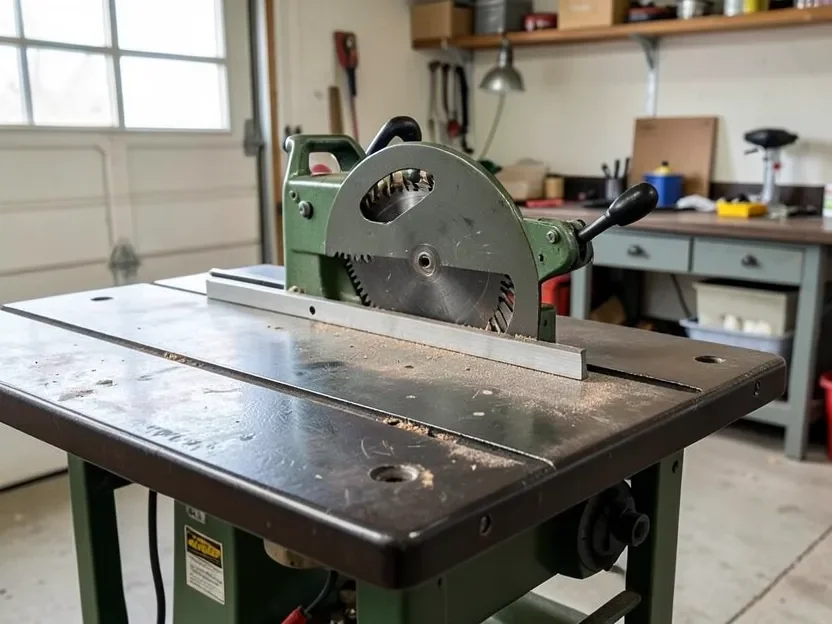
| Delta Model | What It Shipped With | Real Upgrade Path |
|---|---|---|
| 36-725 (current 10″ table saw) | OEM riving knife, factory-installed | Genuine riving knife design – replace a worn one with OEM part DPEC002908 |
| Unisaw (most vintages, cabinet-style trunnion) | Fixed splitter + pawls | SharkGuard’s Delta ARK package retrofits a manually adjustable riving knife on many Unisaw-pattern trunnions |
| 34-444 and other classic contractor saws | Fixed splitter + pawls, blade cantilevered off a single arm | A true riving knife retrofit generally isn’t mechanically possible on this trunnion – upgrade the splitter/pawls and add a featherboard instead |
| 36-600 | Fixed splitter + pawls | No dedicated aftermarket riving knife exists – a quality replacement splitter is the realistic upgrade |
| 34-338 | Fixed splitter + pawls | Confirmed NOT compatible with SharkGuard’s ARK riving knife – splitter-only aftermarket applies here |
Caption: Fit is model-specific – always confirm your exact model number before ordering any riving knife or retrofit kit.
The reason a true riving knife can’t simply be added to most classic Delta contractor saws comes down to geometry, not just parts availability. On saws like the 34-444, the blade and arbor are cantilevered off a single arm rather than tracked by the kind of pivoting bracket a riving knife needs to follow the blade through height and bevel changes. That’s a structural difference, not something an aftermarket bracket can work around on every model.
Can You Retrofit a Real Riving Knife on an Older Delta Saw?
Sometimes, yes — but it’s not universal, and it’s worth being honest about which saws actually qualify.
- Delta Unisaw and Unisaw-clone trunnions: SharkGuard’s Delta ARK package (ARK stands for Adjustable Riving Knife) bolts on a manually adjustable knife that raises, lowers, and tilts with the blade the same way an OEM riving knife does. It fits many older Unisaws and other cabinet saws built on a similar trunnion pattern — but not the Delta 34-338, which SharkGuard’s own compatibility notes exclude from the ARK kit in favor of its splitter version.
- Classic cantilevered contractor saws (34-444 and similar): These generally can’t take a true riving knife retrofit at all, ARK included, because the blade isn’t mounted on a trunnion that can carry the knife’s pivot bracket.
- 36-600 and other orphaned models: No dedicated retrofit riving knife exists. A shop-fitted replacement splitter is the honest, realistic option.
If your saw can’t take a riving knife of any kind, the fallback isn’t “no safety device” — it’s a properly fitted splitter. Delta sells a low-cost removable splitter for around $40, and both the Biesemeyer splitter and Delta’s own “disappearing” splitter run closer to $130. None of them move with the blade the way a riving knife does, but a correctly installed splitter with working anti-kickback pawls is dramatically safer than running the saw with nothing behind the blade at all.
Installing or Replacing a Riving Knife or Splitter Safely
The mounting steps are similar whether you’re installing an OEM riving knife, a SharkGuard ARK kit, or a replacement splitter — the bracket location and general process are the same, even though the part itself differs.
- Unplug the saw. Never work near the blade with the saw powered.
- Remove the throat plate and lift it clear of the table.
- Loosen the arbor nut and remove the blade so you have clear access to the mounting bracket behind it.
- Mount the riving knife or splitter onto its bracket, following the part’s own instructions — OEM parts and the SharkGuard kit both bolt to a specific mounting point, they aren’t interchangeable hardware.
- Check the gap. The knife or splitter should sit close behind the blade without touching it, and it should be no thicker than the blade’s kerf or the cut will bind.
- Reinstall the blade and tighten the arbor nut firmly.
- Confirm alignment with a straightedge laid flat against the blade and the knife or splitter — they need to be parallel, or the wood will bind against one side during a cut.
- Replace the throat plate, plug the saw back in, and make a slow test cut on scrap before trusting it with a real project.
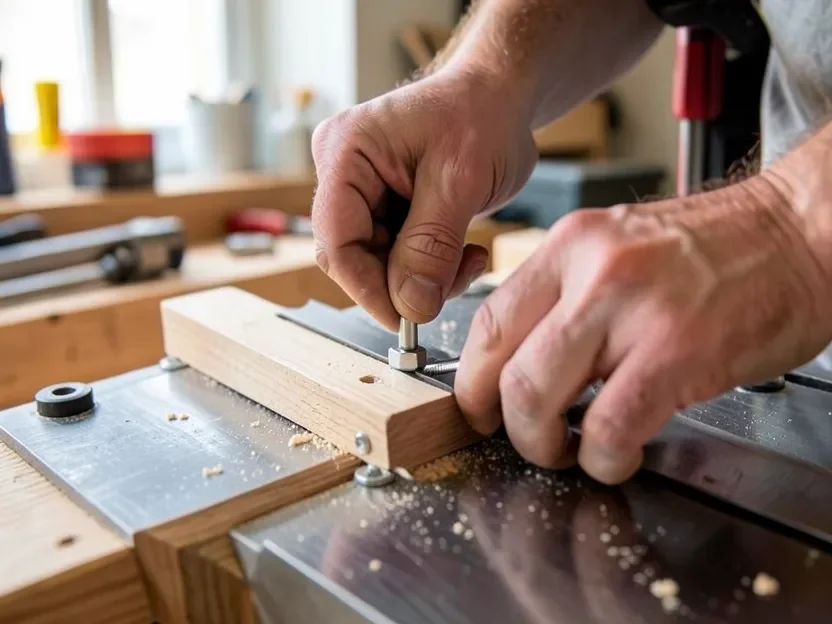
Misalignment is the most common installation mistake, and it’s also one of the most dangerous, since a riving knife or splitter that isn’t parallel to the blade can bind the wood against one side of the cut instead of preventing kickback.
When It’s Actually Okay to Remove It – and When It Isn’t
A riving knife or splitter has to come off for non-through cuts like dados, rabbets, and grooves, because those cuts don’t produce a clean kerf for it to sit in. That’s the only legitimate reason to remove it. Take it off, make the cut with extra care and a push stick, and put it straight back on before doing any regular ripping or crosscutting. Running a saw without it for ordinary cuts — because it’s “in the way” or slows you down — removes the single most effective kickback protection the saw has, and it’s the change most likely to turn a routine cut into an injury.
A full blade guard system and a set of working anti-kickback pawls add another layer of protection on top of whichever knife or splitter your saw uses, and neither one is a substitute for the other.
Frequently Asked Questions
What’s the difference between a riving knife and a splitter?
A riving knife moves up, down, and through the bevel angle with the blade, so it stays at the correct distance behind it at every setting. A splitter is bolted to a fixed point and doesn’t move with the blade. The riving knife is more effective at preventing kickback because it can’t drift out of position the way a fixed splitter can as blade height or angle changes.
Does every Delta table saw have a riving knife?
No. Only Delta’s newer designs, like the current 36-725, shipped with a true OEM riving knife. Classic contractor saws and most vintage Unisaws came with a fixed splitter and anti-kickback pawls instead, because they were built before UL’s 2009 riving-knife requirement existed.
Can I retrofit a true riving knife onto an older Delta saw?
Sometimes. SharkGuard’s Delta ARK package retrofits a manually adjustable riving knife onto many older Unisaws and similar trunnions, though it doesn’t fit every model — the Delta 34-338 is a confirmed exception. Classic cantilevered contractor saws like the 34-444 generally can’t accept a true riving knife retrofit at all, because of how the blade is mounted, and need a replacement splitter instead.
What’s the OEM riving knife part number for the Delta 36-725?
The factory riving knife for the 36-725 is Delta part DPEC002908 (some older parts listings show it under DPEC006136). Confirm the number against your saw’s own parts diagram before ordering, since Delta has reused similar part families across related models.
Is it ever okay to run the saw without a riving knife or splitter?
Only for non-through cuts like dados or rabbets that a riving knife or splitter physically can’t sit in. Remove it for that specific cut, use a push stick and extra caution, and reinstall it immediately afterward. It should never be left off for regular ripping or crosscutting.
What if my Delta saw can’t take a riving knife or the SharkGuard ARK kit?
Fit your saw with a proper replacement splitter instead — Delta’s own low-cost removable splitter, a Biesemeyer splitter, or Delta’s disappearing splitter are all real options in the $40–$130 range. Pair it with working anti-kickback pawls and a featherboard on the outfeed side, and you’ll have solid kickback protection even without a true riving knife.
Bottom Line
Check your Delta model number before you buy anything. The 36-725 takes a genuine OEM riving knife. Many Unisaws and similar cabinet saws can take SharkGuard’s ARK retrofit. Classic cantilevered contractor saws like the 34-444 generally can’t take a true riving knife at all, and a properly fitted splitter with working pawls is the honest, safe answer for those models. Whichever one your saw uses, keep it installed for every cut except dados and rabbets, and add a magnetic featherboard for extra control on the outfeed side.
Sponsored / affiliate links. As an Amazon Associate I earn from qualifying purchases. I may earn additional commission from eligible campaigns.