Ryobi TSS103 10-Inch Sliding Compound Miter Saw: Real Specs
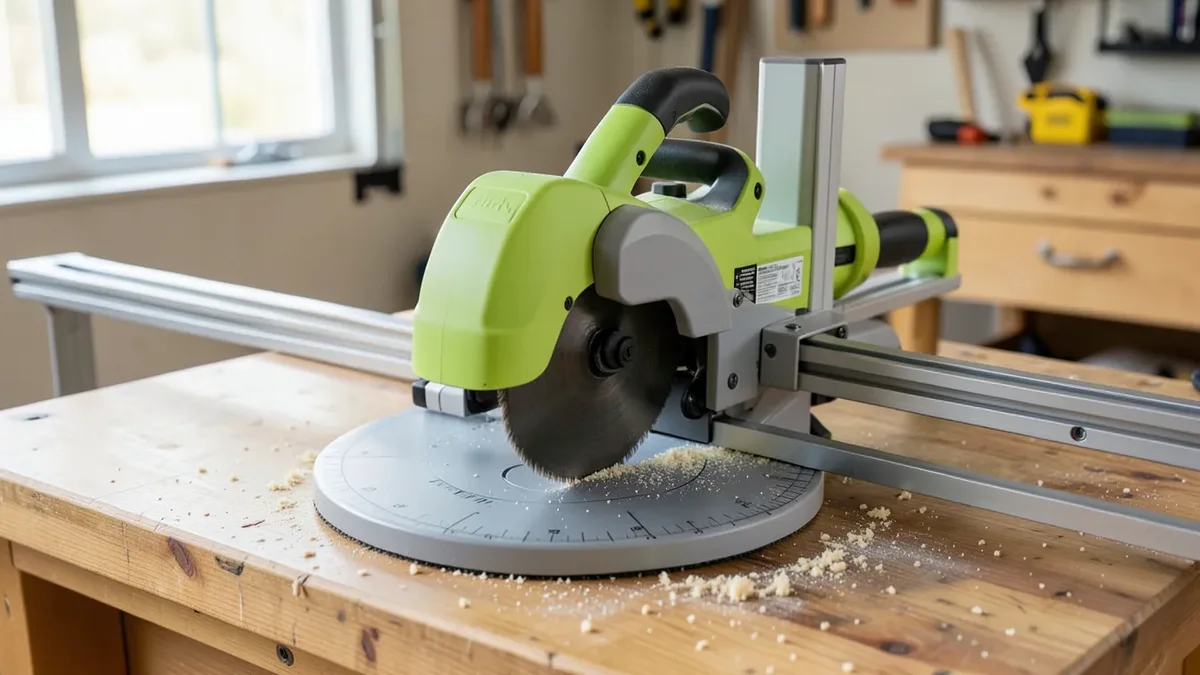
The Ryobi TSS103 is a 15-Amp, 10-inch sliding compound miter saw built around one real advantage over a fixed-head saw the same size: twin sliding rails that let the head travel forward and back, roughly doubling how wide a board it can crosscut in a single pass. Below are the saw’s actual specs, a plain explanation of why that sliding motion matters more than most spec sheets bother to explain, and the one setup tradeoff that catches first-time buyers off guard.
Ryobi TSS103: The Actual Specs
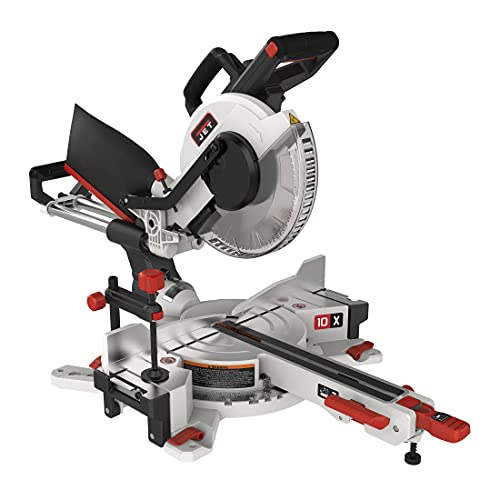
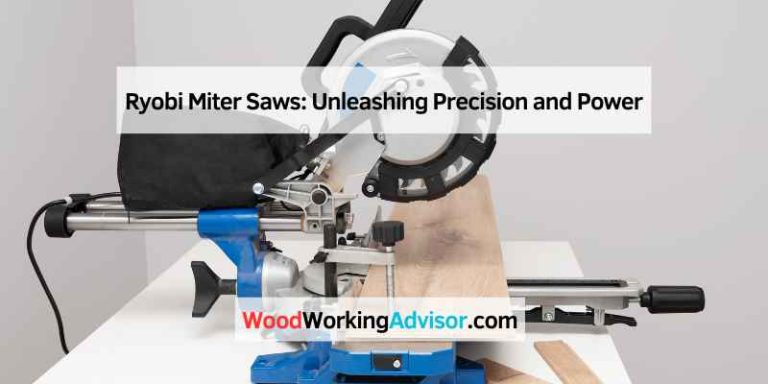
Ryobi’s 10-inch sliding compound miter saw is sold under the model number TSS103. It runs on a 15-Amp motor that spins the blade up to 4,600 RPM with no load, and it ships with a 40-tooth carbide-tipped blade, table extensions, a work clamp, a blade wrench, and a dust bag. The miter range swings 47 degrees to both the left and right of center, and the saw is a single-bevel design, meaning the head only tilts up to 45 degrees to the left, not both directions. At 90 degrees, the sliding rails give it a 12-inch by 2-inch crosscut capacity, which is the number that actually separates it from a fixed-head saw.
GENUINE REPLACEMENT BLADE PICK
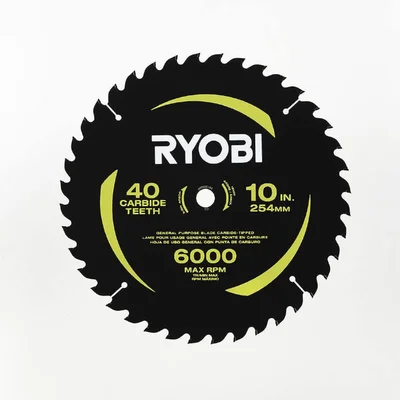 |
RYOBI 10″ 40-Tooth Carbide Thin Kerf Miter Saw Blade – Genuine The TSS103 ships with a 40-tooth blade, but a genuine Ryobi spare is worth having on hand once the stock blade dulls on trim and hardwood.
|
The LED cutline indicator and integrated work light are worth mentioning too, since they solve a real everyday problem. On a fixed-head saw without a laser or LED, lining up a pencil mark under the blade guard means guessing until the blade drops far enough to see it. Ryobi’s LED throws a shadow line onto the workpiece before the cut starts, which sounds minor until it saves a piece of trim from being re-cut because the mark was off by a hair.
Why the Sliding Rails Actually Matter
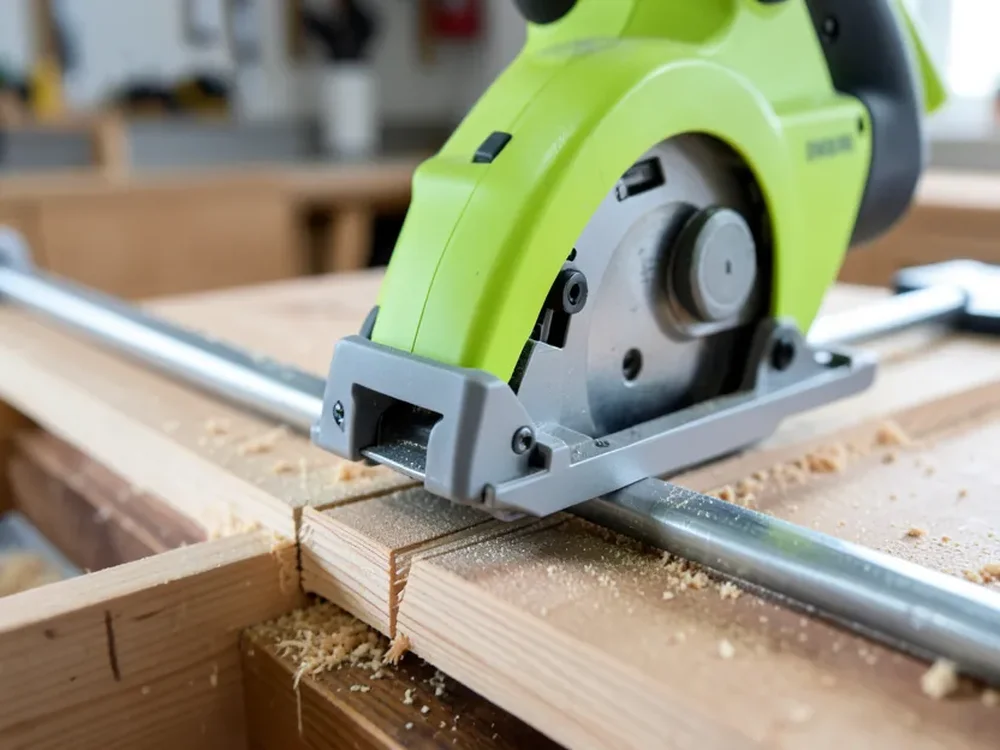
Most write-ups mention “sliding” as a bullet point and move on, which skips the actual mechanical reason it matters. A miter saw’s crosscut width is normally capped by the blade’s diameter and the geometry of the pivot: swing a 10-inch blade straight down onto a board, and the far edge of the board runs out of blade to reach at roughly 5.5 to 6 inches on a typical fixed-head 10-inch compound miter saw. The TSS103’s twin rails don’t change the blade size; they change how the head reaches the material. Pull the head toward you, lower it into the cut, then push it back through the board, and the blade travels through wood the pivot alone could never reach. That is how the same 10-inch blade ends up rated for a 12-inch crosscut instead of 6, roughly double, from a mechanism rather than a bigger blade. For anyone cutting wide baseboard, deep crown molding held vertically against the fence, or stair stringers, that difference is the actual reason a sliding saw gets bought instead of a cheaper fixed-head model with the identical blade size.
Miter and Bevel Range: What You Can Cut in One Pass
The 47-degree miter range in each direction covers standard 45-degree miters with room to spare for slightly out-of-square walls and corners, which is common in older houses where a 90-degree corner is more of a suggestion than a guarantee. The bevel side is more limiting: this is a single-bevel saw, tilting only to the left, up to 45 degrees. For a compound cut that needs a right-tilt bevel, which comes up on crown molding run in certain orientations, the workaround is flipping the workpiece and re-marking it or cutting from the back. Both work, but it is a step a dual-bevel saw skips entirely. If most of your bevel cuts realistically go one direction, this limitation rarely matters in practice. If you run a lot of crown molding both ways, it is worth knowing before buying rather than after.
Setting It Up for Square, Repeatable Cuts
A miter saw straight out of the box is rarely perfectly calibrated, and the positive stops at 0, 22.5, and 45 degrees are only as accurate as the factory setting until you check them. A quick way to test a 90-degree crosscut without a square: cut a scrap board, flip one of the two offcuts end for end, and butt the freshly cut edges together against a straightedge. Any gap at the top or bottom of the joint shows exactly which way the fence is out of alignment, and it shows up more clearly than reading a combination square against the blade. Ryobi’s fence has adjustment screws behind the table for correcting this drift; it takes a few minutes and is worth doing before the first real project rather than after a miter joint comes up short.
Blade maintenance matters more than blade count for how long the stock 40-tooth blade stays usable. Resin and pitch build up on the teeth faster when cutting softwood like pine or cedar, and a gummed-up blade burns the wood and forces the motor to work harder than a clean one would on the same cut. Wiping the blade down with a resin remover every few projects does more for cut quality than swapping to a higher tooth count blade. When the stock blade does eventually dull past the point cleaning fixes, a genuine Ryobi replacement keeps the same 5/8-inch arbor and thin-kerf spec the saw was tuned for, which is the point of the pick above.
Dust collection is worth planning for too. The onboard dust bag catches a portion of what the blade throws, but it is nowhere near complete on its own, especially on longer rip-style crosscuts where chips travel further before settling. Connecting a shop vac to the saw’s dust port instead of relying on the bag catches noticeably more, and it matters most indoors or in a small garage bay where fine dust otherwise settles on every flat surface within a few feet of the saw.
The Tradeoff Nobody Mentions: Rail Clearance
The sliding mechanism that gives the TSS103 its extra crosscut capacity also means the saw needs real depth behind it. With the head pushed all the way back, the rails extend well past the rear of the base, often close to two feet of clearance on sliding miter saws in this size class. Push a sliding miter saw’s stand up against a wall or a shop cabinet the way you might with a compact fixed-head saw, and the rails have nowhere to go: either the slide gets blocked entirely, or the back end of the saw is hitting the wall mid-cut. It is a five-minute fix once you know to leave the room behind the saw, and a frustrating first fifteen minutes if you set up without checking first.
Is the Ryobi TSS103 Right for You?
The TSS103 makes the most sense for anyone who regularly crosscuts stock wider than about 6 inches: baseboard, wide casing, shelving, and stair parts all benefit from the slide. If your projects are mostly narrow trim and small moldings that a fixed-head saw already handles fine, the extra rail clearance and modest price premium of a sliding saw buys capacity you may rarely use. For general trim carpentry, furniture parts, and mixed shop work where board width varies from job to job, the sliding rails are the more versatile choice. If you want to see how the TSS103 stacks up against other 10-inch sliding compound miter saws before deciding, our comparison of corded sliding compound miter saws lines up the same specs side by side.
Frequently Asked Questions
Will a 10-inch sliding miter saw cut a 2×12?
Yes. A nominal 2×12 is actually about 11.25 inches wide, and the TSS103’s 12-inch crosscut capacity at 90 degrees covers that with a little room to spare. Add a miter or bevel angle to the cut and that usable capacity shrinks, so treat the straight 90-degree crosscut as the number to count on for full-width 2×12 stock.
What’s the difference between a sliding miter saw and a sliding compound miter saw?
A sliding miter saw only pivots left and right on its base for angled crosscuts. A sliding compound miter saw, like the TSS103, adds a bevel tilt on top of that miter pivot, so it can combine an angled cut with a tilted blade in a single pass. That combination is the “compound” in compound miter saw.
Is the Ryobi TSS103 a single-bevel or dual-bevel saw?
Single-bevel. The head tilts up to 45 degrees to the left only. Cutting the mirror-image bevel angle means flipping the workpiece rather than tilting the saw the other way.
How much crosscut capacity does the sliding rail system add?
Roughly double what a same-size fixed-head saw manages: about 12 inches on the TSS103 versus roughly 6 inches on a typical non-sliding 10-inch compound miter saw, using the same 10-inch blade diameter in both cases.
The Ryobi TSS103 is not the saw to buy if you need dual-bevel cuts or a compact footprint against a wall. For everything else in the 10-inch class, from wide baseboard to stair stringers, the sliding rails are what turn a 10-inch blade into a saw that competes with the crosscut capacity of a larger, more expensive machine.
Sponsored / affiliate links. As an Amazon Associate I earn from qualifying purchases. I may earn additional commission from eligible campaigns.