Satin vs Semi-Gloss Wood Floors: What Is Best?
Picking the right finish for your wood floors can feel tricky. Many folks wonder, Satin vs Semi-Gloss Wood Floors: Which Is Best? It’s a common question because both look great but have different styles and practical uses.
Don’t worry, we’ll break it down simply. We’ll help you figure out the perfect shine for your home. Get ready to see how easy it is to choose!
Satin vs Semi-Gloss Wood Floors How They Look
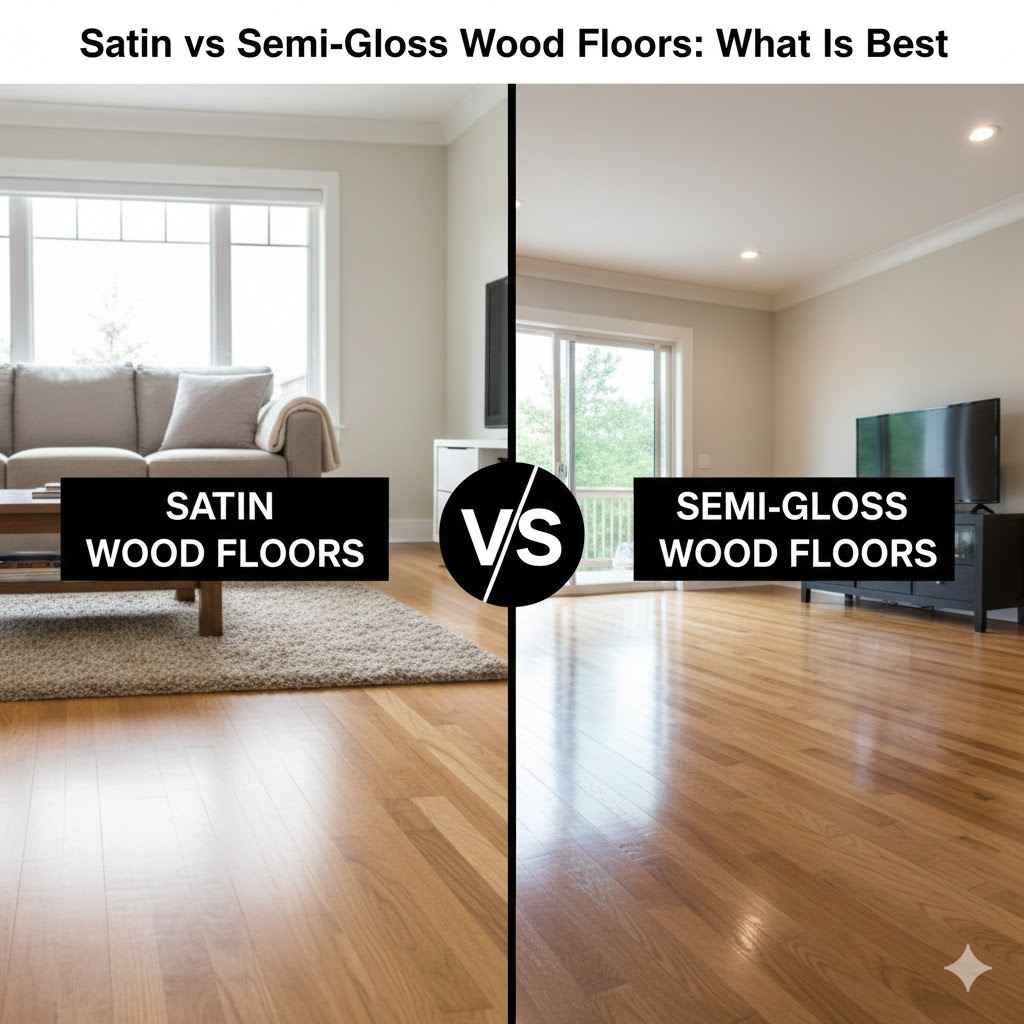
Understanding the visual differences between satin and semi-gloss finishes is the first step in deciding which is best for your wood floors. These finishes affect how light reflects off the wood, influencing the overall ambiance and appearance of your room. They also play a role in how the floor hides everyday wear and tear.
Knowing these distinctions helps you make a choice that matches your aesthetic goals and lifestyle. It is about more than just how shiny the floor is; it’s about the entire feel of your home.
What Is a Satin Finish
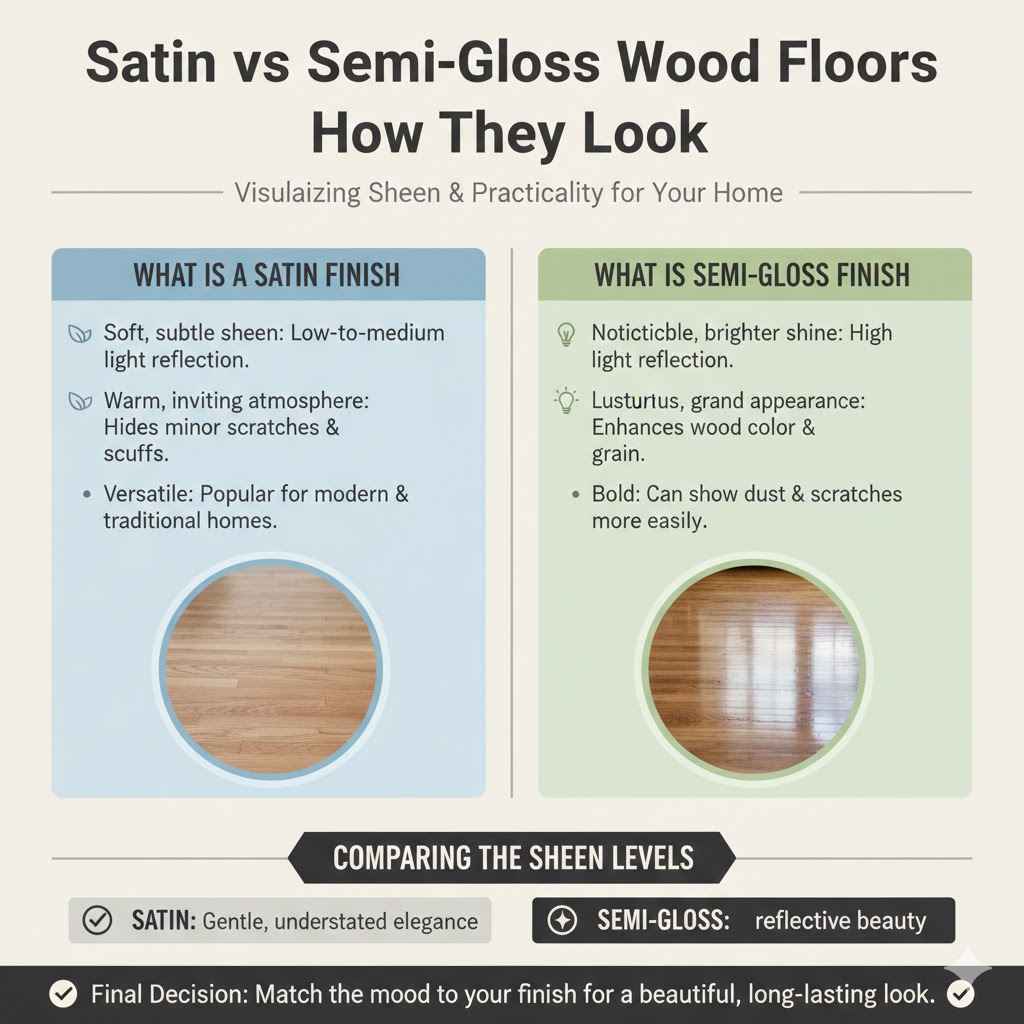
A satin finish offers a soft, subtle sheen. It has a low-to-medium level of shine, making it a very popular choice for many homeowners. The light bounces off it gently, creating a warm and inviting atmosphere.
This finish is not too matte, so it still shows the natural beauty of the wood grain. It also provides a slightly smoother feel underfoot compared to a matte finish.
The understated elegance of satin makes it a versatile option. It works well in both modern and traditional home designs. Because it doesn’t reflect a lot of light, it tends to hide minor scratches and scuffs better than glossier finishes.
This makes it a practical choice for busy households with pets or children. The satin finish offers a balance between a natural wood look and a touch of subtle polish.
What Is a Semi-Gloss Finish
A semi-gloss finish provides a more noticeable shine than satin. It reflects more light, giving the wood floors a brighter and more lustrous appearance. This level of shine can make a room feel more open and grand.
It’s a classic look that many people associate with well-maintained and luxurious interiors. The semi-gloss finish highlights the richness of the wood color.
This finish can also make the wood grain appear more pronounced, adding depth and character to your flooring. However, the higher shine means it can also show more imperfections. Minor scratches, dust, and scuffs are more visible on a semi-gloss surface because the light bounces off them directly.
This requires more frequent cleaning and touch-ups to maintain its pristine look. It is a bold choice that makes a statement.
Comparing the Sheen Levels
The main difference lies in how much light they reflect. Satin is like a gentle whisper of shine, while semi-gloss is a confident gleam. Think of it as the difference between a silk scarf and a polished piece of jewelry.
Satin provides a sophisticated, low-key elegance, while semi-gloss offers a more vibrant, reflective beauty. Both can enhance the natural beauty of wood, but they do so in distinct ways.
- Satin Sheen: Offers a soft, low-reflection shine. It is understated and warm.
- Semi-Gloss Sheen: Provides a noticeable, brighter shine. It is more reflective and can make a room appear larger.
The choice depends on the mood you want to create. If you prefer a cozy, natural feel, satin is a great option. If you like a brighter, more polished look, semi-gloss might be better.
Both are beautiful, but they achieve different aesthetic effects.
Durability and Maintenance Satin vs Semi-Gloss
When it comes to wood floors, how they hold up over time and how much work they require to stay looking good are major concerns. The finish you choose plays a huge role in both durability and the effort needed for maintenance. Understanding these aspects will help you select a finish that fits your lifestyle.
Nobody wants floors that scratch easily or demand constant cleaning. Let’s look at how satin and semi-gloss stack up in real-world use.
How Satin Finish Holds Up
Satin finishes are known for their excellent ability to hide everyday wear and tear. Because they have a lower sheen, minor scratches, scuffs, and even some dirt are less noticeable. The light doesn’t reflect sharply off these imperfections, so they blend in more effectively with the overall surface.
This means your floors can look great for longer between cleanings or refinishing jobs.
This makes satin a very practical choice for homes with active families, pets, or high foot traffic. You won’t have to constantly worry about every little mark. Cleaning a satin floor usually involves regular sweeping or vacuuming and occasional damp mopping with a wood-floor-specific cleaner.
Spills should be wiped up promptly, but minor smudges are often forgiving.
How Semi-Gloss Finish Holds Up
Semi-gloss finishes, with their higher reflectivity, tend to show imperfections more readily. Light bounces off scratches and scuffs, making them stand out. This means that while a semi-gloss floor can look stunning when perfectly clean and well-maintained, it requires more diligent care to keep it that way.
Dust, fingerprints, and pet paw prints can be quite visible.
Maintaining a semi-gloss floor often involves more frequent dusting, sweeping, and cleaning. You might find yourself wiping down high-traffic areas more often. For spills, it’s crucial to clean them up immediately to prevent any potential staining or marks that will be highly visible.
While durable in terms of the protective layer itself, its appearance is less forgiving of daily life.
Maintenance Tips for Each Finish
For satin floors, focus on regular cleaning to prevent dirt buildup, which can dull the finish over time. Use a soft broom or a vacuum cleaner with a hard-floor attachment. A damp mop with a pH-neutral wood floor cleaner works well for deeper cleaning.
Avoid abrasive cleaners or excessive water, as these can damage the wood and finish.
For semi-gloss floors, the key is frequent attention. Dust or sweep daily, especially in entryways and main living areas. Use a microfiber mop dampened with a wood floor cleaner for spills and general cleaning.
Consider using doormats at entrances to trap dirt and grit that can scratch any finish, but especially a semi-gloss one. For a semi-gloss finish, a good quality polish designed for wood floors can help restore some of its luster between cleanings.
Durability Comparison Table
| Feature | Satin Finish | Semi-Gloss Finish |
|---|---|---|
| Scratch Visibility | Low | High |
| Scuff Visibility | Low | High |
| Dust Visibility | Moderate | High |
| Ease of Maintenance | High (less frequent cleaning needed) | Moderate (more frequent cleaning needed) |
| Hides Imperfections | Excellent | Fair |
As you can see, satin generally wins when it comes to hiding daily wear and tear. Semi-gloss looks great but demands more attention to maintain its polished appearance.
Aesthetic Impact and Room Atmosphere
The finish you choose for your wood floors significantly impacts how your home looks and feels. Satin and semi-gloss finishes create very different atmospheres. One offers a subtle charm, while the other provides a more striking elegance.
Thinking about the mood you want to set in each room will guide you toward the right choice. It’s all about how light interacts with the surface and the wood itself.
How Satin Affects Room Feel
A satin finish contributes to a warm, inviting, and comfortable feel in a room. It doesn’t create harsh glare, so it’s easy on the eyes. The softer sheen makes spaces feel cozier and more relaxed.
This makes it an excellent choice for living rooms, bedrooms, and family rooms where comfort is a priority. It complements natural light without overwhelming it.
The subtle shine of satin can make the wood grain stand out gently, showcasing its natural beauty. It adds a touch of sophistication without being ostentatious. Many interior designers prefer satin for its versatility.
It blends well with various decor styles, from rustic to contemporary. The understated elegance means the focus remains on the beauty of the wood and the room’s furnishings.
How Semi-Gloss Affects Room Feel
A semi-gloss finish can make a room feel brighter, more spacious, and more formal. The higher reflectivity bounces light around, which can be advantageous in rooms that are smaller or don’t receive much natural light. This can create a sense of openness and airiness.
It gives a polished, often more traditional, look.
This finish can also make the wood color appear richer and deeper. It draws attention to the floor itself, making it a more prominent design element. Semi-gloss is often chosen for dining rooms, entryways, or formal living areas where a more dramatic and elegant statement is desired.
However, the bright shine can sometimes be too much for very bright rooms, potentially creating unwanted glare.
Visualizing the Difference in Light
Imagine a sunny afternoon. With satin floors, the sunlight will create a soft glow across the surface. You’ll see the beautiful texture of the wood, but there won’t be sharp reflections that cause discomfort.
The room will feel illuminated but serene.
With semi-gloss floors, that same sunlight will create distinct highlights and reflections. You’ll see clear lines of light bouncing off the floor. This can make the room look very bright and dynamic.
It’s a more dramatic visual effect that can be very appealing, but it also means glare can be an issue depending on the light sources and the angle of your seating.
Example Scenarios
In a cozy reading nook, you might opt for satin floors. The soft sheen will enhance the warm atmosphere, making it perfect for relaxing with a book. The reduced glare means you can position your favorite armchair anywhere without being bothered by reflections.
For a grand entryway or a formal dining room, semi-gloss could be the better choice. The shine will make the space feel more elegant and welcoming. It can help a smaller entryway feel larger and more impressive.
The reflective surface can also complement chandeliers or other decorative lighting, amplifying their effect.
Cost and Application Considerations
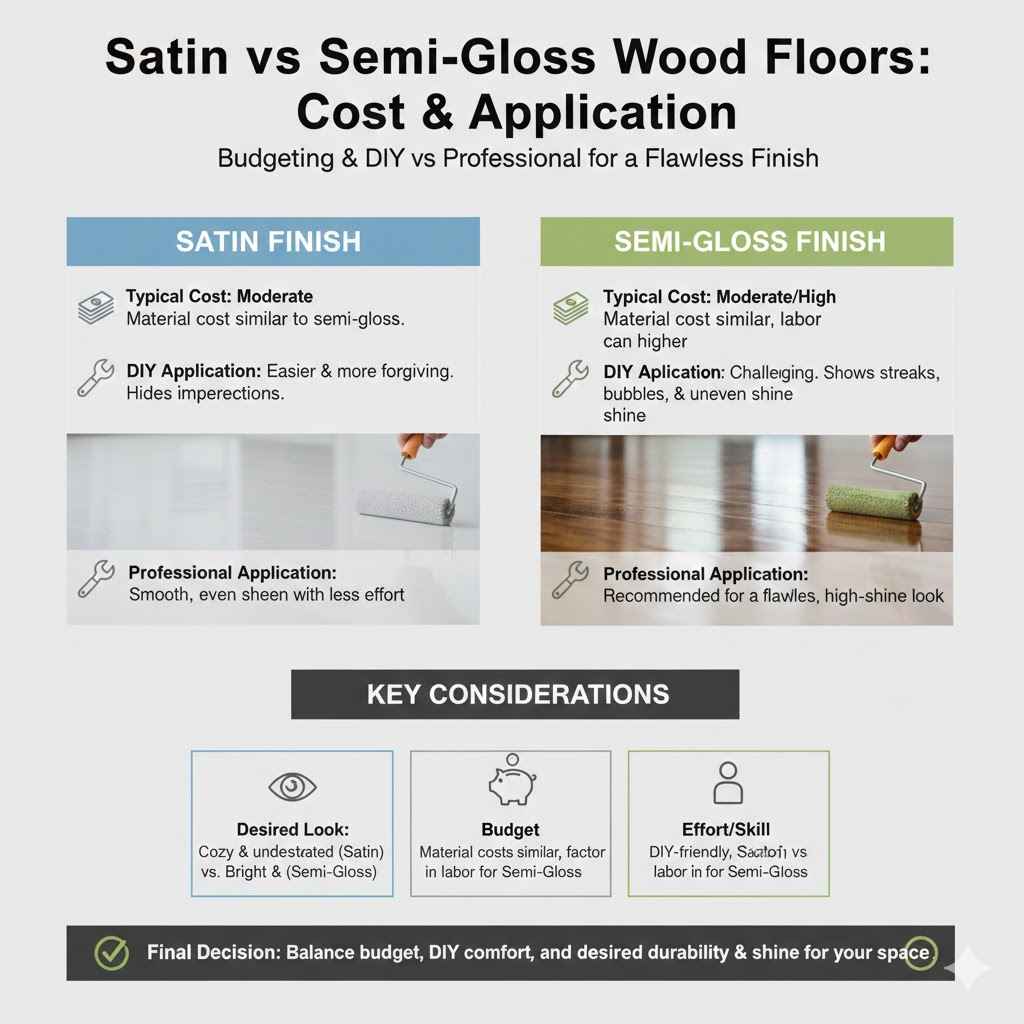
When you’re planning to refinish or install new wood floors, the cost and how the finish is applied are practical factors to consider. Both satin and semi-gloss finishes are generally applied using similar methods, but there can be slight differences in material cost and labor depending on the product. Understanding these aspects will help you budget effectively for your flooring project.
Typical Costs of Finishes
The cost of wood floor finishes can vary based on the brand, type of sealant (e.g., polyurethane, oil-based), and whether you’re doing it yourself or hiring a professional. Generally, the price difference between a quality satin and a quality semi-gloss polyurethane finish is minimal. Both are standard options and are readily available.
However, the cost of application is where you might see more variation. Professionals often charge by the square foot. If a semi-gloss finish requires more coats or more careful buffing to achieve a flawless, high-shine look, it might incur slightly higher labor costs.
Conversely, if a satin finish is chosen for its ease of application and forgiveness, it might sometimes lead to slightly lower labor bills, though this is not always the case.
DIY vs Professional Application
Applying a floor finish can be a DIY project for those with patience and a good understanding of the process. However, achieving a professional, even, and durable finish, especially with a semi-gloss, can be challenging. Streaks, bubbles, or uneven sheen can result from improper application techniques.
Professionals have the experience, tools, and knowledge to apply finishes evenly and efficiently. They understand how to prepare the wood surface, apply multiple coats, and ensure proper drying times. For a semi-gloss finish, getting a perfectly uniform shine without lap marks is critical, and a professional is more likely to deliver this.
For satin, while easier to apply, professional application still ensures the best possible result.
Choosing the Right Product
When selecting a finish, look for high-quality polyurethane products. These are durable and available in both satin and semi-gloss sheens. Water-based polyurethanes tend to dry faster and have lower VOCs (volatile organic compounds), making them more environmentally friendly and less disruptive to your home.
Oil-based polyurethanes are often considered more durable but have stronger fumes and longer drying times.
- Water-Based Polyurethane: Dries fast, low odor, good durability, available in satin and semi-gloss.
- Oil-Based Polyurethane: Longer drying time, stronger odor, excellent durability, tends to amber over time, available in satin and semi-gloss.
Consider your priorities: speed of drying, odor tolerance, and desired long-term durability. Both finishes can be found in excellent formulations for each type of polyurethane.
Real-Life Application Example
A homeowner decided to refinish their old oak floors. They chose a water-based polyurethane. For the living room and kitchen, they opted for a satin finish.
This was because they wanted a warm feel and knew the finish would hide scuffs from their two dogs better. The application went smoothly, and they were pleased with the soft sheen that made the room feel cozy.
In their dining room, which they wanted to feel more formal, they chose a semi-gloss finish. The professional installer was able to achieve a beautiful, even shine that made the dark wood appear rich and luxurious. While it took a bit more careful work to get right, the homeowner felt it was worth it for the dramatic effect in that space.
Frequently Asked Questions
Question: Which finish is more durable satin or semi-gloss
Answer: Both satin and semi-gloss finishes are typically made from the same types of protective coatings like polyurethane. Their durability in terms of resisting wear and tear is very similar. The main difference is how well each finish hides imperfections.
Satin finishes are better at concealing minor scratches and scuffs, making them appear more durable over time because the floor looks better longer.
Question: Can I change from satin to semi-gloss or vice versa
Answer: Yes, you can definitely change from a satin finish to a semi-gloss finish, or vice versa. When you refinish your floors, you can simply choose the new sheen level. The old finish is sanded down, and the new protective coating is applied in your preferred sheen.
This is a great way to update the look of your floors.
Question: Which finish is easier to clean
Answer: Satin finishes are generally considered easier to clean because they hide dirt, dust, and smudges better. You won’t see every little mark, so the floor looks cleaner for longer. Semi-gloss finishes show imperfections more readily, meaning you’ll likely need to clean them more frequently to maintain their polished appearance.
Question: Does the finish affect the color of the wood
Answer: While the finish itself doesn’t change the natural color of the wood, it does affect how the color appears. Semi-gloss finishes can make wood colors look richer and deeper due to their higher reflectivity. Satin finishes offer a more subdued look, allowing the natural tones of the wood to show through without being amplified as much.
Question: Which finish is better for high-traffic areas
Answer: For high-traffic areas, a satin finish is often preferred because it hides scuffs and scratches more effectively. This means the floor will maintain its attractive appearance longer, even with a lot of foot traffic. While semi-gloss is also durable, its shine will highlight every mark, requiring more frequent cleaning to keep it looking its best.
Summary
Choosing between satin and semi-gloss wood floors comes down to your home’s style and how you want your floors to look and feel. Satin offers a warm, soft sheen that hides wear well, making it practical for busy homes. Semi-gloss provides a brighter, more polished look that can make rooms feel grander but requires more frequent cleaning.
Both finishes protect your wood floors effectively. Select the one that best suits your aesthetic goals and lifestyle.