How to Make Slats for a Bed: Size, Spacing & Wood Chart
To make bed slats, buy or rip 1×4 boards, cut each one to the inside width of your frame, and space them with gaps of 3 inches or less, which works out to 12 to 14 slats depending on bed size. The part most guides skip is the span. By our calculation a pine 1×4 running 60 inches across a queen frame with nothing under the middle sags about 0.7 inch under a full load, so queens and kings need a center rail. This guide gives slat counts for every bed size, the spacing limits mattress makers actually publish, and the sag numbers behind the advice.
Check the Span Before You Cut Anything
Best Center Support Pick
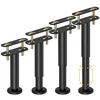 |
Wlrrcwdttc 4 Pcs Adjustable Height Bed Support Legs, 7.08-12.6 inch A set of four steel legs that clamp under a center rail or under the slats themselves, cutting the unsupported span in half on a queen or king frame.
|
Slat length is set by your frame, and slat length is what decides whether a board holds a mattress flat. A slat is a small beam supported at both ends. Double the span and the sag does not double, it grows eight times, because deflection rises with the cube of the span. That is why a twin frame works with nothing but end supports, while a king with the same boards needs help in the middle.
If your frame is a queen or larger, plan on a center rail supported by legs that reach the floor before you cut a single slat. Our guides on adding center support to a bed frame and reinforcing a bed frame cover the rail and leg options in detail.
Bed Slat Size and Count by Bed Size
Measure the inside width of your frame from rail face to rail face, then cut every slat to that length minus about 1/8 inch so it drops in without binding. Mattress width is only a starting point, since frames vary. A common 1×4 is really 3/4 inch thick by 3-1/2 inches wide, and that is the board the numbers below assume.
The slat count comes from a simple formula. With slat width w and a maximum gap g, the number of slats along the mattress length L is (L + g) divided by (w + g), rounded up. The table applies it to standard mattress sizes, first for a 3 inch gap limit and then for a 4 inch limit.
| Bed size | Mattress (W x L, inches) | Slats at 3 in max gap (actual gap) | Slats at 4 in max gap (actual gap) | 1×4 lumber at 3 in gap |
|---|---|---|---|---|
| Twin | 38 x 75 | 12 (3.0 in) | 11 (3.65 in) | 38 ft |
| Twin XL | 38 x 80 | 13 (2.9 in) | 12 (3.45 in) | 41 ft |
| Full | 54 x 75 | 12 (3.0 in) | 11 (3.65 in) | 54 ft |
| Queen | 60 x 80 | 13 (2.9 in) | 12 (3.45 in) | 65 ft |
| California king | 72 x 84 | 14 (2.7 in) | 12 (3.8 in) | 84 ft |
| King | 76 x 80 | 13 (2.9 in) | 12 (3.45 in) | 82 ft |
Mattress sizes are the standard U.S. dimensions. Lumber is total linear feet of 1×4 (slat count times slat length), so buy about 10 percent extra for bad ends and mistakes. The counts are our own arithmetic from the formula above, not a manufacturer chart. Gaps assume the first and last slats sit flush to the head and foot ends.
Two practical notes. Cut one slat first, test it in the frame, and only then cut the rest. And if you only have 1×3 boards (actual width 2-1/2 inches), the same formula gives a higher count, for example 16 slats for a queen at a 3 inch gap.
How Far Apart Should Bed Slats Be? What Mattress Makers Say
Most articles repeat one number, 3 inches, as if it were a law. It is a safe default, but it is not what every maker publishes. Purple’s support page lists slats no more than 3.5 inches apart. Casper’s guidance is flat, wooden slats no more than 4 inches apart. Foam and latex mattresses are the fussiest, because a soft core can sag into a wide gap over time, while an innerspring unit bridges gaps better on its own.
The practical rule is to read your own mattress paperwork first. Warranty terms often require a specific foundation, and a gap wider than the stated limit can be grounds to refuse a claim. If you cannot find the number, 3 inches or less is the choice that satisfies almost any mattress. Building to 2.5 to 3 inches costs one or two extra boards and removes the question.
Slats should also be flat, not bowed, and all the same thickness. Boards of mixed thickness leave the mattress lumpy, and very narrow slats with big gaps concentrate pressure in stripes. Cut every slat from the same stock.
Best Wood for Bed Slats: Real Numbers
Wood species matter less than span, but they do matter. The figures below are published averages from the Wood Database for three woods people commonly use. Janka hardness is dent resistance, modulus of rupture is the bending stress that breaks the wood, and modulus of elasticity is stiffness, the number that controls sag. The last column is our own calculation of the sag at the middle of a 60 inch queen slat with no center support (assumptions in the next section).
| Wood | Janka hardness (lbf) | Modulus of rupture (psi) | Modulus of elasticity (psi) | Calculated sag, queen slat, no center support |
|---|---|---|---|---|
| Eastern white pine | 380 | 8,600 | 1,240,000 | 0.71 in |
| Yellow poplar | 540 | 10,100 | 1,580,000 | 0.56 in |
| Northern red oak | 1,220 | 14,380 | 1,761,000 | 0.50 in |
Two things stand out. First, red oak is only about 40 percent stiffer than eastern white pine, so switching to oak does not fix a slat that is too long. Second, poplar sits between them in stiffness. Pine is fine when the span is short or a center rail is in place, and it is easy to work. If you want a stiffer slat, add thickness or a center rail instead of switching species, as the next section shows.
Why Bed Slats Sag Instead of Breaking
People assume a slat fails by snapping, so they buy thicker or harder wood for strength. The math says otherwise. We modeled a 1×4 pine slat as a simple beam with the load spread evenly, using a deliberately heavy 500 pounds on the bed (a mattress plus two adults). The peak bending stress in a queen slat comes to roughly 880 psi, about one tenth of pine’s 8,600 psi modulus of rupture. The board will not break. What it does is bend, and the bend is what you feel as a hollow in the mattress.
| Bed size | Slat span (inches) | Sag, pine 1×4, no center support | Sag, pine 1×4, center support | Sag, oak 1×4, no center support |
|---|---|---|---|---|
| Twin | 38 | 0.20 in | 0.02 in | 0.14 in |
| Full | 54 | 0.56 in | 0.07 in | 0.39 in |
| Queen | 60 | 0.71 in | 0.09 in | 0.50 in |
| California king | 72 | 1.14 in | 0.14 in | 0.80 in |
| King | 76 | 1.44 in | 0.18 in | 1.02 in |
These are beam-formula estimates, not lab tests of a real bed. They assume a slat resting freely on each end, a 500 pound worst-case load shared evenly across 12 to 14 slats, and the Wood Database stiffness values above. A real mattress spreads load unevenly and a screwed-down slat is a little stiffer, so treat the table as a comparison between options rather than a prediction of your exact sag.
Read down the columns and the pattern is clear. A center rail halves the span and cuts the sag to one eighth, which turns a 0.71 inch sag in a queen into 0.09 inch. Thickness works the same way: a 2×4 laid flat is 1-1/2 inches thick, so it is eight times stiffer than a 3/4 inch board of the same wood, at the price of weight and bed height. For most builds a center rail with standard 1×4 slats is the cheaper fix.
This is why sagging slats are usually a span problem, not a wood problem. If your existing slats already sag, our guide on making bed slats stronger shows the fixes, and wood versus metal foundations compares the alternatives.
How to Make Bed Slats Step by Step
Tools and Materials
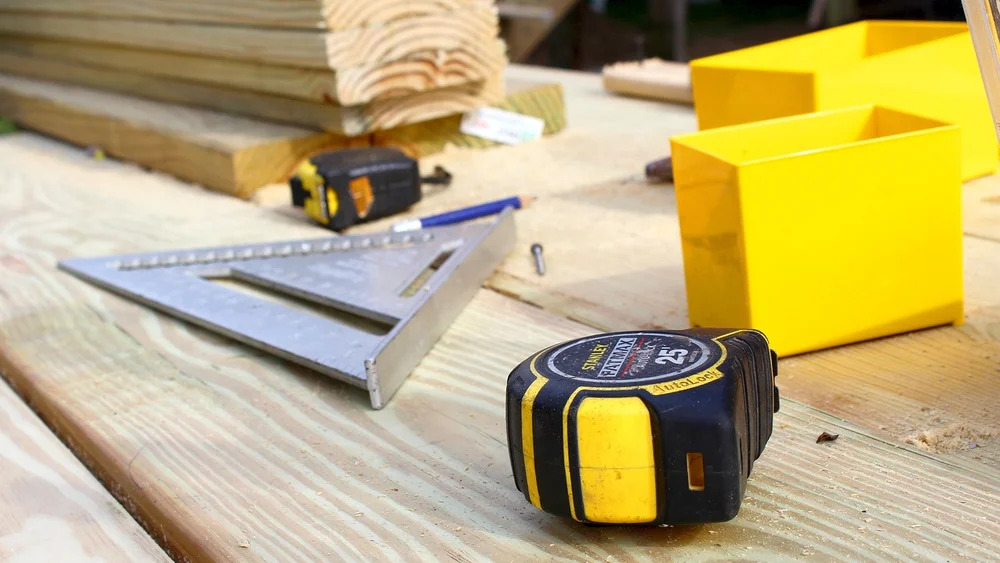
- Tape measure, pencil and a square
- Circular saw, miter saw or hand saw, plus a stop block for repeat cuts
- Drill/driver with a pilot bit
- 1×4 boards (see the lumber column above), plus 1×2 or 2×2 ledger strips if your rails have no ledge
- 1-1/4 to 1-1/2 inch wood screws
- Sandpaper in 120 and 220 grit
The Steps
- Measure the inside width between the rails at both ends and the middle. Use the smallest number, since frames are not always square.
- Set a stop block on your saw and cut the first slat 1/8 inch shorter than that width. Test it in the frame.
- Cut all the remaining slats to the same length, using the stop block so every slat matches. Wear eye and ear protection, and clamp the board before every cut.
- Set aside any boards with large loose knots or splits, which are the weak points in a slat.
- Sand every face, then round the edges and ends with 120 grit, finishing with 220. Rough edges snag mattress covers and sheets. Our edge-rounding guide shows a hand method.
- Screw a ledger strip to the inside face of each side rail if the frame has no ledge, keeping the top of the slats level with or just below the rail top.
- Lay the slats across the rails with equal gaps. Cut a spacer from scrap at your target gap width, for example 2-7/8 inches, and use it to place every slat.
- Fix each slat with one screw at each end through a pre-drilled hole so the boards cannot walk sideways. Whether to screw down every board is a real debate, covered in our guide on screwing down bed slats.
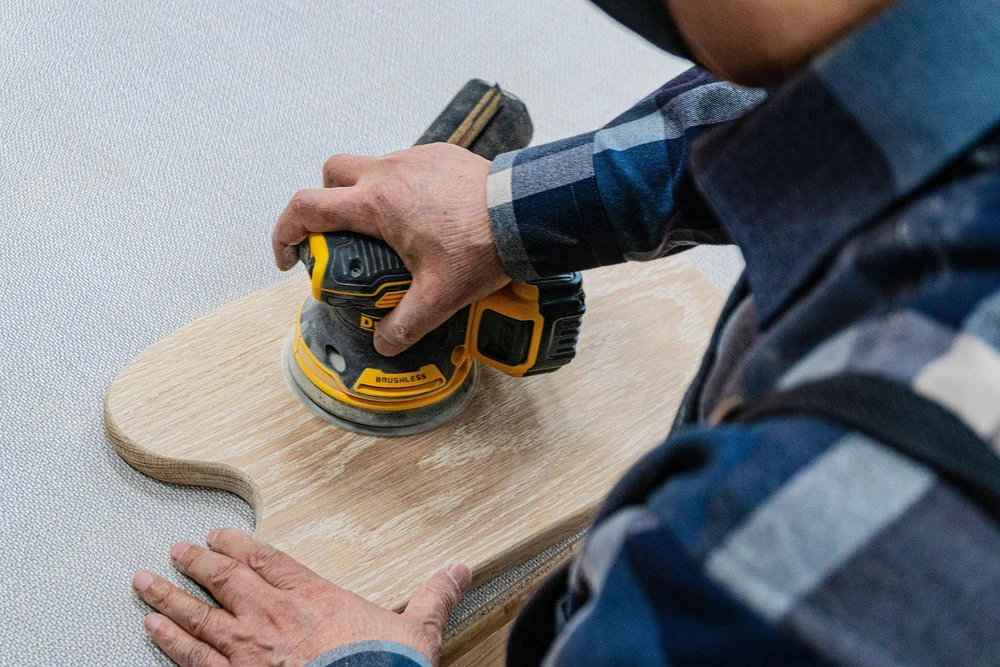
A light coat of water-based polyurethane or wax is optional. It does not add strength, but it keeps bare wood from picking up stains. Let any finish cure fully before the mattress goes on.
If you are building the whole bed rather than replacing slats, our homemade wood bed frame cut list and guide to the best wood for a bed frame cover the frame around them. Considering plywood or a bunkie board instead of slats? See bunkie board versus plywood and whether a memory foam mattress can sit on plywood.
Frequently Asked Questions
How far apart should bed slats be?
Space bed slats 3 inches apart or less. Purple lists 3.5 inches and Casper lists 4 inches as their maximum, but foam and latex mattresses do best with 3 inches or less. Check your own mattress warranty, since a wider gap can void a claim.
How many slats do I need for a queen bed?
A queen (60 x 80 inches) needs 13 slats made from 1×4 boards to keep every gap at 3 inches or less, or 12 slats if a 4 inch gap is allowed. Add a center rail, because a 60 inch slat with no middle support sags noticeably.
What size boards should I use for bed slats?
A standard 1×4, which is 3/4 inch thick and 3-1/2 inches wide, is the usual choice. Cut each slat to the inside width of the frame. For a queen or larger, pair 1×4 slats with a center rail and legs, or step up to thicker boards.
Can I use plywood for bed slats?
Yes, strips of 3/4 inch plywood can work as slats, but keep the same spacing and center support rules. Use a full plywood deck only if your mattress maker allows a solid platform, since a solid deck limits airflow under some mattresses.
Do bed slats need a center support?
Yes for queen, king and California king beds. Our calculation shows a 1×4 pine slat across a queen frame sags about 0.7 inch without center support and about 0.09 inch with it. A twin can go without one, and a full is borderline, so add one if you use a foam mattress or expect heavy use.
Conclusion
To make bed slats that last, measure the inside width of your frame, use 1×4 boards at 3 inches of gap or less, and give any queen or larger frame a center rail. The wood species barely changes the result, while span and center support change it by a factor of eight. Cut one test slat, use a spacer for even gaps, sand the edges smooth, and check your mattress paperwork for its own spacing limit before you finish.
Sponsored / affiliate links. As an Amazon Associate I earn from qualifying purchases. I may earn additional commission from eligible campaigns.