Tung Oil vs Linseed Oil for Cutting Boards
Pure tung oil is the better choice for cutting boards because it cures harder and resists water better than boiled linseed oil; use only a fully cured finish, and expect roughly 7–30 days before full cure. A poor choice can leave a tacky surface that holds moisture and may transfer uncured oil to food. This guide compares cure time, water resistance, and food-contact risk so you can choose the safer finish for cutting boards and other kitchen wood.
| Factor | Tung Oil | Linseed Oil | Winner |
|---|---|---|---|
| Water resistance | Better resistance to moisture, so it handles sink splash and damp wiping more effectively. | Less resistant; it can absorb moisture sooner and is more likely to show swelling or dulling. | Tung Oil |
| Cure behavior | Pure tung oil is 100% oil when labeled that way, may dry 2 to 3 days between coats, and can take 1 to 3 weeks to fully cure. | Linseed oil is a traditional penetrating finish, but it dries and cures more slowly, and the cured film is softer. | Tung Oil |
| Food-contact confidence | Food-safe once fully cured, but only if the product is truly pure and fully dry. | Standard linseed products can yellow and may be less suitable for repeated food contact; product type matters. | Tung Oil |
Tung oil resists water better, but requires weeks to cure
For cutting boards, the main trade-off is direct: tung oil gives more moisture resistance, while linseed oil usually shortens wait time on some products but leaves a softer, less water-resistant result. That matters because boards see knife cuts, sink splash, and detergent, all of which wear through a weak finish quickly.
Water exposure is the first filter
A board that gets rinsed often needs a finish that tolerates moisture without turning gummy or dulling fast. Tung oil wins that comparison, but it still is not a waterproof shell, and it does not stop swelling the way a film finish might on a cabinet door.
Cure time and smell are the second filter
Pure tung oil can dry 2 to 3 days between coats and can take 1 to 3 weeks to fully cure. Linseed oil generally cures more slowly, while boiled linseed oil can cure within 24 to 72 hours, but that faster drying does not make it a better food-surface choice by itself. (Thisoldhouse)
Food-contact risk depends on the exact product
That point matters more than the oil name. A finish must be fully cured before a cutting board or utensil goes back into service, and product formulation matters because “linseed oil” and “boiled linseed oil” are not the same as a food-surface oil labeled for kitchen use.
Cutting board finish comparison table
| Scenario | Recommended finish | Expected cure window | Maintenance interval | Likely failure mode |
|---|---|---|---|---|
| End-grain board | Pure tung oil or a food-safe board oil/wax blend | 1 to 3 weeks for full cure if you choose tung oil | Re-oil when the surface looks dry, usually more often than a display board | Dry spots at the top fibers and moisture entry through knife marks |
| Edge-grain board | Pure tung oil | 1 to 3 weeks for full cure | Periodic touch-up after repeated washing or visible dulling | Uneven wear along seams and edges |
| Salad-serving board | Food-safe board oil or wax blend | Varies by product; confirm the label | Light refresh as needed | Odor retention, greasy feel, or slower cleanup if the finish is too heavy |
| Heavy-wash prep board | Food-safe board oil or wax blend, or plain mineral-oil maintenance | Varies by product; confirm the label | Frequent maintenance, often after visible dry-out | Finish breakdown from detergent, standing water, and heat cycling |
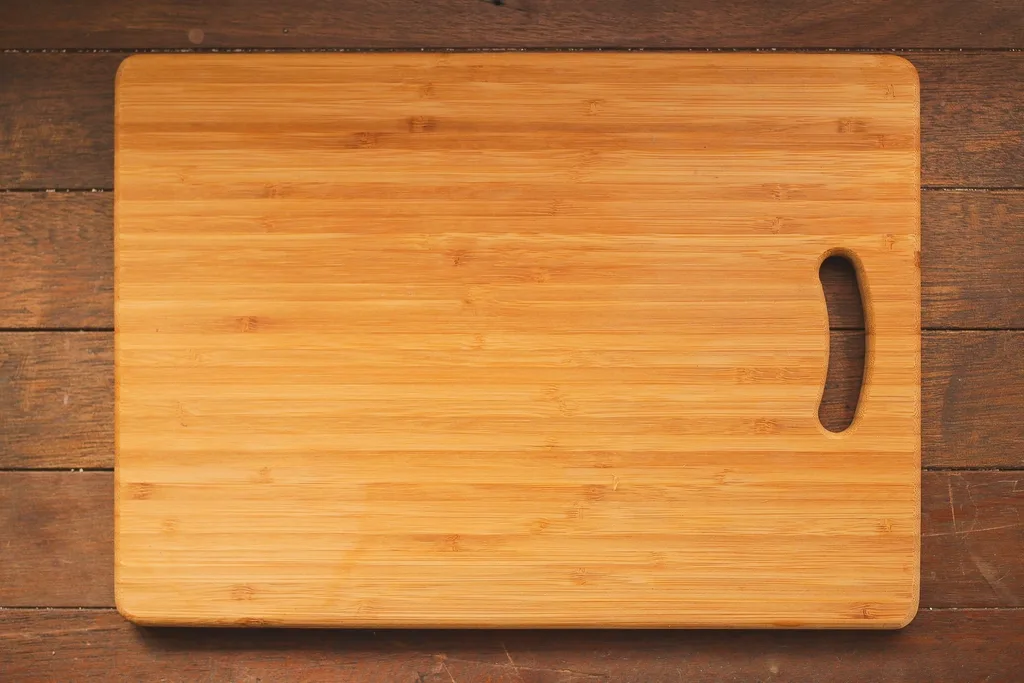
Say a 16-by-12-inch prep board gets rinsed after every dinner. A pure tung-oil finish can work if you are willing to wait for full cure and keep maintenance regular, but a food-safe board oil or wax blend is often easier to renew after sink splash and knife wear.
Suppose a salad-serving board stays out of heavy washing but touches oil, vinegar, and cheese. In that case, odorless board oil or a wax blend is often simpler than a curing oil, because you want easy refresh cycles and low risk of a tacky surface or lingering smell.
How do pure tung oil and linseed oil cure?
Pure tung oil cures more slowly than many people expect, even though it is a strong option for kitchen wood. Plan on 2 to 3 days between coats and 1 to 3 weeks for full cure, then wait for the finish to feel dry and non-greasy before food use.
Dry time between coats
Apply thin coats so oxygen can reach the oil film. A thin coat dries faster than a thick one. Warm, ventilated air helps, while cold or humid conditions can stall drying and leave a tacky surface. The same problem can show up with linseed oil, and it is one reason heavy coats are a bad idea on cutting boards.
Full cure window
Pure tung oil is food-safe once fully cured, but that does not mean it is ready the next day. Linseed oil generally cures more slowly, and standard boiled linseed oil may dry faster yet still be a poor food-contact choice because the formulation often includes metallic driers.
Which finish handles moisture better?
Tung oil handles moisture better than linseed oil, which is why it gets the edge on boards that see sink splash, wiping, and damp storage. That advantage matters for moisture, swelling, and warping, but it still does not make the wood waterproof or immune to knife damage.
Sink-splash boards
If a cutting board sits near the sink or gets rinsed often, the finish needs decent water resistance first. Tung oil stands up better than linseed oil here, especially on open-pore woods that absorb liquid more readily.
Why water resistance is not waterproofing
Neither oil creates a hard shell. The finish slows water entry, but cut marks and end grain still let moisture in, so the board still needs drying, airflow, and periodic re-oiling.
Is either oil safe for food-contact surfaces?
Pure tung oil can be used on food-contact surfaces only after it is fully cured and only when the product is truly pure or otherwise labeled for that use. Standard boiled linseed oil is generally not recommended for cutting boards because metallic driers are common, and product formulation controls the safety answer.
Pure tung oil and full cure
A product sold as pure tung oil should be checked carefully, because some products marketed that way may still be solvent-thinned. The key is the label: look for the exact formulation, then allow the full cure window before any food contact.
Why standard boiled linseed oil is a problem
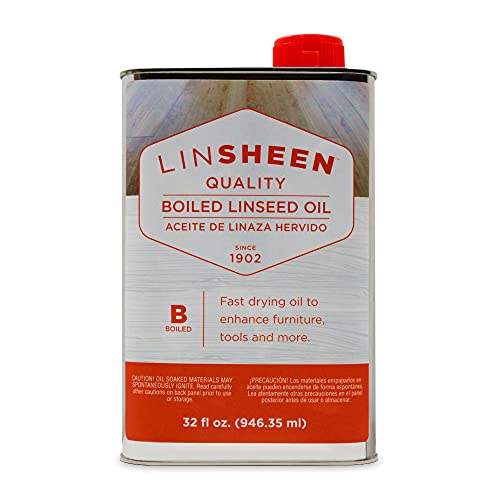
Boiled linseed oil is faster than raw linseed oil and often cures within 24 to 72 hours, but that speed does not solve the food-surface issue. If metallic driers are present, it is generally not the first choice for a cutting board, utensil, or salad server.
Finish choice by cutting board type
The board itself should drive the choice. Dense, low-absorption woods and light-serving boards tolerate more options, while boards that meet water, detergent, and knife use need a simpler maintenance plan and a finish that does not stay gummy.
End-grain board
End grain drinks up finish and also hides knife marks well, so it benefits from a water-resistant penetrating oil. Tung oil is the better curing oil choice here if you want a more durable finish, but many woodworkers still keep a mineral-oil or wax maintenance routine for simpler refresh cycles.
Edge-grain board
Edge-grain boards usually need less finish uptake than end-grain boards, so the gap between products is smaller. Tung oil still wins if water resistance matters, but a food-safe board oil or wax blend may be easier to maintain for everyday family prep.
Salad-serving board
A serving board sees more light moisture and less repeated washing, so odor, feel, and cleanup matter as much as durability. This is one place where a food-safe plant-based oil, mineral-oil alternative, or wax blend can be a better fit than a curing oil.
Heavy-wash prep board
If the board gets detergent, hot water, or constant rinsing, skip the idea that a curing oil will solve everything. A food-safe board oil or wax-only maintenance plan is usually more practical because knife wear will cut through any cured film and you want easy reapplication.
Choose Tung Oil if… / Choose Linseed Oil if…
Choose Tung Oil if you want the better moisture barrier, you can wait for the full 1 to 3 week cure, and the board will see regular kitchen moisture rather than constant detergent washing. Choose Linseed Oil only if you are working with a product clearly labeled for food-contact use and you accept a softer, more water-sensitive finish.
Choose Tung Oil if…
- You need better water resistance for sink splash or damp wiping.
- You can follow thin coats and wait for full cure before use.
- You want a penetrating finish with less yellowing risk than typical linseed oil.
- You are finishing a cutting board that will be dried promptly after washing.
Choose Linseed Oil if…
- You are not trying to maximize moisture resistance.
- The product is clearly labeled for food-contact use, not just wood finishing in general.
- You want a traditional penetrating look and accept more frequent maintenance.
- You are not relying on a standard boiled linseed oil from a hardware shelf for direct food contact.
When to skip both
Skip both oils when your main goal is simple maintenance, odor control, or frequent reconditioning. In that case, food-safe mineral oil, a wax-only routine, or an oil-wax blend is usually easier to manage on a cutting board than a curing finish that can still feel greasy if the coats are too heavy.

Frequently asked questions
Is tung oil good for cutting boards?
Yes, pure tung oil can be a good cutting-board finish when you want better water resistance than linseed oil and are willing to wait for full cure. It is not the only good option, though. Many woodworkers still prefer board oil or wax for simpler maintenance and faster refresh cycles.
Is tung oil safe for cutting boards?
Pure tung oil is food-safe once fully cured, but the exact product matters. A label that says “pure” should still be checked for additives or solvents, and you should not use the board until the finish is fully dry and no longer feels tacky or greasy.
Is linseed oil safe for cutting boards?
Standard linseed oil is not the safest default for cutting boards, and standard boiled linseed oil is generally not recommended because metallic driers are common. A food-contact safe product specifically labeled for kitchen use is a different case, but the name alone is not enough to approve it.
Tung oil vs boiled linseed oil: which is better for a cutting board?
Tung oil is the better choice for a cutting board because it gives better water resistance and a more reliable food-contact path when fully cured. Boiled linseed oil may dry faster, but that does not make it the better board finish, especially if the formulation includes driers.
How long does tung oil take to cure on a cutting board?
Pure tung oil may take about 2 to 3 days to dry between coats and roughly 1 to 3 weeks to fully cure on a cutting board. Warm, ventilated conditions help, while cold or humid air can slow the process and leave the surface sticky for longer than expected.
Does tung oil make a cutting board waterproof?
No. Tung oil improves water resistance, but it does not make a cutting board waterproof or turn it into a sealed film surface. The board can still absorb moisture through knife cuts, edges, and open grain, so drying and routine maintenance still matter.
Can you use linseed oil on a wooden cutting board?
You can use a linseed-based product only if it is clearly labeled for food-contact use and fully cured before the board returns to service. Standard hardware-store linseed oil and many boiled linseed oil products are poor fits for direct food surfaces, so the label must be checked carefully.
Sponsored / affiliate links. As an Amazon Associate I earn from qualifying purchases. I may earn additional commission from eligible campaigns.