Silver Maple vs Sugar Maple: Which Tree Should You Plant?
Choose Silver Maple for fast shade on a large, moist site where you can give it room, and choose Sugar Maple for a slower tree on better-drained soil with fewer long-term conflicts. Picking the wrong one can lead to root trouble, breakage, and costly removals near driveways, foundations, or power lines. This guide compares growth rate, moisture tolerance, size, fall color, and site risk so you can match the tree to your yard.
| Decision factor | Silver Maple | Sugar Maple | Winner |
|---|---|---|---|
| Growth rate | Fast; often about 3 to 5 feet per year in good conditions | Slower; often about 12 to 24 inches per year | Silver Maple |
| Mature size | About 50 to 80 feet tall, with a broad crown | About 60 to 75 feet tall, often wider with age | Tie |
| Root conflict risk | Higher; shallow surface roots commonly affect turf and hardscape | Lower; roots still spread far, but surface conflict is usually less aggressive | Sugar Maple |
| Storm-breakage risk | Higher; weaker wood and branch failure are common concerns | Lower; stronger wood and better limb retention | Sugar Maple |
| Soil moisture tolerance | Very good in wet soils, low spots, and heavy clay | Best in moist, well-drained soil; dislikes chronic wet feet | Silver Maple |
| Fall color | Variable yellow, gold, or sometimes poor color in warm or stressed sites | Reliable yellow, orange, and red tones when site conditions are right | Sugar Maple |
| Maintenance burden | Higher; more cleanup from samaras, pruning, and storm damage | Moderate; less breakage, but still needs room and periodic pruning | Sugar Maple |
Growth, roots, and storm risk
Silver maple and sugar maple solve different problems. Silver maple fits wet ground and fast shade; sugar maple fits better-drained soil and longer-term structure. If your yard is roomy and damp, silver maple can be the practical choice. If your yard drains well and you want a steadier long-term tree, sugar maple is usually the safer pick.
Growth rate and establishment
Silver maple usually reaches usable shade sooner, often adding 3 to 5 feet in a good year once established. Sugar maple grows more slowly, commonly around 12 to 24 inches per year. That speed difference matters because the faster tree gives shade sooner, but it also tends to need more corrective pruning later.
Mature size and space needs
Both trees become large, but neither belongs close to tight structures. A mature maple needs room for its crown and roots, so leave generous clearance from houses, driveways, septic fields, and overhead lines. Sugar maple often develops a broad, dense crown that needs space to keep its shape, while silver maple can sprawl quickly.
Root behavior and yard impact
Silver maple is the tree more likely to create surface-root conflict. Those roots can lift turf, push into edging, and create trouble near sidewalks and driveways, especially in wet soil where roots stay near the surface. Sugar maple roots can still extend widely, but they are usually less notorious for shallow conflict around hardscape.
Wood strength and storm risk
Sugar maple generally has stronger wood and better branch retention. Silver maple is often reported to be more likely to shed limbs in wind, ice, or after poor pruning cuts, especially when the canopy gets large and heavy. That does not mean sugar maple is storm-proof; it means the risk profile is better when weather, age, and pruning pressure add up.
Soil and site conditions
Silver maple is commonly reported to tolerate wet ground, heavy clay, and sites that stay damp after rain. Sugar maple prefers moist, well-drained soil and usually does better where water moves through the profile rather than sitting on top of it. Both can handle full sun to partial shade, but neither fixes a poor planting site.
Which tree grows faster, silver or sugar?
Silver maple grows faster, especially in the first years after planting. That makes it the stronger choice when you want shade sooner and the site can support a large, fast-growing tree. Sugar maple grows at a slower pace, so the canopy takes longer to fill in, but the tree often pays that back with better structure over time.
Speed now, structure later
A common first-timer mistake is choosing the fastest tree for a space that cannot handle its mature size. Say your yard needs shade over a patio in 8 to 10 years and the planting area is broad and damp; silver maple fits that job better. If the same patio is near a driveway, the faster tree can turn into a maintenance burden.
Time to usable shade
Silver maple can provide useful shade sooner, sometimes within a decade or so depending on site conditions and planting stock. Sugar maple usually takes longer to reach the same effect. If quick shade is the priority, that speed matters. If you can wait, sugar maple usually gives you a better long-term structure for the wait.
Which tree fits your site?
Choose the tree by matching it to moisture, soil depth, and available room. Silver maple fits wet low spots, deep enough planting areas, and open edges where fast shade matters. Sugar maple fits drained yards, broader front lawns, and places where you want a steadier canopy for the long run.
Wet low spots and heavy clay
Silver maple is the better fit for sites that stay wet after storms or for low areas with heavy clay. Sugar maple usually struggles more there, especially if the soil stays saturated for long periods. If drainage is poor enough that the ground stays soft for days, silver maple is the more realistic choice.
Compacted urban soil
Neither species is ideal for harsh urban sites with compacted fill, narrow pits, or limited rooting volume, but silver maple handles uneven moisture better. Sugar maple can work in a city yard if the soil is improved and drainage is acceptable, yet it dislikes chronic compaction and drought. For street-tree use, the surrounding space and rooting volume matter more than the label alone.
Small yards, medium yards, and large lots
Silver maple is not a good small-yard tree. Its shallow roots and broad canopy create too much conflict near lawns, paving, and structures. Sugar maple can still be too large for a tight yard, but it is the better option when the lot is medium to large, the soil drains well, and the owner wants a longer-lived shade tree.
Roots, wood, and storm risk
Silver maple’s shallow rooting pattern is the main reason it causes so many site conflicts. Surface roots can interfere with mowing, heave turf, and pressure nearby pavement. Sugar maple roots spread too, but the species usually presents less of a shallow-root problem and tends to hold up better in wind and pruning stress.
How close can you plant a maple tree to a house?
Keep either tree well away from foundations, walks, and service areas. A common rule of thumb is to place large maples about 15 to 20 feet from a house, and farther if the crown will overhang the roof or the soil is wet. For driveways and septic fields, more distance is better because roots and canopy spread keep expanding.
Why pruning changes the risk
Silver maple reacts poorly to hard pruning and repeated topping, which can leave weak attachments and more breakage later. Sugar maple generally handles routine structural pruning better because the wood is stronger and the framework is easier to shape. If the tree will need frequent clearance cuts, sugar maple is the less risky long-term choice.
Scenario: driveway conflict
Suppose a 40-foot-wide suburban lot has a concrete driveway running 10 feet from the planting strip. A silver maple planted there may shade the drive quickly, but its surface roots can create uneven pavement and mowing trouble. Sugar maple grows slower, yet it is the better match if the site can spare the extra time and space.
Fall color and wildlife value
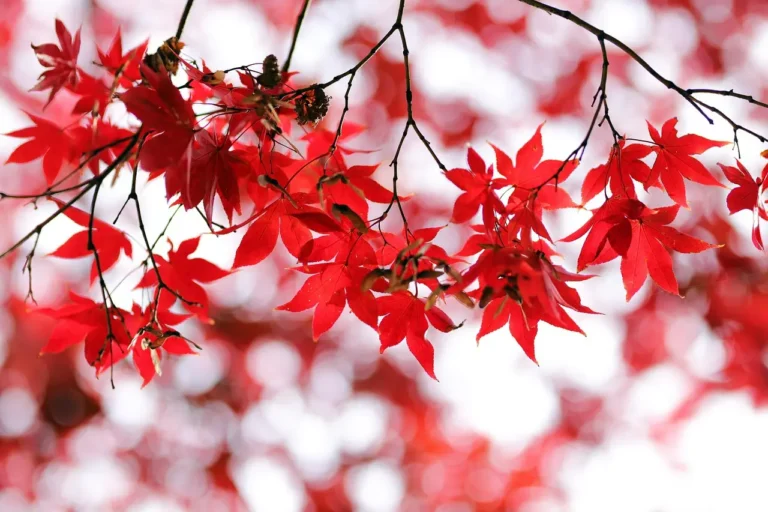
Sugar maple usually wins on fall color. Its leaves are more likely to turn clear yellow, orange, or red, while silver maple often shows yellow to gold and can be less reliable when the site is hot, dry, or compacted. Neither tree should be chosen only for color, but sugar maple is the stronger ornamental pick.
How site conditions affect color
Fall color intensity depends on weather, moisture, and tree health. A stressed silver maple may drop leaves early or color unevenly. Sugar maple also needs the right site to show its best color, but it more often rewards good drainage and adequate sun with a stronger seasonal display.
Wildlife value and cleanup
Both trees support wildlife by providing shade cover and seed crops. Silver maple produces many samaras, so cleanup can be heavy and the seed set can be messy near walks and patios. Sugar maple also feeds wildlife, but its maintenance burden is usually lower because it is less prone to heavy litter and storm-prone branch loss.
Choose Silver Maple if… / Choose Sugar Maple if…
Choose Silver Maple if you need shade quickly on a large, moist site, can give it room from structures, and want a tree that tolerates wet soil better than most maples. Choose Sugar Maple if your yard drains well, you want stronger wood and steadier structure, and you can wait longer for the canopy to fill in.
Choose silver maple if…
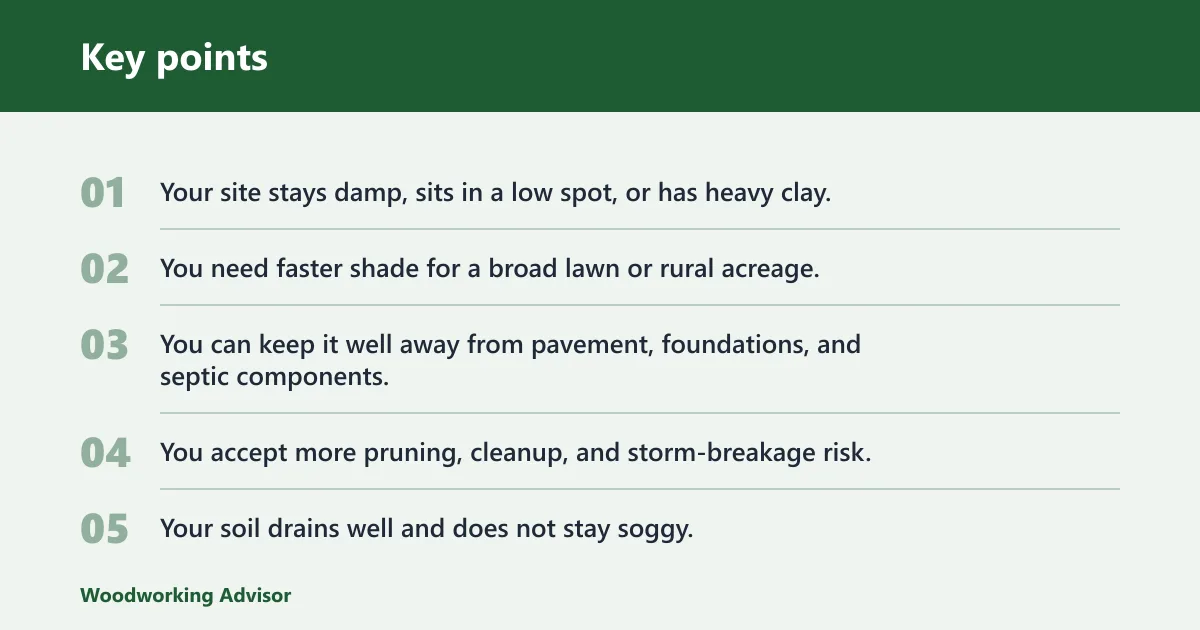
- Your site stays damp, sits in a low spot, or has heavy clay.
- You need faster shade for a broad lawn or rural acreage.
- You can keep it well away from pavement, foundations, and septic components.
- You accept more pruning, cleanup, and storm-breakage risk.
Choose sugar maple if…
- Your soil drains well and does not stay soggy.
- You want a stronger-wooded maple with better long-term structure.
- You care about reliable fall color and a more refined canopy.
- You have enough space for a large tree without crowding utilities or hardscape.
Picture a street-front lawn with overhead lines, a narrow strip of soil, and a sidewalk only a few feet away. Neither tree fits that space well. A smaller species is usually the better answer, because both silver maple and sugar maple outgrow tight planting corridors and create avoidable conflict.
Simple decision rule
- Check drainage first. Wet ground points toward silver maple; drained soil points toward sugar maple.
- Measure the available space. If clearance is tight, choose neither.
- Decide how much risk you will accept. More risk tolerance favors silver maple; less risk points to sugar maple.
- Match the use case. Fast shade on a roomy, moist lot favors silver maple; long-term structure on a drained lot favors sugar maple.


Frequently asked questions
Should I plant a silver maple or sugar maple?
Plant silver maple if you need fast shade on a large, wet site and can accept more root and branch risk. Plant sugar maple if your yard drains well and you want a longer-term tree with stronger wood and better fall color. The right choice follows the site, not the leaf color.
What is the difference between silver maple and sugar maple?
Silver maple grows faster, tolerates wetter soil, and usually has weaker wood with shallower roots. Sugar maple grows more slowly, prefers well-drained soil, and usually has stronger wood with better structure. The two trees can look similar at a glance, but their site needs are very different.
Which maple grows faster, silver or sugar?
Silver maple grows faster. It often adds several feet per year once established, while sugar maple usually grows at a much slower pace. That makes silver maple useful when you want shade sooner, but it also brings more pruning and structural risk over time.
Which maple has stronger wood, silver or sugar?
Sugar maple has stronger wood. It generally holds limbs better through wind and ice and responds better to careful pruning. Silver maple is more prone to branch breakage, especially when it is large, poorly pruned, or planted where storms hit hard.
How big does a sugar maple get?
Sugar maple commonly reaches about 60 to 75 feet tall, with a broad crown that can spread widely with age. It needs enough space for both canopy and roots, so it is not a tree for tight planting beds or narrow strips beside hardscape.
Do silver maples have invasive roots?
Silver maples do not have invasive roots in the legal sense, but their shallow roots are often a problem for lawns, edging, and pavement. In wet soil, those roots stay near the surface and are more likely to cause conflict than sugar maple roots.
Which maple is better for fall color?
Sugar maple is better for fall color. It is more likely to show reliable yellow, orange, and red tones when the site is healthy and well drained. Silver maple can color well too, but its display is usually less consistent and more affected by stress.
Sponsored / affiliate links. As an Amazon Associate I earn from qualifying purchases. I may earn additional commission from eligible campaigns.