Curly Maple vs Bird’s Eye Maple: Which Is More Valuable?
Bird’s Eye Maple usually brings the higher price, especially in small, clear boards and premium veneer. Curly Maple can pass it when the curl is heavy, the board is wide or long, and the stock matches a buyer’s exact need. Price depends on figure density, usable size, defect rate, and end use.
| Factor | Curly Maple | Bird’s Eye Maple | Winner |
|---|---|---|---|
| Figure rarity | Occurs in roughly one in 25 logs; usable boards with clear stripe still turn up in larger runs. | Rarer in clean, saleable stock; dense eye pattern is harder to find in boards that stay flat and usable. | Bird’s Eye Maple |
| Price sensitivity to board size | Large, wide boards with strong curl can bring a strong premium because furniture and panel buyers can use them whole. | Small clear boards and veneer often bring more, but large defect-free boards can jump sharply because supply is thin. | Tie |
| Figure density | Light, medium, and heavy curl all have demand; heavier curl usually pushes price up fastest. | Sparse, medium, and dense eyes show a sharper spread; dense eyes usually bring the largest premium. | Bird’s Eye Maple |
| Workability and waste | Still a figured surface, but it is usually more predictable to plane and sand than dense eye figure. | Harder to machine cleanly without tear-out, so yield loss can cut into usable value. | Curly Maple |
| Finished-piece demand | Strong in luxury furniture, cabinets, tabletops, doors, and musical instruments. | Strong in veneer, high-end cabinetry, turned bowls, and specialty furniture parts. | Tie |
What is curly maple, and what is bird’s eye maple?
Curly maple is a figure pattern, not a species, and its value comes from the striped, shimmering effect it creates across the surface. Bird’s Eye Maple is a separate figure pattern marked by small eye-like spots. Both are premium maples, but buyers price them for different looks and different uses.
Curly maple and chatoyance
Curly maple shows a three-dimensional look along the log, with light shifting across the grain as the viewing angle changes. That chatoyance is a major reason buyers pay more for it. Clear or oil finishes usually bring out that depth better than opaque coatings.
Bird’s eye maple and the eye pattern
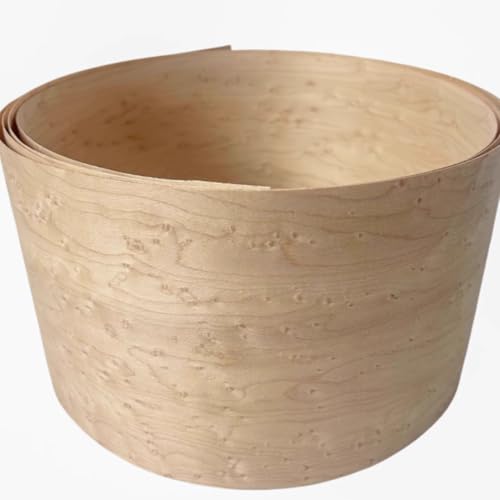
Bird’s eye maple gets its price from the small, repeated eye marks that interrupt the grain in a tight pattern. The figure is rare and often concentrated in smaller areas, which makes usable stock harder to find. Because the pattern can be fickle in milling, clean boards command the strongest premium.
Hard maple and soft maple as base species
Bird’s eye maple is most often associated with hard maple, or Acer saccharum, also called sugar maple or rock maple. Hard maple is commonly listed around Janka hardness 1,450, which helps explain its use for flooring, butcher blocks, and workbenches. Soft maple, often around Janka 700–950, includes red maple or silver maple and can also show curly figure, usually at a lower starting price and with easier working properties. (Wood-database)
Figured maple value matrix

This matrix separates figure type from market result. It shows where price rises fastest and where buyers usually pay for size, pattern density, or better yield rather than for species alone.
| Figure type | What drives price up | When it usually sells for more |
|---|---|---|
| Light curl | Even shimmer, clean color, and enough stripe to read from several feet away. | Furniture parts, doors, and panels where figure matters but waste must stay low. |
| Medium curl | Stronger banding and clearer chatoyance, especially in quartersawn boards. | Tabletops, cabinets, and instrument backs or sides when the buyer wants visible motion. |
| Heavy curl | Dense stripe, strong optical shift, and wider matched pieces with few defects. | High-value furniture sets and instrument parts where display value can justify a larger premium. |
| Sparse bird’s eye | Clean eyes in a board that stays usable, with limited tear-out and distortion. | Smaller parts, accents, and boards where the pattern is present but not dominant. |
| Medium bird’s eye | More frequent eye marks and enough continuity to keep the board saleable. | Matched stock, veneers, and cabinetry components where repeat pattern matters. |
| Dense bird’s eye | High figure concentration, rare clear runs, and low defect loss. | Premium veneer, display furniture, and specialty stock where the pattern is the point. |
- Board size: Wider and longer boards can sell for more when the figure runs consistently across the piece.
- Symmetry: Matched figure across a pair or set raises value for doors, panels, and instrument parts.
- Defects: Knots, checks, warp, and repairs cut value fast because they reduce usable area.
- Intended use: Veneer, furniture, cabinetry, and instruments pay different premiums for the same board.
Figure rarity matters, but rarity alone does not set price. A rare board with short length, twist, or patchy pattern may sell below a less rare board that is larger, cleaner, and easier to place in a finished product. In figured wood, usable yield often matters as much as the figure itself.
Which is more valuable in raw lumber?
Bird’s Eye Maple usually sells for more in raw lumber when the boards are small, clean, and strongly patterned. Heavy curl can outrank it when the board is wide, long, and visually consistent, because furniture and panel buyers can use more of the piece without trimming away the feature they paid for.
A small bird’s eye board with dense, even eyes may bring a stronger price than a larger curly board with uneven stripe. The reverse can happen when the curly board spans a large panel or bookmatched set. Size matters because the usable area, not only the pattern, drives resale value.
Checks, wane, twist, and repairs can erase much of the premium in either figure. Bird’s eye is especially sensitive because the pattern often sells best in clear, stable stock. Curly can survive more variation if the figure remains strong across the board face.
Suppose you have two 8/4 boards with similar color. One is a 6-foot curly board with strong, even stripe and no major defects. The other is a 4-foot bird’s eye board with dense eyes but a slight twist. The curly board can bring more in solid-lumber use because a buyer can actually turn it into a larger finished part.
Why does bird’s eye maple bring such a high price?
Bird’s Eye Maple often brings a high price because usable stock is scarce, the figure is visually distinct, and many buyers want it in small, clear pieces. Veneer and specialty-stock buyers will often pay more per board foot than furniture buyers because the figure can be sliced into thin, repeatable faces with very little waste.
It is rarer in saleable boards
The figure is uncommon enough that a board with both strong eyes and clean structure is difficult to source. The market does not pay for rarity alone; it pays for rare stock that can survive machining and still meet a project’s size needs. That is why clear, stable bird’s eye often costs more than patchy material with similar-looking photos.
Veneer buyers pay for pattern continuity
Veneer turns a small amount of figured wood into many square feet of visible surface. That creates strong demand for dense, consistent eye pattern, especially when buyers need matching sheets for cabinets or furniture faces. Solid lumber buyers are usually more sensitive to waste and movement.
Bird’s eye is harder to machine cleanly
The small swirls and reversals in the figure make tear-out more likely than in straight-grain maple. That does not mean the wood is unusable; it means more time, sharper cutters, and smaller cuts are often needed. Higher labor and higher waste both push the sale price upward in premium stock.
Does quartersawn or flatsawn make figured maple worth more?
Quartersawn stock can help figured maple sell for more because it may reveal curly figure more clearly and more evenly, but it does not create the figure. Flatsawn stock can show the pattern less cleanly and may weaken the visual effect, so a board that looks dramatic in one cut can look ordinary in another.
Quartersawn stock and curly display
Quartersawn lumber is the most efficient way to process maple lumber for the figure, and it often shows curly patterns with more apparent depth. That is why many buyers prefer it for visible furniture parts and instrument stock. The cut is a display choice, not the source of the figure.
Flatsawn stock and weaker display
Flatsawn boards can distort the look of curl or make it read as less consistent. That does not make them low value by default, but it does mean the market may discount the board if the figure is harder to see or less even. Price the actual face, not the species name alone.
Picture a set of cabinet doors cut from the same flitch. A quartersawn door blank shows long, even curl across the face. A flatsawn blank from the same wood may show more break in the stripe and sell for less because the figure reads poorly once the panel is sized.
Choose Curly Maple if… / Choose Bird’s Eye Maple if…
Choose Curly Maple if you need broad demand, larger usable boards, or a figure that works well in furniture, doors, tabletops, and many instrument parts. Choose Bird’s Eye Maple if you need a rare pattern for veneer, matched specialty stock, or high-end cabinetry where small clear boards can carry a stronger premium.
Choose curly maple if…
- You need wide or long boards for panels, doors, or tops.
- You want strong visual movement under clear or oil finish.
- You are pricing for solid-lumber use, where board size and yield matter more than extreme rarity.
- You need a figured maple that often has broader demand in furniture and musical instruments.
Choose Bird’s eye maple if…
- You are selling or buying veneer, small matched sets, or specialty stock.
- You want the strongest premium from dense, distinctive figure in a clear board.
- You can accept tighter machining, more waste, and a smaller pool of usable pieces.
- You are targeting high-end cabinetry or small show surfaces where the eye pattern is the main value driver.

Frequently asked questions
Is curly maple or bird’s eye maple more valuable?
Bird’s Eye Maple is often more valuable in raw lumber, especially in smaller, cleaner boards and in veneer-grade stock. Curly Maple can outrank it when the curl is heavy, the board is larger, and the buyer needs a surface that can be used with little waste. Final value depends on market fit.
Why is bird’s eye maple so expensive?
It is expensive because the figure is rare, clear boards are hard to find, and the pattern often brings a strong premium in veneer and specialty stock. Yield loss and tear-out risk can also raise the effective cost. Buyers pay for usable figure, not just for the name.
Is curly maple a species or just a grain pattern?
Curly maple is a grain pattern, not a separate species. It can appear in maple stock that is sold for furniture, cabinetry, tabletops, doors, or instruments. The value comes from the stripe, shimmer, and depth of the figure, not from a distinct botanical identity.
Which figured maple is rarer: curly or bird’s eye?
Bird’s Eye Maple is generally the rarer saleable figure in clean stock, especially when the eyes are dense and the board remains usable. Curly Maple is also uncommon and may occur in about one in 25 logs, but it is often easier to source in forms that fit furniture and panel work.
How do you finish figured maple to maximize value?
Clear or oil finishes usually bring out depth and chatoyance better than opaque coatings. That matters most for curly figure, where the moving light is part of the selling point. Use a finish schedule that keeps the surface clear and even, because heavy tint can hide the very effect buyers want.
Does figured maple add value to furniture and instruments?
Yes. Figured maple can add value to furniture and instruments because buyers often pay more for visible figure, matched sets, and clear display surfaces. The premium is strongest where the figure can be seen over a wide area and where the board size still fits the project without major waste.
Sponsored / affiliate links. As an Amazon Associate I earn from qualifying purchases. I may earn additional commission from eligible campaigns.