Termite Holes in Wood: What They Look Like and How to Fix Them
A handful of small round holes in a windowsill or deck post is not automatic proof of termites. Carpenter ants and powderpost beetles leave holes too, and mixing them up leads to the wrong treatment. Termite holes have a specific look and a specific set of companions – mud tubes, hollow-sounding wood, and damage that runs with the grain – and this guide walks through how to tell them apart, how bad the damage usually is by the time you notice it, and how to actually repair a hole once the infestation itself has been dealt with.
None of this replaces a licensed pest inspector. If you suspect an active infestation, get a professional inspection before you start patching anything – filling a hole over a live colony just hides the problem while it keeps spreading.
What Termite Holes Actually Look Like
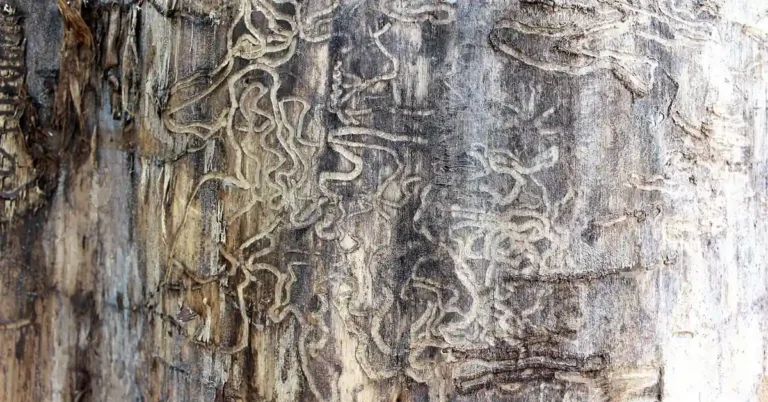
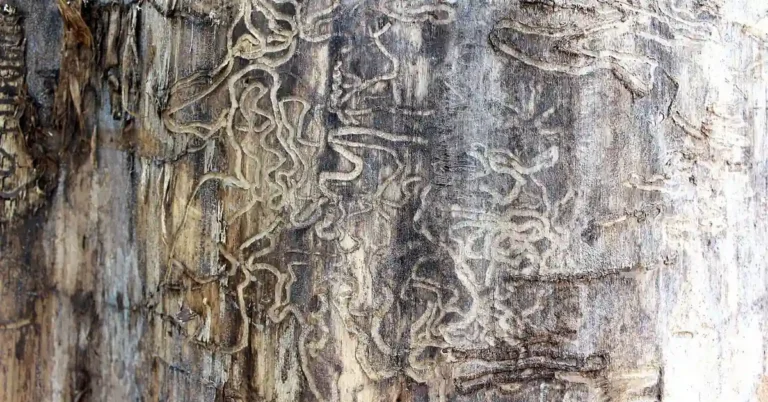
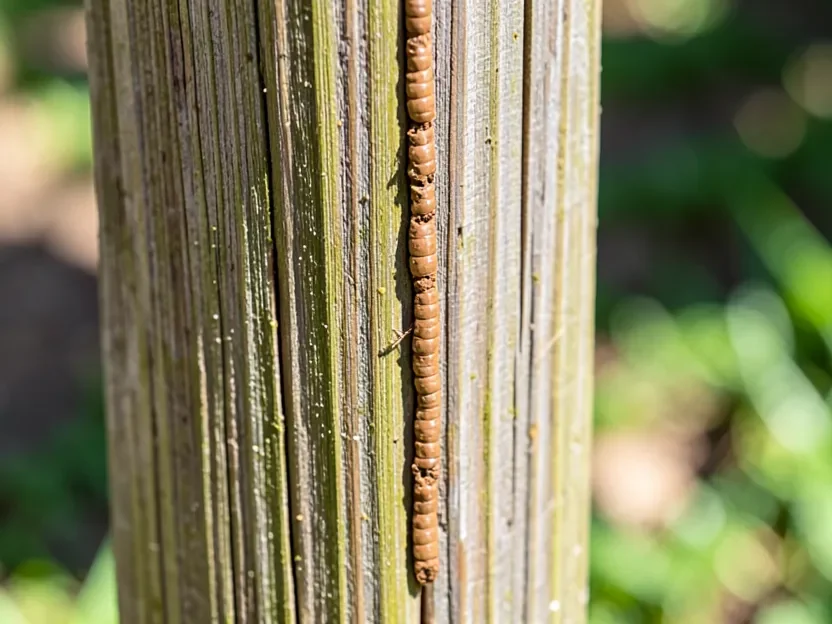
Most people picture termite damage as obvious holes, but subterranean termites – the most common species in the U.S. – rarely puncture the surface at all. They tunnel through the inside of the wood and leave a thin, intact skin of veneer on top, so the damage stays hidden until that skin finally caves in or you tap the wood and it sounds hollow or papery. The real giveaway for subterranean termites isn’t a hole; it’s pencil-width mud tubes running up a foundation wall or support post, built to shield the termites from open air as they travel between the soil and the wood.
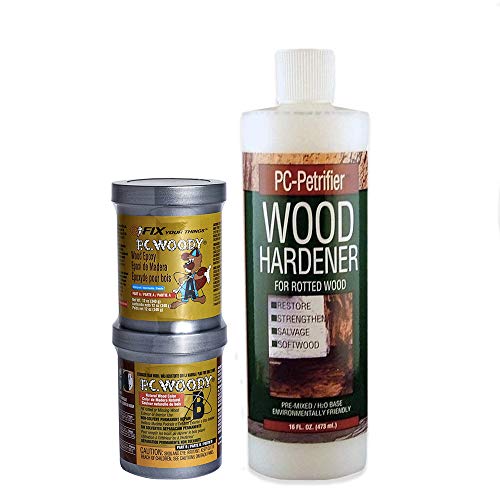
Best for Filling Treated Termite Holes
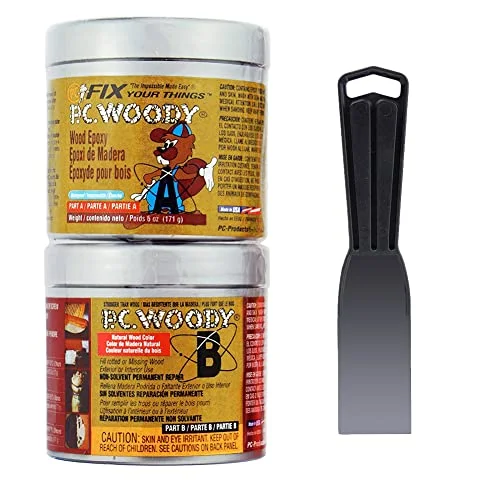 |
PC-Woody Wood Repair Epoxy Kit – $13.36 Once the termite treatment is done, this two-part epoxy paste rebuilds the hollowed-out wood around the hole so it is structurally solid again, not just cosmetically patched.
|
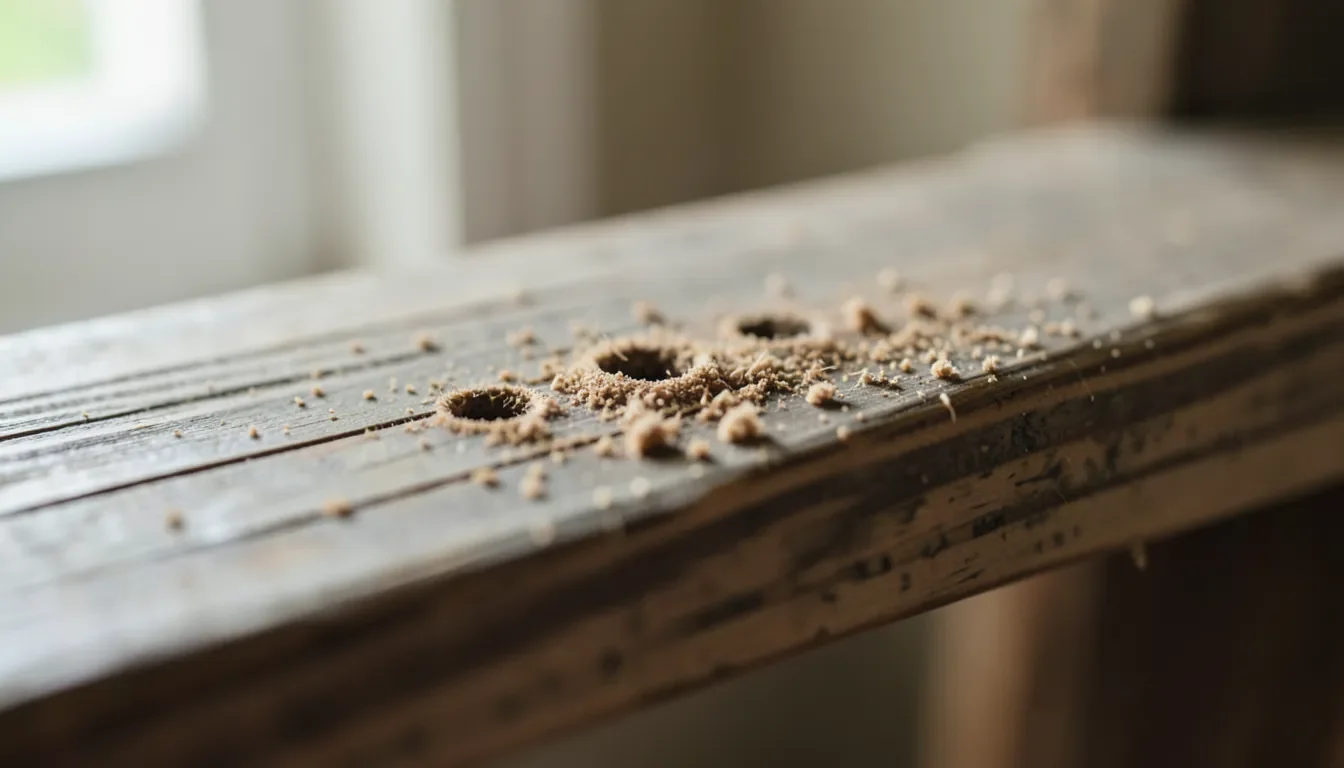
Drywood termites are the exception that actually does make holes. They live entirely inside the wood, without any soil connection, and periodically push waste out through tiny round “kick-out” holes about 1 to 2 millimeters across – roughly the width of a pencil lead. Underneath those holes you’ll usually find small piles of hard, six-sided frass pellets that look a bit like ground pepper or fine sand. If you’re finding actual holes with pellet-like debris rather than mud tubes, drywood termites are the more likely culprit.
Either way, gently press a screwdriver or awl into the wood near the suspected damage. Healthy wood resists; termite-hollowed wood gives way easily or crumbles, often revealing galleries and tunnels that run parallel to the grain.
Termite Holes vs. Carpenter Ant and Powderpost Beetle Damage
Three pests get confused constantly, and misidentifying the one you have means treating the wrong problem. Here’s how to tell them apart by what they actually leave behind:
Not sure whether you are looking at insect damage or fungal decay? Our guide to termite damage vs wood rot compares seven signs side by side.
- Termites (drywood): tiny round kick-out holes, about 1–2mm across, with piles of hard, uniform, six-sided frass pellets underneath. Galleries run with the grain and are mostly hidden.
- Termites (subterranean): usually no visible holes at all – look for mud tubes on foundations or posts instead, plus a hollow sound when you tap the wood.
- Carpenter ants: don’t eat wood for food, they excavate it to nest. Their tunnels are smooth, almost sanded-looking, and they kick out coarse, shredded-looking wood shavings mixed with dead ant parts at the entrance – no mud, no pellets.
- Powderpost beetles: perfectly round exit holes, about 1/16 to 1/8 inch (roughly 1.5–3mm), usually in exposed hardwood furniture, flooring, or framing. The telltale sign is fine, powdery frass that looks and feels like flour or talcum powder, not pellets or shavings.
When the signs are ambiguous, don’t guess. A licensed pest control technician can confirm the species in minutes, and getting it wrong wastes time and money on the wrong treatment while the actual infestation keeps eating.
Where Termite Holes Show Up Most Often
Termites go where the wood meets moisture and easy access, so certain spots turn up damage far more often than others.
Structural Wood
Sill plates, floor joists, and wall studs near the foundation are the most common targets because they sit closest to the soil where subterranean colonies live. Decks, porches, and fence posts set directly in or near soil are also high-risk, since the wood-to-ground contact gives termites a direct path in.
Furniture and Trim
Window sills, baseboards, and wooden furniture can host drywood termites even with no soil contact nearby, since drywood colonies travel by swarming adults rather than underground tunnels. Older or antique pieces are especially vulnerable simply because they’ve had more time to be found.
How to Tell How Bad the Damage Is
Before deciding between a DIY patch and a full board replacement, get a real sense of how far the damage extends.
- Tap along the wood every few inches with a screwdriver handle. A dull, hollow, or papery sound means the interior is compromised even where the surface looks fine.
- Press a thin awl or ice pick into any soft spots. If it sinks in with little resistance, or the wood crumbles rather than splinters, the damage has gone past the surface.
- Check corners and end grain, where damage tends to be most advanced, and follow any mud tubes to see how far they extend up the structure.
- If more than a small, localized area gives way, or if the damage is in a load-bearing member like a joist or stud, treat it as a structural question for a contractor or engineer, not a weekend fix.
Small, shallow, isolated damage on a non-structural piece is a reasonable DIY candidate. Anything load-bearing, or anything you can’t fully see the extent of, is not.
How to Repair Termite Holes: Treat First, Then Fill
The order matters here. Repairing a hole before the infestation is actually treated just gives a fresh colony a patched-over meal – the termites don’t care that you sanded and painted over them. Treat the infestation first, typically with a borate-based wood preservative that soaks into the fibers and acts as a slow poison to any termites still feeding on it, and only then move on to cosmetic and structural repair.
Filling Small Holes and Shallow Galleries
- Let the wood dry out completely and vacuum or brush out any loose debris, dust, or frass from inside the hole.
- Scrape out any soft, crumbly wood with a small screwdriver or awl until you hit solid material.
- Fill with a two-part epoxy wood filler rather than standard wood putty. Epoxy cures hard and is resistant to insects and moisture, while ordinary filler shrinks over time and can still be chewed through.
- Overfill slightly, since most fillers settle a bit as they cure, then let it fully harden per the product’s instructions before doing anything else to it.
- Sand flush and finish with paint or stain to blend it into the surrounding wood.
Replacing Larger Damaged Sections
When the hollowed-out area is too large to fill, cut it out instead. Measure the damaged section, cut it free with clean, straight cuts, and fit a new piece of matching wood into the gap – sanding the edges as needed for a snug fit. Secure it with wood glue and, where appropriate, screws or nails, then sand the transition smooth and match the finish. This takes longer than filling a hole but holds up far better on anything that needs to bear weight.
When to Call a Professional
Bring in a contractor or structural specialist when the damage affects a joist, stud, beam, or other load-bearing member, when you can’t fully see how far the tunneling extends, or when more than a small area is compromised. A professional can open up the area safely, confirm how much of the wood needs to come out, and reinforce or sister in new material so the structure stays sound – not just patched to look fine on the surface.
Pair any structural repair with a pest control professional’s treatment plan. Fixing the wood without addressing the colony just means paying for the same repair again later.
Preventing Future Termite Damage
- Break wood-to-soil contact. Keep deck posts, fence posts, and stored lumber off bare ground, and maintain a gap between soil and any wood siding or framing.
- Control moisture. Fix leaks, keep gutters clear, and ensure crawl spaces and basements are ventilated – termites need moisture to survive, and damp wood is far more attractive to them.
- Use treated or naturally resistant wood for anything near grade, and consider a borate pretreatment on framing lumber during construction or major repairs.
- Do a seasonal walk-around. Check foundations for mud tubes, tap exposed wood for hollow spots, and look for discarded swarmer wings near windows and doors, which often show up before other signs.
- Schedule periodic professional inspections, especially in regions with high termite pressure – catching a colony before it does structural damage is far cheaper than repairing after the fact.
Frequently Asked Questions
What Do Termite Holes Look Like?
Drywood termite holes are tiny, round “kick-out” holes about 1 to 2mm across, usually with piles of hard, uniform frass pellets underneath. Subterranean termites typically don’t leave visible holes at all; look for mud tubes and wood that sounds hollow when tapped instead.
Do Termites Actually Make Holes, or Just Tunnels?
Mostly tunnels. Subterranean termites, the most common species, tunnel through the inside of the wood and leave the outer surface mostly intact until it fails. Drywood termites are the exception, since they push waste pellets out through small kick-out holes as they feed.
How Do You Fill Termite Holes in Wood?
Clean out any loose debris, scrape away soft or crumbly wood back to solid material, then fill with a two-part epoxy wood filler rather than standard putty, since epoxy resists insects and moisture instead of just cosmetically covering the hole. Sand flush and finish to match once fully cured.
Should You Repair Termite Damage Before Treating the Infestation?
No. Treat the infestation first, typically with a borate-based wood preservative or a professional treatment plan, and only repair or fill the wood afterward. Patching over an active colony just hides the problem while it keeps spreading.
Conclusion
Not every hole in a piece of wood is a termite hole, and not every termite problem shows up as a hole at all. Learning the real signs – mud tubes, hollow-sounding wood, tiny uniform kick-out holes with pellet frass – helps you catch an infestation early and avoid confusing it with carpenter ants or beetles. Once the infestation itself is confirmed and treated, repairing the wood is straightforward: clean, fill or replace, and finish to match. If you’re unsure whether a piece of wood is salvageable or needs to be treated and disposed of entirely, see our full guide to identifying and treating termite-infested wood.
Sponsored / affiliate links. As an Amazon Associate I earn from qualifying purchases. I may earn additional commission from eligible campaigns.