Termites Dead on Floor: What It Means and Why You Shouldn’t Ignore It
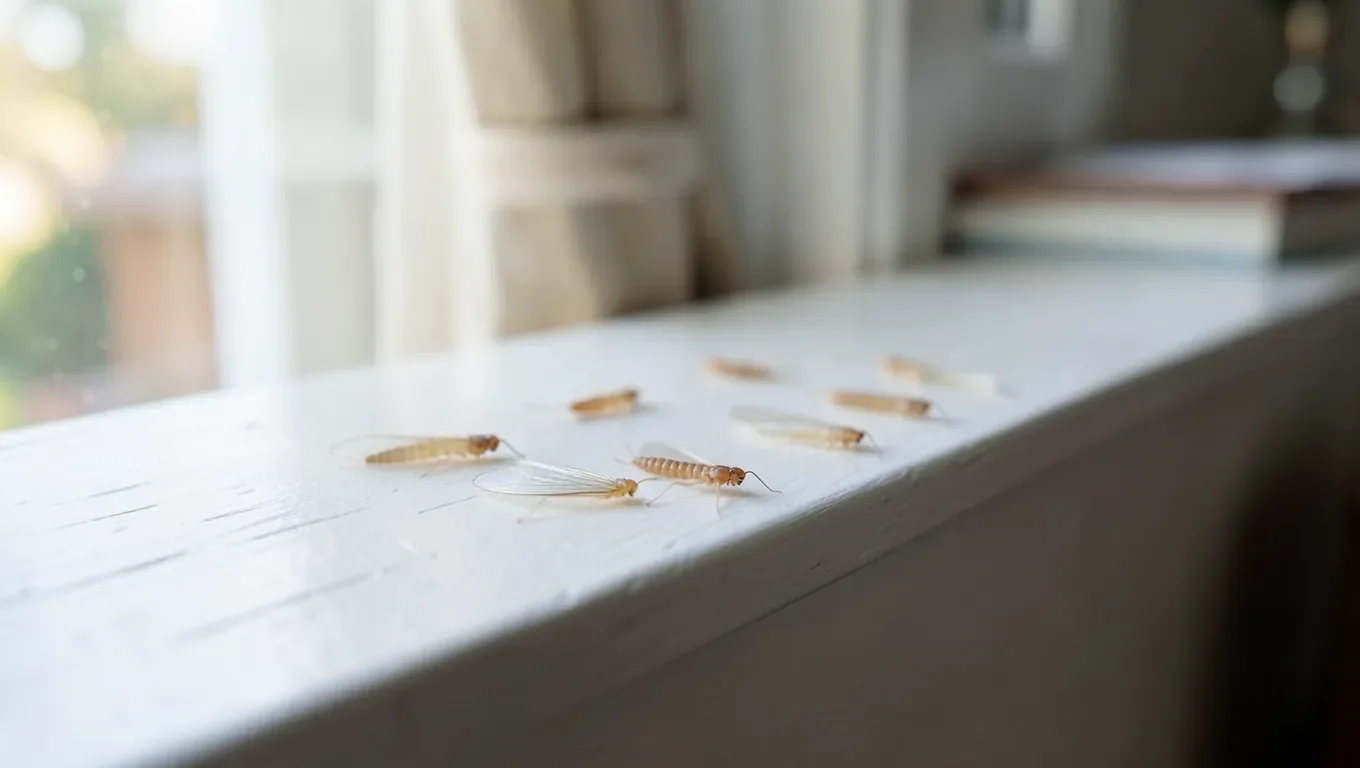
Finding termites dead on the floor almost always means a termite colony swarmed inside or right next to your home – it is not a sign the problem has already gone away. Winged termites (called swarmers or alates) fly out from a mature colony to start a new one, shed their wings once they land, and most of them die within an hour or two if they don’t find a mate and a place to burrow. What you’re looking at on the floor is the aftermath of that event, not the whole story.
The insects themselves aren’t the part that damages your home – the workers that stay hidden inside the wood or soil are. But dead swarmers and their shed wings are the clearest outward clue that a colony exists close enough to have sent a swarm through your house, and that’s worth taking seriously even though the sight itself looks harmless. Here’s what’s actually happening, how to tell how urgent it is, and what to check next.
What Finding Dead Termites on the Floor Actually Means
Best DIY Termite Monitoring Kit
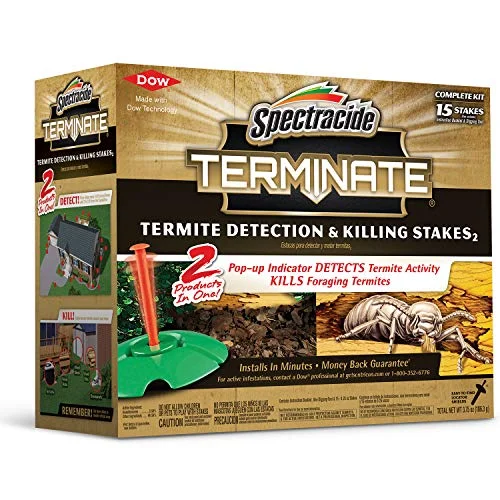 |
Spectracide Terminate Termite Detection & Killing Stakes (15-Count) – $56 A reasonable first step after finding dead swarmers indoors – it won’t replace a licensed inspection, but it gives you an early read on ground-level activity while you wait for one.
|
Two details matter more than the fact that you saw dead termites at all: where you found them and how many. A few dead swarmers on an exterior windowsill, especially near a light, can simply mean an outdoor swarm from a colony in the yard or a neighboring property bumped into your window trying to reach the light and never got inside. That’s worth noting but isn’t necessarily urgent.
Swarmers found on an interior floor, in a closet, near baseboards, or on the sill of a window that was closed at the time, are a different situation. That means the colony released its swarm from somewhere inside the structure – a wall void, a sill plate, a subfloor – which is the single most reliable sign of an active infestation already in your home, not just nearby. It’s also worth knowing that a colony has to be roughly three to five years old and well established before it’s mature enough to produce a swarm in the first place, so an indoor swarm points to a problem that’s been building for years, not days.
Why Termites Die Indoors After a Swarm
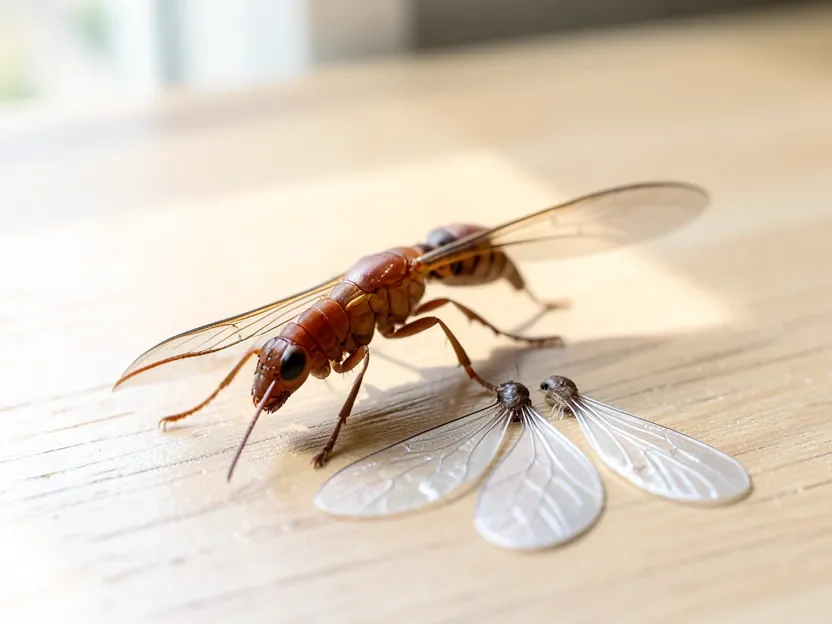
Swarmers are built for one short flight, not for surviving indoors. Once a winged termite lands, it snaps off both pairs of wings at a weak seam near the base – a process called dealation – and tries to pair off with a partner to found a new colony. Most don’t succeed. Indoors, away from soil and without the humidity a termite’s thin exoskeleton needs, a stray swarmer can dry out and die within thirty to forty minutes of losing its wings. That’s why you’ll often find neat little piles of wings with only a few bodies nearby – the wings shed fast, but the termites that don’t reach shelter don’t last much longer.
A pesticide treatment already applied to your home can also be the reason – if a pest control company recently treated your foundation or the soil around it, dead termites on the floor may simply be foraging workers or swarmers that contacted the treatment. If you know a treatment happened recently, that’s a much less alarming explanation than an untreated indoor swarm.
Dead Termites vs. Just Wings: Does It Matter Which You Find?
Not really, for diagnostic purposes – both point to the same event. If you’re not home when the swarm happens, or if the termites scatter and get vacuumed up or eaten by other insects, you may only ever find the discarded wings: small, uniform, translucent, and often in a loose pile near a window, door threshold, or light fixture. If you do catch the aftermath quickly, you’ll usually find both the wings and the bodies of swarmers that didn’t survive. Either way, treat it as the same signal – a mature colony swarmed at or near this location.
Other Signs of an Active Termite Problem
Dead termites and discarded wings are rarely the only clue. Before you call anyone, it’s worth doing a quick walk-through and checking for these alongside what you already found:
- Frass or droppings: Drywood termites push tiny, ridged, wood-colored pellets out of small kick-out holes – they look like coarse sand or sawdust piled near a baseboard crack.
- Hollow or papery-sounding wood: Tap along baseboards, window frames, and exposed joists with a screwdriver handle. Termites eat along the grain from the inside, often leaving a thin, intact-looking shell over damaged wood.
- Mud tubes: Subterranean termites – the most common and most destructive type in the US – build pencil-width tubes of soil and saliva along foundation walls and piers to travel between the ground and your home’s wood while staying protected from open air.
- Doors and windows that stick: Termite activity and the moisture it often introduces can warp door and window frames, making them harder to open and close.
- Paint that looks bubbled or sunken: This can indicate moisture and activity in the wood underneath, similar to water damage but without an obvious leak.
If you’re specifically worried about a floor – sagging boards, a spongy feel underfoot, or hollow spots when you walk – that’s a distinct enough situation that it deserves its own checklist; see our guide on signs of termites in your floor for how to check joists and subfloor without pulling anything apart yourself.
What to Do When You Find Dead Termites
Don’t just sweep them up and move on, but don’t panic either. A methodical response gets you real answers faster than either extreme.
- Collect a few, don’t destroy the evidence. Put several dead termites and a few wings in a small sealed container or bag. A pest control company or your local extension office can often identify the species from a sample, which changes the treatment approach.
- Note exactly where you found them. Interior vs. exterior, which room, near which window or wall. This location is one of the first things an inspector will ask about, and it narrows down where the colony likely is.
- Check nearby areas for the signs listed above – mud tubes along the foundation, hollow-sounding trim, frass near baseboards – without cutting into any wood yourself.
- Clean the area with a vacuum, not a broom, and dispose of the bag outside. This limits how much termite scent trail is left for other insects, and keeps allergenic debris from settling into carpet or HVAC dust.
- Schedule a licensed inspection rather than waiting to see if it happens again. A swarm that already happened doesn’t need to repeat itself for the colony behind it to keep causing damage.
Preventing Future Swarms and Infestations
You can’t fully swarm-proof a house, but you can make it a much less attractive target for the colonies that are already in the area:
- Keep wood off the soil. Firewood stacks, mulch beds, and any wood-to-ground contact near the foundation give subterranean termites a direct, hidden bridge to your home. Keep firewood at least 20 feet away and elevated.
- Fix moisture sources. Leaking spigots, clogged gutters, and poor grading around the foundation keep the soil damp, which is exactly what subterranean termites need. Redirect downspouts and regrade low spots so water moves away from the house.
- Seal obvious entry points. Caulk gaps where utility lines and pipes enter the foundation, and repair damaged weep holes or screens.
- Reduce exterior wood-to-soil contact on structures. Deck posts, fence posts, and porch supports set directly in soil are common entry points – use post bases or concrete footings that keep wood above grade.
- Get a baseline inspection even with no active signs. Many pest control companies offer an annual termite inspection for a modest flat fee, and catching a colony before it swarms is far cheaper than repairing structural damage afterward.
When to Call a Professional
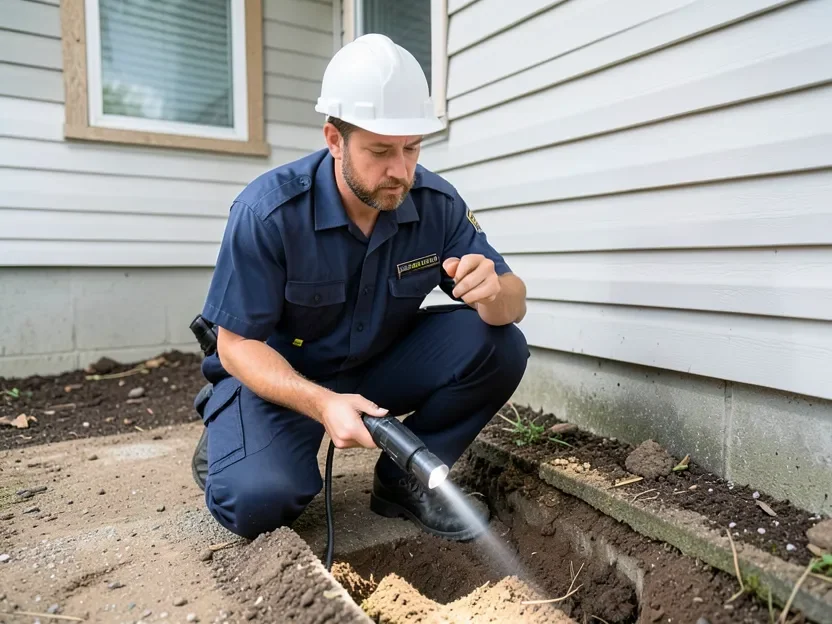
Call a licensed pest control company if any of the following apply: you found swarmers or wings inside the house rather than only outside on a windowsill, you’ve spotted mud tubes anywhere on the foundation, wood sounds hollow when tapped, or you simply want confirmation before assuming the worst (or the best). Species identification and any chemical treatment – liquid termiticide barriers, baiting systems, or in severe drywood cases, fumigation – are jobs for a licensed professional, not a weekend project. A DIY monitoring product like the stakes above can help you keep an eye on things between visits, but it isn’t a substitute for an actual inspection when you’ve already found direct evidence like dead termites indoors.
Frequently Asked Questions
Is it normal to find dead termites on the floor?
It’s a common finding, but not a harmless one. Dead termites on the floor are usually swarmers that didn’t survive after a colony swarmed nearby or inside your home. Finding them isn’t unusual, but it does mean a mature colony exists close enough to have sent that swarm through your space.
Does finding dead termites mean the infestation is over?
No. The swarmers you’re seeing are the reproductive termites that leave the colony to start new ones – they aren’t the workers doing the actual wood damage. Those stay hidden inside the wood or soil. A dead swarm on your floor means a colony exists nearby or inside your structure, not that it’s gone.
How do I know if my termite problem is bad?
Swarmers found indoors (rather than only outside near a light), visible mud tubes on the foundation, hollow or papery-sounding wood, and frass near baseboards together point to a more established problem. A licensed inspector can confirm the extent and the termite species, which determines the right treatment.
Why are there termites on my floor specifically?
Termites on a floor usually arrived there either as part of a swarm (flying toward light from a windowsill or fixture and then losing their wings) or as foraging workers exposed after damaged wood or a mud tube was disturbed. Both point to wood or moisture nearby that’s attracting them.
Is it normal to see just one or two termites?
Not really. Termites rarely forage alone – seeing even a couple, dead or alive, usually means there are many more you’re not seeing, either still in the wall void or soil nearby. It’s worth treating a small sighting as a reason to check further rather than something to dismiss.
The Bottom Line
Termites dead on the floor are the leftover evidence of a swarm, not the infestation itself – and a colony has to be years old before it’s mature enough to swarm at all. Treat an indoor sighting as a reason to check for mud tubes, hollow wood, and frass, keep the evidence instead of sweeping it away, and get a licensed inspection rather than waiting to see it happen again. The insects on your floor already did the hard work of telling you where to look.
Sponsored / affiliate links. As an Amazon Associate I earn from qualifying purchases. I may earn additional commission from eligible campaigns.