Ground Contact Pressure Treated Lumber: UC4A vs UC4B Chart
Ground contact pressure treated lumber is wood treated to AWPA Use Category UC4A or higher, which means 0.40 pcf of ACQ or 0.15 pcf of copper azole, but only if the end tag says so. Above-ground UC3B lumber is not rated for soil. This guide covers UC4A vs UC4B retention, how to read the tag, which fasteners to use, and how to treat cut ends.
Shopping at a big-box store? See what Lowe’s labels on its Severe Weather lumber in Lowe’s pressure treated lumber types, grades and end tags.
Quick Answer
Posts that touch soil need UC4A (0.40 pcf ACQ or 0.15 pcf copper azole). Use UC4B (0.60 pcf ACQ or 0.31 pcf copper azole) for severe conditions or critical parts such as permanent wood foundations. Never put UC3B above-ground lumber in the soil, and check the end tag first.
What Is Treated Wood for Ground Contact?
Best Cut-End Treatment Pick | |
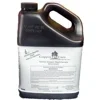 |
Tenino Copper Naphthenate 17% (2% as Metal), 1 Gallon: $66.94 AWPA M4 calls for copper naphthenate with at least 2% copper as metal on cut ends of ground contact lumber. This is a 2%-as-metal product, so it matches the cut-end rule covered below.
|
As an Amazon Associate we earn from qualifying purchases. | |
Treated wood for ground contact is lumber pressure-treated with a waterborne preservative to the AWPA UC4A or UC4B Use Category, the two categories written for wood in contact with the ground or fresh water. The American Wood Protection Association (AWPA) sets these categories, and the tag stapled to the end of the board tells you which one you are holding.
The category system is simple: the higher the number, the more protection the wood carries. UC3B covers exterior wood that can dry out, such as deck boards and railings. UC4A and UC4B cover wood in soil, in fresh water, or in spots where decay is likely. The Western Wood Preservers Institute (WWPI) publishes the AWPA tables used on this page, and every retention number below comes from them.
What Is Ground Contact Pressure Treated Lumber?
Ground contact pressure treated lumber is lumber whose preservative retention meets the UC4A or UC4B level for its preservative. Retention is the amount of preservative left in the wood, measured in pounds per cubic foot (pcf). The numbers differ by preservative, so a copper azole board and an ACQ board in the same category carry different pcf values.
| Use Category | Where it applies | ACQ (pcf) | Copper azole CA-C (pcf) |
|---|---|---|---|
| UC3B, above ground | Decking, railings, fence pickets | 0.15 | 0.06 |
| UC4A, ground contact | Fence posts, deck posts, ledgers, garden boxes | 0.40 | 0.15 |
| UC4B, heavy duty | Permanent wood foundations, severe or critical use | 0.60 | 0.31 |
Retention for sawn fence and deck posts is 0.40 pcf ACQ or 0.15 pcf CA-C (UC4A); permanent wood foundation lumber is 0.60 pcf ACQ or 0.31 pcf CA-C (UC4B). Source: WWPI, Specifying with AWPA Use Categories (AWPA 2020 Book of Standards, Table 3-1)
Do not compare pcf numbers across preservatives. Copper azole needs fewer pounds than ACQ to deliver the same protection, so 0.15 pcf of copper azole at UC4A is not weaker than 0.40 pcf of ACQ. Compare the Use Category first, then confirm the retention matches that category for the preservative on the tag. For a look at how those tags show up on lumber at a big-box store, see pressure treated wood at Lowe’s.
Ground Contact Lumber vs Regular Pressure Treated: What Is Different?
Regular, above-ground pressure treated lumber is UC3B or lower, with 0.15 pcf of ACQ or 0.06 pcf of copper azole. Ground contact lumber carries 0.40 pcf or 0.15 pcf. The difference is not cosmetic, and the tint of the wood will not tell you which one you have. Only the end tag does.
The part most guides miss is that “above ground” does not always mean UC3B is allowed. AWPA says sawn components used above ground must still be treated to UC4A or higher in these cases:
- Soil, vegetation, leaf litter or other debris can build up and stay in contact with the part.
- Plants or the structure itself will block air from circulating under the construction and between decking boards.
- The part sits less than 6 inches above final grade and rests on permeable material such as treated wood or concrete.
- It touches untreated, non-durable wood or older construction showing decay.
- It gets wetted often, as on a floating freshwater dock or beside a watering system.
- It is used in a tropical climate.
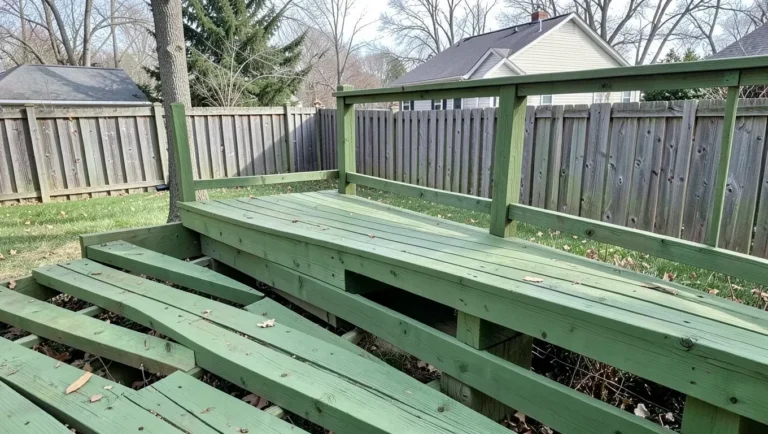
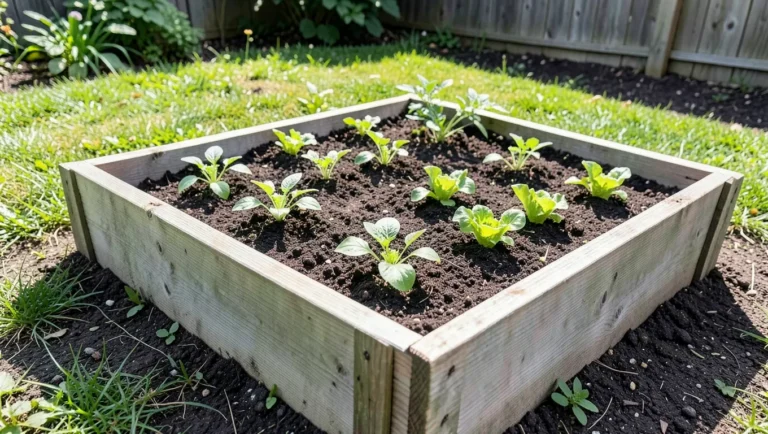
That means a low ground-level deck, a raised bed frame or a post-and-rail fence set close to the soil may need UC4A even though nothing is buried. Source: WWPI, Specifying with AWPA Use Categories.
Treated Wood UC Ratings: Which One Do You Need?
The WWPI specification guide lists the Use Category for common projects. Use it as a starting point and confirm local code and your project conditions.
| Project part | Use Category | ACQ (pcf) | CA-C (pcf) |
|---|---|---|---|
| Deck boards and railings | UC3B | 0.15 | 0.06 |
| Fence pickets and rails | UC3A or UC3B | 0.15 | 0.06 |
| Deck joists and beams, above ground | UC3B or UC4A | 0.15 or 0.40 | 0.06 or 0.15 |
| Deck joists and beams, ground contact | UC4A | 0.40 | 0.15 |
| Structural deck posts and ledger boards | UC4A | 0.40 | 0.15 |
| Sawn fence posts | UC4A | 0.40 | 0.15 |
| Garden boxes and landscape walls | UC4A | 0.40 | 0.15 |
| Ground contact plywood | UC4A | 0.40 | 0.15 |
| Permanent wood foundation lumber and plywood | UC4B | 0.60 | 0.31 |
For most homeowners the answer is UC4A. AWPA describes UC4B as ground contact in severe environments, such as horticultural sites, in climates with a high potential for deterioration, or for critically important components. The WWPI table lists landscape walls and garden boxes at UC4A, so reach for UC4B on a retaining wall only when the wall is a hard-to-replace structural part or the site is unusually harsh. When in doubt, ask your lumber supplier or an engineer.
Types of Treated Wood for Ground Contact
Not every preserved lumber product is allowed in the ground. WWPI lists the common waterborne preservatives and where each one may be used:
| Preservative | Allowed uses | Ground contact? |
|---|---|---|
| ACQ (alkaline copper quaternary) | Above ground, ground contact, fresh water, salt water splash | Yes |
| CA (copper azole) | Above ground, ground contact, fresh water, salt water splash | Yes |
| EL2 (DCOI-imidacloprid) | Above ground only | No |
| PTI (propiconazole-tebuconazole-imidacloprid) | Above ground only | No |
| SBX (inorganic boron) | Interior use kept dry | No |
This is the corrected myth worth remembering: plenty of newer treated lumber is perfectly good decking and still wrong for a post hole. Older CCA lumber is a separate case. The EPA notes that manufacturers voluntarily stopped making chromated arsenical-treated wood for homeowner uses in December 2003, so lumber you buy new today is ACQ, copper azole or one of the others above. Source: EPA, Chromated Arsenicals (CCA).
How to Read the End Tag
Every piece of preserved lumber carries an end tag or stamp. According to the AWPA infographic, it lists the treating company, the preservative, the retention, the standard and the exposure. A tag for above-ground lumber reads like “CA-C, .06 pcf, AWPA U1, UC3B, above ground.” Ground contact lumber should instead read UC4A or UC4B, with the retention for that category.
- Use Category: UC4A or UC4B for anything touching soil.
- Preservative and retention: match the pcf to the table above, for that preservative.
- Exposure line: it should say ground contact, not above ground.
- Missing tag: do not guess. Ask the yard, or buy lumber that is tagged.
Fasteners and Cut Ends for Ground Contact Lumber
Copper-based preservatives corrode plain steel, so hardware matters. AWPA says builders should use hot-dip galvanized steel, stainless steel, silicon bronze or copper fasteners with treated wood, and it adds that you should follow the fastener maker’s compatibility recommendations. Source: AWPA, For Builders.
“It is important to follow the fastener manufacturers recommendations regarding compatibility of their fasteners with pressure treated wood.”
Cut ends are the other weak point. Preservative is more concentrated near the outside of the board than at its center, so a fresh cut or drilled hole exposes less-protected wood. IRC R317.1.1 requires field-cut ends, notches and drilled holes of preservative-treated wood to be treated in the field per AWPA M4. For exterior ground contact, M4 names copper naphthenate (minimum 2 percent copper as metal), while oxine copper is the above-ground choice. Brush it on before the post goes in the ground. Our recoating cut treated wood code breakdown covers the details.
Safety Considerations When Using Treated Wood
The EPA advises wearing goggles and a dust mask when sawing treated wood and washing your hands after handling it. It also says not to burn preservative-treated wood in a residential setting, to avoid inhaling toxic smoke and ash. Follow the same steps for ACQ and copper azole lumber, and read our guides to cutting treated wood and sanding treated wood before you start. Source: EPA, Chromated Arsenicals (CCA).
How to Choose the Right Treated Wood for Your Project
- Does any part touch soil or hold standing water? If yes, choose UC4A at minimum.
- Is it above ground but close to the soil, blocked from airflow or in contact with debris? Apply the AWPA conditions above and step up to UC4A.
- Is it a permanent foundation or a critical part in a harsh site? Look at UC4B.
- Is the tag readable? If not, pick different lumber.
- Buying a finish? A wood sealer or stain is for the above-grade surfaces, not a substitute for the right Use Category.
Wondering how long a UC4A post lasts, and what makes it fail early? That is the focus of our ground contact pressure treated wood durability guide.
Conclusion
Choose by Use Category, not by color. UC4A covers fence posts, deck posts and garden boxes; UC4B is for severe or critical conditions; UC3B stays out of the soil. Check the tag, use hot-dip galvanized or stainless fasteners, and treat every cut end with copper naphthenate before the lumber goes in the ground.
Frequently Asked Questions
What does ground contact mean for treated wood?
Ground contact means the lumber is treated for AWPA Use Category UC4A or higher, the categories for wood in contact with soil or fresh water. For ACQ that is 0.40 pcf retention, and for copper azole (CA-C) it is 0.15 pcf. The Use Category is printed on the end tag.
What is the difference between UC4A and UC4B?
UC4A is general-use ground contact for non-critical parts such as fence posts, deck posts and garden boxes. UC4B is heavy duty, for severe exposure or critical, hard-to-replace parts such as permanent wood foundations. Retention is higher: 0.60 pcf ACQ and 0.31 pcf CA-C, against 0.40 and 0.15 for UC4A.
Can you use above-ground (UC3B) lumber in the ground?
No. UC3B retention is 0.15 pcf for ACQ and 0.06 pcf for CA-C, well below the UC4A levels of 0.40 and 0.15. UC3B lumber is meant for decking, railings and fence pickets with room to dry, not for soil contact, and some above-ground parts also need UC4A.
Do I need to treat the cut ends of ground contact lumber?
Yes. IRC R317.1.1 requires field-cut ends, notches and drilled holes of preservative-treated wood to be treated in the field per AWPA M4. For ground contact that means copper naphthenate with at least 2% copper as metal, brushed on before the cut end goes in soil.
What fasteners should I use with ground contact lumber?
AWPA says builders should use hot-dip galvanized steel, stainless steel, silicon bronze or copper fasteners with preservative-treated wood. Always follow the fastener maker’s compatibility guidance for the specific preservative on your lumber’s tag.
Is all green or brown pressure treated lumber rated for ground contact?
No. Some modern preservatives, including EL2 and PTI, are listed for above-ground use only, and borate (SBX) is for dry interior use. Only the end tag tells you the Use Category, so check for UC4A or UC4B before buying posts.
Sponsored / affiliate links. As an Amazon Associate I earn from qualifying purchases. I may earn additional commission from eligible campaigns.