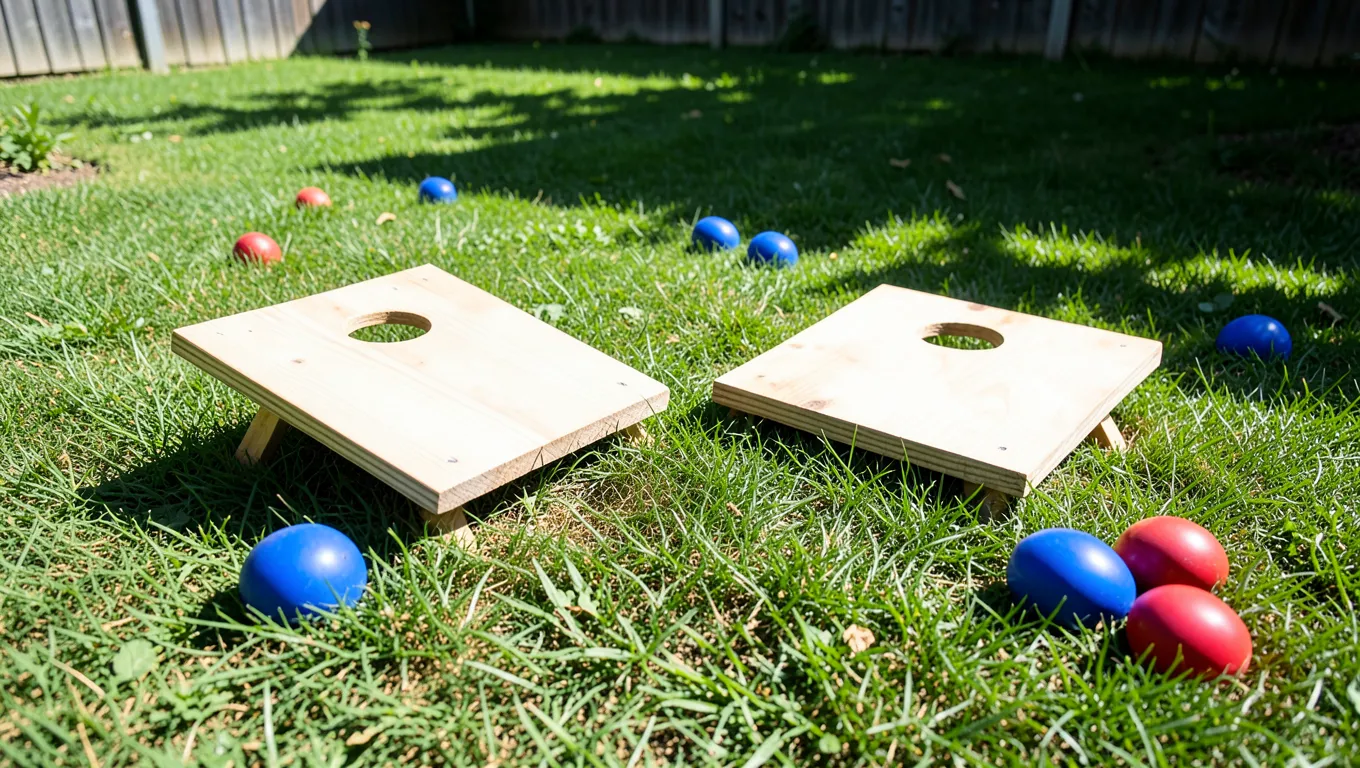
Official Cornhole Board Dimensions: 48 x 24 Inches, 6-Inch Hole
Regulation cornhole boards are 48 inches long by 24 inches wide, with a 6-inch diameter hole centered 9 inches from the top edge (and 12 inches from each side). The board sits elevated so the far end is roughly 12 inches off the ground and the near end 3–4 inches, creating the slope bags need to slide into the hole.
Full Regulation Dimensions
Skip the Build — Regulation Set Ready to Play
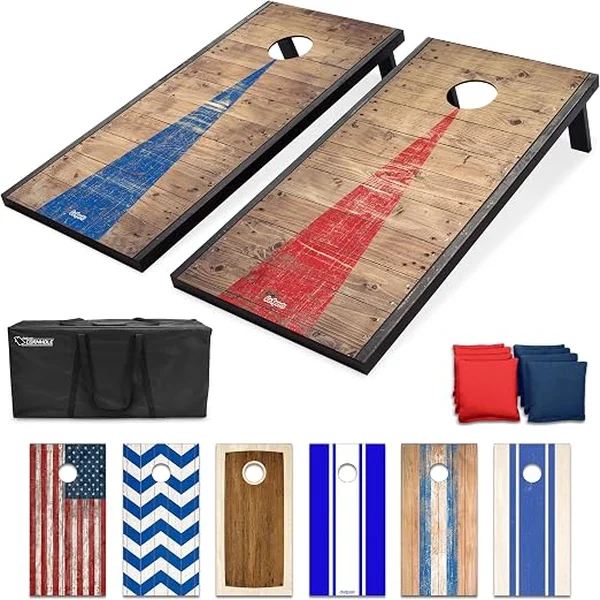 |
GoSports 4 x 2 ft Regulation Size Cornhole Board Set – $93.03 Full 48″x24″ regulation boards, pre-drilled 6″ hole, 8 bags, and a carrying case — if you’d rather play today than build this weekend.
|
| Measurement | Regulation Spec |
| Board length | 48 inches |
| Board width | 24 inches |
| Hole diameter | 6 inches |
| Hole position from top edge (center) | 9 inches |
| Hole position from each side (center) | 12 inches (centered) |
| Playing surface thickness | 1/2 inch plywood, minimum |
| Board height, front edge | 3–4 inches |
| Board height, back edge | 12 inches |
| Distance between board fronts | 27 feet |
| Corner style | Rounded, not sharp 90° corners |
The Detail Most Guides Skip: Rounded Corners
Official cornhole regulation calls for rounded corners on the board, not sharp square ones — it’s a safety spec, not a style choice, since players and bystanders end up close to the boards’ edges during a game. If you’re building your own, trace a can or a compass template with roughly a 3–4 inch radius at each corner before cutting, then sand the curve smooth. It’s a five-minute step that a lot of DIY plans skip entirely, and it’s the difference between a backyard-looking board and one that would actually pass at a sanctioned tournament.
If you’re building from scratch: a half-sheet of 1/2″ plywood (a 4’x8′ sheet cut in half gives you almost exactly enough for two boards with minimal waste), 2x4s for the frame, a 6″ hole saw or jigsaw for the hole, folding hairpin legs or hinges for the leg braces, wood screws, and exterior paint or polyurethane for the finish.
Regulation vs. Casual Backyard Boards
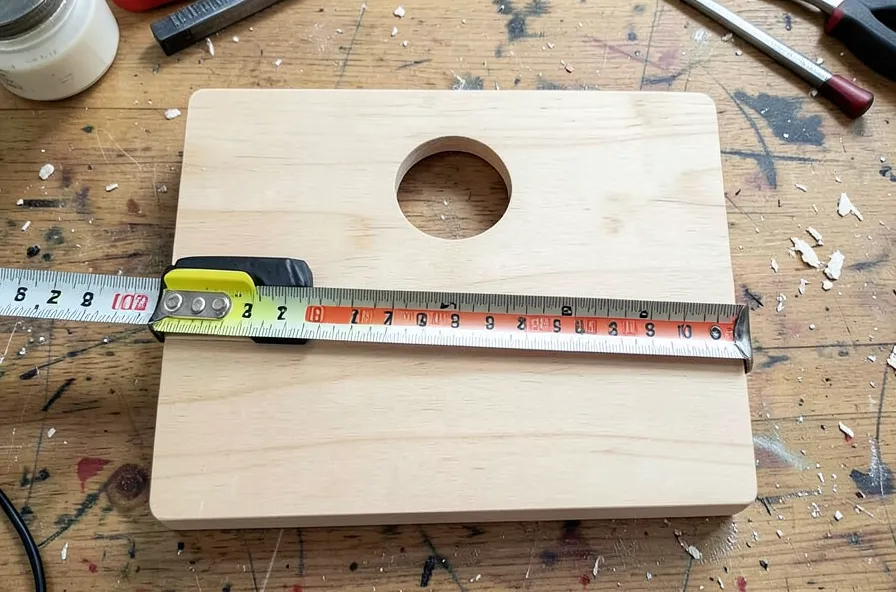
Regulation boards (48″x24″, 6″ hole, rounded corners) are what you need for anything sanctioned or tournament-adjacent, and they’re also just the size most commercially made bags and boards are built to match, so sticking to spec keeps your set compatible with borrowed boards and bags at a cookout. Casual/backyard boards can be smaller — some inexpensive kids’ or travel sets run 36″x18″ or smaller with a proportionally smaller hole — but mixing a regulation bag set with an undersized board (or vice versa) throws off the game’s balance, since bag size and hole size are meant to match the standard.
Material Choice
Plywood is the standard choice: 1/2″ cabinet-grade or ACX plywood is light enough to carry, holds paint well, and is what most manufactured boards use. Solid wood is heavier and more expensive but resists warping better outdoors over years of storage. Whichever you choose, the top surface needs to be smooth and free of grain texture that would slow a sliding bag — a coat of polyurethane or a UV-resistant clear coat over paint gives you that slick, consistent slide.
Setup: Distance and Placement
Set the two boards 27 feet apart measured front-edge to front-edge, facing each other on level ground. Give yourself at least 3 feet of clearance on each side and behind each board for a full pitcher’s box — cramped setups are the most common reason casual games feel off compared to the “real” game.
Maintenance
Wipe boards down with a soft cloth and mild soap and water; skip harsh solvents, which can dull a polyurethane or polycrylic topcoat. Dry them fully before stacking or storing — trapped moisture between stacked boards is the most common cause of warping and peeling finish. Store flat or fully upright (not leaned at an angle, which stresses the panel over time) in a dry space out of direct sun, since UV exposure fades paint and can dry out plywood veneer over seasons.
Frequently Asked Questions
What are standard cornhole board dimensions?
Standard regulation cornhole boards measure 48 inches long by 24 inches wide, with a 6-inch diameter hole centered 9 inches from the top edge and centered side to side.
How far apart are cornhole boards?
Cornhole boards are placed 27 feet apart, measured from the front edge of one board to the front edge of the other.
What is the height of cornhole boards?
The front edge sits 3 to 4 inches off the ground, and the back edge is elevated to 12 inches, creating the sloped playing surface bags need to slide toward the hole.
What materials are used for cornhole boards?
Most boards use 1/2-inch plywood for the playing surface with a 2×4 frame underneath. Solid wood is also used for extra durability, though it adds weight and cost.
Do cornhole board corners need to be rounded?
Yes, official regulation calls for rounded corners rather than sharp 90-degree corners, primarily as a safety measure since players and spectators are close to the boards during play.
Bottom Line
Regulation cornhole boards are 48″x24″ with a 6″ hole centered 9″ from the top, elevated 3–4″ at the front and 12″ at the back, and set 27 feet apart front-to-front. If you’re building your own, don’t skip the rounded corners — it’s the one regulation detail almost every DIY plan leaves out.
Sponsored / affiliate links. As an Amazon Associate I earn from qualifying purchases. I may earn additional commission from eligible campaigns.