What Is Prefinished Hardwood Flooring? Pros, Cons & Cost
Prefinished hardwood flooring is solid or engineered wood planks sanded, stained, and sealed at the factory with a UV-cured aluminum oxide finish – so it’s ready to walk on the day it’s installed, unlike site-finished wood that needs days to cure. Skipping on-site finishing also means no sanding dust or fumes in your home. This guide covers what it costs per square foot, how it stacks up against unfinished and engineered wood, and how long that factory finish actually lasts.
What Is Prefinished Hardwood Flooring?
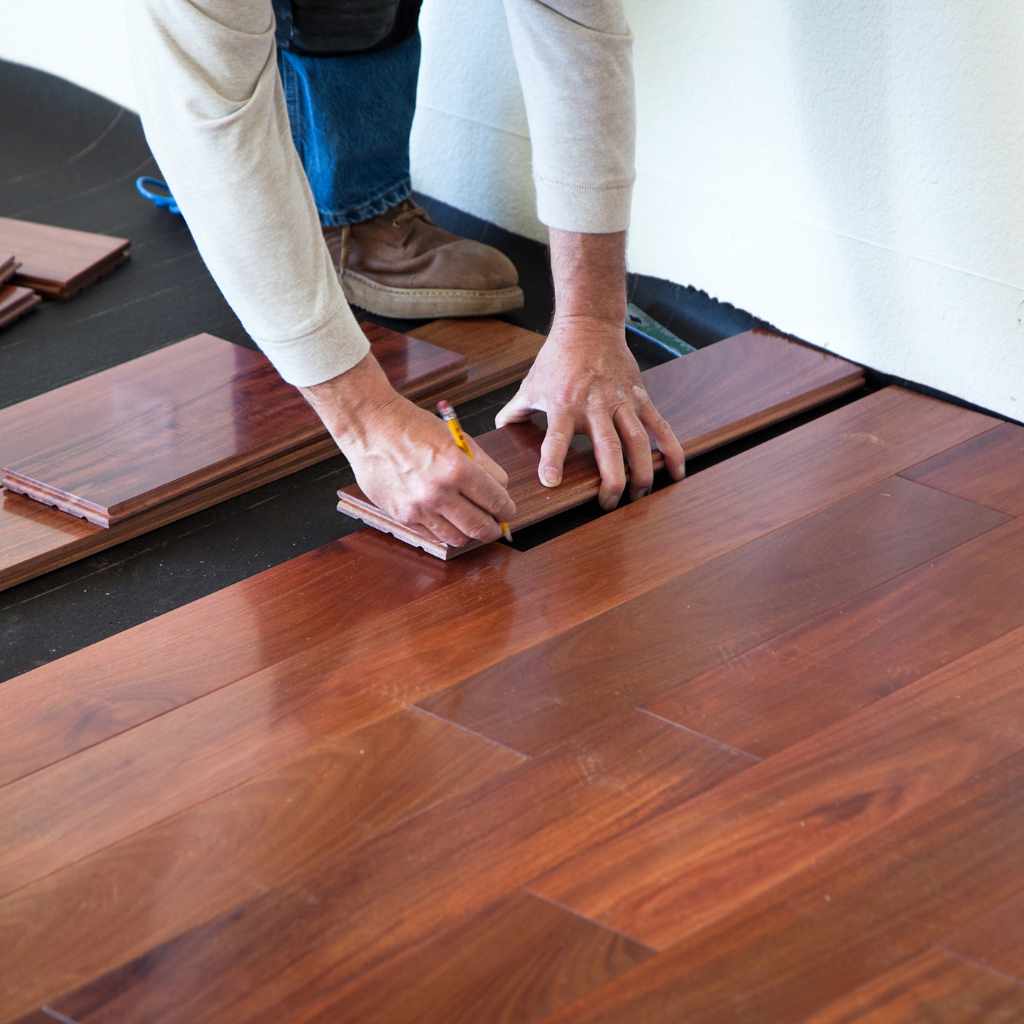
Prefinished hardwood flooring is wood plank flooring that has been sanded, stained, and coated with a protective finish inside a factory, before it ever reaches a job site. The boards arrive shrink-wrapped and ready to install – there’s no on-site sanding, staining, or waiting for a finish to cure. For a broader look at how it fits alongside other flooring types, see our wood flooring guide.
- Factory-cured aluminum oxide finish: most prefinished lines use a UV-cured aluminum oxide topcoat, harder than any finish that can be applied by hand on-site.
- Micro-beveled edges: a small V-groove between boards that hides minor height differences from board to board.
- Click-lock or tongue-and-groove: many prefinished products use a click-lock profile, which is part of why they’re popular with DIY installers.
- Walkable immediately: because the finish cured at the factory under controlled heat and UV light, there’s no wait time after installation.
How Prefinished Hardwood Is Made
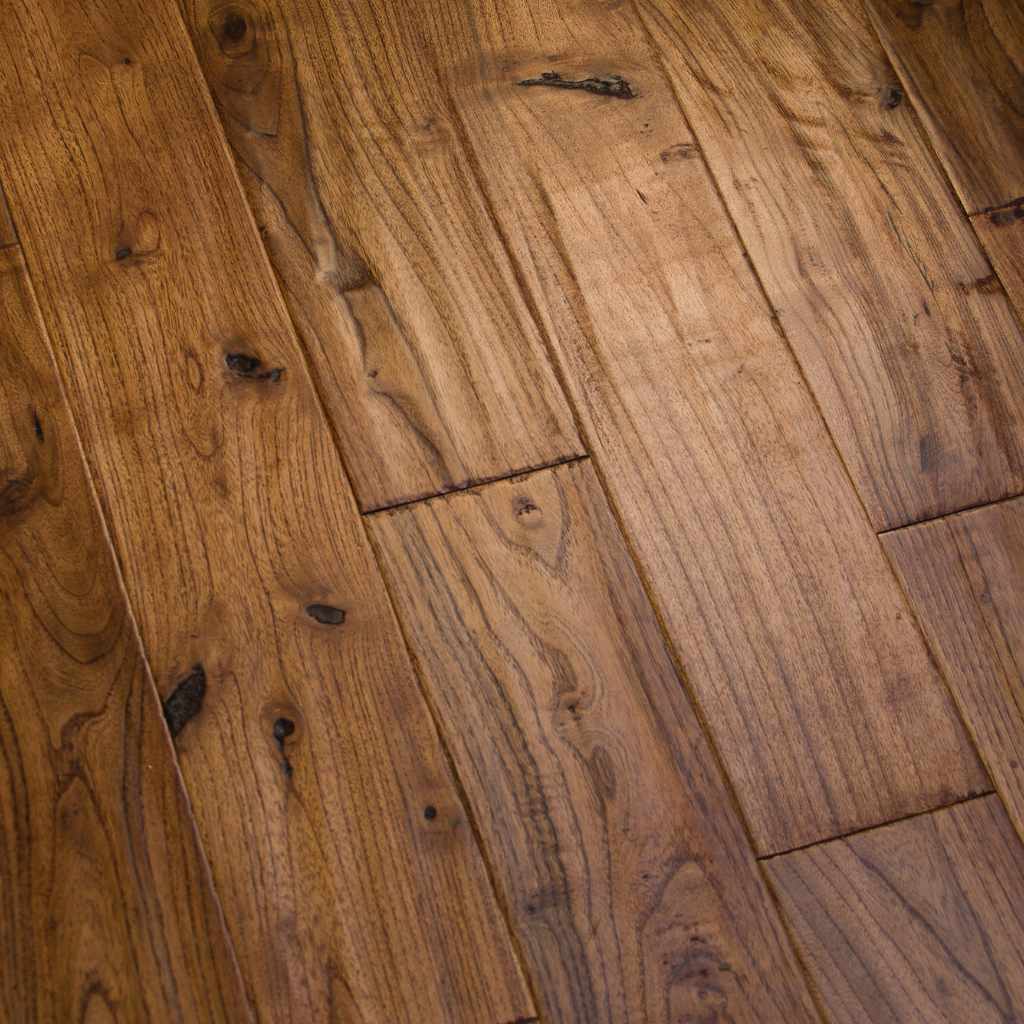
Manufacturers kiln-dry the boards, mill the tongue-and-groove or click-lock profile, and machine the micro-bevel edge before finishing starts. Each plank is then sanded through multiple grits, stained to the target color, and run through a UV-cure line that hardens 5 to 10 separate coats of aluminum oxide-infused urethane in minutes rather than the days a site-applied finish needs to cure between coats.
That multi-coat, oven-cured process is the real difference from a floor finished after installation – it’s not just “the same polyurethane applied earlier,” it’s a harder, more cross-linked finish that a brush or roller can’t replicate on-site.
How Long Does Prefinished Hardwood Flooring Last?
An aluminum oxide factory finish typically lasts 20 to 25 years under normal foot traffic before it needs refinishing, compared to roughly 10 years for a site-applied polyurethane coat. The finish itself doesn’t wear evenly forever, though – grit tracked in on shoes and unprotected chair or table legs will dull it well before that ceiling.
📊 Aluminum oxide factory finishes last an average of 20–25 years, roughly double the ~10-year lifespan of a site-applied polyurethane coat. — Source: Rustic Wood Floor Supply, 2026
“In our shop, we’ve watched aluminum oxide factory finishes shrug off years of foot traffic and the occasional dropped tool without a scratch – something a site-applied polyurethane coat rarely survives past its first year or two of hard use.”
Keeping that finish intact for the full 20+ years means using a cleaner made for factory finishes – vinegar, ammonia, and wax-based polishes can dull or haze aluminum oxide over time. A pH-neutral hardwood cleaner is the safer everyday choice.
Best Cleaner For Prefinished Floors
 |
Minwax Hardwood Floor Cleaner, 32 fl. oz. – $9.59 A pH-neutral, no-rinse formula safe for the UV-cured aluminum oxide finish on prefinished floors – the wax- and vinegar-based cleaners this guide warns against can dull that same finish over time.
|
As an Amazon Associate we earn from qualifying purchases.
Prefinished vs. Unfinished Hardwood Flooring
The core trade-off is finish quality and speed versus customization. Prefinished wins on install time and finish durability; unfinished wins on seamlessness and color control. See our full prefinished vs. site-finished hardwood floors comparison for installation-day specifics, or check where to buy unfinished hardwood flooring if seamlessness matters more to you than speed.
| Feature | Prefinished Hardwood | Unfinished Hardwood |
|---|---|---|
| Finish | Factory-applied aluminum oxide, UV-cured | Sanded, stained, and sealed on-site |
| Install time | 1–2 days, walkable immediately | 3–5+ days including cure time |
| Appearance | Visible micro-bevel seams between boards | Seamless, sanded flush after install |
| Color/finish choice | Limited to manufacturer’s stock options | Fully custom stain and sheen |
| On-site mess | None – no sanding dust or VOC fumes | Significant dust and finish fumes |
Prefinished vs. Engineered Hardwood Flooring
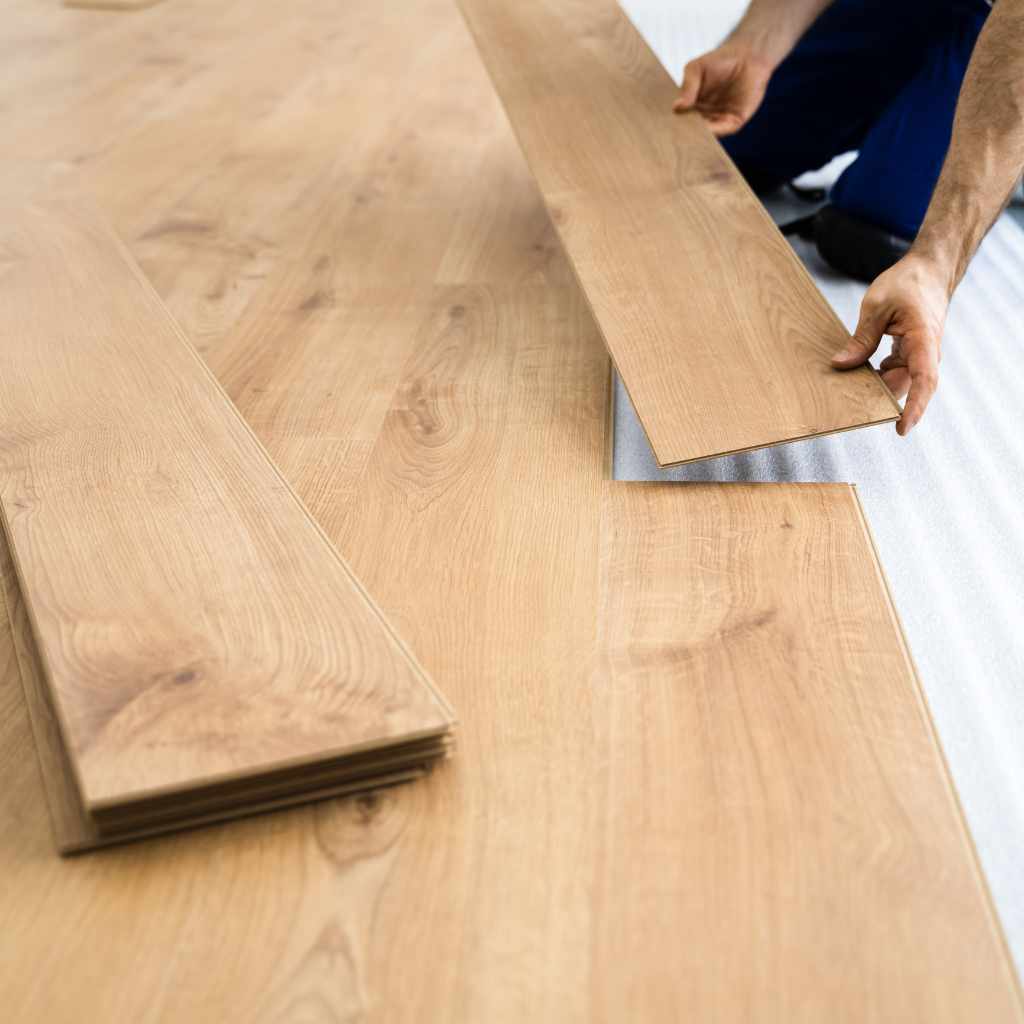
“Prefinished” describes the finish; “engineered” describes the board’s construction – the two aren’t opposites, and engineered hardwood is almost always sold prefinished. Solid prefinished hardwood is thicker and can be sanded down more times over its life, while engineered hardwood’s thin real-wood wear layer handles humidity and can go over concrete slabs where solid wood can’t. Our prefinished hardwood vs. engineered comparison breaks down which fits a given subfloor.
Cost of Prefinished Hardwood Flooring (Per Square Foot)
Prefinished hardwood materials run $6 to $15 per square foot depending on species and grade, plus $3 to $8 per square foot for installation. Basic oak or maple runs $6–$8/sq ft, mid-range species $8–$10/sq ft, and premium or exotic species $10–$15+/sq ft.
📊 Prefinished hardwood typically costs $6–$15/sq ft in materials and $3–$8/sq ft to install – but skipping on-site finishing labor (about $1.50–$3.00/sq ft) usually makes the total project cost lower than unfinished wood, despite the higher material price. — Source: This Old House, 2026
| Grade | Material Cost | Examples |
|---|---|---|
| Basic | $6–$8/sq ft | Red oak, maple |
| Mid-range | $8–$10/sq ft | White oak, hickory |
| Premium/exotic | $10–$15+/sq ft | Brazilian cherry, walnut, wide-plank |
Can You Refinish or Repair Prefinished Hardwood Flooring?
Yes, but it’s harder than refinishing an unfinished floor. Solid prefinished boards with a thick enough wear layer can be sanded down and refinished on-site like any hardwood floor, though the aluminum oxide topcoat is tougher on sanding equipment than a standard poly finish. Thin-wear-layer engineered boards may only tolerate one light refinish, or none at all. Spot repairs are the bigger limitation – because the factory finish can’t be feathered in locally, a single damaged board is usually replaced rather than patched. See our guide to refinishing a prefinished hardwood floor for what’s actually involved.
3 Mistakes to Avoid When Choosing Prefinished Hardwood
- Assuming every “factory finish” is aluminum oxide. Some budget prefinished lines still use a standard UV-cured polyurethane with no aluminum oxide added – check the spec sheet, not just the word “prefinished,” if long-term durability is the reason you’re buying it.
- Skipping acclimation because it’s “already finished.” The finish is done, but the wood itself still moves with humidity. Prefinished boards need the same 3–5 days acclimating in the room before installation as unfinished wood – skip it and you risk gapping or cupping later.
- Cleaning it like a sealed hardwood floor with the wrong products. Vinegar, ammonia-based cleaners, and oil soaps can dull an aluminum oxide finish over time even though the floor looks sealed and low-maintenance. Stick to a pH-neutral cleaner made for factory-finished wood.
FAQ
How long does prefinished hardwood flooring last?
An aluminum oxide factory finish lasts an average of 20 to 25 years under normal use, about double the roughly 10-year lifespan of a site-applied polyurethane coat. The wood itself can last much longer than the finish if it’s refinished when the topcoat starts to dull.
How much does prefinished hardwood flooring cost per square foot?
Materials run $6 to $15 per square foot depending on species and grade, plus $3 to $8 per square foot for installation. Because there’s no on-site finishing labor to pay for, the total project cost is often lower than unfinished hardwood despite the higher material price.
Can you refinish prefinished hardwood flooring?
Solid prefinished boards with enough wear layer can be sanded and refinished like any hardwood floor, though the aluminum oxide topcoat is harder on sanding equipment. Thin-wear-layer engineered boards may only tolerate one light refinish or none at all.
Is prefinished or unfinished hardwood flooring better?
Neither is universally better. Prefinished wins on install speed, mess, and finish durability; unfinished wins on a seamless look and full color customization. Choose based on whether visible micro-bevel seams or a longer install timeline matters more to you.
Can I install prefinished hardwood flooring myself?
Yes. Many prefinished products use a click-lock or tongue-and-groove profile designed for DIY installation without nails, glue, or a flooring nailer. The floor is walkable as soon as the last board is locked in, since the finish already cured at the factory.
Bottom Line
Prefinished hardwood flooring trades a small amount of customization – visible micro-bevel seams and a fixed set of factory colors – for a harder, longer-lasting finish and a fraction of the installation time and mess. At $6–$15 per square foot in materials, it’s usually the lower-total-cost option once you factor in the on-site finishing labor it eliminates. If a seamless, fully custom look matters more than speed, unfinished hardwood is still the better fit.
Sponsored / affiliate links. As an Amazon Associate I earn from qualifying purchases. I may earn additional commission from eligible campaigns.