What Is Swing on a Lathe? Over Bed vs Tool Rest Explained
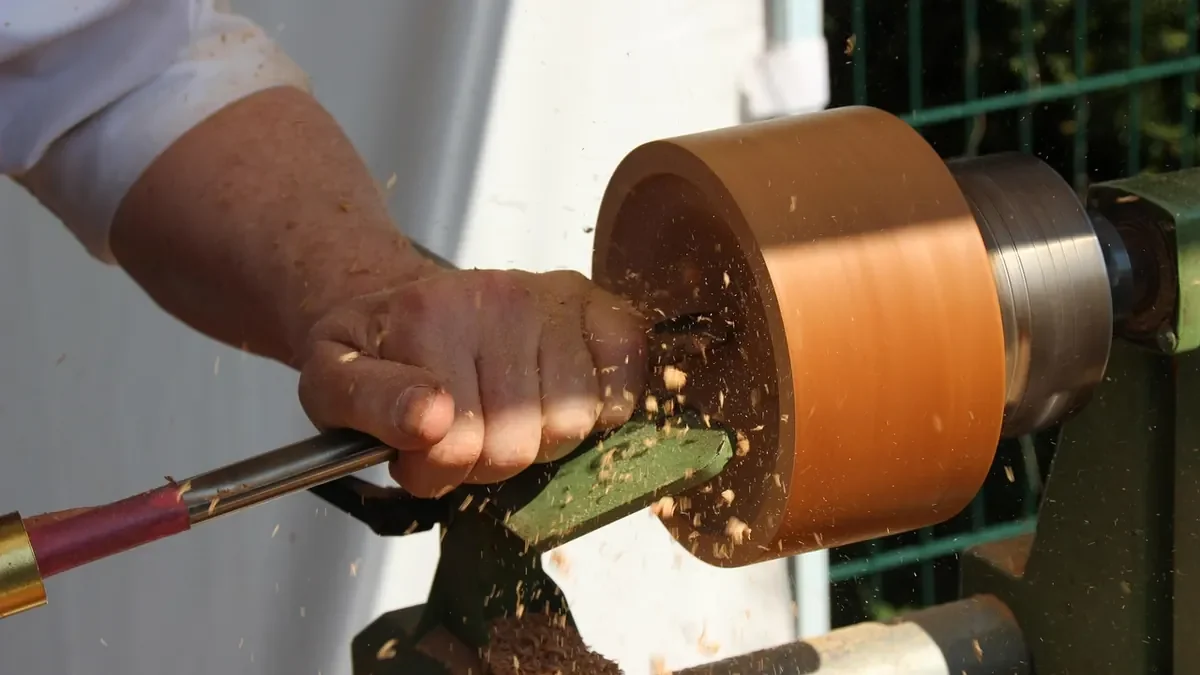
Swing on a lathe is the largest workpiece diameter the machine can spin without the wood hitting the bed. It equals twice the distance from the spindle centerline to the top of the bed, so a lathe with a 6-1/4 in. center height has a 12-1/2 in. swing. But the diameter you can actually turn is smaller, because the tool rest gets in the way. This guide covers over-bed versus over-tool-rest swing, real spec numbers, outboard turning and how to measure your own lathe.
What Is Swing on a Lathe?
Swing is a capacity rating, not a measurement of the wood itself. Picture the workpiece spinning around the spindle axis. The bed is the closest obstruction below that axis, so the distance from the axis down to the bed sets how big a circle can turn freely. Double that distance and you have the swing diameter. Manufacturers usually quote it first in a lathe name, in the format “swing x distance between centers,” so a “12 x 21” lathe swings 12 in. and holds about 21 in. of length between the drive center and the tailstock.
Best Midi Lathe Pick | |
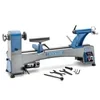 |
Rockler VS 12-24 Variable Speed Midi Wood Lathe (12 in. swing x 24 in. between centers) A cast-iron benchtop lathe with a 12 in. swing, a 24 in. bed and electronic variable speed, so you can see how the swing figure translates into real turning room.
|
As an Amazon Associate we earn from qualifying purchases. | |
The bed is only the first obstruction. Woodturners also care about the tool rest, and that is where most published swing numbers stop telling the whole story. If you are still sizing up the machine itself, see our review of Grizzly wood lathes for one brand comparison.
Swing Over Bed vs Swing Over Tool Rest
Most spec sheets list two numbers. Swing over bed is the raw figure described above. Swing over tool rest (sometimes listed as swing over the tool rest base) is the largest diameter that still clears the tool rest when it is mounted in its banjo. It is always the smaller number, because the rest and its base sit between the wood and the bed, and a bowl blank must clear them to spin.
Here are three lathes whose manufacturer specs list both figures. The last column is simple division, over-tool-rest divided by over-bed, so you can see how much of the headline number is really usable.
| Lathe | Swing over bed | Swing over tool rest | Usable share |
|---|---|---|---|
| JET JWL-1221VS (midi) | 12-1/2 in. | 9-9/20 in. (about 9.45 in.) | about 76% |
| Rikon 70-220VSR (midi) | 12-1/2 in. | 9-5/8 in. | about 77% |
| Powermatic 3520C (full size) | 20 in. | 15-3/4 in. | about 79% |
The pattern: on all three, roughly three quarters of the advertised swing is what clears the tool rest. Treat that as a rough rule from these three spec sheets, not a law, since tool rest designs vary. It still explains a common surprise: a “12 in. lathe” does not turn a 12 in. bowl in the usual setup.
Swing Is Not the Same as Bowl Size
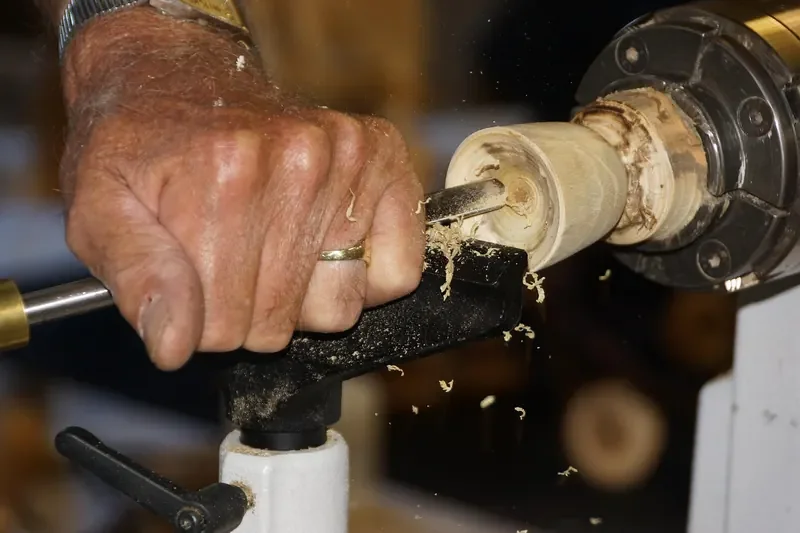
This is the misunderstanding that costs buyers money. Some product listings pair a 12 in. swing with a claim that the lathe turns bowls up to 12 in. across. In practice the tool rest limits you, and your gouge needs room to reach the wood too. One turning resource advises staying an inch or two under the maximum rather than working right at the limit.
A workable way to size a lathe for a bowl you want to make: divide the bowl diameter by 0.77 (the usable share from the table) to estimate the swing you need. For a 12 in. bowl that is about 15.6 in., which puts you in the 16 in. class, not the 12 in. class. For 8 in. bowls, about 10.4 in. of swing is enough, so a 12 in. midi lathe has comfortable margin. This is our own back-of-the-envelope estimate from three spec sheets, so check the over-tool-rest figure for the exact lathe you are considering.
Other things that eat into swing
- Chuck and faceplate: the blank sits out from the spindle nose, but its rim still has to clear the bed.
- Out-of-round blanks: a rough blank swings a bigger circle than its nominal diameter until you true it up, so round it off first.
- Stand and bench height: a higher spindle center makes a big blank easier to reach, but it does not change the swing number.
Can You Turn Bigger Than the Swing? Outboard Turning
Yes. Many wood lathes let you rotate the headstock 90 degrees or turn a faceplate on the outboard end of the spindle, so the workpiece hangs past the bed with nothing beneath it. This is called outboard turning, and it is how turners make platters and large bowls beyond the over-bed swing. The Powermatic 3520C, for example, lists a maximum outboard turning diameter of 38 in. with its optional bed extension in the low position, compared to its 20 in. swing over bed.
Outboard turning has its own demands. You need a floor-standing tool rest, your body position changes, and big heavy blanks put real stress on the spindle bearings. It is an extra reason to read the spec sheet for the exact lathe rather than assuming.
How Big Are Lathes? Size Classes by Swing
Wood lathes cluster into classes. The examples below use the swing and length figures from each model name or spec sheet.
| Class | Typical swing | Example (swing x between centers) |
|---|---|---|
| Mini / benchtop | about 8 to 10 in. | WEN LA3421 (8 x 13 in.), JET JWL-1015VS (10 x 15 in.) |
| Midi | about 12 to 12-1/2 in. | JET JWL-1221VS (12-1/2 x 20-1/2 in.), Rikon 70-220VSR (12-1/2 x 20 in.) |
| Full size | 14 to 20 in. | JET 14 x 40, JET 16 x 40, Powermatic 3520C (20 in. swing, 36 in. between centers) |
The older version of this page claimed swings run from 6 to 40 inches. Woodturning lathes are far more clustered than that, and the very large swings are usually industrial metalworking machines rather than the turning lathes hobbyists buy.
How to Measure Swing on Your Own Lathe
Your manual or the maker website is the best source, but you can check any lathe in a few minutes.
- Unplug the lathe: never measure near a spindle you can power on by accident.
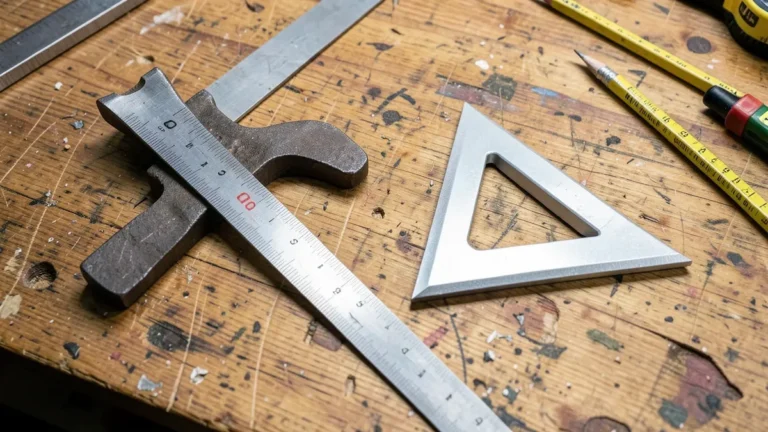
- Find the spindle axis: mount a spur or live center and note its tip height, or measure to the middle of the spindle nose.
- Measure straight down: use a rule or tape from that axis to the top of the bed ways, the highest point the wood could touch.
- Double it: that is your swing over bed. Example: 7 in. down means a 14 in. swing.
- Repeat over the tool rest: set the rest in its normal position, measure from the axis to the top of the rest base, and double it.
Swing vs Distance Between Centers
Swing limits diameter. Distance between centers limits length: it is the gap from the drive center in the headstock to the live center in the tailstock. A 12 x 21 lathe can turn a table leg about 21 in. long and roughly 12 in. wide across. If you mostly make spindles like legs and balusters, length matters more; for bowls and platters, swing does. Bed extensions add length only. They do not change swing.
Common Mistakes When Choosing a Lathe by Swing
- Buying by the headline number: compare the over-tool-rest figure instead.
- Ignoring bed length: a big swing with a short bed still cannot turn long spindles.
- Forgetting the blank has to be rounded first: a square 10 in. blank has a corner-to-corner diameter near 14 in., which swings past a 12 in. limit.
- Skipping safety gear: big blanks can fly apart with real force, so wear a full face shield and keep loose sleeves away. See are lathes dangerous for the risks.
The corner-to-corner point is plain geometry: a square of side s has a diagonal of about 1.41 x s, so a 10 in. square blank spins a 14.1 in. circle until it is rounded.
Frequently Asked Questions
What does swing on a lathe mean?
Swing is the maximum diameter of a workpiece the lathe can rotate without hitting the bed. It equals twice the distance from the spindle centerline to the bed. A 12 in. swing lathe can spin a circle up to 12 in. across over the bed, though a tool rest reduces the usable diameter.
What is the difference between swing over bed and swing over tool rest?
Swing over bed is the largest circle that clears the bed. Swing over tool rest is the largest circle that clears the tool rest and its base, so it is always smaller. On the JET JWL-1221VS the figures are 12-1/2 in. and about 9.45 in.
How do you calculate lathe swing?
Measure from the center of the spindle straight down to the top of the bed, then multiply by two. If the distance is 7 in., the swing is 14 in. Repeat the measurement to the top of the tool rest base to get the over-tool-rest figure.
Is swing the same as the largest bowl a lathe can turn?
No. Bowl size is limited by the tool rest, not the bed. On the three spec sheets we checked, about 76 to 79 percent of the over-bed swing was usable over the tool rest, so a 12-1/2 in. lathe fits bowls well under 12 in.
Can you turn something bigger than the swing?
Often yes, using outboard turning. Rotating the headstock or using the outboard end of the spindle lets a faceplate-mounted blank hang past the bed. The Powermatic 3520C lists 38 in. of outboard capacity against a 20 in. swing over bed.
Conclusion
Swing is twice the spindle height above the bed, but the number that matters for bowls is the over-tool-rest figure, which on the lathes we checked is about three quarters of the headline swing. Check that number, match it to the largest blank you plan to turn, and remember outboard turning exists if you outgrow it. For getting the wood onto the lathe, our guide to using a wood lathe chuck is the next step, and the best wood for turning helps you pick the blank.
Sponsored / affiliate links. As an Amazon Associate I earn from qualifying purchases. I may earn additional commission from eligible campaigns.