Kilz 2 vs Kilz 3: VOC, Stain Blocking and Real Differences
Kilz 3 Premium blocks more stains than Kilz 2 and has the lower VOC rating (under 5 g/L against under 50 g/L), but both are water-based, dry to the touch in 30 minutes and recoat in 1 hour. Neither is oil-based. This page compares the labels and data sheets side by side, shows which stains only Kilz 3 lists, and corrects three claims most comparisons repeat.
Kilz 2 vs Kilz 3: Which One Should You Buy?
Best Everyday Primer Pick |
|
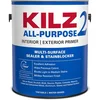 |
KILZ 2 All-Purpose Latex Interior/Exterior Primer, 1 Gallon A water-based primer-sealer-stainblocker that the can rates for light to medium stains, with a 1 hour recoat time.
|
As an Amazon Associate we earn from qualifying purchases.
For most rooms, Kilz 2 is enough: it seals bare drywall and wood, hides old colors and blocks the light to medium stains its can names. Step up to Kilz 3 Premium when the surface has a real stain problem, because its label names more stain types. One buying note: when we checked on September 30, 2026, the Kilz 3 Premium listings we found on Amazon showed as out of stock, so it is mainly a home center and paint store item, while Kilz 2 was in stock.
Kilz 2 vs Kilz 3 Specs Side by Side
These figures come from the KILZ 3 Premium label and data sheet (Masterchem, rev. 06/19), the Kilz 2 product listing at Dunn-Edwards, and the Kilz 2 gallon can label. Where the two products list the same number, both are shown.
| Spec | Kilz 2 All-Purpose | Kilz 3 Premium |
|---|---|---|
| Base | Water-based | Water-based |
| Stain rating | Light to medium stains | Most stains, high-hide formula |
| Stains named | Minor water stains, rust, grease, ink, pencil, felt marker | Water, tannin, ink, pencil, felt marker, grease, nicotine, rust |
| VOC | Under 50 g/L | Under 5 g/L, excluding colorant |
| Coverage per gallon | 300 to 400 sq ft | 300 to 400 sq ft |
| Dry to touch | 30 minutes | 30 minutes |
| Recoat | 1 hour | 1 hour |
| Mildew | Mildew resistant finish | Mildew resistant coating |
| Tinting | Tintable (printed on the can) | Up to 2 oz universal colorant per gallon |
| Cleanup | Soap and water | Soap and water |
The takeaway from the table is how much is identical. If you were expecting an oil-based versus water-based split, or a big difference in dry time, there is none: the real gaps are the stain list and the VOC rating.
Three Claims Most Kilz 2 vs Kilz 3 Guides Get Wrong
Kilz 2 is not oil-based
Some comparisons, including an earlier version of this page, describe Kilz 2 as oil-based. It is a water-based latex primer. The oil-based primers in the range are KILZ Original and its variants, which is why a can of Kilz 2 cleans up with soap and warm water.
Kilz 3 is the lower-VOC product, not the smellier one
The tougher-sounding primer is not the higher-VOC one. The Kilz 3 Premium label states VOC under 5 g/L, while Kilz 2 is listed under 50 g/L, so the Kilz 2 ceiling is up to ten times higher. The Kilz 3 label calls it very mild odor and low odor. Low VOC does not mean no ventilation: the label still says to use only with adequate ventilation and to open windows and doors during application and drying.
Mildew resistance is not a Kilz 3 exclusive
The can of Kilz 2 says Mildew Resistant Finish, and the Kilz 3 label says mildew resistant coating, ideal for moisture-prone areas. Neither claim means the primer will fix an existing mold problem. The Kilz 3 label says surfaces covered in mold or mildew must be washed with a mildew remover, rinsed and dried before priming.
What the Labels Say About Stains
This is the one place the two products clearly separate. The Kilz 2 can says it blocks light to medium stains, and the Dunn-Edwards listing names minor water stains, rust, grease, ink, pencil and felt marker, and adds that heavy stains may need extra coats or a specialty primer. The Kilz 3 label says it blocks most stains caused by water, tannin, ink, pencil, felt marker and grease, with nicotine and rust also listed.
The word that matters is tannin. Tannin is the brown, yellow or pink bleed that some woods push through paint, and it appears on the Kilz 3 list but not on the Kilz 2 list we read. That does not prove Kilz 2 fails on tannin, it means the manufacturer only claims it for Kilz 3.
A Fire and Smoke Exception Most Guides Skip
Several guides recommend Kilz 3 for smoke damage from a fire. The Kilz 3 label itself points elsewhere for that job: under fire restoration it says it is critical to clean damaged surfaces thoroughly and recommends KILZ Restoration for a water-based system, or KILZ Original or Original Low Odor if you want oil-based. Kilz 3 does list nicotine, so it suits smoker stains, but for actual fire damage follow the label and pick from those lines instead.
Which One for Wood Trim, Doors and Raw Lumber?
On bare or stained wood, tannin is the risk, so Kilz 3 Premium is the safer claim on paper. For clean, previously painted trim with no staining, Kilz 2 does the job at a lower price. Our guide to using Kilz on wood covers prep in more detail, and the best wood primers compared covers alternatives.
Whichever you choose, the Kilz 3 label gives a simple test that works for either primer: after priming, apply the topcoat to a small section. If the stain bleeds through, apply a second coat of primer and test again before painting the whole area. If bleeding continues, the label says the primer needs a longer dry time before topcoating. Do not thin the primer for stain-blocking jobs.
Can You Use Kilz 2 or Kilz 3 Outside?
The Kilz 3 label and the Kilz 2 can both state interior and exterior use. Be aware that the current kilz.com listings we saw for both products are titled Interior, so labels may differ between production runs. Read the wording on the can you actually hold before priming siding or trim, and see our guide to using Kilz outside. A primer is also not a topcoat: on the outside, it must be covered with exterior paint.
How Much Kilz Do You Need and What Does It Cost?
Both list 300 to 400 square feet per gallon depending on porosity and application method. A 12 by 12 foot room with 8 foot walls has about 384 square feet of wall area before subtracting doors and windows, and 144 square feet of ceiling, so 528 square feet is roughly 1.3 to 1.8 gallons for one coat of either primer.
| Room size (walls + ceiling) | Area | Gallons for one coat |
|---|---|---|
| 10 x 10 ft, 8 ft walls | about 420 sq ft | 1.1 to 1.4 |
| 12 x 12 ft, 8 ft walls | about 528 sq ft | 1.3 to 1.8 |
| 12 x 16 ft, 8 ft walls | about 704 sq ft | 1.8 to 2.4 |
For price, the Dunn-Edwards listing shows Kilz 2 at $25.99 per gallon, which works out to about 6.5 to 8.7 cents per square foot at the label coverage. On Amazon on September 30, 2026, the Kilz 2 gallon we picked was $59.50 and a quart was $22.69, so a home center or paint store is usually the cheaper place to buy either primer by the gallon.
How to Apply Either Primer
- Clean the surface of dust, chalk, oil, grease, wax and loose paint. If washing, use a non-soapy detergent or a TSP substitute, rinse and let it dry.
- Scuff sand glossy surfaces before priming, and sand peeling paint smooth. Sanding old paint can release lead dust, so test older homes first.
- Only work when the surface, air and product are between 50 and 90 F.
- Stir thoroughly before and during use rather than shaking.
- Apply with a nylon or polyester brush, or a roller: 3/8 to 1/2 inch nap on smooth surfaces and 1/2 to 3/4 inch on semi-rough or porous ones.
- Prime the whole surface so the topcoat looks uniform, then recoat or topcoat after 1 hour.
The Kilz 3 data sheet also allows a small amount of water for spraying (no more than 1/2 pint per gallon), an airless tip of .017 to .021 with a 60 mesh filter, and 30 days of cure time for new masonry. For drying times in cold or humid rooms see how long Kilz 2 takes to dry, and if you want a colored primer, tinting Kilz 2 has the limits.
When to Pick Each One
- Choose Kilz 2 for new drywall, repainting over clean walls, hiding a color change, and light stains from pencil, marker or minor water marks.
- Choose Kilz 3 Premium for water rings, nicotine, tannin bleed from wood, and rooms where a low VOC rating matters.
- Choose something else for fire damage (KILZ Restoration or Original per the label), or see our Zinsser vs Kilz comparison for a different brand.
If you are weighing Kilz 2 against the original oil-based formula instead, our Kilz vs Kilz 2 comparison covers that pair.
Frequently Asked Questions About Kilz 2 vs Kilz 3
Is Kilz 3 better than Kilz 2?
Kilz 3 Premium is better for tough stains: its label lists tannin, nicotine, water, rust, ink, pencil, felt marker and grease, while Kilz 2 is rated for light to medium stains. Kilz 2 is the better value for ordinary priming, and both dry to the touch in 30 minutes.
Is Kilz 2 oil-based or water-based?
Kilz 2 All-Purpose is water-based. The oil-based lines are KILZ Original and its low-odor variants, so Kilz 2 cleans up with soap and warm water, not mineral spirits.
Can you use Kilz 2 over Kilz 3, or the reverse?
Yes for both directions on a dry coat: both are water-based and both list latex or oil-based topcoats, and the label tells you to test for bleed-through and add a second coat where a stain shows. Let the first coat dry at least 1 hour before recoating.
How long do Kilz 2 and Kilz 3 take to dry?
Both list 30 minutes to touch and 1 hour to recoat at 77 F and 50 percent humidity. Cooler air, higher humidity or a heavy coat will make both take longer.
Conclusion
Kilz 2 and Kilz 3 Premium share a base, coverage, dry time and recoat time, so the choice comes down to the stain. Buy Kilz 2 for ordinary priming and light to medium stains, and Kilz 3 Premium when tannin, nicotine or heavier water stains are involved. Read the can, run the small-patch bleed test, and add a second coat where a stain shows.
Sponsored / affiliate links. As an Amazon Associate I earn from qualifying purchases. I may earn additional commission from eligible campaigns.