Where to Buy Finished Butcher Block Countertops
Finding the perfect finished butcher block countertops can feel like a puzzle. Many people wonder Where to Buy Finished Butcher Block Countertops because they want a beautiful, durable surface for their kitchen but aren’t sure where to start. It’s easy to get lost in all the options and technical details.
This guide will make it simple. We will walk you through each step to find exactly what you need.
Finding Where to Buy Finished Butcher Block Countertops
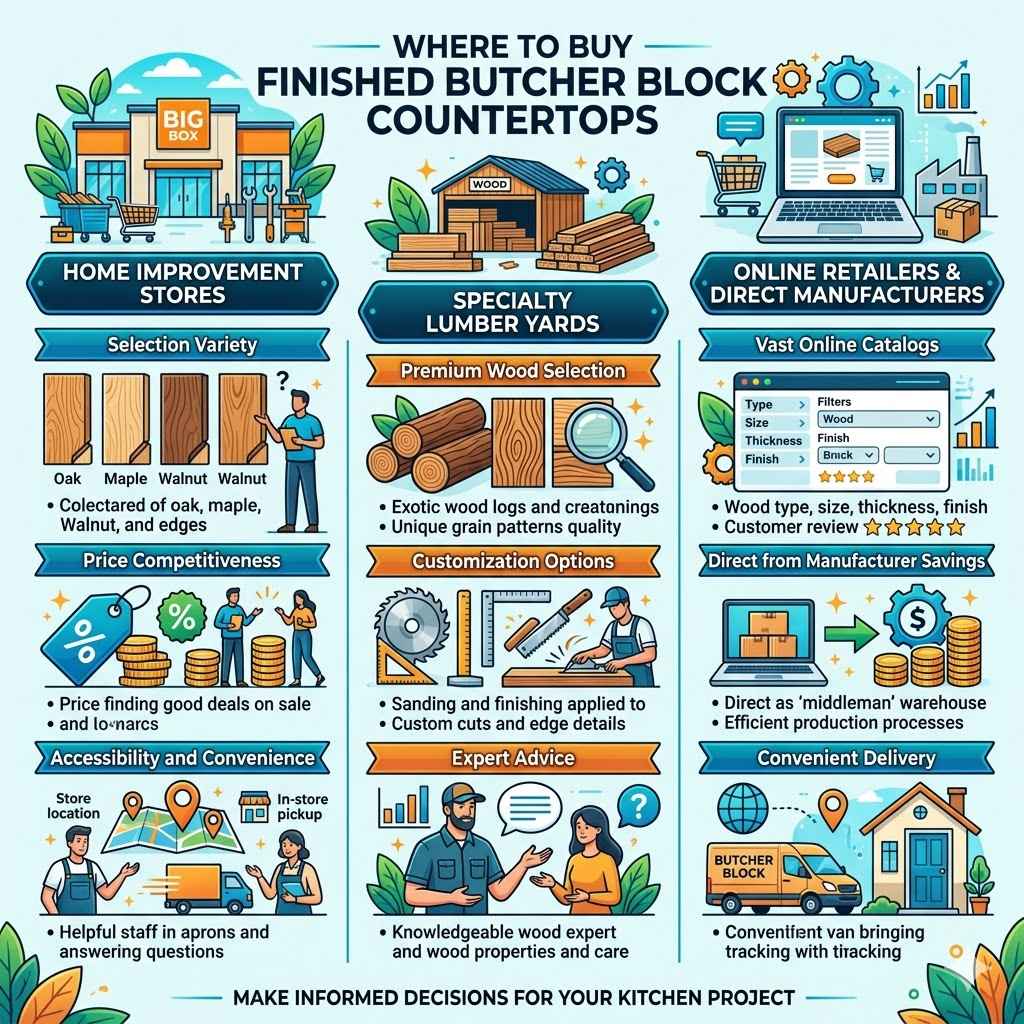
This section will guide you through the most common places to purchase finished butcher block countertops. We will explore big box stores, specialty lumber yards, and online retailers. Understanding the pros and cons of each will help you make the best choice for your project.
We aim to make your shopping experience smooth and successful. You will learn what to look for and what questions to ask.
Home Improvement Stores
Large home improvement stores are often the first stop for many DIYers and homeowners. They carry a wide variety of building materials, including butcher block countertops. These stores are convenient because you can often see the products in person and get them immediately or with quick delivery.
- Selection Variety
Big box stores usually offer several wood species like oak, maple, and walnut. They also have different finishes and edge profiles. This variety allows you to find a style that matches your kitchen’s decor.
You can compare different looks and textures side-by-side.
- Price Competitiveness
Due to their large purchasing power, these retailers often have competitive pricing. They frequently run sales and promotions, which can lead to significant savings. This makes them an attractive option for budget-conscious shoppers.
You can get good quality without breaking the bank.
- Accessibility and Convenience
With numerous locations, these stores are easy to access. They offer services like in-store pickup and home delivery. This convenience saves time and effort, especially when dealing with bulky items like countertops.
You can often find knowledgeable staff to answer basic questions.
Specialty Lumber Yards
Specialty lumber yards focus on wood products and often provide higher quality and more unique options than general retailers. They are a great resource if you are looking for exotic woods or custom finishes.
- Premium Wood Selection
These yards typically stock hardwoods in their best grades. You can find less common wood species and unique grain patterns. The focus here is on the quality and natural beauty of the wood.
If you want something truly special, this is the place to go.
- Customization Options
Many specialty lumber yards offer custom cutting, sanding, and finishing services. This means you can get countertops made to your exact specifications. They can often provide unique edge details or special treatments for the wood.
Their expertise is invaluable for custom projects.
- Expert Advice
The staff at specialty lumber yards are wood experts. They can offer detailed advice on wood care, durability, and the best finishes for your needs. They understand the properties of different woods and can guide you toward the most suitable choice.
This level of knowledge is hard to find elsewhere.
Online Retailers and Direct Manufacturers
The internet has opened up a world of options for purchasing butcher block. Online retailers and manufacturers offer convenience and often a wider selection than physical stores.
- Vast Online Catalogs
Online stores have extensive catalogs with hundreds of options. You can easily filter by wood type, size, thickness, and finish. This makes comparison shopping much simpler.
Many sites also provide detailed product descriptions and customer reviews.
- Direct from Manufacturer Savings
Buying directly from manufacturers can sometimes lead to lower prices. You cut out the middleman, which can save you money. These companies specialize in wood products and often have efficient production processes.
They might also offer more bespoke options.
- Convenient Delivery
Most online sellers offer direct-to-home delivery. This is especially helpful for large, heavy items like countertops. Many provide detailed tracking information so you know when your order will arrive.
Ensure you check their shipping policies and any associated costs.
What to Look for in Finished Butcher Block Countertops
When you are ready to buy, it is important to know what makes a good finished butcher block countertop. This section covers the essential factors to consider, from wood type to finish quality. Making informed decisions will ensure you get a product that lasts and looks great.
We will explain the key features that contribute to durability and beauty.
Wood Species and Grain Patterns
The type of wood used in your butcher block significantly impacts its appearance, durability, and cost. Different woods have unique characteristics that suit various kitchen styles and usage needs.
- Hardwood Durability
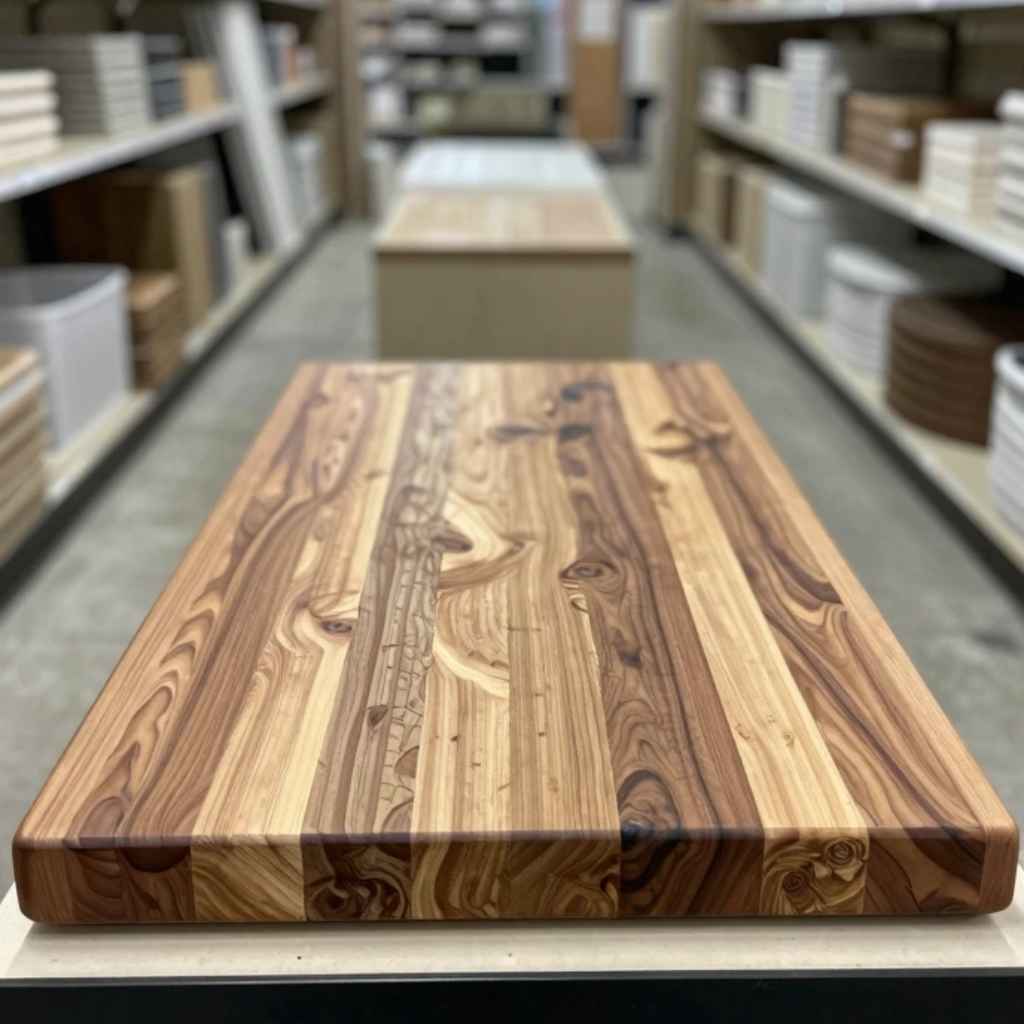
Hardwoods like maple, oak, and walnut are most commonly used for butcher block. Maple is very hard, dense, and has a fine grain, making it resistant to dents and scratches. Oak is also strong with a distinct grain pattern that adds character.
Walnut offers a richer, darker color and a beautiful grain, though it is slightly softer than maple.
- Grain Orientation and Construction
Butcher block countertops are typically constructed using one of three grain orientations: edge grain, end grain, or face grain. Edge grain involves arranging strips of wood with their edges facing up, creating a smooth, linear look. End grain uses blocks of wood with their ends facing up, which is ideal for cutting directly on and is the most durable.
Face grain is made by joining planks face-to-face, showing the widest part of the wood’s grain.
- Aesthetic Appeal
Each wood species offers a different visual appeal. Light-colored woods like maple can brighten a kitchen and offer a modern look. Richer woods like walnut or cherry bring warmth and a more traditional feel.
The grain pattern itself adds texture and visual interest, making each countertop unique.
Finishing and Sealing Techniques
The finish applied to your butcher block is crucial for its protection and longevity. A good finish will resist moisture, stains, and wear, keeping your countertops looking beautiful for years.
For countertops intended for food preparation, using a food-safe finish is essential. Mineral oil and beeswax blends are popular choices. They penetrate the wood, providing protection and a natural sheen.
These finishes require regular reapplication to maintain their protective qualities.
- Protective Sealants
For areas that might see more moisture or spills, a more robust sealant might be preferred. Polyurethane or a similar durable topcoat can offer superior water and stain resistance. However, ensure the product is rated for kitchen use and is safe for indirect food contact if you plan to prepare food directly on the surface.
Some people opt for a combination, using a food-safe oil on the main surfaces and a sealant on edges or areas prone to heavy use.
- Maintenance Requirements
The type of finish dictates the maintenance needed. Oil finishes require periodic re-oiling, typically every few months or when the wood starts to look dry. Sealed finishes are generally lower maintenance, often just needing occasional cleaning with mild soap and water.
Understanding the upkeep will help you choose a finish that fits your lifestyle.
Dimensions and Customization
Getting the correct dimensions and any custom features is vital to ensure your butcher block fits perfectly into your kitchen design.
- Standard vs. Custom Sizes
Butcher block countertops come in standard lengths, widths, and thicknesses. However, many suppliers offer custom sizing. This is ideal for kitchens with non-standard cabinet layouts or unique island designs.
Measure your space carefully and compare it to available options.
- Edge Profiles
The edge of your countertop can significantly affect its appearance and function. Common edge profiles include square (or eased), bullnose, and beveled. A square edge offers a clean, modern look.
A bullnose edge is rounded for a softer feel and better durability. A beveled edge provides a subtle angle.
- Cutouts for Sinks and Cooktops
If you are installing an undermount sink or a flush-mount cooktop, you will need precise cutouts. Many retailers offer custom cutting services for these features. It is often best to have these done by the manufacturer or a professional to ensure clean, accurate cuts that will not compromise the wood’s integrity.
Tips for Buying and Installation
Once you know where to buy and what to look for, the next step is to ensure a smooth purchase and installation process. This section offers practical advice to help you avoid common pitfalls and enjoy your new countertops.
Measuring Your Space Accurately
Precise measurements are the foundation of a successful countertop project. Incorrect measurements can lead to costly mistakes and delays. Take your time and double-check everything.
- Cabinet Depth and Length
Measure the depth and length of your cabinets where the countertop will sit. Remember to account for any overhang you desire. A standard overhang is usually around 1 to 1.5 inches in the front.
Also, consider the depth of your backsplash if you plan to have one.
- Consider Existing Appliances
If you are replacing existing countertops, measure them before removal, but also measure the cabinet base directly. This ensures accuracy, as sometimes the old countertop might not have been perfectly sized. For new installations, measure the cabinet frames precisely.
- Account for Walls and Obstructions
Note the distance between cabinet runs and any walls or obstructions. If your walls are not perfectly straight, you may need to account for this to ensure a tight fit against the wall. Butcher block can often be trimmed on-site by a professional to achieve a perfect fit.
Delivery and Handling
Butcher block countertops are heavy and can be susceptible to damage if not handled properly. Understanding the delivery process is key.
- Inspect Upon Arrival
Before signing for delivery, carefully inspect the packaging and the countertops themselves for any signs of damage, such as dents, scratches, or warping. Document any issues with photos and note them on the delivery receipt. This is crucial for filing a claim if necessary.
- Have Adequate Help
Butcher block is dense and heavy. Ensure you have enough people to safely move the countertops from the delivery point to your home and into their final position. Professionals with dollies and lifting equipment are recommended for large pieces.
- Acclimatize the Wood
Allow the butcher block to acclimatize to your home’s environment for at least 48-72 hours before installation. This allows the wood to adjust to the humidity and temperature, reducing the risk of warping or cracking after installation.
Professional Installation vs. DIY
Deciding whether to install the countertops yourself or hire a professional depends on your skill level, tools, and confidence.
- DIY Installation Considerations
If you are a confident DIYer, installing butcher block can be a rewarding experience. You will need woodworking tools like a circular saw, jigsaw, router, and sander. Precise cutting, drilling for sink mounts, and applying the finish are all tasks you can handle with proper planning and research.
Ensure you follow manufacturer guidelines for sealing and finishing.
- When to Hire a Professional
For those less experienced with woodworking or who want a flawless finish, hiring a professional installer is a wise choice. They have the specialized tools, experience, and knowledge to ensure precise cuts, a perfect fit, and a beautiful, durable finish. They can also handle complex installations, such as undermount sinks or intricate edge details.
- Cost-Benefit Analysis
While DIY installation saves on labor costs, consider the potential cost of mistakes. If you are unsure, the investment in a professional can prevent costly errors and ensure a long-lasting result. Compare the cost of hiring a professional against the potential expense and time involved in fixing DIY blunders.
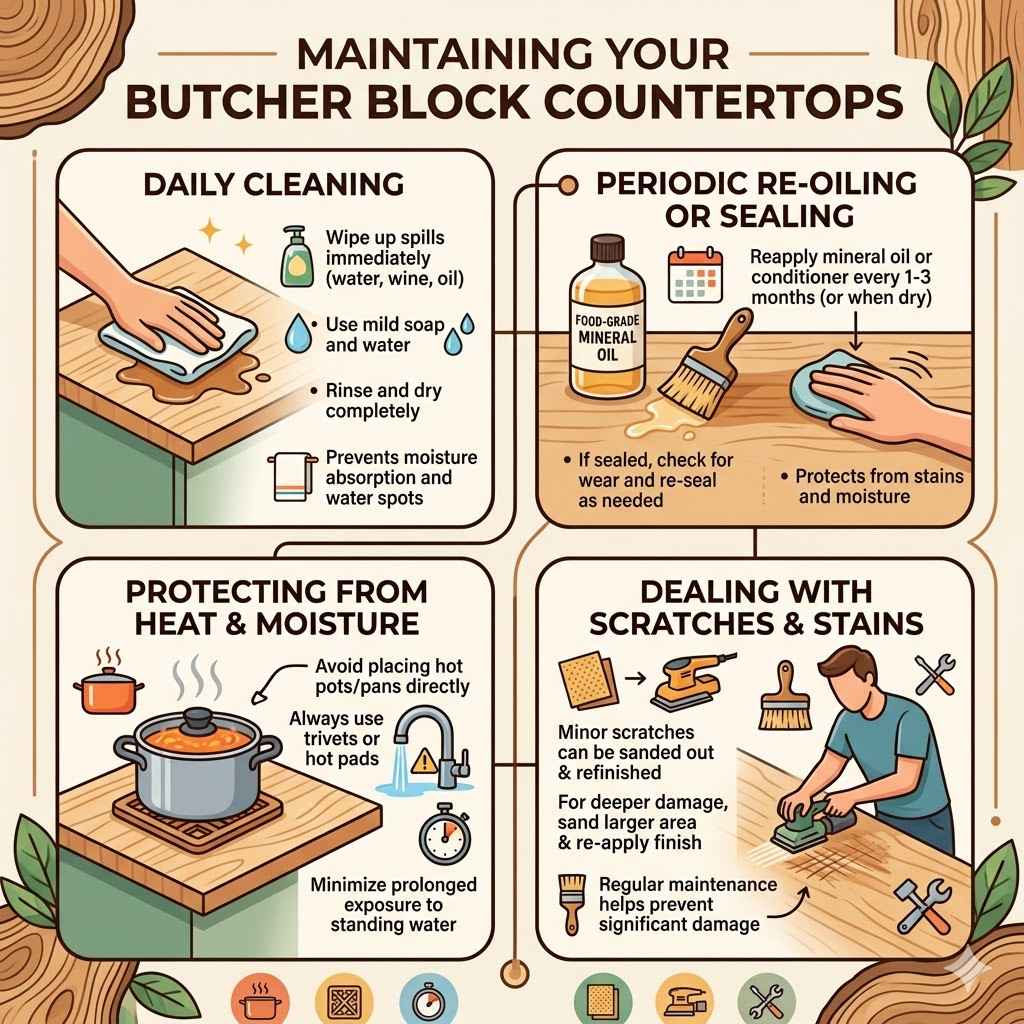
Maintaining Your Butcher Block Countertops
Proper maintenance is key to keeping your butcher block countertops looking beautiful and functional for many years. This section covers essential care tips.
- Daily Cleaning
Wipe up spills immediately, especially water, wine, or oil. For daily cleaning, use a soft cloth dampened with mild soap and water. Rinse thoroughly with clean water and dry completely with a soft towel to prevent water spots and moisture absorption.
- Periodic Re-oiling or Sealing
If you have an oiled finish, reapply a food-grade mineral oil or a specialized butcher block conditioner every 1-3 months, or whenever the wood looks dry. If you have a sealed finish, check for wear and reapply the sealant as needed according to the product’s instructions. This protects the wood from stains and moisture.
- Protecting from Heat and Moisture
Avoid placing hot pots or pans directly on the butcher block, as this can scorch or damage the wood. Always use trivets or hot pads. Similarly, try to minimize prolonged exposure to standing water, as even sealed wood can be affected over time.
- Dealing with Scratches and Stains
Minor scratches can often be sanded out and the area re-finished. For deeper damage or stubborn stains, you might need to sand down a larger section or the entire countertop and then reapply the finish. Regular maintenance helps prevent significant damage.
Where to Buy Finished Butcher Block Countertops Frequently Asked Questions
Question: Where can I find finished butcher block countertops near me?
Answer: You can check large home improvement stores like Home Depot or Lowe’s, specialty lumber yards, or online retailers. Searching online for “butcher block countertops near me” can help you find local options.
Question: Are finished butcher block countertops good for kitchens?
Answer: Yes, finished butcher block countertops are durable, attractive, and can be food-safe if properly finished. They add warmth and natural beauty to any kitchen space and can withstand daily use with proper care.
Question: What is the best wood for butcher block countertops?
Answer: Hardwoods like maple, oak, and walnut are excellent choices due to their density and durability. Maple is very hard and has a fine grain, while oak offers a distinct grain pattern and walnut provides a richer color.
Question: How do I maintain a finished butcher block countertop?
Answer: Regular cleaning with mild soap and water, immediate spill cleanup, and periodic re-oiling or resealing are key. Using trivets for hot items and avoiding prolonged water exposure also helps.
Question: Can I cut directly on finished butcher block countertops?
Answer: You can cut directly on butcher block countertops if they are finished with a food-safe oil or wax and are of the end-grain construction. For other finishes or constructions, it’s best to use a cutting board to protect the surface.
Summary
When looking Where to Buy Finished Butcher Block Countertops, you have many great options. From big home stores to specialized wood shops and online sellers, the perfect choice is out there. Focus on wood type, finish, and dimensions.
Measure carefully and consider professional installation for the best results. With a little care, your new butcher block countertops will be a beautiful and lasting addition to your home.