Why Is My Hardwood Floor Buckling? Real Causes and How to Fix It
A hardwood floor is supposed to lie flat. When a section suddenly arches up off the subfloor, it’s not a cosmetic quirk, it’s the wood telling you it has absorbed more moisture than it can hold. Buckling is the most severe stage of water damage a solid wood floor can show, and it almost never fixes itself. Here’s what actually causes it, how to tell it apart from the milder problems of cupping and crowning, and the real steps to dry it out, repair it, and keep it from happening again.
What Buckling Actually Looks Like
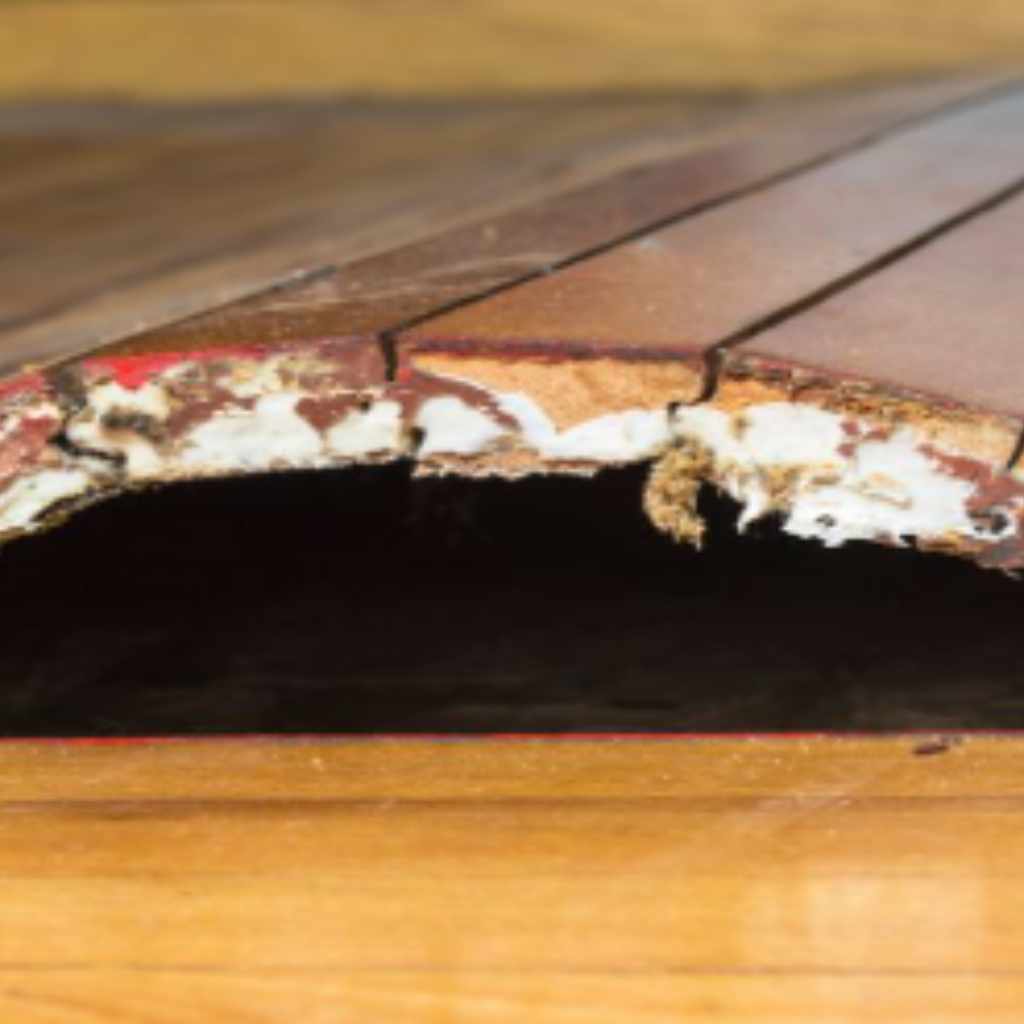
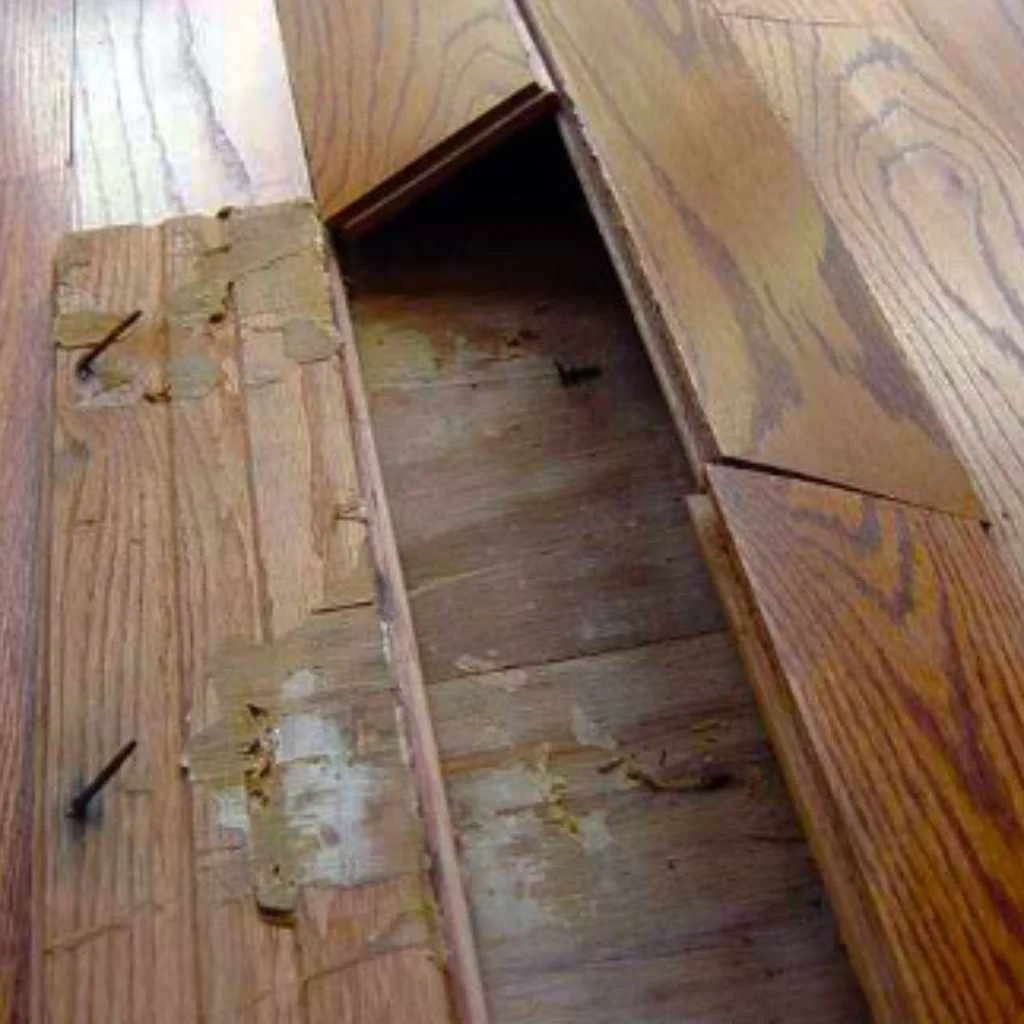
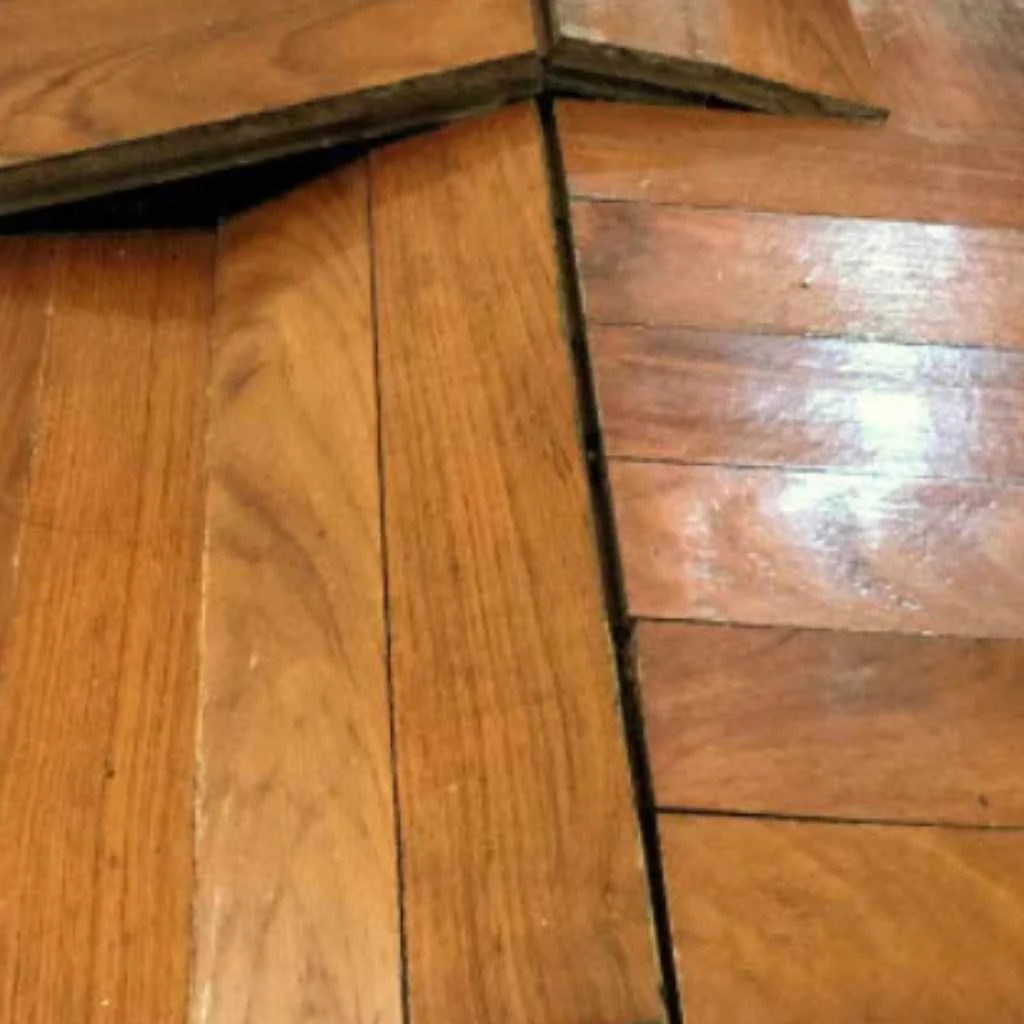
Buckling is easy to spot once you’ve seen it: one or more boards separate from the subfloor and arch upward, sometimes just a slight ridge, sometimes standing several inches tall. It’s different from the more common problems homeowners run into – cupping (edges higher than the centers of the boards) and crowning (centers higher than the edges) are both milder moisture reactions that keep the board attached to the subfloor. Buckling means the bond to the subfloor has failed and the board is genuinely lifting away from it. If you’re only seeing a slight dish shape across each board rather than boards standing up, you’re most likely dealing with cupping, which is worth fixing early specifically because it’s the stage right before buckling.
Best Way to Confirm It’s Moisture
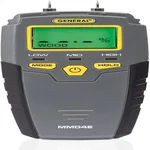 |
General Tools MMD4E Moisture Meter – $39.98 Before you pull up a single board, this pin-type meter tells you whether you actually have a moisture problem and how far it has spread into the surrounding floor.
|
The Real Causes of Hardwood Floor Buckling
Wood is hygroscopic, meaning it constantly exchanges moisture with the air and anything it’s touching. Solid hardwood flooring is milled and installed at a moisture content of roughly 6-9%, matched to the humidity of the room it’s going into. Buckling happens when that balance gets thrown off hard and fast, usually from one of these sources:
- Standing water or a major leak. A burst supply line, an overflowing washing machine or dishwasher, or flooding is the single most common cause of true buckling. Water pooling on or under the floor for even a few hours can push localized moisture content well past 25-30%.
- A wet or improperly dried subfloor. Concrete slabs release moisture for weeks after being poured, and crawl spaces without a vapor barrier constantly feed moisture upward. If wood flooring goes down before the slab or subfloor is actually dry, the floor absorbs moisture from below with no leak ever occurring above it.
- No expansion gap at the walls. Wood flooring needs roughly 3/4 inch of clearance at the perimeter (covered by trim) so it has somewhere to expand when it takes on moisture. Installers who nail flooring wall-to-wall with no gap leave the boards nowhere to go except up.
- Excess adhesive or over-fastening. Too much adhesive, or too many staples/nails spaced too tightly, can restrict the wood’s natural movement enough that swelling pressure has to release somewhere – usually as a buckle at the weakest seam.
- Prolonged high indoor humidity. Humidity that sits above roughly 55-60% for weeks, especially without air conditioning or a dehumidifier, gradually raises the wood’s moisture content. This more often produces cupping first, but sustained enough exposure can progress to buckling, particularly near exterior walls or below-grade rooms.
How to Confirm It’s a Moisture Problem
Before you touch a single board, find out how far the moisture has actually spread – it’s almost always wider than the visibly buckled area. A pin-type moisture meter (the product above) reads wood moisture content directly: press the pins into the surface a few inches away from the buckled section, then work outward in a grid until readings drop back to a normal 6-9%. Anywhere still reading above 15-20% is still actively wet and needs to dry before you replace anything on top of it. Skipping this step is the single most common reason a “fixed” buckled floor buckles again within a few months – the new boards go down before the subfloor underneath has actually finished drying.
How to Fix a Buckled Hardwood Floor
- Stop the moisture source first. Repair the leak, remove standing water, or address the humidity issue. Nothing else matters until the water is no longer coming in.
- Dry the area aggressively. Run fans and a dehumidifier (not just fans – moving humid air around a closed room doesn’t remove moisture, it just redistributes it) for several days. A shop vac with a wet-pickup attachment helps if there’s still standing water.
- Check moisture content before deciding how far to go. If a meter reading near the buckle is still above roughly 20%, keep drying – pulling boards too early just exposes a subfloor that’s still saturated.
- Try weight only for very mild buckling. Once the area is fully dry, placing heavy, flat weight across a slightly raised board for a few days can sometimes flatten it. Boards that have been standing more than a day or two typically won’t relax back down.
- Remove boards that won’t flatten. Pry up the buckled boards carefully, numbering them if you’re hoping to reuse any, and check the subfloor underneath for warping, mold, or continued dampness.
- Let the subfloor finish drying and confirm it with a meter reading before installing anything new.
- Acclimate replacement boards in the room for the manufacturer’s recommended period (often 3-5 days) so they match the room’s humidity before installation.
- Reinstall with a real expansion gap at the walls, then sand and refinish to blend the repair with the existing floor.
For the NWFA drying targets, the board-replacement cuts, and the expansion-gap rule in more detail, see our full guide on how to fix hardwood floor buckling.
For anything beyond a single mildly lifted board, or if the buckling followed a significant flood, bring in a flooring contractor – subfloor damage and mold growth under a badly buckled floor aren’t always visible from the top, and a professional moisture survey is worth the cost compared to reinstalling a floor over a problem that isn’t actually solved.
Preventing Buckling Before It Starts
- Keep indoor relative humidity between 30-50% year-round with a dehumidifier or humidifier as the seasons change.
- Fix leaks, drips, and appliance seals the day you notice them, not the week you get around to it.
- Confirm any new subfloor or slab has been tested and is dry before flooring goes down over it.
- Make sure installers leave the manufacturer’s specified expansion gap at every wall, doorway, and fixed obstruction.
- Keep a basic moisture meter on hand so a small damp spot gets caught while it’s still just cupping, not after it’s already buckled.
Frequently Asked Questions
What does it mean when a hardwood floor buckles?
Buckling means the boards have lifted or arched up off the subfloor, sometimes several inches, instead of lying flat. It’s the most severe stage of wood moisture damage – by the time boards are visibly standing up, the wood has absorbed far more water than it can hold while staying flat.
What causes hardwood floors to buckle?
Buckling is almost always moisture-driven: a plumbing leak, an appliance overflow, flooding, or a wet subfloor forces the wood to absorb water and expand. If the floor also has no expansion gap at the walls or was face-nailed too tightly, the swelling wood has nowhere to go but up. Poor installation makes a moisture problem worse, but it’s rarely the sole cause on its own.
Can high humidity alone cause a hardwood floor to buckle?
Sustained high humidity (well above 55-60% for weeks) can push boards into cupping and, in extreme cases, mild buckling, but true dramatic buckling almost always involves standing water or a saturated subfloor, not humidity by itself. If you’re only dealing with humidity, you’ll typically see cupping first, which is a warning sign to fix before it worsens.
Should I try to flatten a buckled floorboard myself?
You can try weighting down mild buckling once the moisture source is fixed and the area is fully dry, but boards that have been standing up for more than a day or two usually won’t lie flat again on their own. At that point the boards need to be pulled, the subfloor dried and checked, and new boards acclimated and installed with a proper expansion gap.
How long does it take a buckled floor to dry out?
With fans, a dehumidifier, and the moisture source stopped, a mildly affected area can dry in 3-5 days; a floor that took on standing water, especially with a wet subfloor underneath, often needs 1-2 weeks of active drying before it’s safe to remove and replace boards. Don’t rush this step – installing new wood over a subfloor that isn’t actually dry just buckles the replacement boards too.
How can I stop my hardwood floor from buckling again?
Fix leaks immediately instead of letting water sit, keep indoor humidity in the 30-50% range with a dehumidifier or humidifier as needed, and confirm your flooring was installed with the manufacturer’s recommended expansion gap. A cheap moisture meter lets you catch a wet spot while it’s still just damp, long before it turns into a buckled board.
Sponsored / affiliate links. As an Amazon Associate I earn from qualifying purchases. I may earn additional commission from eligible campaigns.