Wood Stove Glass Turns Black: Causes and How to Clean It
Wood stove glass usually turns black from incomplete combustion. If it darkens within about one or two burns, check first for wet wood, a smoldering fire, or too little air. If the black stays mainly at the edges, check draft, door seals, or the airwash system. Left alone, it can hide fire conditions and shorten burn efficiency. This guide shows how to read the soot pattern and clean the glass safely.
The glass on a wood stove is heat-resistant ceramic glass, and you should clean it only when the stove is cool. Black build-up is usually soot or creosote, and it forms when smoke touches the glass instead of burning in the firebox. A strong flame makes less smoke and usually keeps the glass cleaner.
What different soot patterns reveal about your stove


What the soot pattern tells you
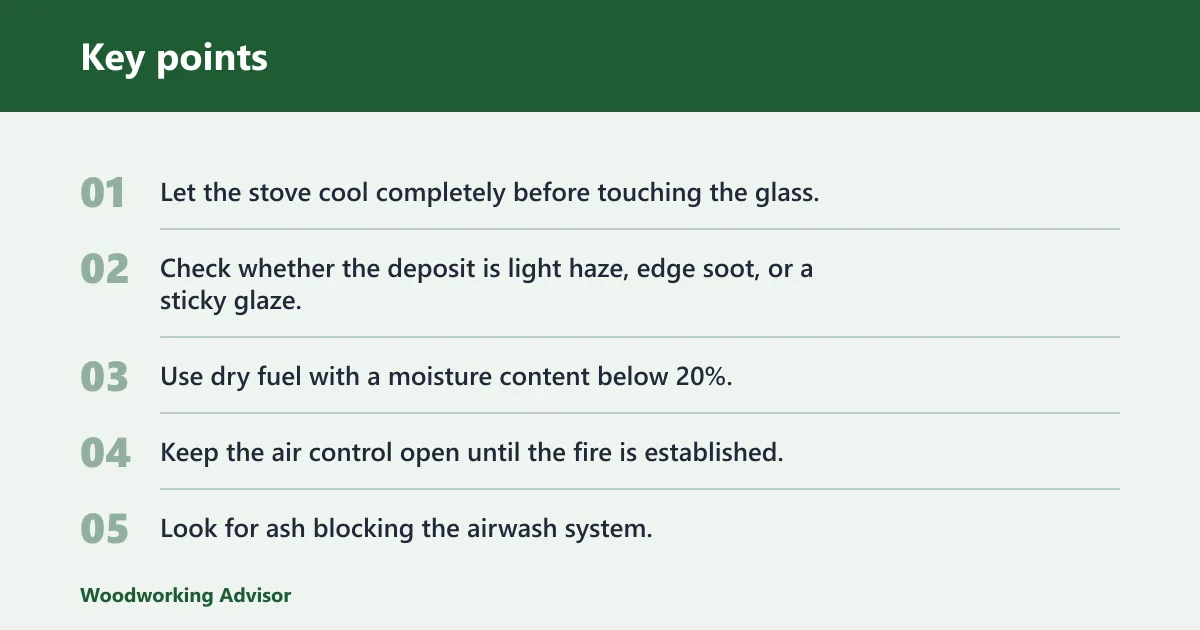
The shape of the blackening matters. Fast blackening after startup usually points to smoky ignition, wet fuel, or a weak draft. Soot at the top edge often points to lazy flames or poor airwash flow near the upper glass. Diagonal streaks and a hazy film usually mean smoke is brushing the glass during burn changes, while a thick tar-like glaze suggests repeated low burns or sticky creosote deposits.
Picture a stove that looks clear after lighting, then turns gray-black across the whole pane before the kindling has burned down. That pattern points to smoke contact early in the burn, not a glass-cleaning problem. A different stove may stay mostly clear except for a black band at the top; that pattern calls for a check of airwash flow, gasket seal, and draft before you reach for a cleaner.
Stove glass troubleshooting matrix
| Symptom pattern | Likely cause | One-check diagnosis | Exact fix or next step |
|---|---|---|---|
| Fast blackening after startup | Wet wood, too little air, or weak draft | Watch whether the fire stays smoky instead of building active flame within the first burn | Use wood below 20% moisture, open the air control longer, and check flue draft if smoke lingers |
| Soot only at the top edge | Weak airwash, low flame height, or a gasket leak | Look for a clean lower pane with a dirty upper band | Clear ash from the airwash path, inspect the door gasket, and verify the stove is burning hotter |
| Diagonal streaking | Smoke moving across the glass during reloads or throttled burns | Check whether the streak lines match where smoke curls during loading | Leave the air open longer after reload, place splits to leave airflow gaps, and avoid smothering the fire |
| Hazy film | Light soot from normal but imperfect combustion | Wipe a small test spot with a damp cloth when cool; if it clears easily, the deposit is light | Use ash paste, baking soda paste, or commercial stove glass cleaner, then improve burn air and fuel dryness |
| Thick tar-like glaze | Creosote buildup from repeated smoky burns | See whether the deposit feels sticky or glassy rather than dusty | Stop running the stove in a smoldering mode, burn hotter, and have the chimney checked if the glaze returns |
| Black glass after an overnight burn | Air controls closed too soon, oversized logs, or low overnight settings | Check whether the fire was reduced before a strong coal bed formed | Keep the air open until the fire is established, size the logs to the firebox, and avoid choking the burn too early |
| Dirty glass despite dry wood | Airwash blockage, gasket leak, or poor draft | Confirm the wood is seasoned, then inspect the airwash slots and gasket seal | Clean the airwash area, do the dollar-bill seal check, and call for chimney service if draft stays weak |
| Dirty glass with smoky startup | Cold flue, restricted chimney, or poor kindling fire | Note whether smoke spills into the firebox before the flue warms | Start with smaller dry kindling, warm the flue with a hotter start, and schedule a chimney sweep if smoke continues |
Simple troubleshooting sequence
- Let the stove cool completely before touching the glass.
- Check whether the deposit is light haze, edge soot, or a sticky glaze.
- Use dry fuel with a moisture content below 20%.
- Keep the air control open until the fire is established.
- Look for ash blocking the airwash system.
- Do the dollar-bill test on the door gasket.
- Inspect the chimney draft if smoke lingers or blackening returns quickly.
Is wet wood the main cause?
Wet, green, or poorly seasoned firewood is one of the most common reasons stove glass turns black. Moist fuel burns cooler, makes more smoke, and leaves more soot on the ceramic glass. A good target is less than 20% moisture. Dry, seasoned, or kiln-dried fuel burns cleaner because it supports hotter combustion and less smoke contact.
Fuel shape matters too. Oversized logs can crowd the firebox, limit airflow, and contribute to a smoldering burn. That can blacken the glass even when the wood is dry. Match log size to the firebox, and leave space between splits so air can move around them.
Suppose a 16-inch firebox is packed with two large splits laid flat across the full width. The stove may look full, but the fire can breathe poorly. If the same stove is loaded with smaller splits that leave gaps, the fire usually gets more air and less smoke clings to the glass.
Seasoned versus kiln-dried fuel
Seasoned wood and kiln-dried wood both aim at lower moisture, but the real test is the moisture reading, not the label. If the wood is below 20% moisture, it is far less likely to smoke heavily at startup. If the glass still blacks out fast with dry wood, look next at air settings, draft, or gasket leaks instead of blaming the fuel again.
Does the air vent setting matter?
Yes. Closing the air controls too early can blacken the glass by starving the fire of oxygen and pushing it toward incomplete combustion. The stove needs enough air to build a strong flame first. Once the fire is established, you can reduce air according to the stove’s instructions, but not so far that the flame turns lazy and smoky.
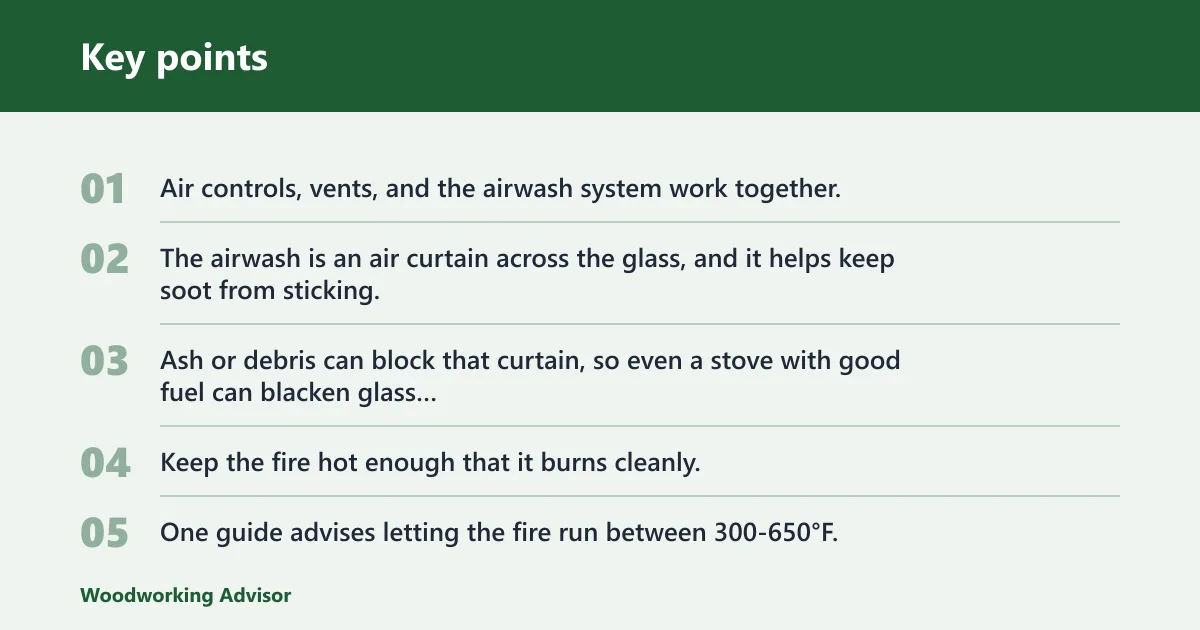
Air controls, vents, and the airwash system work together. The airwash is an air curtain across the glass, and it helps keep soot from sticking. Ash or debris can block that curtain, so even a stove with good fuel can blacken glass if the air path is restricted.
Keep the fire hot enough that it burns cleanly. One guide advises letting the fire run between 300-650°F, and that range reflects a burn that is hot enough to reduce smoke without smoldering. The exact control position varies by stove, so adjust to the stove-specific instructions rather than guessing.
Loading wood to leave airflow gaps
Load wood so the firebox still has room for air to move. If the splits are stacked too tightly, the stove can smoke against the glass even with dry fuel. A thin ash layer can help maintain the coal bed, but too much ash restricts airflow and can work against the airwash system.
How do I clean black soot off wood stove glass?
Use only methods meant for cool ceramic glass. For light haze, a damp newspaper dipped in ash is a quick clean method. For more stubborn soot, a commercial stove glass cleaner, wood ash paste, or baking soda paste can work. Do not use abrasive tools, and do not clean the glass while hot.
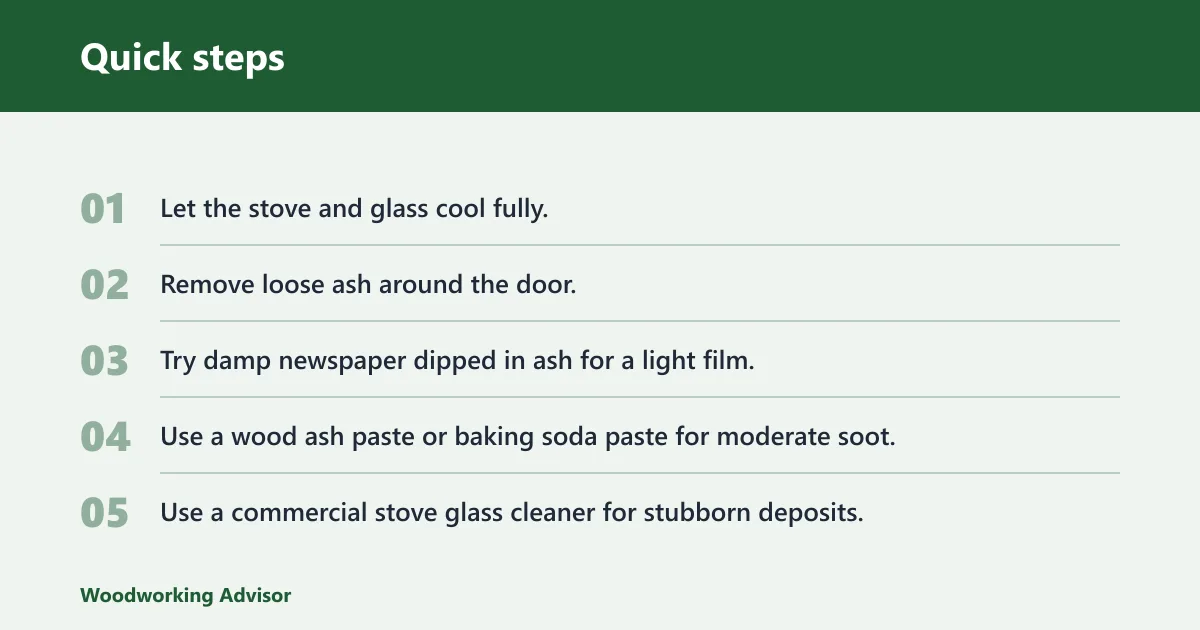
For a light haze, start with the gentlest option. For a thicker film, use a cleaner made for stove glass and follow the label. For baked-on tar-like glaze, expect to spend more time on cleaning, but also treat the burn cause. If the glass blackens again the next day, the stove is telling you the problem is not just the pane.
Safe cleaning steps
- Let the stove and glass cool fully.
- Remove loose ash around the door.
- Try damp newspaper dipped in ash for a light film.
- Use a wood ash paste or baking soda paste for moderate soot.
- Use a commercial stove glass cleaner for stubborn deposits.
- Wipe clean with a soft cloth and dry the glass.
What to avoid on ceramic glass
Avoid metal scrapers, abrasive pads, and rough tools that can scratch ceramic glass. Avoid household cleaners that are not meant for stove glass if they leave residue or streaks. If the deposit does not lift with safe cleaning, stop scrubbing harder and look for the cause of repeated soot.
What causes black buildup on stove glass?
Black buildup comes from soot or creosote that sticks when combustion is incomplete or smoke stays in contact with the glass. The common causes are wet fuel, low air, weak draft, blocked airwash flow, dirty flue passages, and door leaks. Forge & Flame notes that wood stove glass blackening is caused by creosote buildup, which fits the same burn conditions.
Wood stove blackening and pellet-stove blackening are not the same problem. Pellet stoves can blacken for different reasons, such as burn-pot issues, air intake restrictions, or low settings. Do not apply pellet-stove fixes to a wood stove and expect the same result.
Door gasket and draft checks
A loose door gasket can let air leak in the wrong place and reduce airwash effectiveness. A simple dollar-bill test can help: close the door on a bill and pull it. If it slips out too easily at several points, the seal may be loose and the gasket may need replacement. Weak draft, cold flue sections, a short flue, or a restricted chimney can also leave smoke hanging near the glass.
If black glass shows up with smoky startup, repeated edge soot, or sticky deposits after dry fuel and correct air settings, the chimney is part of the diagnosis. Surefire Wood says the simplest solution is certified firewood and enough air, and it recommends chimneys be swept at least once a year.
Frequently asked questions
Why does my wood stove glass turn black so fast?
Fast blackening usually means the fire is making more smoke than heat. Wet wood, too little air, a weak draft, or closing the air controls too early can cause that. If the glass darkens within one or two burns, start with fuel moisture, then check the air setting and draft path.
What is the safest way to clean wood stove glass?
The safest method is a cool stove, a soft cloth or paper, and a cleaner made for stove glass. For mild haze, ash on damp newspaper can work well. For tougher soot, use a commercial stove glass cleaner. Never clean hot glass, and never use anything abrasive that can scratch the ceramic surface.
How often should I clean wood stove glass?
That depends on burn quality and fuel. A well-adjusted stove can keep the glass clean for several weeks. If yours blacks up after nearly every burn, the stove is not burning cleanly enough, and you should look at wood moisture, vent settings, draft, ash buildup, and gasket condition before cleaning becomes the only fix.
Can a dirty chimney make stove glass black?
Yes. A dirty or restricted chimney can weaken draft, trap smoke near the firebox, and leave soot on the glass. If you see smoky startup, repeated blackening, or sticky tar-like buildup after using dry wood and enough air, the chimney should be inspected and swept. Annual sweeping is a common baseline recommendation.
Is wet wood the main reason stove glass turns black?
Wet wood is one of the most common reasons, but it is not the only one. Fuel below 20% moisture burns cleaner, yet the glass can still blacken if the air controls close too soon, the airwash is blocked, the gasket leaks, or the chimney draft is weak. Diagnose the burn, not just the wood.
Sponsored / affiliate links. As an Amazon Associate I earn from qualifying purchases. I may earn additional commission from eligible campaigns.