Woodworking Shop Calculators: Lathe Speed, Clamping Force, Glue Coverage & More
Eight free shop calculators in one place: wood lathe speed, clamping force, glue coverage, tool ROI, bowl blank sizing, firewood usage, moisture meter species correction, and miter angle — each with the formula, a worked example, and a reference chart.
Quick Answer
These eight calculators cover shop-math questions that come up constantly but do not fit one lumber or finishing category: how fast to run the lathe, how much clamping force and glue a glue-up needs, whether a tool purchase pays for itself, how big to cut a bowl blank, how much firewood a season burns, how to correct a moisture meter reading for species, and what angle to set for a multi-sided miter cut.
Wood Lathe Speed Calculator
Enter your project values below. The calculator gives a planning estimate, then the guide explains the formula, example calculation, common mistakes, and when to adjust the result.
Enter your values and click calculate.
Wood Lathe Speed Calculator Formula
RPM = target surface feet per minute × 3.82 ÷ blank diameter in inches, then adjusted down for balance and blank type.
Reference Table
| Project factor | Planning guidance |
|---|---|
| Large bowl blank | slow start |
| Natural edge blank | extra caution |
| Small spindle | can run faster |
| Final sanding | only after balance is safe |
Common Mistakes to Avoid
- Starting a large blank too fast.
- Ignoring vibration.
- Using a cracked or poorly mounted blank.
- Standing in the line of fire when starting the lathe.
Clamping Force Calculator
Enter your joint’s dimensions and pick a wood density category to estimate total clamping force and roughly how many clamps you’ll need.
Enter your values and click calculate.
Formula
Clamping force (lbf) = Joint area (sq in) x Recommended pressure (psi). Joint area = Length (in) x Width (in).
Typical Clamp Force by Type
| Clamp type | Typical force |
|---|---|
| Spring clamp | ~20-40 lbf |
| F-style/bar clamp (light-medium) | ~100-300 lbf |
| Pipe clamp | ~300-1,000+ lbf |
| Parallel-jaw clamp | ~500-1,000+ lbf |
Common Mistakes to Avoid
- Over-clamping softwood, which crushes fibers and can starve the joint of glue instead of strengthening it.
- Under-clamping hardwood, leaving a weak, glue-starved bond that can fail under load.
- Spacing clamps too far apart along a long joint, which leaves the middle under-pressured even if end clamps are tight.
- Ignoring that total force needs to be distributed evenly, not just met by one or two very tight clamps.
Glue Coverage Calculator
Enter your joint’s surface area and pick a glue type to estimate how much adhesive to have on hand.
Enter your values and click calculate.
Formula
Fluid ounces needed = (Area sq ft x Sides) / Coverage rate (sq ft per fl oz for the chosen glue).
Typical Spread Rate by Glue Type
| Glue type | Approx. coverage | Typical use |
|---|---|---|
| PVA wood glue | ~1.6 sq ft/fl oz | General woodworking glue-ups |
| Polyurethane | ~1.2-1.5 sq ft/fl oz | Outdoor/moisture-resistant joints |
| Epoxy (glue-line) | ~0.3-0.5 sq ft/fl oz | Structural bonds, gap-filling |
Common Mistakes to Avoid
- Applying glue to only one surface on porous or end-grain joints, which absorb glue quickly and can starve the bond.
- Assuming every adhesive spreads at the same rate — epoxy applied for structural strength uses far more per square foot than a thin PVA coat.
- Not accounting for squeeze-out and spreader waste, which typically adds 10-20% beyond the theoretical coverage.
- Buying by bottle count without converting to total fluid ounces first, especially on large glue-ups.
Woodworking Tool ROI Calculator
Enter what a tool costs, what it’s worth to you per use (income, savings, or time value), and how often you use it, to see the payback period and return on investment.
Enter your values and click calculate.
Formula
Net cost = Purchase price – Resale value. Monthly value = Value per use x Uses per month. Payback period (months) = Net cost / Monthly value. 1-year ROI% = ((Monthly value x 12 – Net cost) / Net cost) x 100.
Illustrative Payback Examples
| Scenario | Typical payback |
|---|---|
| Frequently-used shared/shop tool | 6-18 months |
| Occasional specialty tool | 1-3+ years |
| Pure hobby tool (enjoyment value) | May never “pay back” financially — and that’s fine |
Common Mistakes to Avoid
- Ignoring ongoing costs like blades, bits, sandpaper, and maintenance when figuring the tool’s true cost basis.
- Not counting time saved as real value — if a tool saves you meaningful hours, that time has a dollar value even without direct income.
- Forgetting resale value entirely, which can meaningfully lower a tool’s true net cost if you’d realistically sell it later.
- Comparing ROI across tools without normalizing for how often each is actually used.
Bowl Blank Calculator
Enter your target bowl dimensions below. The calculator gives a planning estimate for blank size, board feet, weight, and cost, then the guide explains the formula, worked example, common mistakes, and when to adjust the result.
Enter your values and click calculate.
Bowl Blank Calculator Formula
Blank diameter = bowl diameter + 1″. Blank thickness = bowl depth + base allowance + 1.5″ mounting waste.
Reference Table: Approximate Dry Density by Species
| Species | Density (lb per cubic ft) |
|---|---|
| Pine | ~25 |
| Cedar | ~33 |
| Poplar | ~29 |
| Mahogany | ~34 |
| Cherry | ~35 |
| Walnut | ~38 |
| Ash | ~42 |
| Oak | ~44 |
| Maple | ~44 |
| Purpleheart | ~56 |
Common Mistakes to Avoid
- Cutting the blank too close to the finished diameter, leaving no room to true up an out-of-round log section.
- Forgetting the base/foot allowance and ending up with a bowl that is too shallow.
- Not accounting for how much green (wet) wood will shrink and warp as it dries before final turning.
- Ignoring chuck or faceplate mounting waste at one end of the blank.
Firewood Usage Calculator
Enter your values below for an instant result, then see the formula, worked example, and common mistakes.
Enter your values and click calculate.
Formula
Cords needed = Daily burn rate (cords/day) x Number of heating-season days. Cubic feet = Cords x 128 (the volume of a standard 4x4x8 ft stacked cord).
Reference Table: Firewood BTU Output by Species (per cord)
| Species | Approx. BTU per cord |
|---|---|
| Hickory | ~27.7 million BTU |
| White Oak | ~24.2 million BTU |
| Sugar Maple | ~24 million BTU |
| Red Oak | ~22.1 million BTU |
| Pine (common softwood) | ~15.7 million BTU |
Higher-BTU hardwoods burn longer and hotter per cord, meaning fewer cords are needed for the same total heat output compared to lower-BTU softwoods.
Common Mistakes to Avoid
- Confusing a ‘face cord’ (often 4 ft x 8 ft x 16 in, about 1/3 of a full cord) with a full cord (4 ft x 4 ft x 8 ft, 128 cubic feet) when buying — always confirm which measurement a seller means.
- Burning unseasoned (wet) firewood, which produces less usable heat and more creosote buildup than properly dried wood (below about 20% moisture content).
- Using a flat cords-per-season estimate without adjusting for species — a cord of pine has meaningfully less heat output than a cord of oak or hickory, so more pine cords are needed for equivalent heat.
- Not accounting for stove efficiency — a modern EPA-certified stove (70-80% efficient) uses noticeably less wood than an old open fireplace (10-15% efficient) for the same heat delivered to a room.
Wood Resistance (Moisture Meter) Calculator
Enter your values below for an instant result, then see the formula, worked example, and common mistakes.
Enter your meter reading and species, then calculate.
Formula
This is an approximation model: Correction ~= (Species SG – 0.45) x (Reading x 0.12). Real correction curves published by meter manufacturers are measured empirically per species and are not perfectly linear, so treat this calculator as a planning estimate, not a substitute for the manufacturer’s official correction chart.
Reference Table: Specific Gravity by Species (for Pinless/SG Correction)
| Species | Specific Gravity (SG) |
|---|---|
| Western Red Cedar | 0.31 |
| White Pine | 0.36 |
| Poplar / Yellow Poplar | 0.40 |
| Douglas Fir (meter baseline) | 0.45 |
| Black Walnut | 0.51 |
| Red Oak / Hard Maple | 0.56 |
| White Oak | 0.60 |
| Bubinga | 0.71 |
| Jatoba | 0.77 |
Common Mistakes to Avoid
- Assuming a pin-type moisture meter reads the same regardless of species — meters are calibrated to one reference species (commonly Douglas Fir at SG 0.45) and need a manual correction for every other species.
- Confusing pin-meter (resistance) correction, which is species-based, with pinless (capacitance) meter correction, which is specific-gravity-based — both ultimately trace back to SG, but the correction tables and mechanisms differ between meter types.
- Using a generic “hardwood” or “softwood” correction instead of the specific species’ SG — SG varies significantly within both categories (e.g. Western Red Cedar at 0.31 vs. Douglas Fir at 0.45 are both softwoods).
- Ignoring temperature — wood temperature outside the 50-90 degF range also requires a separate correction on many meters, independent of the species correction.
Woodworking Miter Angle Calculator: Angles for Any Sided Shape
Enter your values below for an instant result, then see the formula, worked example, and common mistakes.
Select the number of sides, then click calculate.
Formula
Miter Angle = 180 / n, where n is the number of sides of the regular polygon. Equivalently, Miter Angle = (180 – Interior Angle) / 2, where Interior Angle = (n – 2) x 180 / n. Both formulas always agree for a regular (equal-sided) shape — this calculator uses 180/n directly since it is simpler and gives the same result.
Reference Table: Miter Angles by Number of Sides
| Sides | Shape | Interior angle | Miter angle (saw setting) |
|---|---|---|---|
| 3 | Triangle | 60 deg | 60 deg |
| 4 | Square/Rectangle | 90 deg | 45 deg |
| 5 | Pentagon | 108 deg | 36 deg |
| 6 | Hexagon | 120 deg | 30 deg |
| 8 | Octagon | 135 deg | 22.5 deg |
| 12 | Dodecagon | 150 deg | 15 deg |
Common Mistakes to Avoid
- Confusing the interior angle with the miter angle — the saw is set to the miter angle (half of what remains after the interior angle), not the interior angle itself.
- Assuming all miter joints use a 0-degree bevel — this calculator covers standard flat miters; compound miters (used for angled/canted shapes like tapered boxes or crown molding installed at a spring angle) require both a miter AND a bevel angle set together, a different calculation.
- Forgetting that most miter saws are marked with the angle from square (0 degrees = straight cut) rather than from the blade’s full range — double check your saw’s angle scale convention before cutting.
- Not test-cutting on scrap first — even a fraction of a degree of error per joint compounds across multiple corners on shapes with many sides, creating a visible gap on the final seam.
Frequently Asked Questions
Wood Lathe Speed
Is this a safety limit?
No. It is a planning estimate. Always follow your lathe manual and start at the lowest safe speed.
Why do larger blanks need lower RPM?
The rim speed increases with diameter, so larger blanks can become dangerous at high RPM.
Can I use this for unbalanced blanks?
Use the roughing setting and start lower if vibration is present.
Clamping Force
How tight should wood clamps be?
Tight enough to see a slight, even bead of glue squeeze out along the joint — not so tight that you’re crushing or denting the wood surface.
How many clamps do I need for a glue-up?
As a rough guide, plan on one clamp roughly every 6-12 inches along the joint, depending on each clamp’s rated force and the wood density.
Does more clamping pressure always make a stronger joint?
No — beyond the recommended range, excess pressure can squeeze out too much glue and starve the joint, weakening the bond rather than strengthening it.
Glue Coverage
How much wood glue do I need per square foot?
Roughly 0.6-0.7 fl oz per square foot per side for typical PVA wood glue, though this varies with wood porosity and application thickness.
Does epoxy or PVA cover more area per ounce?
PVA covers far more area per ounce since it’s applied in a thin film, while structural epoxy is applied thicker for strength and gap-filling and covers proportionally less.
Should I glue both sides of a joint?
Yes, especially for porous, rough-sawn, or end-grain surfaces — gluing both mating faces gives more even coverage and a stronger bond.
Tool ROI
How do I calculate ROI on a new woodworking tool?
Divide the value the tool generates over a year (income, savings, or time value) minus its net cost, by its net cost, then multiply by 100 for a percentage.
What’s a good payback period for a shop tool?
It varies widely — frequently used shared or commercial tools often pay back in 6-18 months, while specialty or occasional-use tools may take years, and pure hobby tools may never pay back financially in the traditional sense.
Should I include the value of time saved in my ROI calculation?
Yes, if the tool genuinely saves you time you’d otherwise spend or could use productively elsewhere — value it at a reasonable hourly rate for a more complete picture.
Bowl Blank Size & Weight
How much bigger should a blank be than the finished bowl?
About 1 inch wider in diameter and enough thicker to cover the bowl depth, base allowance, and roughly 1 to 1.5 inches of chucking/mounting waste.
Do I need extra wood for green (wet) bowl blanks?
Yes. Rough-turn green blanks oversized, then let them dry (often several weeks to months) before final turning, since the wood will warp and shrink as it loses moisture.
How do I estimate the weight of a bowl blank?
Multiply the blank’s volume (in cubic inches) by the species’ density in pounds per cubic foot, then divide by 1728 to convert to pounds.
Firewood Usage
How many cords of firewood do I need for winter?
Homes using wood as a primary heat source in cold climates typically use 3-5 cords per winter; moderate climates use 2-3 cords; supplemental wood stoves typically use 1-2 cords.
How big is a cord of firewood?
A standard cord is a stack measuring 4 feet high by 4 feet deep by 8 feet long, totaling 128 cubic feet of stacked wood (including air gaps between pieces).
Which firewood species burns the longest?
Dense hardwoods like hickory, oak, and maple have the highest BTU output per cord (22-28 million BTU), meaning they burn longer and hotter than softwoods like pine (about 15.7 million BTU per cord).
Wood Resistance (Moisture Meter)
Why do moisture meters need a wood species correction?
Because pin-type meters measure electrical resistance, and different wood species conduct electricity differently even at the identical true moisture content — meters are calibrated to one reference species (commonly Douglas Fir) and read incorrectly on others unless corrected.
What species is a moisture meter usually calibrated to?
Most pin-type meters, including Delmhorst models, use Douglas Fir (specific gravity 0.45) as the USDA-standard calibration baseline.
Do dense hardwoods read higher or lower than their true moisture content?
Generally lower — dense hardwoods and exotic species commonly read 2-5 percentage points below their actual moisture content on an uncorrected pin meter.
Is species correction the same for pin and pinless moisture meters?
No — pin (resistance) meters use a species-specific correction table, while pinless (capacitance) meters use a specific-gravity-based correction formula; both relate to SG but are applied differently.
Miter Angle
What is the formula for miter angle?
Miter angle equals 180 divided by the number of sides of the regular shape you are building — for example, 180/4 = 45 degrees for a square.
What angle do you cut a hexagon miter?
30 degrees per corner — calculated as 180 divided by 6 sides, or equivalently half of the 180-degree supplement of the 120-degree interior angle.
Is miter angle the same as bevel angle?
No — miter angle is the horizontal angle cut across the board’s width (seen from above), while bevel angle is a tilt of the blade through the board’s thickness, used for compound cuts on angled assemblies.
Why do miter joints need matching angles on both pieces?
Two mitered pieces must each be cut at the same miter angle so that when joined, their combined angle equals the shape’s interior angle exactly, leaving no gap at the seam.
Sources and Methodology
These are original Woodworking Advisor calculator guides combining published woodworking, wood-science, and manufacturer references with conservative planning assumptions and clear limitations.
- Lathe speed: starting RPM (target SFM × 3.82 / blank diameter, reduced for balance and blank type) follows standard woodturning surface-speed practice: larger and less-balanced blanks require a lower starting RPM.
- Clamping force: pressure ranges (100-150 psi softwood, 150-200 psi medium density, 200-300 psi hardwood) reflect widely cited woodworking glue-up guidance, including Forest Products Laboratory-derived recommendations referenced across current woodworking trade publications as of 2026.
- Glue coverage: coverage figures are drawn from published wood-glue manufacturer data (including Gorilla Wood Glue’s stated ~1.6 sq ft per fluid ounce) and general epoxy glue-line application guidance as of 2026; always confirm against your specific product’s data sheet since formulations vary.
- Tool ROI: the ROI and payback period formulas used here are standard financial calculations (net benefit divided by net cost) applied to a woodworking tool-purchase context.
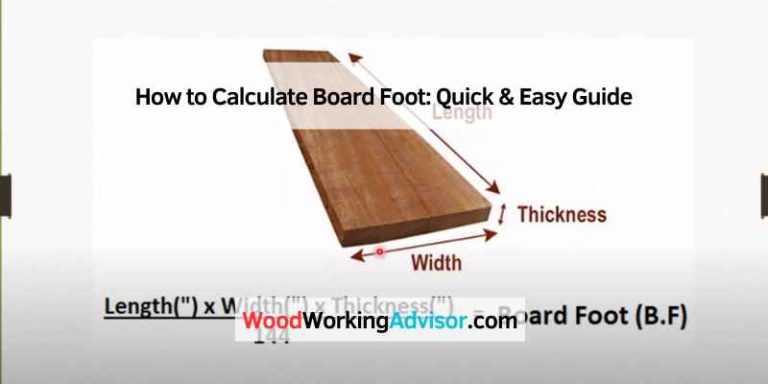
- Bowl blank size & weight: wood species density values are approximate air-dried figures based on standard wood science references such as the USDA Forest Products Laboratory Wood Handbook. Board footage uses the standard 144 cubic-inch board foot unit. Blank sizing allowances (diameter and mounting waste margins) reflect common wood turning practice, not a single official standard — always inspect your specific blank and lathe setup before mounting.
- Firewood usage: cord dimensions (4x4x8 ft, 128 cubic feet), seasonal usage ranges (1-5 cords depending on heat role and climate), species BTU values, and stove efficiency figures reflect commonly published firewood and wood-heating industry references (e.g. university extension heating guides and firewood BTU charts), current as of 2026.
- Wood resistance (moisture meter): species correction concept, Douglas Fir calibration baseline, and specific-gravity reference values sourced from Delmhorst Instrument Co.’s published Correction Tables (Species Corrections and SG Pinless Corrections), cross-referenced against Bessemeter’s and general wood-science guidance on resistance-type moisture measurement.
- Miter angle: the miter angle formula (180/n for regular polygons) and interior angle formula ((n-2) × 180/n) are standard, universally used geometry confirmed against Omnicalculator’s Miter Angle Calculator, Skirting World’s Mitre Angle Calculator, and Calculator Academy’s Angle Cut Calculator — all citing the same n-sided polygon miter formula.
Sponsored / affiliate links. As an Amazon Associate I earn from qualifying purchases. I may earn additional commission from eligible campaigns.