Ash Wood for Guitars: Tone, Types, and a Supply Story Most Guides Skip
Ash gives electric guitars a bright, snappy, resonant tone with strong sustain and an open, prominent grain, but the specific ash your favorite Fender-style guitar was actually built from has become genuinely scarce over the last two decades.
Ash has been a go-to guitar body wood since the earliest Telecasters and Stratocasters, prized for a clear, articulate attack that cuts through a mix. Most guides stop at tone and grain figuring. What they leave out is that the ash supply guitar builders depend on has been quietly shrinking for years, which is now changing prices and availability for anyone shopping for ash lumber, a pre-cut body blank, or a finished guitar. Below is what ash actually sounds like, the real differences between the types you’ll encounter, how to work the wood, and the supply story that explains why “ash” on a spec sheet doesn’t mean what it used to.
What Makes Ash a Classic Guitar Tonewood
Ash is a hardwood with a relatively open cellular structure, and that structure is doing most of the acoustic work. Because the grain isn’t tightly packed, vibrations travel through the body more freely than they do in a denser, tighter-grained wood, which is why ash guitars are consistently described the same way by players and builders alike:
- Bright, articulate attack with strong upper-midrange presence, so notes stay clear in a busy mix instead of blurring together.
- Good note separation for fast picking, chord work, and anything with a lot of moving parts.
- Long, ringing sustain, a direct result of the open grain letting the body resonate rather than damping the string’s vibration.
- A solid, punchy midrange that gives the guitar some “oomph” without turning muddy.
That combination is exactly why ash became the standard body wood for the bright, cutting tones associated with rock, country, and blues-leaning Fender-style guitars through the 1950s and 60s, and it’s still the wood players reach for when they want that particular sound today.
Best Ash Body Blank for a DIY Build
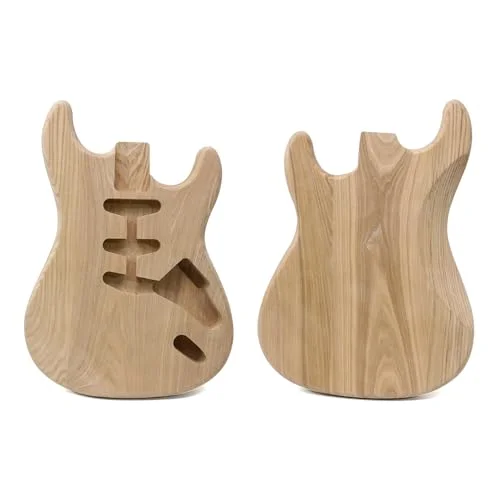 |
ModouString Unfinished Ash Guitar Body – $42.99 A genuine ash body blank, so you can hear the tone described above on your own build instead of taking it on faith.
|
The Three Types of Ash You’ll Actually Encounter
“Ash” on a guitar spec sheet can mean three noticeably different boards. None of them are a different species in the strict botanical sense except where noted below, but builders treat them as distinct categories because the weight, grain, and tone really do vary.
Northern Ash (White Ash, Fraxinus americana) is the denser, finer-grained wood that built most of the iconic ash Fenders of the 1950s and 60s. It leans brighter and more bell-like up top, with excellent sustain, but it’s heavier on the shoulder than the other two.
Southern Ash (Green Ash, Fraxinus pennsylvanica) is more common in production guitars today. It’s a touch lighter with a coarser, more open grain than Northern Ash, and the tone is still bright and clear but slightly warmer and a bit more compressed.
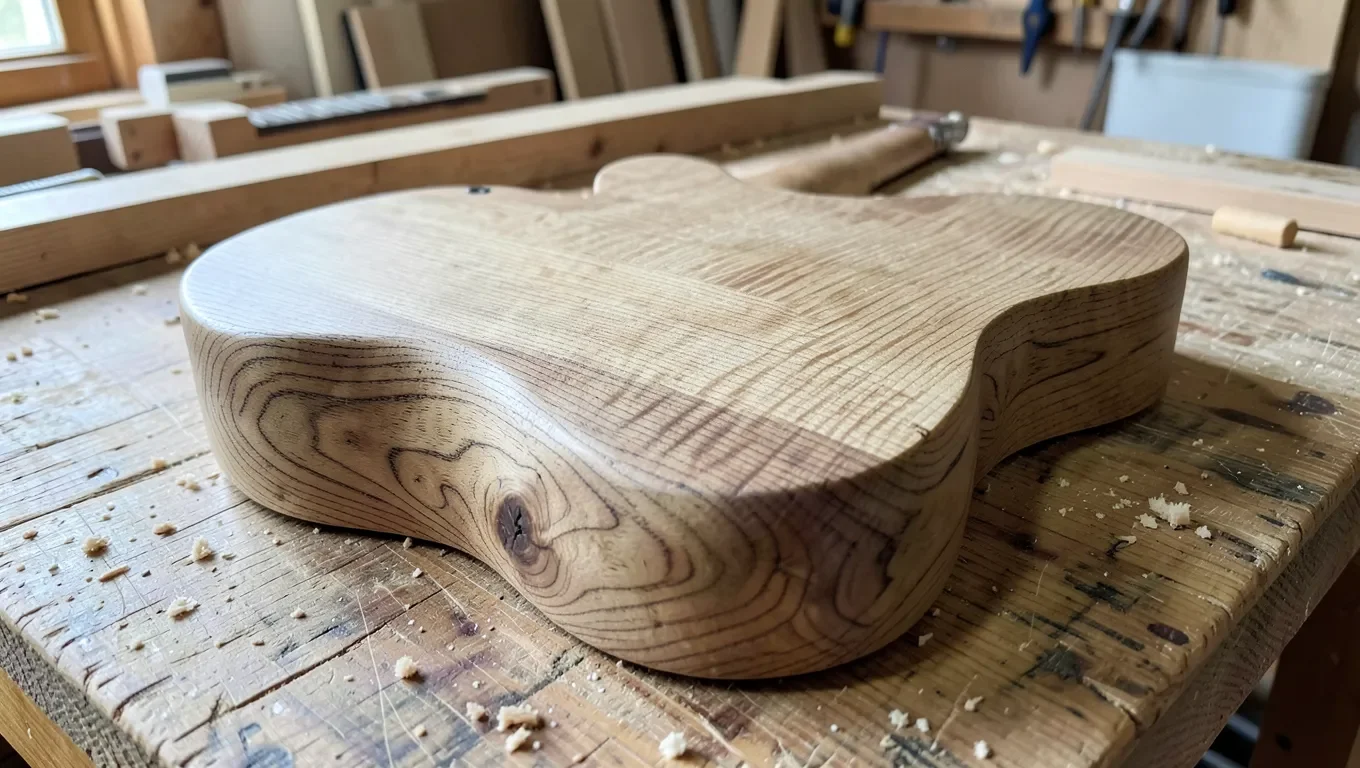
Swamp Ash isn’t a separate species — it’s ash (usually white or green ash) that grew in wet, low-lying ground, which produces a lighter, more open-pored board. It’s the variety most associated with vintage Fender tone: light weight, a very open and visually striking grain, and a snappy, resonant attack that many players consider the most desirable of the three. It’s also the variety hit hardest by the supply problem covered below — see our full breakdown of American swamp ash for the details on sourcing it today.
| Ash Type | Density | Grain | Brightness | Weight |
|---|---|---|---|---|
| Northern Ash | High | Fine, consistent | Very high, bell-like | Moderate to heavy |
| Southern Ash | Medium | Coarser, more open | High | Moderate |
| Swamp Ash | Lower | Very open, striking | Very high, snappy | Lightweight |
Why Ash Guitar Wood Is Getting Harder to Find
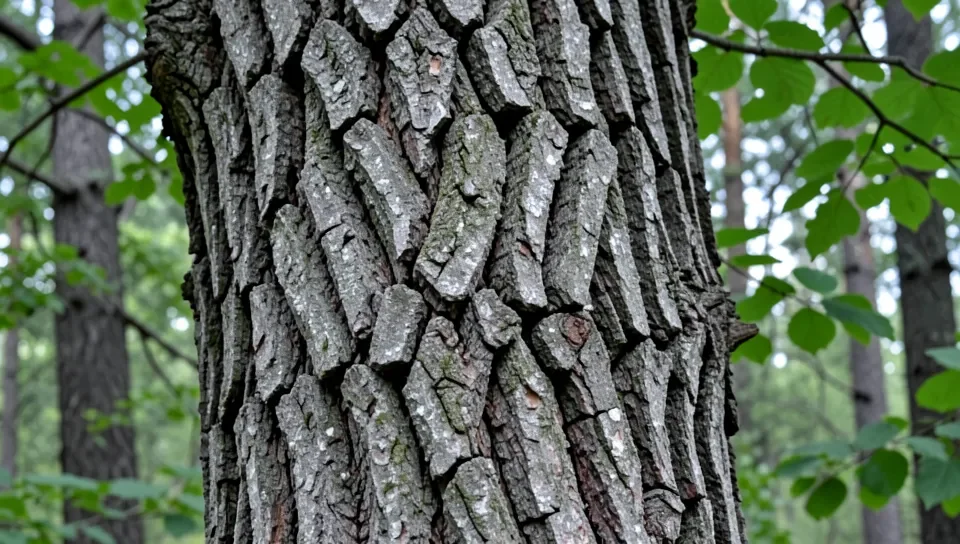
This is the part most “ash for guitars” articles skip entirely, and it’s worth knowing before you shop. The emerald ash borer, an invasive beetle first identified in the U.S. in 2002, has since killed an estimated hundreds of millions to billions of ash trees across North America, and the effect on the guitar industry has been direct rather than theoretical: on April 20, 2020, Fender announced it was pulling ash from most of its regular production models, reserving remaining stock for select vintage-series guitars only. The Mississippi Delta bottomland where the best swamp ash has traditionally been harvested has been especially hard hit, and chronic flooding in the same region has added to the shortage.
For anyone buying today, that means two practical things. First, “ash” body blanks and finished guitars are increasingly likely to be Southern (green) ash rather than the swamp ash that built the vintage reputation, even when a listing doesn’t spell that out. Second, genuine light, open-grained swamp ash costs more and is harder to source reliably than it was even a decade ago, so it’s worth asking a supplier directly which type of ash you’re actually getting rather than assuming. We go deeper on sourcing, pricing, and what to look for specifically with swamp ash in the dedicated swamp ash guide.
Working With Ash: Machining, Joining, and Finishing
Ash is a forgiving hardwood for a builder at any skill level, though its hardness and open grain both call for a few adjustments to your usual routine.
Cutting and shaping: Use sharp, carbide-tipped blades. Ash’s straight grain makes it predictable to cut and rout, but dull blades will tear the open grain rather than slicing it cleanly. Pay attention to grain direction around any figuring to avoid splintering.
Sanding: Start around 80-100 grit to clear tool marks, then work up to 220-320 for a finish-ready surface. Because the grain is open, a smooth glassy result usually means using a grain filler before your finish coats, not just sanding longer.
Joining: Ash glues cleanly and holds a strong joint, which is why multi-piece bodies (two or three boards glued into one blank, common on production guitars) are standard practice and not a quality shortcut.
Finishing: Ash’s grain is the whole visual point of a natural or transparent finish — a clear nitrocellulose lacquer or polyurethane lets that open, striking pattern show through. If you want a dead-smooth, glass-like surface instead, fill the pores with a grain filler first; skip it and the open grain will telegraph through even multiple coats of finish. Ash also takes color well, so sunbursts and solid stains are both realistic options if you’d rather not show bare grain.
Safety: Ash dust is a genuine respiratory irritant, so wear a proper dust mask or a P100 respirator any time you’re cutting, routing, or sanding it, along with eye protection and hearing protection whenever power tools are running.
Ash vs. Alder and Mahogany
Ash’s character stands out most clearly next to the two woods it’s most often cross-shopped against.
| Feature | Ash | Alder | Mahogany |
|---|---|---|---|
| Tone | Bright, snappy, cutting | Balanced, focused mids | Warm, thick, sustain-heavy |
| Grain | Open, prominent, bold | Fine, tight, subtle | Straight, medium-porous, uniform |
| Weight | Moderate (lighter as swamp ash) | Light and consistent | Moderate to heavy |
| Typical guitars | Telecasters, Stratocasters | Stratocasters, Telecasters | Les Pauls, SGs |
Alder trades some of ash’s high-end sparkle for a more even, rounded response, which is why Fender uses both woods across different models rather than picking a single “best” one. Mahogany is a different tonal category entirely — warmer and thicker, with less of the percussive snap that makes ash distinctive. If you want that classic Stratocaster spank or Telecaster twang, ash (or alder, for a slightly smoother version of the same idea) is the right family of wood; if you want Gibson-style warmth and sustain, mahogany is the better starting point.
Choosing Ash for Your Own Build
Whether you’re buying a pre-cut body, a neck blank, or raw lumber, a few things matter more than a listing photo will tell you.
Grain and porosity: An open, visible grain is what you want for classic ash tone, especially if you’re after the swamp ash character specifically. Figured pieces (flame or quilt) look great but check that the tonal openness is still there underneath the figuring.
Weight: Lighter is usually better, particularly for swamp ash, since a lighter board tends to correlate with a more open grain and a more comfortable instrument. A typical ash guitar body runs roughly 4 to 5.5 pounds (about 1.8-2.5 kg); anything noticeably heavier is more likely Northern ash than swamp ash regardless of what the listing calls it.
Moisture content: Confirm the wood is kiln-dried, or if air-dried, that it’s down to roughly 6-8% moisture before you build with it. Wood that’s still too wet will move and warp as it finishes drying, which is a problem you don’t want to discover after the body is shaped.
Source: Buy from a supplier who can actually tell you which type of ash you’re getting, especially given the sourcing squeeze described above — a vague “ash” listing with no species or region noted is a reasonable sign to ask more questions before you buy. Inspect the board ends for checks or cracks that run deep into the wood, since those can turn into a problem right where you need to cut a body outline or neck pocket.
Common Mistakes Builders Make With Ash
- Using dull tools. Ash is a hardwood with an open grain; dull blades tear it instead of cutting cleanly. Keep blades and bits sharp.
- Ignoring grain direction around figuring. Straight-grain ash is predictable, but figured sections can catch a router or plane against the grain and splinter.
- Skipping the grain filler when a glossy finish is the goal. Open grain will show through a clear gloss finish unless it’s filled first — not a defect, just a step that’s easy to skip by accident.
- Finishing before dimensions are final. Sanding through a finish to fix a shape problem is far harder than getting the shaping right first.
- Skipping dust protection. Ash dust is a real irritant; a proper mask or respirator isn’t optional.
Ash for Bodies vs. Necks
Ash is most associated with guitar bodies, where its resonance has the most impact on the instrument’s overall tone. Builders typically look for stiff, resonant, lightweight pieces, glued from one to three boards into a single blank, then shaped from a template with a bandsaw or jigsaw before routing the pickup and control cavities. Resaw capacity and blade width vary a lot between saws, so it’s worth checking which bandsaws actually handle guitar-body curves and tonewood resawing before you buy one for this kind of work.
Ash necks exist but are less common than maple or mahogany necks. It’s a stable wood that leans bright, though the added weight is a real consideration; when it is used for a neck, it’s often paired with a rosewood or ebony fretboard to balance out the brightness.
Frequently Asked Questions About Ash Wood for Guitars
What kind of tone does ash wood give a guitar?
A bright, clear, resonant tone with a snappy attack, good sustain, and excellent note separation. It has a strong upper-midrange presence that helps a guitar cut through a mix.
Is ash wood heavy for guitars?
It depends which type. Swamp ash is known for being relatively lightweight thanks to its open grain, while Northern (white) ash tends to be denser and heavier. Weight is a real factor in playability over a long gig or practice session.
Is ash wood good for beginners to work with?
Yes. It machines, cuts, and sands predictably thanks to its straight grain. It’s still a hardwood, though, so sharp tools and proper dust protection matter more than they would with a softer wood.
Why is ash guitar wood harder to find now?
The emerald ash borer, an invasive beetle established in the U.S. since 2002, has killed a large share of North America’s ash trees, hitting the Mississippi Delta bottomland that produces guitar-grade swamp ash especially hard. Fender pulled ash from most regular production guitars in April 2020 as a direct result. Genuine swamp ash is now costlier and harder to source than it was a decade ago.
What are the main types of ash used for guitars?
Northern Ash (White Ash), Southern Ash (Green Ash), and Swamp Ash. Swamp ash is the most prized for its light weight and resonant, open-grained tone, though it’s also the scarcest of the three today.
Sponsored / affiliate links. As an Amazon Associate I earn from qualifying purchases. I may earn additional commission from eligible campaigns.