BCX vs RTD Plywood Which Is Best
Picking the right plywood can feel like a puzzle, especially when you’re just starting out. You might see terms like BCX and RTD and wonder what they mean and how they’re different. It’s a common question because these terms aren’t always explained in a simple way.
This guide will break down the differences between BCX and RTD plywood so you can easily choose the best one for your projects. We’ll look at what makes each type unique and help you decide.
Understanding Plywood Grades BCX and RTD
Plywood comes in different grades that tell you about its appearance and where it’s best used. Think of these grades as labels that help you pick the right sheet for your needs. This section will explain what BCX and RTD mean and why these grades matter for your projects.
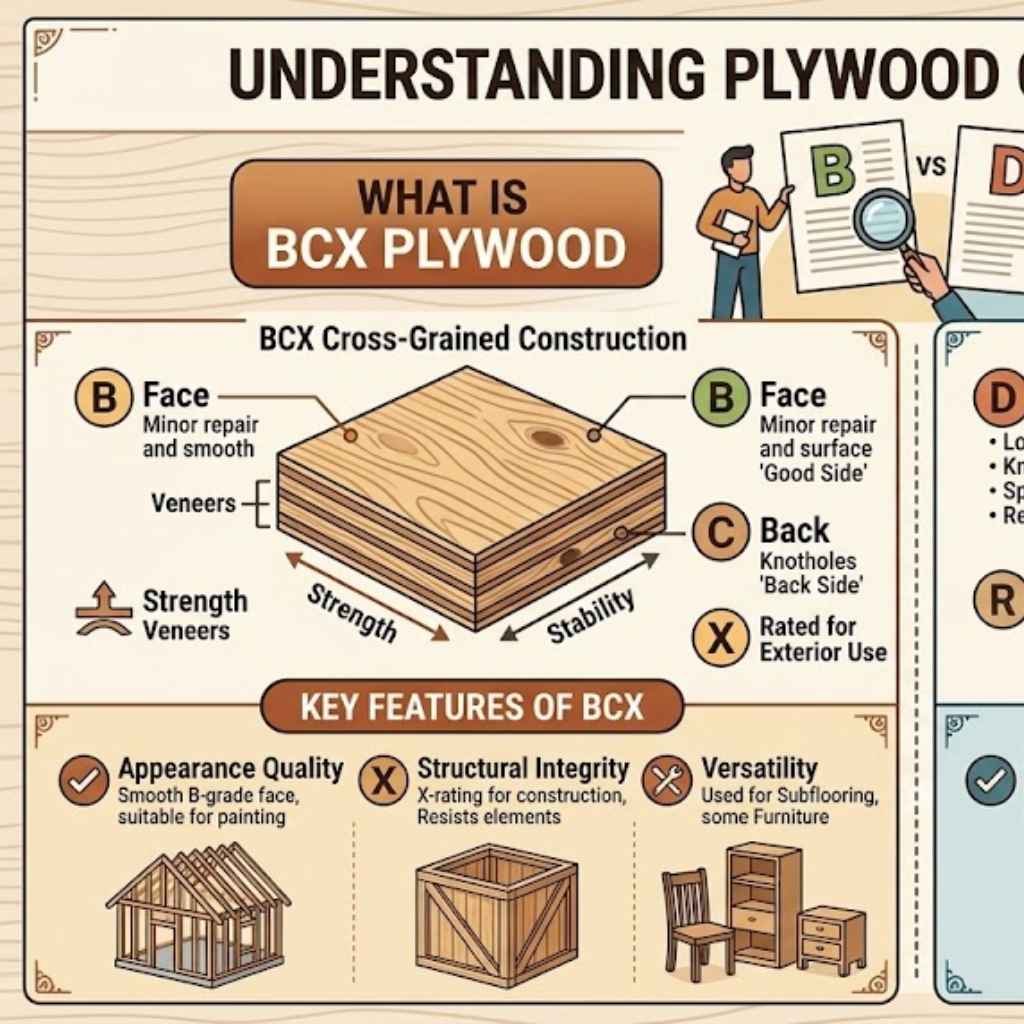
What is BCX Plywood
BCX plywood is a popular choice for many building projects. The “B” side means it’s a good quality surface, often smooth and free of large defects. The “C” side is less perfect, with more knotholes or repairs.
The “X” means it’s rated for exterior use, so it can handle some moisture.
This type of plywood is made by layering thin sheets of wood veneer. These layers are glued together with their grain running in different directions. This cross-graining makes plywood strong and stable.
It resists warping and splitting better than solid wood. BCX plywood is often used for subflooring, sheathing walls, and even for furniture where one side will be hidden.
The strength of BCX plywood comes from its construction. The alternating grain patterns of the veneers create a panel that can handle stress from different directions. This makes it a reliable material for structural applications.
It offers a good balance of appearance and strength for many common uses.
Key features of BCX Plywood
- Appearance Quality BCX plywood has a B-grade face, which is usually smooth and has minor imperfections. This makes it suitable for projects where the visible surface is important and may be painted or covered. It’s much nicer than a D-grade panel.
- Structural Integrity The X rating signifies its suitability for structural applications, especially in exterior settings. It’s designed to withstand the elements and provide support in construction.
- Versatility This plywood is a workhorse. It’s used for many things like wall sheathing, roofing, subflooring, and even in some types of cabinetry or built-ins where appearance is not the highest priority on all sides.
What is RTD Plywood
RTD plywood is a bit different. The “R” often stands for “Repair,” meaning the veneer has been repaired. The “T” might refer to “Touched,” indicating some level of surface treatment or finishing.
The “D” means it’s a D-grade veneer, which is the lowest appearance grade. This means it will have many knotholes, splits, and other imperfections.
Because of its lower appearance grade, RTD plywood is generally used for utility purposes. Think of things like temporary structures, crates, or the back of cabinets. It’s not meant to be seen.
Its strength is still there, but its looks are not its strong suit. It’s a more budget-friendly option when aesthetics don’t matter.
The construction of RTD plywood is similar to other types, with layers of wood veneer glued together. However, the quality of the veneer sheets themselves is lower. This results in a panel that is functional but not decorative.
It’s important to know its limitations regarding appearance.
Key features of RTD Plywood
- Lower Appearance Grade RTD plywood uses D-grade veneer. This means you’ll see more knotholes, shims, and wood filler. It’s not for projects where the surface will be exposed.
- Utility Focus This plywood is best for hidden applications or temporary structures. Its main purpose is function over form.
- Cost-Effectiveness Because of the lower grade veneer, RTD plywood is typically less expensive than higher-grade options. This makes it a good choice when budget is a primary concern and appearance is not.
BCX vs RTD Plywood Which Plywood Is Best for Your Project
When you’re deciding between BCX and RTD plywood, the main question is what you’ll be using it for. The “best” plywood depends entirely on your project’s needs, especially regarding appearance and exposure to the elements.
If your project needs a surface that looks good, can be painted or stained, and might face some moisture, BCX is likely your better choice. For example, building an outdoor deck railing or a storage shed where the outside needs to look decent, BCX performs well.
RTD plywood is the go-to when you just need a strong panel and don’t care how it looks. This could be for the inside of a closet, the backing of a large built-in wardrobe, or for making shipping crates. The cost savings can be significant for these hidden applications.
Consider the long-term use. If the plywood will be visible for years, investing in a better grade like BCX will likely be worth it. If it’s a temporary solution or something that will be covered up, RTD saves you money without sacrificing necessary structural support.
Appearance Considerations
Appearance is a major difference. BCX plywood features a “B” face, meaning it’s relatively smooth and clean. You might see a few small knots, but overall, it presents a uniform look.
This makes it suitable for surfaces that will be seen and finished, such as cabinets, shelving, or decorative wall paneling.
The “C” side of BCX has more defects than the “B” side, but it’s still often usable. It might have larger knots or some veneer repairs. However, when compared to RTD, the difference is stark.
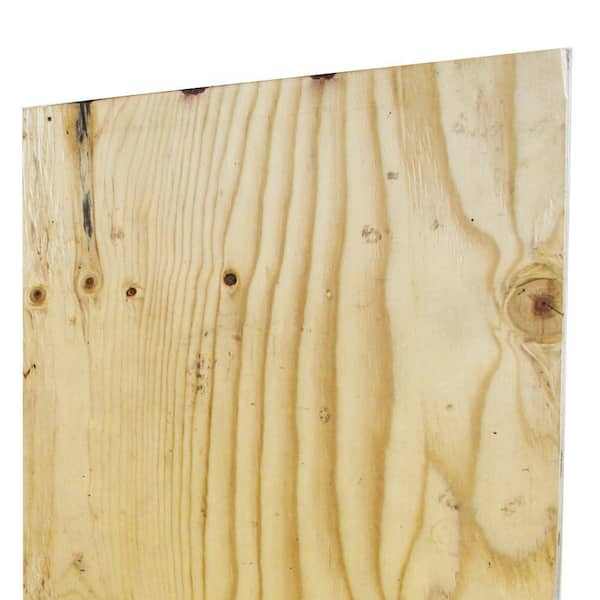
RTD plywood uses “D” grade veneer, which is characterized by numerous knotholes, splits, and plugged defects. It’s not meant for visible surfaces.
If you plan to paint over the plywood, the difference between a “B” face and a “D” face might be less critical. However, for staining or clear finishes, the smoother “B” face of BCX will give you a much better result. RTD will likely require a lot more filler and sanding to achieve a smooth finish, and even then, the underlying defects might show through.
Sample Scenario for Appearance
- You are building a custom bookshelf for your living room. You want to stain it a deep walnut color. In this case, the smooth, uniform surface of BCX plywood would be ideal for the shelves and visible sides, allowing the stain to look rich and even.
- You are creating storage boxes to go inside a large walk-in closet. The boxes will hold clothes and other items, and no one will see the exterior of the boxes except you. RTD plywood would be a perfectly suitable and cost-effective choice here, as the appearance is not a concern.
Structural Strength and Durability
Both BCX and RTD plywood are constructed with multiple layers of wood veneer glued together. This cross-graining technique gives plywood its inherent strength and stability, making it resistant to warping and splitting. The “X” in BCX signifies its rating for exterior use, which implies it’s made with exterior-grade glue.
Exterior-grade glue is water-resistant, making BCX suitable for applications where it might be exposed to moisture, humidity, or even direct weather. This doesn’t mean it’s waterproof, but it can withstand more challenging conditions than interior-grade plywood. This makes it a good choice for subflooring, sheathing, and other structural components in buildings.
RTD plywood, while structurally sound for its intended use, is typically made with interior-grade glue unless otherwise specified. The “R” and “T” in its designation don’t inherently speak to exterior durability. Its strength lies in its construction, but its longevity in damp environments is limited compared to BCX.
Case Study: Shed Construction
A homeowner decided to build a small garden shed. They chose BCX plywood for the exterior walls and roof sheathing. The “X” rating ensured the plywood would hold up well against rain and humidity, protecting the shed’s interior.
The “B” face on the exterior also provided a smoother surface for painting, enhancing the shed’s finished look and providing an extra layer of weather protection.
If they had used RTD plywood for the exterior walls, it would have been cheaper initially. However, without the exterior-grade glue, the panels would have been much more susceptible to delamination and structural failure when exposed to moisture over time. The cost savings would have been short-lived, leading to repairs or replacement sooner.
Cost Differences
A significant factor in choosing plywood is its price. Generally, RTD plywood is more affordable than BCX plywood. This price difference is directly related to the quality of the veneer used and the grade of the finished product.
Since RTD plywood uses lower-grade veneers with more visible defects, the manufacturing process is less costly. This savings is passed on to the consumer, making RTD a budget-friendly option for projects where appearance is not a primary concern.
BCX plywood, with its higher-grade “B” face and exterior-rated glue, commands a higher price. The cost reflects the improved appearance, better quality control, and enhanced durability for outdoor use. For projects where a good finish is needed or where moisture resistance is important, the extra cost of BCX is often justified.
Example Cost Comparison
| Plywood Type | Typical 4×8 Sheet Price (Estimate) | Primary Use Case |
|---|---|---|
| BCX Plywood | $30 – $45 | Exterior sheathing, subflooring, visible surfaces needing a good finish |
| RTD Plywood | $20 – $30 | Utility use, hidden applications, crates, temporary structures |
Please note that these prices are estimates and can vary based on location, supplier, and specific product variations.
Where to Use BCX Plywood
BCX plywood is a versatile material perfect for many applications where both strength and a decent appearance are needed, and some exposure to the elements is expected. Its “X” rating means it uses exterior-grade adhesives, making it resistant to moisture and delamination. This is crucial for structural integrity in damp environments.
Common uses include wall and roof sheathing, subflooring for homes, decks, and patios. It’s also a good choice for fences, exterior storage sheds, and outdoor furniture. The “B” face provides a smooth surface that can be painted or stained, while the “C” side can be hidden or used where appearance is less critical.
Sample Project Scenario: Outdoor Deck Frame
- You are building a new deck. The frame and joists will be exposed to weather. BCX plywood is an excellent choice for covering the joists to create a solid surface for the deck boards.
- You need to build a small outdoor planter box. BCX plywood will provide the necessary strength and resistance to moisture from soil and rain, ensuring it lasts longer than interior-grade options.
Statistics on Plywood Usage in Construction
According to industry reports, softwood plywood, which includes grades like BCX, is a dominant material in residential construction for sheathing and subflooring. It’s estimated that over 70% of new homes utilize plywood for these structural components, highlighting its importance in building stability and longevity.
Where to Use RTD Plywood
RTD plywood is the practical choice when you need structural support but the visual aspect of the wood is not important. This is often the case for hidden parts of a project or for temporary structures where cost savings are a priority. Its lower grade veneer means it has more defects, but it still provides reliable strength for its intended purposes.
Ideal applications include the back panels of cabinets and furniture, internal bracing, the bottom of drawers, and for creating shipping crates or pallets. It can also be used for temporary partitions or forms for pouring concrete. Anywhere the plywood will be covered or will not be seen is a prime spot for RTD.
Real-Life Example: Cabinet Construction
A furniture maker was building a large set of custom kitchen cabinets. For the cabinet boxes themselves, they chose RTD plywood for the back panels and internal dividers. This allowed them to save money on materials.
The visible sides, doors, and drawer fronts were made from higher-grade plywood or solid wood, ensuring a beautiful finished product where it mattered most.
The RTD plywood provided the necessary rigidity to keep the cabinet boxes square and strong. Since these panels are hidden behind cabinet doors, the presence of knotholes and other defects was not an issue. This approach optimized the budget without compromising the overall quality and appearance of the finished cabinetry.
Making Your Final Decision
Deciding between BCX and RTD plywood comes down to a simple assessment of your project’s needs. For any application where the plywood will be visible, needs to withstand moisture, or requires a smooth finish for painting or staining, BCX is the superior choice. Its improved appearance and exterior-grade glue offer better long-term value and aesthetics.
Conversely, if the plywood will be completely hidden from view, is not expected to face significant moisture, and budget is a major consideration, RTD plywood will serve its purpose effectively. It provides the necessary structural support at a lower cost. Always consider the trade-offs between appearance, durability, and price.
Think about the end result you want. If you’re aiming for a professional, polished look, or if the project is outdoors, invest in BCX. If it’s purely functional and will be covered up, RTD offers a smart, economical solution.
Frequently Asked Questions
Question: What does the “X” in BCX plywood mean
Answer: The “X” in BCX plywood means it is rated for exterior use. This indicates that it is made with exterior-grade glue that is resistant to moisture and can withstand outdoor conditions better than interior-grade plywood.
Question: Can I paint RTD plywood
Answer: Yes, you can paint RTD plywood. However, because it has a lower appearance grade with more knotholes and imperfections, you will likely need to use wood filler and primer to achieve a smooth, uniform painted surface.
Question: Which plywood is stronger BCX or RTD
Answer: Both BCX and RTD plywood are structurally strong due to their layered construction. However, BCX is generally considered more durable for exterior applications because of its exterior-grade glue, which helps prevent delamination in moist environments.
Question: When should I avoid using RTD plywood
Answer: You should avoid using RTD plywood for any application where the surface will be visible and appearance is important, such as the exterior of a structure, visible furniture panels, or decorative elements. It’s also not ideal for projects that will be consistently exposed to moisture without proper sealing.
Question: Is BCX plywood suitable for furniture
Answer: BCX plywood can be suitable for furniture, especially if it will be painted or if the “B” face will be the visible surface. For furniture that will be stained or requires a very high-quality finish, you might consider even higher grades like those with an “A” face.
Final Thoughts
Choosing between BCX and RTD plywood is about matching the material to the job. BCX offers better looks and moisture resistance for visible or exterior projects. RTD provides cost-effective strength for hidden, utility uses.
Make your choice based on whether your project needs to look good and withstand the weather, or just needs to be strong and affordable.