Best Cedar for Closets: 8 Compared by Cost & Moth Power (2026)
Eastern Red Cedar (Juniperus virginiana) is the species that actually repels moths — its cedrol and alpha-cedrene oils are what do the work. Our top pick, Woodever’s 56-piece cedar block set, spot-treats a whole closet for about $3.20 using the manufacturer’s own 10-block guidance — roughly 1/150th the cost of lining the same closet in solid cedar planking. Below, 8 real cedar-for-closet products compared by live price, cost to actually treat one closet, and which species is on the label.
Cedar for Closets Compared: Price, Species & Cost Per Closet
Every cedar closet product on Amazon looks similar in photos — reddish wood, a moth-repellent claim, a low price per piece. What actually differs is the species (only Eastern/aromatic red cedar is bred and marketed for its oil content; Western Red Cedar is a different, milder-smelling species sold mainly for siding and saunas) and the real cost once you buy enough to treat a closet, not just one block. We pulled live Amazon prices and each manufacturer’s own usage guidance to build the table below — a comparison nobody else selling these products has published.
| Product | Format | Species (as labeled) | Price | Per-Unit Price | Cost to Treat One Closet* | Refresh Method | Verdict |
|---|---|---|---|---|---|---|---|
| Woodever Cedar Blocks (56 pc) | Blocks/chips/balls mix | Aromatic cedar (species not stated) | $17.99 | $0.32 / piece | $3.20 | Light sanding or moistening | Best all-around — one box covers every spot in the closet |
| Cedar Elements Aromatic Red Cedar Planking (15 sq ft) | Tongue & groove planks | Eastern Red Cedar | $59.99 | $4.00 / sq ft | $480.00 | Not specified by manufacturer (light sanding is standard) | Best for permanent full-wall lining if budget allows |
| 100 Cedar Balls with Satin Bags | Balls | American (Eastern) Red Cedar | $16.95 | $0.17 / ball | $1.70 | Cedar oil spray or light sanding | Best value — cheapest spot treatment of the eight |
| Dr. Killigan’s Cedarwood Planks (10 pc) | Hanging blocks | 100% Eastern Red Cedar | $24.97 | $2.50 / block | $24.97 | Branded Cedar Ward oil spray, claimed to extend scent up to 10× | More surface area than balls/chips; refresh system is a real differentiator |
| TOPIA HANGER Cedar Hangers (30 pk) | Hangers | American (Eastern) Red Cedar | $52.99 | $1.77 / hanger | N/A — replaces existing hangers | Not specified | Protection you get automatically, since they replace hangers you already need |
| Professor Killamoth Cedar & Lavender Sachets (20 pk) | Sachets | Cedar (species not stated) | $21.95 | $1.10 / sachet | $11.00 | Not designed to be refreshed — replace the sachet | Good scent-layering option; priciest per-unit spot treatment here |
| Household Essentials Cedarline Panels (10 pk) | Small tongue & groove panels | Red cedar (species not stated) | $26.99 | $9.21 / sq ft | $1,105.20 | Sandpaper or CedarFresh spray (sold separately) | Fine for a drawer; buying enough for a full closet costs more than solid planking |
| bingaai Western Red Cedar Wall Panels | Tongue & groove panels | Western Red Cedar | $89.99 | ~$8.49 / sq ft | ~$1,018.80 (not recommended for this use) | N/A — wood finish upkeep, not an aromatic refresh | Built for saunas and accent walls — not sold or formulated as a moth repellent |
*Cost to treat one closet is a derived figure, not a manufacturer claim. For per-unit products (blocks, balls, sachets), we used the commonly cited guidance of roughly 10 pieces per closet and multiplied by the live per-unit price. For per-square-foot planking and panels, we used a standard reach-in closet coverage example (roughly 120 sq ft of wall and ceiling surface for a 6×4×8-foot closet) multiplied by the live per-square-foot price. Both benchmarks are estimates for comparison, not installation specs — measure your own closet before buying. Prices and per-unit prices are live Amazon buy-box prices pulled via the Amazon Creators API on 2026-08-02 and will drift over time.
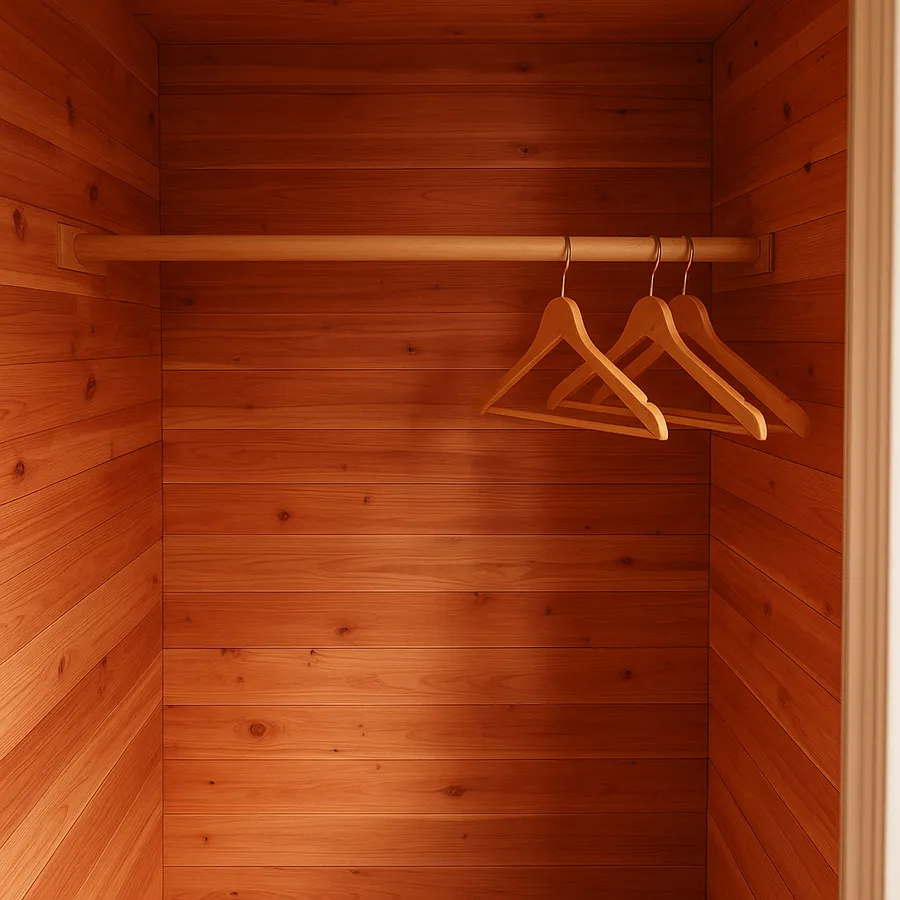
Best Cedar for Closets: 8 Picks
1. Woodever Cedar Blocks for Clothes Storage (56 Pcs) — #1 Best Overall
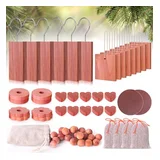
Price: $17.99 ($0.32/piece) | See current price on Amazon
- 56 pieces mixing planks, chips, hearts and balls, several with metal hooks for hanging
- $0.32 per piece — the cheapest per-unit price of any spot-treatment product in this comparison
- Manufacturer recommends light sanding or lightly moistening the wood to refresh the scent
- Marketed as “aromatic cedar” without naming the species on the listing
This is the pick that actually matches how most people use cedar in a closet: a little bit in a lot of places, not one big installation. The mixed format means you can hook a few pieces on the rod, drop chips in a drawer, and tuck a ball into a shoe without buying three separate products. At $0.32 a piece it’s also priced closer to the cheapest single-format option (the cedar balls below) than to any of the mid-tier single-format products, while covering more use cases.
Main drawback: the listing doesn’t specify the cedar species, so you can’t confirm from the packaging alone whether it’s the more potent Eastern Red Cedar or a milder blend. Buyers who specifically want a guaranteed-species product should look at Cedar Elements or Dr. Killigan’s below, both of which name Eastern Red Cedar on the listing.
2. Cedar Elements Aromatic Red Cedar Planking — Best for Full Closet Lining
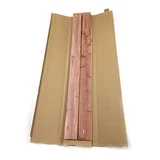
Price: $59.99 ($4.00/sq ft) | See current price on Amazon
- Solid 1/4″ x 3-3/4″ x 48″ Eastern Red Cedar boards, tongue-and-groove edges, 12 boards per 15-sq-ft pack
- Species is explicitly named on the listing as US-grown Aromatic Red Cedar
- At $4.00/sq ft, this is the cheapest per-square-foot lining option of the two we compared — less than half the cost of the smaller Household Essentials panels below
- Lining a full 120-sq-ft reach-in closet costs roughly $480 across eight packs
If you want a genuine cedar closet — walls actually lined in solid wood, not a scattering of blocks — this is the pick, and it’s the more efficient of the two lining products here on a per-square-foot basis. If you’re still deciding whether full lining is worth it, our cedar closet design ideas page shows what a finished result actually looks like. Tongue-and-groove edges mean the boards interlock without gaps, and because it’s solid 1/4″ stock rather than a thin panel, it holds up to periodic light sanding for years of scent refreshes.
Main drawback: $480 to line an average closet is real money, and the manufacturer doesn’t publish a refresh method on this listing (light sanding is the standard approach industry-wide, but it’s not stated here the way Dr. Killigan’s or Household Essentials spell it out). This is a permanent renovation-style purchase, not an impulse buy.
3. 100 Cedar Balls with Satin Bags — Best Value
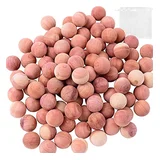
Price: $16.95 ($0.17/ball) | See current price on Amazon
- 100 American (Eastern) Red Cedar balls, 0.87″ diameter, plus 3 satin drawstring bags
- $0.17 per ball — the lowest per-unit price of any product in this comparison, spot-treatment or otherwise
- Treating one closet at the commonly cited 10-ball guidance costs about $1.70
- Manufacturer recommends cedar oil spray or light sanding to refresh scent
At under two dollars to spot-treat an entire closet, this is the cheapest real option on this list by a wide margin — even Woodever’s mixed set costs almost double per closet. The satin bags let you group balls in drawers or hang a cluster from the rod, and because the species is named (American Red Cedar, the common-name equivalent of Eastern Red Cedar), you know what you’re buying.
Main drawback: loose balls in bags don’t hang as neatly among clothes as Dr. Killigan’s hook-ready blocks or Woodever’s hanging pieces, and with only 3 bags for 100 balls you’ll be improvising storage for the rest.
4. Dr. Killigan’s Cedarwood Planks (10-Pack) — Best for Targeted Moth Protection
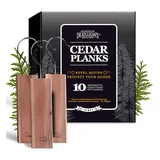
Price: $24.97 ($2.50/block) | See current price on Amazon
- 100% Eastern Red Cedar, explicitly named on the listing — the species with the strongest published moth-repelling oil content
- Larger surface area per block than cedar balls or chips, which the manufacturer states improves coverage
- Sells a companion Cedar Ward oil spray, claimed to extend potency up to 10× longer than sanding alone
- 10-pack matches the commonly cited “about 10 blocks per closet” guidance almost exactly
This is the pick for buyers who specifically care about moth protection over ambient scent — it’s explicit about species, explicit about why more surface area matters, and backs it with a purpose-built refresh product rather than telling you to guess with sandpaper. The pack size lining up with the standard 10-block closet guidance is a nice bonus — you’re not left with 46 unused pieces the way you would be with Woodever’s 56-count set.
Main drawback: at $2.50 a block it costs roughly 8× more per piece than the cedar balls above for what is, functionally, the same job — you’re paying for the branded refresh system and stated species purity, not a fundamentally different product.
5. TOPIA HANGER American Red Cedar Hangers (30-Pack) — Best Cedar Hangers for Closets
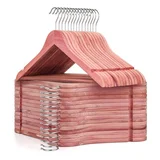
Price: $52.99 ($1.77/hanger) | See current price on Amazon
- Solid American (Eastern) Red Cedar, unfinished and unpainted so the natural oils stay exposed
- 360° rust-resistant chrome swivel hook, shoulder-contoured to keep garments in shape
- 30 hangers measuring 17.5″W x 9.4″H x 0.47″thick
- $1.77 per hanger — a real cost, but one that replaces hangers you’d be buying anyway
Every other product on this list is something extra you have to remember to place and refresh. Cedar hangers aren’t — they’re the hangers doing double duty, so the protection is there every time you hang up a shirt without any extra step. For anyone re-hanging a closet from wire or plastic hangers regardless, upgrading to cedar ones is close to free moth protection.
Main drawback: hangers only protect what’s on them — folded items in drawers, shoes and off-season storage bins get no benefit, so this isn’t a standalone solution the way blocks or balls distributed around the closet are.
6. Professor Killamoth Cedar & Lavender Sachets (20-Pack) — Best Cedar Sachets for Drawers
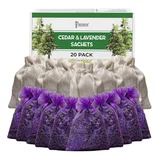
Price: $21.95 ($1.10/sachet), or $19.75 ($0.99/sachet) on Subscribe & Save | See current price on Amazon
- USA-grown cedar chips blended with dried lavender in ready-to-hang sachet bags
- 20 sachets per pack, sized for drawers, closets, garages and cars
- Sachets are meant to be replaced rather than refreshed — there’s no sanding a fabric bag
- At $1.10/sachet this is the priciest per-unit spot treatment in this comparison, though Subscribe & Save brings it under a dollar
The lavender blend is the differentiator here — if you want cedar’s moth-repelling effect layered with a softer, less “woodshop” scent for a bedroom drawer, this is the only product in this comparison built for that. It’s also genuinely convenient: no hooks, no sanding, just hang the bag.
Main drawback: per sachet it’s the most expensive spot treatment here, and because it’s not refreshable the way solid wood is, you’re on a permanent replacement cycle rather than a one-time-then-maintain cost.
7. Household Essentials Cedarline Panels (10-Pack) — Best Budget Starter Pack for Small Spaces
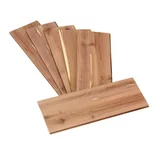
Price: $26.99 ($9.21/sq ft) | See current price on Amazon
- 10 individual red cedar panels, 3.8″W x 11.2″L each, tongue-and-groove so they link together
- Marketed for both drawer lining and closet storage, with CedarFresh spray sold as a companion refresh product
- At $9.21/sq ft, this is more than double the per-square-foot cost of the Cedar Elements planking above
- 10 panels cover roughly 2.9 sq ft — a drawer or shelf, not a closet wall
This is a real, honestly useful product for what it’s sized for: lining one drawer or a couple of shelves cheaply and without tools. Where it goes wrong is if you try to scale it up — because the panels are small and priced per piece, using enough of them to line a full closet would cost over $1,100, more than double what the dedicated Cedar Elements planking costs for the same coverage. Buy this for a drawer; buy the planking above if you actually want a lined closet.
Main drawback: the per-square-foot price only looks reasonable at small scale. The listing doesn’t make this limitation obvious, and it’s the kind of thing you only notice once you do the math — which is exactly what this table is for.
8. bingaai Western Red Cedar Tongue & Groove Wall Panels — Best Looking, Weakest for Moths (Verify Before Buying)
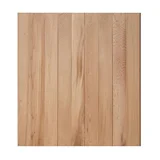
Price: $89.99 (~$8.49/sq ft) | See current price on Amazon
- Solid 1/2″ (12mm) Western Red Cedar (Thuja plicata) tongue-and-groove boards, thicker than the standard 1/4″ planks above
- The listing markets it explicitly for saunas, steam rooms, bathroom accent walls and DIY feature walls — moth protection or closet use is never mentioned
- Western Red Cedar’s aroma comes from tropolone compounds, not the cedrol and alpha-cedrene found in Eastern Red Cedar, and published comparisons rate it as the milder-smelling, less potent species for repelling clothes moths
- At $8.49/sq ft it also costs more than double the Cedar Elements Eastern Red Cedar planking above
We included this one deliberately: “cedar” is not one product, and a shopper searching for cedar closet panels can easily land on a listing like this one — a genuinely nice, thick, well-built board — that was never designed or marketed as a moth repellent. It’s Western Red Cedar, a different species from the Eastern (aromatic) Red Cedar every other wood product on this list is built from, and its selling points here are moisture resistance for saunas and bathrooms, not clothing protection.
Main drawback: if what you actually want is moth protection for a closet, this is both the most expensive per-square-foot product in the comparison and the one with the least evidence behind its aromatic effectiveness for that specific job. Buy it for a sauna or an accent wall; buy the Cedar Elements planking above if the goal is a moth-repelling closet.
How We Picked These
We have not physically purchased and tested these eight products in a closet over time — no fabricated hours-of-use claims, no invented lab. What we did do: pulled live prices, package sizes and manufacturer-stated features for all eight directly from the Amazon Creators API on 2026-08-02; cross-checked the species claims each listing makes against published wood-science sources on Eastern Red Cedar (Juniperus virginiana) versus Western Red Cedar (Thuja plicata) aromatic chemistry; and built the cost-per-closet figures from each manufacturer’s own package size combined with commonly cited usage guidance (roughly 10 spot-treatment pieces or ~120 sq ft of planking per reach-in closet), with the formula shown above the table so you can check it yourself. Where a listing didn’t state the species or a refresh method, we said so rather than guessing.
This is a Tier C, comparison-based roundup, not a first-hand test — and we’d rather say that plainly than borrow the “we tested” framing other cedar-closet articles use without the hours of hands-on use to back it up. What we can verify — live pricing, stated species, package math, and third-party wood chemistry — is exactly what this table shows, and nothing in the reviews above claims more than that.
One editorial call worth flagging: we deliberately included the bingaai Western Red Cedar panels even though they’re not a great fit for this specific job. Cedar-panel search results genuinely mix moth-repellent Eastern Red Cedar products with general-purpose Western Red Cedar building material, and a shopper comparing prices across both without noticing the species difference is a realistic mistake — one this table is built to prevent.
What to Consider When Buying Cedar for Closets
Species: Eastern Red Cedar vs. Western Red Cedar
Only Eastern Red Cedar (Juniperus virginiana, also sold as “aromatic cedar” or “American red cedar”) is bred and processed specifically for its high concentration of cedrol, thujopsene and alpha-cedrene — the oils responsible for both the strong scent and the moth-repelling effect. Western Red Cedar (Thuja plicata) is a different, related species valued for rot resistance in siding, decking and saunas; its aroma comes from tropolone compounds and is generally rated milder and less effective against clothes moths. For the full botanical and Janka-hardness breakdown of the two species, see our Eastern Red Cedar vs. Western Red Cedar guide. Five of the eight products above name Eastern or American Red Cedar directly on the listing. One — the bingaai wall panels — is explicitly Western Red Cedar sold for a different purpose. If a listing doesn’t name a species at all, treat “cedar” as a marketing word, not a guarantee.
Format: Blocks, Balls, Planks, Panels, Hangers or Sachets
Blocks, balls and sachets are spot treatments — cheap, portable, and easy to distribute through drawers, shoe racks and hanging rods. Planks and panels are permanent lining — a real cedar closet, at real cost. Hangers are the odd one out: they don’t add a step to your routine because they replace hardware you already need. Pick the format that matches how much of the closet you actually want treated, not just the lowest sticker price.
Surface area matters within the spot-treatment category too, not just between categories. Dr. Killigan’s planks state directly that their larger surface area per piece out-performs cedar balls and chips at the same job — which tracks with how cedar works: scent (and the moth deterrent it carries) comes off exposed wood surface, so a flat plank exposes more wood per dollar than a small sphere does, even before accounting for the refresh-spray system. That’s the tradeoff behind Dr. Killigan’s higher per-piece price against the plain cedar balls above.
Cost Per Closet, Not Cost Per Piece
The comparison table above exists because per-piece pricing is misleading on its own. Household Essentials’ panels look cheap at $26.99, but scaling that to a full closet costs more than double the dedicated planking option. Do the multiplication — price per unit × the quantity you’ll actually need — before deciding a small pack is the budget option.
Worked example: spot-treating a closet with the cheapest cedar balls above runs about $1.70. Lining that same closet in solid Eastern Red Cedar planking runs about $480 — roughly 280× more. Neither is the “wrong” choice; they’re different products solving different problems. Spot treatment buys moth protection. Planking buys a permanently cedar-scented room. The mistake is paying planking-adjacent money (like the $1,105 it would take to cover a closet in the small Household Essentials panels) without getting a full-lining result for it.
Refresh Method and How Often You’ll Need It
Cedar’s oils evaporate over time, typically noticeable within 6–12 months depending on airflow and temperature, and the scent (and the moth-repelling effect it signals) fades with it. Solid wood — blocks, balls, planks, panels, hangers — can be restored with light sanding to expose fresh wood, or with a cedar oil spray; several manufacturers above sell their own spray for this. For a full walkthrough of the sanding process, see how to refresh cedar blocks step by step. Sachets can’t be sanded and are designed to be replaced instead. Factor this into cost: a $2.50 block you refresh for years costs less over time than it looks like on day one.
Aromatic Potency vs. Durability
There’s a real tradeoff in this category between scent strength and structural durability, and it maps directly onto the species split above. Eastern Red Cedar is prized for potency, not weather resistance. Western Red Cedar is prized for decay resistance in wet, humid environments (which is exactly why the bingaai panels above are marketed for saunas) but is a weaker performer on scent and moth control. Don’t assume the thicker, more expensive, better-reviewed-for-durability board is also the better moth repellent — check the species.
Safety for Fabrics, Kids and Pets
Every product in this comparison is marketed as safe around children and pets, and for dogs and for handling by kids that’s generally accurate. One real caveat worth knowing: cedar wood is mildly acidic and can, over long direct contact, yellow or discolor very delicate light-colored fabrics (silk and some synthetics are more sensitive than cotton or wool). Wrapping delicate items in acid-free tissue before they touch bare cedar, or keeping cedar pieces from direct contact with light fabrics, avoids this.
Cat owners specifically should know something none of the eight listings above mention: cedar wood contains phenols, and cats metabolize phenols poorly compared to dogs or humans. Veterinary sources single out Eastern Red Cedar — the same species this article recommends for moth protection — as carrying more concern for cats than milder species, mainly if a cat chews on the wood directly rather than simply being in a room with it. A closet a cat can’t get into, or solid blocks kept out of chewing range, avoids the issue in practice; a cat that regularly chews wood is the actual risk factor, not proximity to a cedar block on a shelf.
Where You’re Actually Placing It

Drawers and shoe cubbies favor small, low-profile formats — balls, chips, sachets, or the small Household Essentials panels. Hanging rods favor blocks with hooks or cedar hangers themselves. Whole-closet, walk-in-style treatment is really only served by the planking and panel products, at planking’s cost. Matching format to location matters more than brand.
It’s also fine to mix formats within one closet rather than picking a single product from this list. A realistic setup for most reach-in closets: cedar hangers on the rod (since they replace hardware you need anyway), a handful of blocks or balls in each drawer, and a sachet in the shoe rack — total cost well under $50 across three of the products above, without touching the $480+ full-lining tier at all.
Price and Where to Verify It
Every price and per-unit price in the table above was pulled live from Amazon on 2026-08-02 and will drift — cedar products see real swings around subscribe-and-save discounts, multi-packs and seasonal promotions. Click through to the current Amazon listing before buying rather than trusting a screenshot-era price from any article, including this one.
How to Use Cedar in Your Closet
- Measure your space. For full lining, measure wall and ceiling square footage (height × width for each surface, minus doors/windows). For spot treatment, just count drawers, shelves and rod length.
- Choose format by location. Blocks and balls for drawers and shoe racks; hook-ready blocks or cedar hangers for the rod; planking or panels only if you’re lining permanently.
- Place pieces so air can reach them. Cedar needs airflow to keep releasing scent — sealed plastic bins blunt the effect.
- Test fabric contact first. For light-colored silks or delicate synthetics, wrap in acid-free tissue or keep cedar from direct fabric contact.
- Refresh on a schedule, not when you notice it’s gone. Lightly sand solid cedar every 6–12 months (or use a manufacturer’s cedar oil spray) before the scent — and the moth-repelling effect — has already faded.
- Replace sachets rather than refreshing them. Fabric sachets can’t be sanded; swap them on the same 6–12 month cycle instead.
FAQ
What type of cedar is best for closets?
Eastern Red Cedar (Juniperus virginiana), sold as “aromatic cedar” or “American red cedar,” is the species specifically valued for its high oil content and moth-repelling scent. It’s the species named on five of the eight products in our comparison above.
Does cedar actually repel moths, or does it just smell nice?
Both are true, and they’re related: the same cedrol and alpha-cedrene oils that give Eastern Red Cedar its strong scent are what disrupt clothes moths’ ability to find and lay eggs on fabric. The effect is real but not permanent — it fades as the oils evaporate, which is why refreshing matters more than the initial purchase. For a deeper look at how different cedar species compare on this specifically, see which cedar actually works best against moths.
How long does cedar keep its scent, and how do I refresh it?
Typically 6–12 months before the scent (and its effectiveness) noticeably fades, depending on airflow and temperature. For solid wood, lightly sanding the surface to expose fresh wood restores it; several brands above also sell a cedar oil spray as a faster alternative. Fabric sachets should be replaced instead of refreshed.
Cedar blocks vs. cedar balls vs. cedar planks — which should I buy?
Blocks and balls are cheap spot treatments best for drawers, shoes and small spaces — our comparison found cedar balls cost as little as $1.70 to treat a whole closet. Planks and panels are a permanent lining, priced closer to $480 for a full closet in the most efficient product we found. Choose spot treatment unless you specifically want a true cedar-lined closet.
Is Western Red Cedar as good as Eastern Red Cedar for closets?
No — they’re different species. Western Red Cedar (Thuja plicata) is prized for moisture and rot resistance in siding, decking and saunas, and its milder tropolone-based aroma is generally rated less effective for repelling clothes moths than Eastern Red Cedar’s cedrol-based oils. A Western Red Cedar panel can still look and smell like cedar without being the species that’s actually documented as effective against moths.
Can cedar stain or damage clothes?
Cedar wood is mildly acidic and can, with prolonged direct contact, yellow delicate light-colored fabrics like silk. Wrapping sensitive items in acid-free tissue, or simply avoiding direct contact between bare cedar and light fabrics, prevents this. It’s not a risk for typical cotton, wool or synthetic clothing.
How much cedar do I need for a full closet?
For solid planking or panels, a commonly cited example for a 6×4×8-foot reach-in closet works out to roughly 120 sq ft of wall and ceiling surface — measure your own closet rather than assuming this figure applies directly. For spot treatment, roughly 10 blocks, balls or sachets per closet is the guidance we saw most often, distributed across drawers, shelves and the hanging rod. See our closet coverage walkthrough for help measuring your own space.
Is cedar safe for cats?
With caveats. Cedar wood contains phenols, which cats metabolize poorly compared to dogs or people, and veterinary sources flag Eastern Red Cedar specifically — the species recommended throughout this comparison — as more of a concern than milder cedar species if a cat chews on it directly. Simple proximity in a closet a cat can’t access, or keeping blocks out of chewing range, sidesteps the risk in most homes; a cat that chews wood is the actual factor to plan around.
Final Thoughts
For most closets, Woodever’s 56-piece cedar block set is the pick — a mixed format that covers rods, drawers and shoes for about $3.20 per closet at the standard 10-piece guidance. If you want a true cedar-lined closet, Cedar Elements’ Eastern Red Cedar planking is the more efficient of the two lining products we compared at $4.00/sq ft. And the one fact worth remembering above all: check the species before you buy. Only Eastern Red Cedar is documented as effective against moths — a beautiful, well-built Western Red Cedar panel, like the sauna-grade boards we included here, isn’t the same product even when both listings say “cedar.” For more on cedar as a material generally — species, pricing, and other uses around the house — browse the rest of our cedar wood guides.
Sponsored / affiliate links. As an Amazon Associate I earn from qualifying purchases. I may earn additional commission from eligible campaigns.