Cedar vs Vinyl Siding: Cost, Care, and Appearance
Vinyl Siding usually costs less upfront and needs less routine cleaning and repair, while Cedar costs more but brings natural grain and easier spot repair; choose Cedar if appearance matters most, Vinyl Siding if low maintenance and lower lifetime cost matter more. Choose poorly and you can pay more over 20 to 40 years for repainting, repairs, or moisture damage. This guide compares cost, upkeep, appearance, and climate fit so you can match the siding to your budget and local weather.
| Decision factor | Cedar | Vinyl Siding | Winner |
|---|---|---|---|
| Upfront installed cost | $5.00 to $12.00 per square foot installed | $3.50 to $7.00 per square foot installed | Vinyl Siding |
| Maintenance burden | Paint or stain every 3 to 7 years, plus sealant touch-ups | Mostly cleaning, with occasional panel repair | Vinyl Siding |
| Natural appearance | Real grain, deeper shadow lines, stronger profile depth | Wood-look and cedar-shake styles, but still synthetic at close range | Cedar |
| Moisture and decay risk | Can rot, mold, or take insect damage if finish fails | Does not rot, but can crack, warp, fade, or move with temperature | Vinyl Siding |
| Climate fit | Best when you can maintain finish and detail exposure | Often better in budget builds, mixed climates, and low-maintenance projects | Vinyl Siding |
Cedar vs vinyl siding: the core trade-off
Cedar is natural wood siding, including cedar clapboard and cedar shake shingles, and it wins on grain, depth, and historic character. Vinyl Siding is PVC-based cladding that usually costs less, needs less maintenance, and comes in clapboard, board and batten, Dutch lap, and cedar-shake styles.
What each material is made
Cedar belongs to the wood siding family, but its look and upkeep change with species, grain, and profile shape. Vinyl Siding is made primarily from PVC, a rigid plastic material, and it is fastened so it can expand and contract with temperature changes.
The decision factors that matter most
The real choice is not only price. It comes down to installed cost, finish upkeep, repair risk, and how closely the siding needs to match the home’s period or trim details.
Say your house is a 1920s bungalow with deep eaves and visible porch columns. Cedar clapboard or cedar shakes can match the massing and shadow lines in a way most vinyl products cannot, especially at corners, friezes, and around trim.
Which looks more natural?
Cedar usually looks more natural because the grain is real, the edges read deeper, and the profiles carry more visual depth. Vinyl Siding can mimic cedar shake shingles and wood grain, but at close range it still reads as a manufactured skin rather than milled wood.
Cedar clapboard vs cedar shakes vs cedar shingles
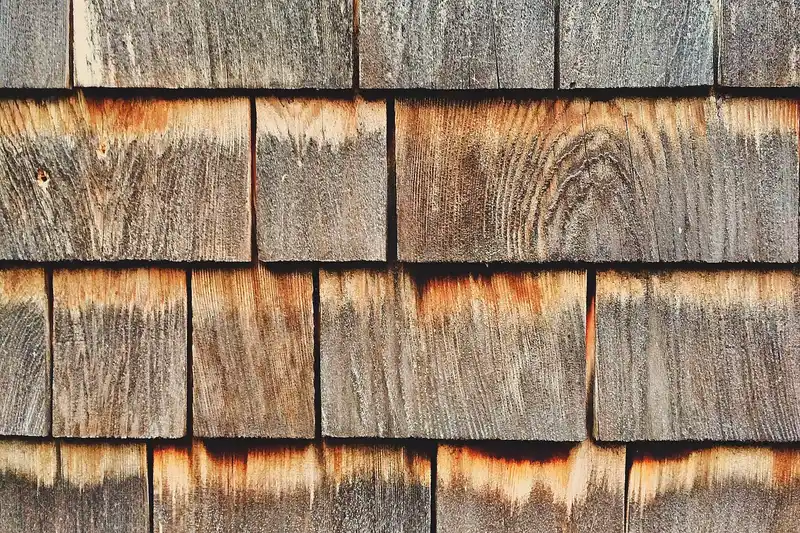
Cedar clapboard gives a flatter, more orderly face. Cedar shakes are thicker and rougher, so they cast stronger shadows. Cedar shingles are more uniform and can suit refined historic work, but they still look different from clapboard because the edges and texture are distinct.
What cedar-look vinyl can and cannot copy
Cedar-look Vinyl Siding can copy broad shapes, lap exposure, and some texture, and that is enough for many houses from the street. It usually misses the small irregularities, edge softness, and shadow depth that real cedar produces under changing light.
Appearance and curb appeal
For resale, the appearance question often turns on neighborhood context and the age of nearby homes. In a newer subdivision, a clean vinyl profile may fit well. On an older home with preserved trim, cedar often looks more convincing because the siding and details feel like one system.
How much does each siding cost?
Vinyl Siding is usually cheaper to buy and install than Cedar. Installed cost for Vinyl Siding is about $3.50 to $7.00 per square foot, while Cedar is about $5.00 to $12.00 per square foot installed, with home layout, labor rates, and detail work moving the final total up or down.
Installed cost per square foot
For a 2,000-square-foot home, Vinyl Siding comes out to about $7,000 to $14,000 installed. Cedar comes out to about $10,000 to $24,000 installed. Those numbers can rise if the house has many corners, dormers, gables, or repairs under the old cladding.
How home size and layout change labor
A simple box with few openings is faster to wrap than a house with bay windows, bump-outs, and decorative trim. Labor rises when installers must cut more pieces, flash more details, or remove damaged substrate before the new siding goes on.
A common first-timer mistake is judging cedar and vinyl siding by upfront cost alone without accounting for maintenance over time. A 2,000-square-foot exterior with complex trim can cost more than a larger but simpler wall plane because the labor is doing the real work.
Why cedar usually costs more over time
Cedar costs more over time because the finish schedule keeps coming back. The wood itself is premium, natural, and renewable, but that benefit comes with repainting or restaining every 3 to 7 years, plus more attention to caulk joints and exposed edges.
How much upkeep should you expect?
Vinyl Siding needs less routine work, usually cleaning and spot repair. Cedar needs more attention because wood siding needs to be painted or stained every 3 to 7 years, and neglected finish cycles raise the risk of rot, insect damage, and mold.
Vinyl cleaning and occasional repairs
Most Vinyl Siding care is washing off dirt, pollen, and mildew film. If a panel cracks, loosens, or warps, the damaged section can often be replaced without redoing the whole wall. That is one reason it is the budget-friendly, low-maintenance standard.
Cedar painting or staining every 3 to 7 years
Cedar’s upkeep is not just cosmetic. A sound finish helps control water absorption, which is the difference between a dry, durable wall and one that starts to fail at cut ends, joints, and lower courses.
Both materials may need caulking around penetrations, trim interfaces, and doors or windows. Cedar adds more touch-up work because any exposed end grain or cut edge needs protection. Vinyl can hide less of that burden, but it can still need trim replacement if thermal movement loosens fasteners over time.
20-year cedar siding ownership table
This table uses a typical 2,000-square-foot home and the installed-cost ranges above for comparison. It shows the ownership pattern over 20 years, not a single day-one price.
| Item | Cedar | Vinyl Siding | Notes |
|---|---|---|---|
| Typical installed cost for 2,000 sq. ft. | $10,000 to $24,000 | $7,000 to $14,000 | Based on installed cost per square foot |
| Cleaning cycle over 20 years | Wash as needed, with extra attention near lower walls and shaded sides | Wash as needed | Both benefit from periodic cleaning |
| Repaint or restain cycle | About 3 to 7 years, so roughly 3 to 6 cycles in 20 years | Usually none | Cedar finish upkeep drives long-term cost |
| Likely repair allowance | Moderate to higher, especially where finish neglect or wet exposure occurs | Low to moderate, mainly damaged panels or loose pieces | Failure mode differs by material |
| Best-fit climate or use case | Dryer climates, historic homes, buyers who accept maintenance | Budget projects, mixed climates, low-maintenance priorities | Context matters as much as price |
Which lasts longer in your climate?
Neither material wins everywhere. Cedar can last well when finish cycles are kept up and details shed water, but it is vulnerable to rot, termites, and mold if moisture lingers. Vinyl Siding avoids rot and insects, yet it can crack, fade, or warp when temperature swings are hard on the wall.
Rot, termites, and mold risk in cedar
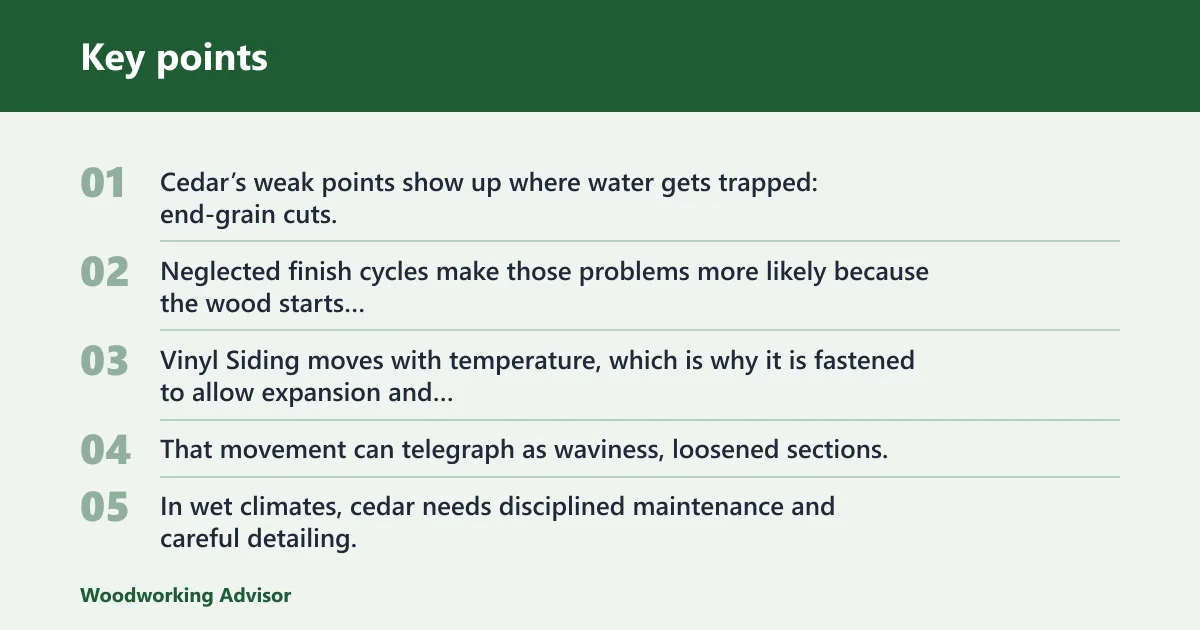
Cedar’s weak points show up where water gets trapped: end-grain cuts, bottom edges near grade, failed caulk, and walls that stay wet. Neglected finish cycles make those problems more likely because the wood starts absorbing moisture instead of shedding it.
Cracking, fading, and thermal movement in vinyl
Vinyl Siding moves with temperature, which is why it is fastened to allow expansion and contraction. That movement can telegraph as waviness, loosened sections, or stress cracking if installation is too tight or if a panel takes abuse in cold weather.
Wet, coastal, and freeze-thaw performance
In wet climates, cedar needs disciplined maintenance and careful detailing. In coastal exposure, salt, wind, and moisture cycles can punish neglected wood surfaces. In freeze-thaw regions, Vinyl Siding often handles moisture better, but impact and movement still matter around fasteners, corners, and trim.
Suppose a 2,000-square-foot coastal home gets strong rain and salty air. Cedar can still work, but only if the finish schedule stays on time and end-grain exposure is managed carefully. Vinyl Siding is usually the safer low-maintenance pick there, though it must be installed with room for movement.
Installation difficulty and DIY suitability
Vinyl Siding is usually more DIY-friendly because it is lighter and cuts with simpler tools. Cedar is less forgiving, and better results often depend on sharp blades, careful layout, and protection against dust and wood exposure. Both can need furring strips or tear-off work depending on the substrate.
Tools, PPE, and substrate limits
Wood siding work often needs saws suited to clean cuts, fasteners that match the product, and basic PPE for cutting dust and debris. Vinyl work needs accurate fastening without overdriving, because the panels must move. When old siding is uneven, new work may need furring strips to create a flat plane.
Can you install cedar over vinyl siding?
You can sometimes install new siding over existing vinyl only if the wall is flat, dry, and code-compliant for the added thickness and attachment pattern. In practice, many projects do better with tear-off so you can inspect the sheathing, add flashing fixes, and avoid trapping damage under the new skin.
Choose Cedar if… / Choose Vinyl Siding if…
Choose Cedar if the home depends on authentic grain, deep shadow lines, or a period-correct look that Vinyl Siding cannot fully copy. Choose Vinyl Siding if your priority is lower upfront cost, less upkeep, and a simpler ownership plan over 20 years.
- Choose Cedar if you own a historic house and want the siding to match older trim, reveals, and profile depth.
- Choose Cedar if you are willing to repaint or restain every 3 to 7 years and keep water details tight.
- Choose Vinyl Siding if budget control matters most and you want the lower installed cost path.
- Choose Vinyl Siding if you want less routine maintenance and better resistance to rot and insect damage.
- Choose Vinyl Siding if you are working with a mixed-climate home where thermal movement can be managed by proper installation.
- Check whether the house is historic or detail-heavy.
- Estimate how often you will maintain paint or stain.
- Compare installed cost, not material price alone.
- Ask how the wall handles moisture, corners, and trim transitions.
- Pick the material that fits both the climate and your upkeep tolerance.


Frequently asked questions
Is cedar siding a good choice compared with vinyl?
Cedar is a strong choice when appearance, authenticity, and repairability matter more than routine upkeep. Vinyl is the stronger value when you want lower installed cost and less maintenance. The better pick depends on whether you would rather pay more upfront or more in care over time.
Vinyl siding vs wood siding
Vinyl siding is usually cheaper and easier to maintain than wood siding. Cedar, as a premium wood option, looks more natural and can suit older homes better, but it needs periodic finishing and more moisture control. The long-term cost gap usually grows after the first repaint or restain cycle.
Vinyl siding vs wood siding for an old house
For an old house, wood often fits the architecture better because it keeps the original profile depth and trim relationship. Vinyl can be a practical budget choice, but it may flatten the visual detail that gives older homes their character. Preservation-minded buyers usually lean wood.
How much does cedar siding cost compared with vinyl?
Installed Cedar usually runs about $5.00 to $12.00 per square foot, while Vinyl Siding runs about $3.50 to $7.00 per square foot installed.
Which lasts longer, cedar siding or vinyl siding?
It depends on maintenance and climate. Cedar can hold up well if kept painted or stained and protected from water entry, but neglected wood can rot or attract insects. Vinyl avoids rot, yet it can crack, fade, or warp if installation and climate movement are not handled well.
What vinyl siding looks like cedar siding?
Look for cedar-shake styles, wood-grain embossing, and profiles that mimic lap siding or shake exposure. These products can read well from the street, especially on simpler homes. Up close, the uniform texture and repeat pattern still give Vinyl Siding away more than real cedar does.
Sponsored / affiliate links. As an Amazon Associate I earn from qualifying purchases. I may earn additional commission from eligible campaigns.
 Vinyl Siding Removal Tool with Extra Long Handle- Steel Blade Vinyl Non-Slip Grip Handle for Installation and Removal Tool Avoid Damaging Vinyl Siding Tool (2)
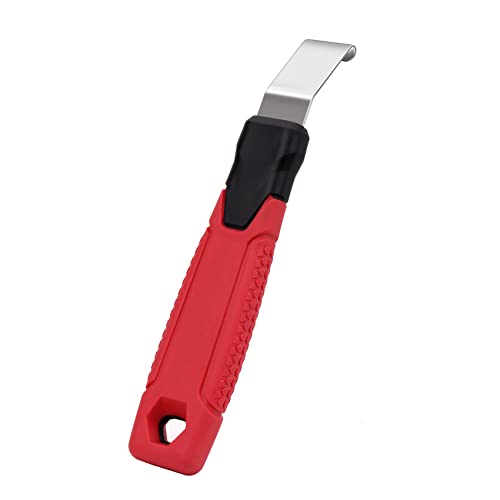 Vinyl Siding Removal Tool with Extra Long Handle- Steel Blade Vinyl Non-Slip Grip Handle for Installation and Removal Tool Avoid Damaging Vinyl Siding Tool (1)