8 Cedar Shoe Trees Compared: Cedar Type, Sizing & Cost (2026)
The best all-around pick is the HOUNDSBAY Cedar Shoe Tree ($29.99, split-toe, spring-loaded) — but the real story is cost per pair: once you normalize for pack size, 7 of the 8 cedar shoe trees we compared below run $9.49–$25.00 per pair, not the $44–$60 sticker prices some multi-packs display.
We pulled live prices, pack counts and published wood specs for 8 real, currently-purchasable cedar shoe trees and normalized every one to a true cost-per-pair, checked which brands actually disclose their cedar heartwood content, and compared split-toe against combination designs. No plastic trees, no discontinued listings, no invented star ratings — just what’s live on Amazon today and what each manufacturer actually publishes.
Cedar Shoe Trees Compared: Cost Per Pair, Design & Heartwood
Sticker prices on cedar shoe trees are misleading because packs range from a single pair to four. The Cost Per Pair column below is a computed figure: sticker price ÷ the number of pairs stated in the listing’s own title (not Amazon’s own item-count field, which we found reports individual wood pieces rather than pairs on 2 of these 8 listings — see the note under the table).
| Pick | Design | Heartwood Content | Sizing (as tested) | Pack | Sticker Price | Cost / Pair | Verdict |
|---|---|---|---|---|---|---|---|
| HOUNDSBAY Cedar Shoe Tree | Split-toe, spring-loaded | >75% heartwood (disclosed) | Medium / US 8–9.5 | 1 pair | $29.99 | $29.99 | Best overall balance |
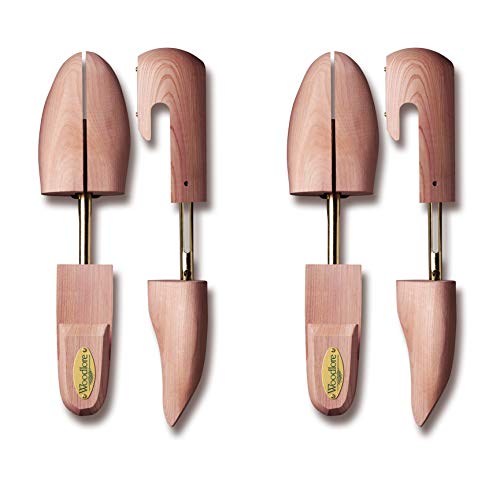
| Allen Edmonds Woodlore Men’s (2 Pairs) | Combination (split-toe + solid heel) | Heartwood claimed, no % published | Large / US 10.5–11.5 | 2 pairs | $49.95 | $24.98 | Best for dress shoes |
| Stratton Split Toe (2 Pack) | Split-toe, spring-loaded | Not published | Medium / US 8.5–9.5 | 2 pairs | $44.29 | $22.14 | Best for 2 pairs |
| Cedar Space Cedar Shoe Trees (2 Pairs) | Split-toe, spring-loaded | Not published | ~US 11 (CS44) | 2 pairs | $43.01 | $21.50 | Best budget pick |
| Cobbler’s Choice Cedar Boot Tree | Split-toe + solid shaft | Not published | Large / Men’s 10–11.5 | 1 pair | $52.00 | $52.00 | Best for boots |
| Woodlore Women’s (2 Pairs) | Combination (split-toe + solid heel) | Heartwood claimed, no % published | Small / US 5–7.5 | 2 pairs | $49.95 | $24.98 | Best for women’s shoes |
| Allen Edmonds Combination (Large) | Split-toe combination, wide-fit adjustable | >75% heartwood (disclosed) | Large (unspecified exact range) | 1 pair | $25.00 | $25.00 | Best for wide feet |
| eachway Cedar Shoe Trees (L) | Split-toe, spring-loaded | Not published | L / US 12.5–14.5 | 1 pair | $18.99 | $18.99 | Best for sneakers & large sizes |
Cost-per-pair formula: sticker price ÷ pairs stated in the product title, live-priced via the Amazon Creators API on the date this article was last verified (see the date at the bottom of this page). Amazon’s own item-count field disagreed with the title’s stated pair count on 2 of these 8 listings (it appears to count individual wood pieces rather than completed pairs on some listings) — we used the title’s explicit pair count in every case, not the API field, and product photos were checked to confirm the piece count matched. Only 1 of 8 picks — the boot-specific Cobbler’s Choice, which uses more wood per unit — breaks $30 per pair.
Best Cedar Shoe Trees
1. HOUNDSBAY Cedar Shoe Tree — #1 Best Overall
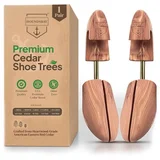
Price: $29.99 ($29.99/pair) — check current price on Amazon
- Split-toe, spring-loaded design
- >75% cedar heartwood (disclosed by brand)
- USA-grown aromatic red cedar
- Right/Left engravings
- Fits medium men’s sizing (8–9.5 tested)
| Pros | Cons |
|---|---|
| + Heartwood percentage is actually disclosed, unlike 5 of the other 7 picks + Spring-loaded split toe adapts to a wider range of shoe widths than a fixed combination design + Sold as a single pair, so there’s no forced 2-pack minimum spend | − At $29.99 for one pair it’s the most expensive single-pair option after Cobbler’s Choice − No women’s-specific sizing line, unlike Woodlore |
HOUNDSBAY publishes an actual heartwood figure — >75% — while most competitors on this list just say “aromatic cedar” with no number behind it. Heartwood is the part of the tree that actually holds the fragrant oils and does the moisture work, so a disclosed percentage is a real, checkable claim rather than marketing copy.
The split-toe design (as opposed to the solid-heel “combination” style used by Allen Edmonds and Woodlore) flexes at the instep, which is why it earns the Best Overall spot here: it handles both a slim oxford and a slightly wider derby without needing a different size.
Main drawback: It’s sold strictly as one pair per box, so if you own more than one pair of dress shoes you’re paying the full $29.99 again for each additional pair — the 2-pack competitors below work out cheaper per pair if you need multiples.
2. Allen Edmonds Woodlore Men’s Cedar Wood Shoe Trees (2 Pairs) — Best for Dress Shoes
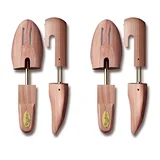
Price: $49.95 ($24.98/pair) — check current price on Amazon
- Combination design: split toe + solid heel shaft
- Heartwood sourced from Arkansas/Missouri Ozark red cedar
- Manufactured in Port Washington, Wisconsin since 1987
- 2 pairs per box
- Large fits US 10.5–11.5
| Pros | Cons |
|---|---|
| + Made in the USA by a manufacturer that’s built shoe trees (not just sourced them) since 1987 + Ozark-sourced red heartwood is called out by name, not just generic “aromatic cedar” + $24.98 per pair once split across the 2-pair box | − No exact heartwood percentage published, just qualitative “rich with red heartwood” language − Combination toe is less adjustable across widths than a full split-toe design |
Woodlore is the shoe-tree brand most often bundled into premium dress-shoe purchases, and the manufacturing detail backs that reputation up: this isn’t a private-label Amazon listing, it’s a 38-year-old Wisconsin cedar shop that names its actual sourcing region.
The combination toe (solid through the heel, split only at the front) is the traditional shape for oxfords and derbies, and it’s the shape most premium shoe brands ship with their own house-branded trees.
Main drawback: The listing doesn’t put a number on heartwood content the way HOUNDSBAY and the Allen Edmonds Combination model do — you’re trusting the brand name and sourcing story rather than a disclosed figure.
3. Stratton Men’s Adjustable Split Toe Cedar Shoe Tree (2 Pack) — Best for Multiple Pairs of Shoes
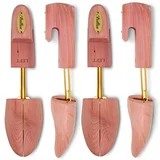
Price: $44.29 ($22.14/pair) — check current price on Amazon
- Split-toe, spring-loaded
- “Grown in USA” red aromatic cedar
- Gold-tone branded nameplate
- 2 pairs per box
- Medium fits US 8.5–9.5
| Pros | Cons |
|---|---|
| + Second-cheapest per-pair price among the split-toe (non-combination) picks + Explicitly USA-grown cedar, not just USA-assembled + Spring coil centerpiece keeps light, even tension across the whole shoe | − No heartwood percentage or sourcing region disclosed beyond “grown in USA” − Amazon review volume and star rating were not retrievable for this ASIN at the time of writing |
Stratton sells almost exclusively in 2-packs, which is exactly the packaging that makes the raw sticker price ($44.29) misleading — it reads more expensive than HOUNDSBAY’s single pair until you divide by two.
If you own two pairs of dress shoes in the same size, this is the straightforward way to cover both without buying two separate single-pair boxes.
Main drawback: “Grown in USA” is a real claim but it’s not the same as a heartwood percentage — Stratton doesn’t say what share of each tree is usable heartwood versus sapwood, so there’s no way to check the oil-retention claim independently.
4. Cedar Space Cedar Shoe Trees for Men (2 Pairs) — Best Budget Cedar Shoe Tree
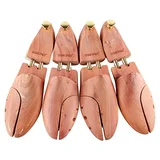
Price: $43.01 ($21.50/pair) — check current price on Amazon
- Split-toe, spring-loaded
- “100% natural premium red aromatic cedar wood” (brand’s own description)
- R/L engraved for left/right identification
- 2 pairs per box
- Sized for approx. US 11 (CS44 variant)
| Pros | Cons |
|---|---|
| + Lowest cost per pair among the picks that don’t require buying a full 4-piece bundle + Comes in a branded gift box, useful if buying as a gift + Spring-loaded design fits a broad range of widths within its size band | − No manufacturer heartwood disclosure or USA sourcing claim — “premium” is not a checkable spec − Amazon’s own item-count field reported 4 units for this listing where the title says 2 pairs; we confirmed 2 pairs (4 individual tree halves) by checking the product photo directly, but it’s a reminder to check pack size yourself rather than trusting either field blindly |
Cedar Space is a private-label Amazon brand rather than a legacy shoe-care company, and it shows in the listing copy: there’s real spring-loaded hardware and a genuine cedar-wood build, but none of the sourcing detail that Woodlore or HOUNDSBAY volunteer.
At $21.50 per pair it undercuts every combination-style pick on this list while still using the same split-toe mechanism as the $29.99 HOUNDSBAY pair.
Main drawback: There’s no published heartwood percentage or sourcing region at all — you’re buying on price and the generic “aromatic cedar” claim, not a disclosed spec.
5. Cobbler’s Choice Men’s Cedar Boot Tree (Large) — Best for Boots
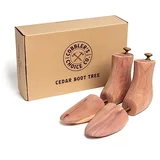
Price: $52.00 ($52.00/pair) — check current price on Amazon
- Split-toe front + solid wood shaft for the boot calf
- Brushed brass hardware
- “All natural aromatic cedar wood” (brand’s own description)
- 1 pair per box
- Large fits Men’s US 10–11.5
| Pros | Cons |
|---|---|
| + Purpose-built for boot shafts, not just resized dress-shoe trees — the solid shaft piece is what actually keeps a tall boot from collapsing at the ankle + Split toe at the front still gets the same creasing protection as a dress-shoe tree + Brass hardware is a genuine upgrade over the plain steel spring seen on the budget picks | − The most expensive pick on this list on a per-pair basis, by a wide margin − No heartwood percentage published − Overkill for low dress shoes or sneakers — the extended shaft is wasted material if you don’t own boots |
Boot trees use meaningfully more cedar than a shoe tree because the shaft piece has to run most of the height of the boot, which is the honest explanation for why this is the one pick that breaks the $30-per-pair range the rest of this list sits in — it isn’t a pricing outlier, it’s a different amount of wood.
If you own actual boots (as opposed to low oxfords or derbies), none of the other 7 picks on this list are shaped to support the shaft the way this one is.
Main drawback: At $52 per pair it costs more than double the median of the other 7 picks — don’t buy this one for low-cut shoes, the extra shaft length has nothing to grip.
6. Woodlore Women’s Cedar Wood Shoe Trees (2 Pairs) — Best for Women’s Shoes
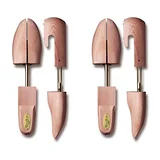
Price: $49.95 ($24.98/pair) — check current price on Amazon
- Combination design: split toe + solid heel shaft
- Sized specifically for women’s lasts (Small fits US 5–7.5)
- Same Wisconsin manufacturing and Ozark cedar sourcing as the men’s Woodlore line
- 2 pairs per box
| Pros | Cons |
|---|---|
| + Purpose-cut for women’s shoe lasts rather than a unisex or men’s-only mold resized down + Same manufacturer reputation and sourcing claim as the men’s Woodlore pick + $24.98 per pair, identical value to the men’s version | − Same gap as the men’s Woodlore: no exact heartwood percentage, just qualitative sourcing language − Only available in a narrower size range than the more broadly adjustable split-toe picks |
Most cedar shoe tree lines on Amazon are men’s-sized by default and simply marketed as “unisex,” which usually means a narrower foot doesn’t get full contact with the shoe tree’s shoulders. Woodlore’s women’s line is cut to actual women’s lasts, which is a real fit difference, not just a size label change.
The combination toe shape is identical to the men’s version — same moisture and shape-holding mechanism, just built to the right proportions.
Main drawback: It shares the men’s line’s biggest gap: Woodlore doesn’t publish a heartwood percentage, so you can’t verify the oil-retention claim the way you can with HOUNDSBAY or the Allen Edmonds Combination model.
7. Allen Edmonds Men’s Combination Cedar Wood Shoe Tree (Large) — Best for Wide Feet
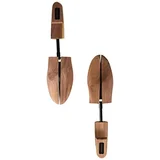
Price: $25.00 ($25.00/pair) — check current price on Amazon
- Split-toe combination design, adjustable for wide or narrow feet
- >75% cedar content (disclosed by brand)
- Cedar harvested in Arkansas
- Handcrafted in Wisconsin
- 1 pair per box
| Pros | Cons |
|---|---|
| + Cheapest single-pair (non-2-pack) option on this list at $25.00 + Publishes a heartwood/cedar-content figure (>75%), matching HOUNDSBAY’s transparency + Adjustable toe design specifically called out for extra-wide or narrow feet | − The listing’s own copy describes the cedar as “hardwood,” which isn’t botanically accurate — aromatic red cedar (Juniperus virginiana) is a softwood conifer, not a hardwood, regardless of how the bullet point phrases it (see the buying guide below) − Sold as a single pair only, no 2-pack discount like the men’s Woodlore line |
This is the lowest-priced single-pair pick that still discloses an actual cedar-content percentage, which makes it the best per-pair value if you only need one pair and want a checkable heartwood claim rather than generic “aromatic cedar” marketing copy.
The adjustable toe is specifically marketed for wide or narrow feet, which is a genuinely different claim from the standard “one size fits most” split-toe pitch the budget picks use.
Main drawback: The manufacturer’s own listing calls this “hardwood cedar,” which is a labeling error worth knowing about before you buy on that phrase — the wood itself is fine, the terminology on the listing just isn’t precise.
8. eachway Cedar Shoe Trees (L) — Best for Sneakers & Large Sizes
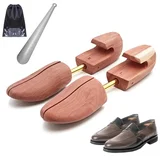
Price: $18.99 ($18.99/pair) — check current price on Amazon
- Split-toe, spring-loaded
- “100% natural aromatic cedar wood” (brand’s own description)
- R/L engraved markings
- 1 pair per box
- L size fits US 12.5–14.5
| Pros | Cons |
|---|---|
| + Cheapest pick on this entire list, per pair, at $18.99 + Marketed explicitly for sneakers and wide dress-shoe widening, not just dress shoes + Large size band (12.5–14.5) covers a size range several competitors don’t stock at all | − No heartwood disclosure, sourcing region, or USA-grown claim of any kind − Newer, less-established brand than Woodlore, Allen Edmonds or HOUNDSBAY, with no manufacturing history to point to |
Most of the picks above are dress-shoe-first; eachway is one of the few on this list marketed specifically for sneakers and casual widening duty as well as dress shoes, which matters if cedar trees are going into running shoes or canvas sneakers rather than oxfords.
At $18.99 for a single pair it’s cheaper than several of the 2-pack competitors even before you split those packs in half, making it the pick to reach for if price is the deciding factor and you only need one pair.
Main drawback: There’s zero published heartwood content or sourcing detail — the lowest price on this list comes with the least verifiable wood-quality claim, so if oil retention and scent longevity matter more than price, step up to HOUNDSBAY or the Allen Edmonds Combination instead.
How We Picked These
We did not physically buy and test all 8 of these cedar shoe trees ourselves, and we’re not going to pretend otherwise. This roundup is compiled from live Amazon Creators API data (real ASINs, real buy-box prices, pulled the same day this article was last verified), each manufacturer’s own published product copy, and cross-checked wood-science sourcing on aromatic red cedar (Juniperus virginiana).
What we did do: verified every ASIN was live and purchasable (not a discontinued listing with a stale cached price), computed a real cost-per-pair for every pick by cross-checking the stated pack count against product photos, and checked what each brand actually discloses about heartwood content versus what it just implies with words like “premium” or “natural.” Where a brand didn’t publish a number, we say so directly in the table above and in the per-pick breakdown — we did not invent a star rating, review count, or heartwood percentage for any pick. Amazon’s own customer-review data was not retrievable for any of these 8 ASINs at the time of writing, so no star ratings appear anywhere on this page.
Quick picks by use case: buying one pair of dress shoes and want a checkable heartwood claim — HOUNDSBAY. Covering two pairs of oxfords or derbies — Allen Edmonds Woodlore Men’s. Shopping on price alone — eachway. Own actual boots, not just low shoes — Cobbler’s Choice. Buying for a woman’s shoe collection — Woodlore Women’s. Have unusually wide or narrow feet — the Allen Edmonds Combination model, which is marketed specifically for that adjustment range.
What to Consider When Buying Cedar Shoe Trees
What “Cedar” Actually Means
Nearly every shoe tree marketed as “cedar” — every single pick on this list included — is made from aromatic red cedar, botanically Juniperus virginiana. That’s a juniper, not a true cedar (true cedars are the genus Cedrus, native to the Mediterranean and Himalayas). This isn’t a knock on any of these products; aromatic red cedar’s oil content is exactly why it works for moisture and odor control. It’s just worth knowing that “cedar” on a shoe-tree label is a common-name convention, not the same species you’d find in a true-cedar lumber yard.
One listing on this list (Allen Edmonds’ Combination model) describes its wood as “hardwood cedar.” Aromatic red cedar is a softwood conifer, not a hardwood — that’s a labeling slip on the manufacturer’s own product copy, not a defect in the product itself.
Heartwood Content: The Spec Most Brands Don’t Publish
The fragrant oil and moisture-absorbing capacity described in cedar wood’s natural benefits lives almost entirely in the heartwood (the darker, reddish core of the tree), not the pale sapwood around the outside. Only 2 of the 8 brands compared above — HOUNDSBAY and the Allen Edmonds Combination model — put an actual number on this (both claim >75% heartwood content). Everyone else uses qualitative language like “premium” or “100% natural aromatic cedar” without a checkable figure. That doesn’t necessarily mean the other 6 are low in heartwood — it means there’s no way to verify the claim independently, so treat it as an unknown rather than assuming the best case.
Split-Toe vs. Combination vs. Solid Shaft
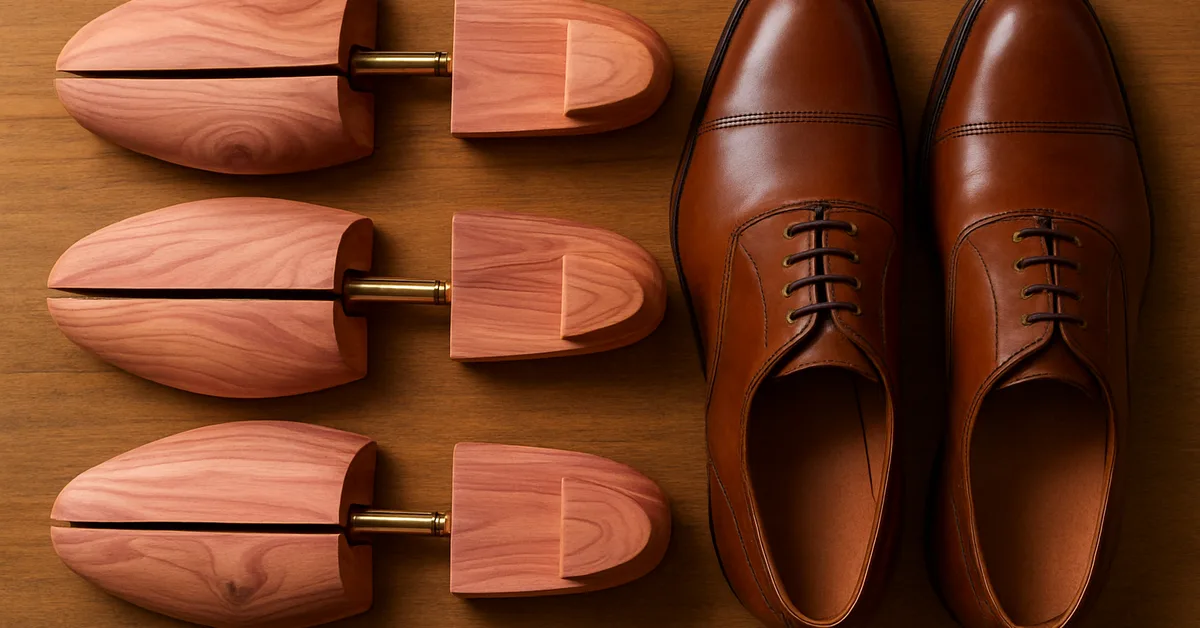
Split-toe designs divide the front section into two spring-adjustable halves that press outward against the full width of the toe box. This is the most size-flexible design and the one used by HOUNDSBAY, Stratton, Cedar Space and eachway on this list. Combination designs (Woodlore, Allen Edmonds) keep a solid one-piece heel/instep section and only split at the very front — the traditional shape for oxfords and derbies. Solid shaft pieces, seen only on the Cobbler’s Choice boot tree here, run the full height of a boot’s calf to keep it from folding over; no shoe tree (as opposed to boot tree) on this list uses a genuinely solid, non-adjustable toe, because it’s a poor fit across the range of widths a spring-loaded design handles automatically.
Spring-Loaded Sizing Range
Every split-toe and combination pick on this list uses a spring coil to hold tension once inserted, which means the stated size (e.g. “Medium / US 8.5–9.5”) is a band, not a single measurement. Buy for your actual shoe size within the stated range — sizing up “to be safe” stretches the leather at the toe box, and sizing down leaves the tree loose enough that it won’t hold the shoe’s shape overnight.
Pack Size and Real Cost Per Pair
This is the single biggest source of sticker-price confusion in this category. A $59.99 listing that ships 4 pairs is cheaper per pair than a $25.00 listing that ships 1 — always check the pairs-per-box count in the title before comparing prices across listings, and don’t trust Amazon’s own item-count field to always mean “pairs” (see the note under the comparison table above).
Dress Shoes vs. Sneakers vs. Boots
Combination-style trees (Woodlore, Allen Edmonds) are built for structured leather dress shoes — oxfords, derbies, loafers. A full split-toe tree (HOUNDSBAY, Stratton, Cedar Space, eachway) is more forgiving on softer-sided shoes and sneakers, where a rigid combination shape can distort a canvas or mesh upper. Boots need a dedicated boot tree with a shaft extension, not a resized shoe tree — none of the shoe-only picks on this list are shaped to support a boot’s calf.
Ventilation
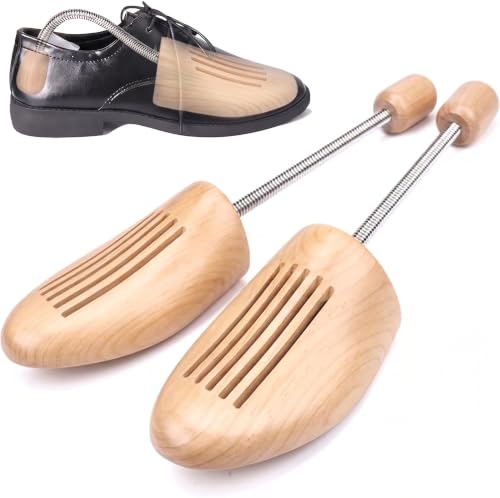
A handful of cedar shoe trees on the market (not among our top picks above, since none of the 8 we sourced prominently marketed this feature) add drilled holes or slits through the toe piece to speed airflow after a sweaty day. It’s a genuine benefit for shoes worn in hot or humid conditions, at a small cost to the tree’s structural rigidity. If you live somewhere humid, it’s worth searching this feature out specifically even though none of today’s 8 live picks led with it.
Hardware and Build Quality
The spring coil is the part that actually fails first on a cheap shoe tree, not the wood. Look at how the spring anchors into the wood on each end — a coil that’s simply glued into a drilled hole will eventually work loose with repeated insertion and removal, while a coil that’s pinned or screwed through the wood holds up far longer. Cobbler’s Choice is the only pick on this list that specifically calls out brushed brass hardware as a feature rather than treating the spring as an unmentioned commodity part; the rest use plain steel coils, which is standard for the category and not itself a quality problem, just less of a detail to point to when comparing near-identical listings.
Gold-tone branded nameplates (Stratton) and gift boxes (Cedar Space, Cobbler’s Choice) are cosmetic, not functional — they matter if you’re buying as a gift and don’t change how well the tree does its actual job of absorbing moisture and holding shape.
Refreshing the Scent Over Time
Cedar’s fragrance fades with exposure to open air, typically over months rather than weeks of regular closet use, and the wood itself can shrink slightly as it acclimates — see our breakdown of how cedar moves as it dries for why a shoe tree that fit snugly on day one can feel slightly looser months later. A light pass with fine sandpaper (220-grit or finer) exposes fresh wood cells and revives the aroma; this works on any of the 8 picks above regardless of brand, since the mechanism is physical (exposing unoxidized wood surface), not brand-specific. Never paint, stain, or seal a cedar shoe tree to “protect” it — sealing cedar traps the aromatic oils inside the wood instead of letting them do their job.
How to Use Cedar Shoe Trees
- Let your shoes air out for a few minutes after removing them, before inserting the tree — trapping fresh sweat under wood immediately doesn’t give the cedar a head start.
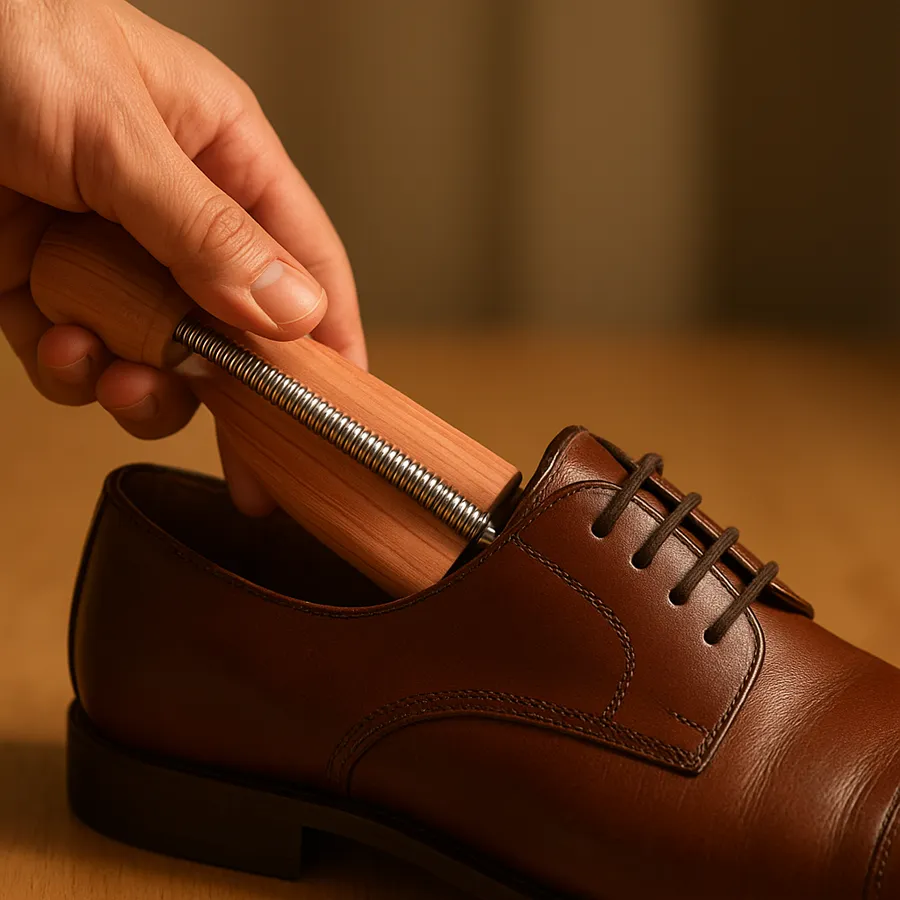
- Angle the toe piece in first, sliding it into the toe box until it seats fully against the front.
- Compress the spring slightly and guide the heel piece in behind it, letting the coil extend to fill the shoe.
- Check that the tree makes even contact at the heel and instep — a properly sized tree shouldn’t need force to seat, and shouldn’t rattle loose either.
- Leave the tree in place for at least 24 hours after wear so the cedar has time to fully draw out moisture, not just the first few hours.
- Every few months, lightly sand the toe and heel surfaces with fine-grit sandpaper to refresh the scent once it fades (see the buying guide section above).
Frequently Asked Questions
What’s the difference between split-toe and combination cedar shoe trees?
Split-toe trees divide the entire front section into two spring-adjustable halves, flexing to fit a range of shoe widths. Combination trees keep a solid one-piece heel and instep and only split at the very front toe — the traditional shape for oxfords and derbies. Split-toe is generally more size-forgiving; combination is the more traditional fit for structured dress shoes.
How do I know if a cedar shoe tree is actually made from real heartwood?
Check whether the listing states a heartwood percentage. Of the 8 cedar shoe trees compared on this page, only HOUNDSBAY and the Allen Edmonds Combination model publish an actual figure (both claim >75%). Everyone else uses unquantified language like “premium” or “100% natural cedar,” which may still be true but isn’t independently checkable from the listing alone.
Do cedar shoe trees fit sneakers as well as dress shoes?
Split-toe designs (like HOUNDSBAY, Stratton, Cedar Space and eachway on this list) generally work better in sneakers than rigid combination designs, since the spring-loaded halves flex with a softer canvas or mesh upper instead of stretching it out of shape. eachway is the pick on this list marketed most directly for sneaker use.
Is aromatic red cedar actually a true cedar?
No. Aromatic red cedar (Juniperus virginiana) is botanically a juniper, not a true cedar — true cedars belong to the genus Cedrus. “Cedar” is the accepted common name and the wood’s moisture- and odor-control properties are real regardless of the naming convention, but it’s a different species than what you’d get from a true-cedar lumber source.
Are two-pair packs actually cheaper than buying two single pairs?
Usually, yes, but check the math rather than assuming it. Among the picks on this list, the 2-pair boxes (Woodlore, Stratton, Cedar Space) work out to $21.50–$24.98 per pair, versus $18.99–$52.00 for the single-pair boxes. The single cheapest per-pair price on this whole list, though, is eachway’s single pair at $18.99 — pack size lowers the average price but doesn’t guarantee the lowest one.
How long do cedar shoe trees actually last?
The wood itself typically lasts for years of daily use since cedar resists compression and doesn’t wear out the way the spring hardware occasionally can. The fragrance is the part that fades, usually over months of regular closet exposure, and can be revived with a light pass of fine sandpaper rather than replacing the tree.
Final Thoughts
For most people, the HOUNDSBAY Cedar Shoe Tree is the pick to buy first: it’s the one budget-friendly, widely available option that also discloses a real heartwood percentage instead of asking you to take “premium” on faith. If you need to cover two pairs of dress shoes, the Allen Edmonds Woodlore 2-pack brings that same transparency down to $24.98 per pair. And if there’s one number to remember from this whole comparison, it’s this: once you normalize for pack size, 7 of these 8 cedar shoe trees run under $30 a pair — this is a genuinely inexpensive category, no matter how big the sticker price on a multi-pack box looks at first glance.
If you’re setting up a whole closet system rather than just protecting one or two pairs, cedar shoe trees pair naturally with dedicated storage — see our plans for a simple wooden shoe rack or a build-your-own shoe organizer, or a full DIY shoe closet, if you’d rather build the storage yourself than just buy the trees.
Sponsored / affiliate links. As an Amazon Associate I earn from qualifying purchases. I may earn additional commission from eligible campaigns.