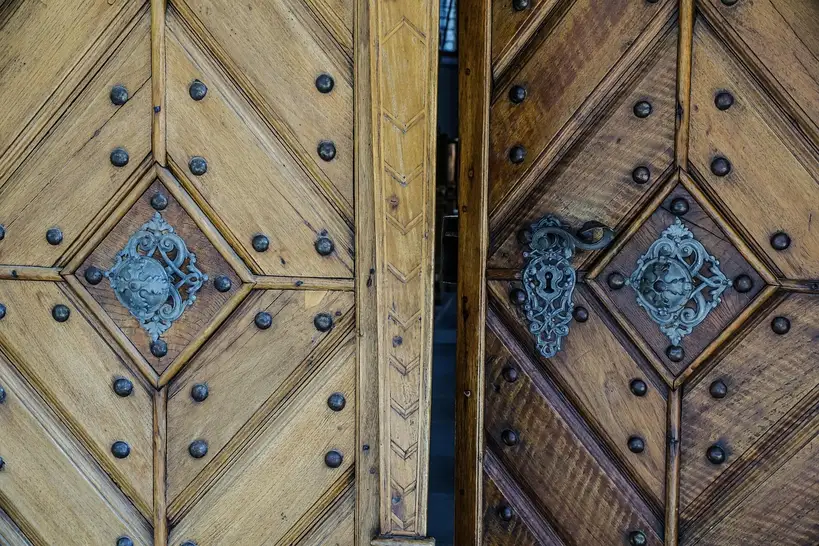
3 Best Stain Colors for Doors (2026): Based on Specs and Reviews
For most wood front doors, the best stain colors are medium walnut, red-brown mahogany, and dark coffee tones, with lighter natural oak or golden amber working best on white oak and fir. Match the species first, then the undertone. A poor match can turn the door muddy, orange, too dark, or faster to fade in full sun. This guide gives species-specific stain picks and shows how undertone, sheen, and exterior surroundings change the final color.
This guide is part of our Wood Stain Colors and Stain Problems: Brand Charts, Comparisons and Fixes series.
Quick comparison
| Product | Badge | Best for | Price | ||
|---|---|---|---|---|---|
 |
General Finishes Oil Base Gel Stain, 1 Quart, Antique WalnutGeneral Finishes | Our pick | 1 Quart · Gel Stain · Antique Walnut | $60.87
Price as of 9 Nov 2026
|
View |
 |
Varathane Total Control Dark Walnut Gel StainVarathane | Budget pick | Half Pint · Gel Stain · Dark Walnut | $10.59
Price as of 9 Nov 2026
|
View |
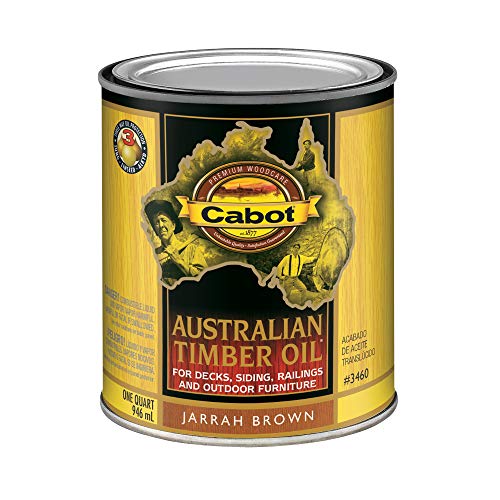 |
Cabot Australian Timber Oil Wood Stain and ProtectorCabot | Pair with it | 1 Quart · Wood Stain & Protector · Jarrah Brown | $31.60
Price as of 9 Nov 2026
|
View |
The right stain color for a front door depends on the wood species, the amount of sun the entry gets, and whether you want the grain to stay visible. Darker browns usually read more formal and can hide minor color variation, but they also show dust, heat, and fade more readily on exposed doors.
How we chose
The recommendations here come from manufacturer specs, listing details, and published buyer feedback. That keeps the focus on stain type, application control, exterior protection, and real-world color comments instead of broad style claims.
The filter was simple: exterior suitability, control on vertical surfaces, color family, and likely fit for common front-door species such as oak, mahogany, fir, pine, and cedar.
Only three products made the cut, so each pick below is positioned as a color-control option for a door rather than a generic wood finish.
Front-door stain table
| Wood species | Best stain color families | Likely undertone | Main risks to watch |
|---|---|---|---|
| Oak | Walnut brown, chestnut, dark coffee, medium mahogany | Brown with yellow or red cast depending on oak type | Open grain can read busy; very dark colors may look heavy on a small entry |
| Mahogany | Red-brown, deep walnut, jarrah, espresso-brown | Red-brown with naturally warm depth | Can turn too red or too flat if the color is too cool; sunlight can mute depth over time |
| Pine | Light walnut, antique walnut, medium brown gel stain | Yellow and orange undertones | Blotching, patchy absorption, and dark blotches around knots |
| Fir | Golden amber, light brown, honey walnut, clear brown | Yellow to light amber | Strong grain contrast can look striped if the stain goes too dark |
| Cedar | Warm brown, red-brown, cedar brown, medium walnut | Red-brown or warm brown | Color can skew orange if the finish is too amber; strong UV exposure speeds fade |
Transparent and semi-transparent stains keep more grain visible. Solid stains cover more of the wood but can hide the species character that makes a wood front door look intentional. A gel stain is often the better control choice when the wood is blotch-prone or the door has vertical panels and detailed trim.
Best stain color for a wood front door
For a broad range of homes, medium walnut is the safest first choice because it lands between too-light and too-dark, works on many species, and tends to read clean in daylight. Red-brown mahogany is a stronger choice when the door wood already leans warm, while dark coffee tones work best when you want a formal look and a more sealed-in grain pattern.
Those color families usually age more predictably outdoors than very pale stains or nearly black tones. Sun, rain, and temperature swings still change the finish, though, so the right pick depends on species and exposure as much as style.
A common first-timer mistake is choosing a dark color from an indoor sample card, then applying it to a 32-inch oak door that faces afternoon sun. The door can look nearly black at the edges, while the center panel still reads brown, which makes the finish look uneven rather than dramatic.
Why medium-dark browns usually age well outdoors
Medium-dark browns stay readable when sunlight lowers contrast and when dust or pollen settles on the surface. They also hide small variation in the wood better than light amber or natural finishes, which can expose sapwood, mineral streaks, or patchy sanding marks on a door with mixed grain.
When mahogany or pecan is the better choice
Mahogany makes sense when the door species already has red or brown undertones, especially on a formal entry with bronze hardware. Pecan or similar warm brown tones suit lighter species when you want more warmth without pushing the door into the very dark range that can feel heavy on a narrow porch.
What stain colors work best by wood species?
The best front-door stain color depends on how the species absorbs color and what undertone it brings before the stain even goes on. Oak, mahogany, pine, fir, and cedar do not behave the same way, so the same can of stain can look refined on one door and muddy on another.
Oak: brown, walnut, and chestnut tones
Oak usually takes stain well because its grain is open and visible. Brown, walnut, and chestnut families work best because they respect the grain and do not fight the wood’s natural structure. White oak often takes a more neutral brown, while red oak can lean warmer and may flash orange if the stain is too amber.
Mahogany: red-brown and deep walnut tones
Mahogany already carries a red-brown base, so the safest colors stay in that lane. Deep walnut and jarrah-style tones keep the door looking layered instead of flat. Very cool brown or gray-brown colors can mute the species character and make the finish look dull in exterior light.
Pine and fir: lighter brown or gel-stain options
Pine and fir are more prone to blotching, so a lighter brown, antique walnut, or gel-stain path is often the better choice. Gel stain sits thicker and gives you more control on vertical surfaces, which helps reduce blotchy absorption on softwoods and around knots, resin pockets, and end grain.
Cedar: warm brown and red-brown tones
Cedar usually looks best in warm brown or red-brown families that keep its natural character intact. It can look washed out under very pale stains or overly orange under strong amber tones. Because cedar often sees exterior exposure, color choice should also account for UV fading and the topcoat system you plan to use.
Should you stain a front door dark or light?
Dark stain is usually the better choice if you want the door to read more formal, hide some grain variation, and stand out against light trim. Light stain works better when you want the wood figure to remain obvious, but it also shows sanding marks, patchy absorption, and species quirks more readily.
Sheen changes the result too. A satin or semi-gloss clear topcoat usually makes color look a little deeper and cleaner outdoors, while a lower-sheen finish can flatten the color and make it look more washed out in daylight. Very glossy finishes can read sharper, but they also reveal dust and application marks faster.
On a small entryway, a very dark stain can make the door feel visually heavier than the rest of the facade. On a larger porch with deep overhangs, the same color may look balanced and deliberate.
How dark stains change perceived size and grain
Dark stains compress grain contrast and make the door look denser. That can be useful on plain oak or fir when the goal is a cleaner read, but it also means panel detail may disappear at a distance. If the door is narrow, a very dark finish can make the entry feel smaller.
How light stains show more grain and defects
Lighter stains let the species show through, which is appealing on premium wood but unforgiving on pine and mixed-grain doors. Scratches, uneven sanding, glue residue, and older filler can become visible under sun. That is why a lighter finish needs better prep than many homeowners expect.
How sheen changes color depth outdoors
Higher sheen usually makes color appear deeper and more saturated because it reflects more light. Satin often gives the most balanced look for a front door. Semi-gloss can work when you want a slightly sharper, more polished read, but it also makes surface flaws easier to spot.
How do trim, siding, and hardware affect the color?
Door stain should work with the whole entry, not just the wood panel. White trim makes warm brown and red-brown colors look cleaner, black trim can support darker coffee tones, and painted siding may push you toward a finish that either repeats the trim color family or clearly contrasts it.
Hardware changes the read as well. Brass and aged bronze usually support warm walnut and mahogany families. Black hardware can tolerate darker coffee or walnut tones, while bright metal can make a very warm stain feel more traditional than intended.
Suppose your house has white trim, charcoal siding, and black hardware. A medium walnut door often looks balanced there because it gives warmth without fighting the cooler exterior palette. A red-heavy mahogany stain could read too warm if the siding already leans cool.
Coordinating with white, black, stained, or painted trim
White trim gives you the widest range, but it also makes undertones more obvious. Black trim and dark siding can handle deeper stain colors better. If the trim is stained wood too, keep the undertones close. A red-brown door beside an orange trim stain can look mismatched fast.
Matching warm and cool exterior palettes
Warm exteriors pair best with walnut, mahogany, pecan, and cedar-brown families. Cool palettes usually need a more neutral brown so the door does not clash with gray siding, slate roof tones, or cool painted trim. Avoid pushing a warm species into a color that fights its natural base tone.
When brass, bronze, or black hardware changes the read
Brass softens the look of a medium-dark stain and makes warm undertones feel intentional. Bronze blends easily with walnut and mahogany tones. Black hardware tends to sharpen contrast, which can make the same stain look darker and more formal than it appears in a sample board indoors.
Which one should you buy?
If you want the safest all-around color, a medium walnut gel stain is the most flexible starting point for many front doors. For oak, a deeper walnut or chestnut tone often looks best. For blotch-prone pine or fir, a gel stain gives you more control than a thinner penetrating stain.
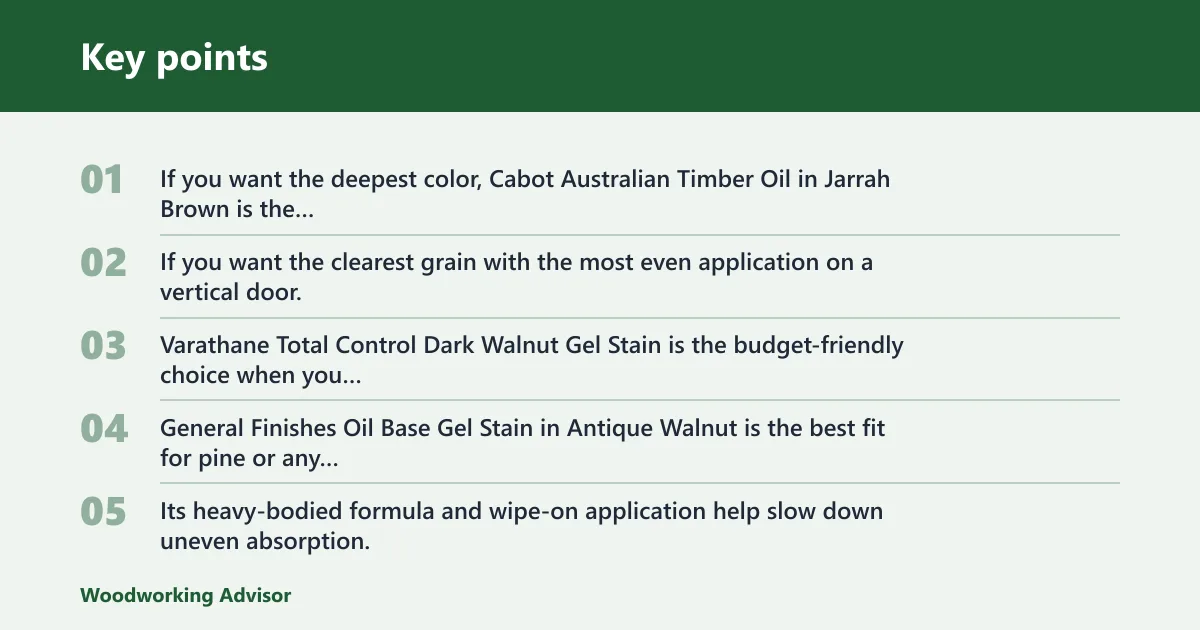
If you want the deepest color, Cabot Australian Timber Oil in Jarrah Brown is the strongest fit from this group because the tone runs rich and warm. If you want the clearest grain with the most even application on a vertical door, General Finishes Oil Base Gel Stain in Antique Walnut is the safer pick. Varathane Total Control Dark Walnut Gel Stain is the budget-friendly choice when you need vertical control and faster drying, especially on a small project.
General Finishes Oil Base Gel Stain: best for pine and color control
General Finishes Oil Base Gel Stain in Antique Walnut is the best fit for pine or any door that tends to blotch. Its heavy-bodied formula and wipe-on application help slow down uneven absorption, which is useful on softwoods and on vertical panels where a thinner stain can run.
It also works well when you want a more controlled walnut look without pushing the door into a muddy dark brown. The drawback is cost: at about $60.87 per quart, it appears to be the priciest option here, and gel stain still needs careful wiping so it does not build up in corners and recesses.
Varathane Total Control Dark Walnut Gel Stain: best for vertical surfaces
Varathane Total Control Dark Walnut Gel Stain is the easiest pick for vertical surface application and quick turnaround. The thick, no-drip formula suits front doors, especially when you want a darker walnut read without fighting runs on panels, rails, and stiles.
Its low-odor, water-based formula is also helpful in tighter work areas. The tradeoff is size and depth of finish: at half a pint, it is not the best choice for larger doors or for anyone who wants a deeper oil-rich look. Confirm coverage needs on the listing before buying.
Cabot Australian Timber Oil Jarrah Brown: best for deep warmth
Cabot Australian Timber Oil in Jarrah Brown suits a homeowner who wants a warmer, deeper exterior color with strong visual depth. The three-way oil protection and penetrating character make it a solid match for dense woods where you want the grain and patina to stay visible.
The drawback is that jarrah brown is a strong color family. On a small door, it can read redder or darker than expected under direct sun, so a sample board matters here more than with many lighter stains. It is also less of a blotch-control product than a gel stain.
Frequently asked questions
What is the best stain color for a wood front door?
Medium walnut is the safest all-purpose choice because it works on many species, stays readable in sunlight, and usually feels balanced beside white trim or dark hardware. Red-brown mahogany and dark coffee tones are also strong options when the door wood is already warm or when you want a more formal look.
Should a front door be stained dark or light?
Dark stain is better when you want a stronger visual anchor, more grain control, and a finish that hides small color variation. Light stain is better when you want the wood character to stay obvious, but it shows defects and patchiness more easily. On a small entry, dark can feel heavier.
What stain color makes a wood door look more expensive?
Rich walnut, mahogany, and deep coffee-brown tones usually make a door look more finished because they add depth and reduce the look of uneven grain. The effect depends on sheen and prep as much as color. A clean satin topcoat often reads more refined than a dull, uneven finish.
Which stain colors hide imperfections on a front door?
Medium-dark browns hide minor sanding marks, patchy grain, and color variation better than light amber or nearly clear stains. Gel stain can help even out blotch-prone woods like pine. Very dark colors hide some flaws, but they also make dust, edge wear, and application laps easier to notice.
What stain color works best on oak front doors?
Oak front doors usually look best in walnut, chestnut, and medium brown families because those colors work with the open grain instead of fighting it. White oak often leans cleaner and more neutral, while red oak can go warmer. A too-orange stain can make oak look dated fast.
How do I test stain colors before staining my front door?
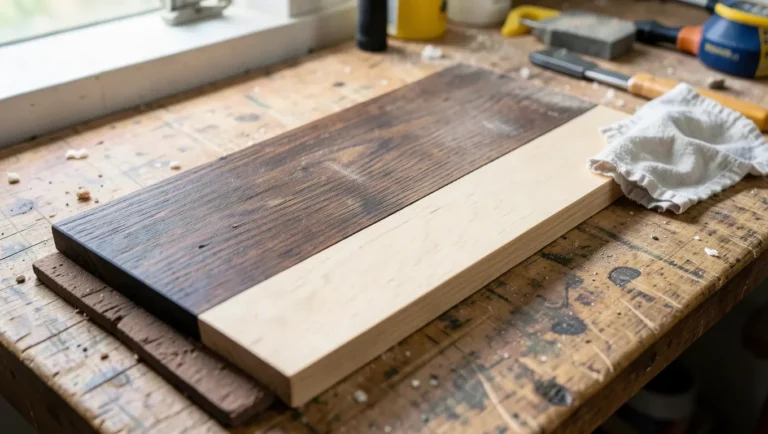
Make a sample board from the same species as the door, and finish it with the stain and the intended topcoat. Put it outside in the same light the door gets, then check it at different times of day. Compare three to five colors, and include the hardware color if possible.
What sheen or topcoat should I use on a stained front door?
Satin is the safest starting point for most front doors because it balances color depth with a clean look. Semi-gloss works if you want a brighter, more polished finish. Use an exterior clear topcoat or spar urethane only if it is listed as compatible with the stain system you chose.
What stain colors hold up best on an exterior wood door?
Medium walnut, red-brown mahogany, and darker brown tones usually age best because they keep looking intentional as UV exposure slowly changes the finish. Very pale stains fade into a washed look more quickly, while very dark stains can show heat and fade wear more obviously on south- and west-facing doors.
Sponsored / affiliate links. As an Amazon Associate I earn from qualifying purchases. I may earn additional commission from eligible campaigns.