Is Olympic Maximum Stain Oil-Based or Water-Based? (250 g/L Rule)
Olympic Maximum Stain + Sealant in One is water-based today, not oil-based — built on a “water-based acrylic shell” per Olympic’s own site, a switch that lines up with the Ozone Transport Commission’s 250 g/L VOC cap on stains. Reviewers report the new formula wears faster than the discontinued oil version. This guide covers the actual rule behind the change, which oil-based Olympic SKUs still exist, and how to tell an old can from new stock.
Disclosure: This post may contain affiliate links. As an Amazon Associate we earn from qualifying purchases.
Quick Answer
Olympic Maximum’s current formula is water-based — a water-based acrylic shell under Olympic’s Weather-Ready technology — built to meet VOC limits like the OTC’s 250 g/L rule for stains. The original oil-based version isn’t sold nationwide anymore, though Olympic still lists an oil-based Maximum Transparent and oil-based Toner on its own site, legal only where OTC-style VOC rules don’t apply.
What Formula Is Olympic Maximum Stain Today?
Best Oil-Based Stain Alternative Pick
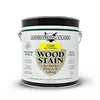
Armstrong-Clark Oil-Based Wood Stain (Cedar Semi-Transparent) – $84.95
Scored highest (8.5/10) in the same independent two-year field test that scored current water-based Olympic Maximum at 6.75/10 — the closest match to the deep-penetrating protection old-formula Maximum used to deliver.
- Best for: Buyers who want the deep-penetrating protection Olympic Maximum’s original oil formula used to offer
- Why we picked it: Highest field-test score (8.5/10) of any stain compared against current Maximum in the same test
- Main drawback: Higher-VOC oil formula — confirm it’s legal to sell/apply in your state (see the OTC state list above)
Compare more deck stain options
 Option 1 Cabot Australian Timber Oil (Jarrah Brown, 1 Gallon) – $44.76
|
 Option 2 Olympic Maximum Stain + Sealant (Redwood Semi-Transparent) – $34.94
|
 Option 3 Olympic Elite Low-VOC Oil Transparent Stain (Kona Brown) – $49.98
|
As an Amazon Associate we earn from qualifying purchases.
Olympic Maximum Stain + Sealant in One is a water-based product today. Olympic’s own site describes the current formula as built on a “water-based acrylic shell” under its Weather-Ready Application technology — a core-shell hybrid resin blending acrylic and oil chemistry rather than a straight oil formula. Independent reviewers confirm the same thing from the outside: deckstainhelp.com lists the current line as “VOC Compliant: 250 Compliant in All 50 States,” and compositepaint.com’s spec sheet puts the water-based version under 100 g/L VOC — a long way from the roughly 600 g/L ceiling typical of older oil-based deck stains.

Coverage on the current formula runs 150–350 sq ft per gallon depending on opacity, though deckstainhelp’s own two-year field test measured closer to 150 sq ft/gallon in real use on a 600 sq ft pine deck — the low end of the label claim. Expect to pay $35–$48 per gallon at Home Depot or Lowe’s, with a labeled dry time around 24 hours and an application window of 45–95°F. For the full current color lineup across all seven Olympic product lines, see our Olympic stain color chart. Olympic also sells a separate water-based sealer line under the WaterGuard name — see our Olympic WaterGuard vs Thompson’s Water Seal comparison if you’re deciding between the two.
Why Did Olympic Switch Maximum From Oil-Based To Water-Based?
No Olympic or PPG press release ever announced this reformulation — but the regulation that most likely forced it is verifiable. The Ozone Transport Commission’s Architectural & Industrial Maintenance (AIM) Model Rule sets a VOC ceiling of 250 grams per liter for the “stains” category, well below the roughly 380–550 g/L a federal baseline allows for many paint and stain categories. PPG, Olympic’s parent company, confirms on its own sustainability and compliance page that it meets the OTC’s Model Rule 2002 and Model Rule 2010 VOC limits, including that 250 g/L stain threshold, across the OTC’s member jurisdictions: Connecticut, Delaware, Washington D.C., Maine, Maryland, Massachusetts, New Hampshire, New Jersey, New York, Pennsylvania, Rhode Island, Vermont, Virginia, and select Utah counties.
That PPG page does not name Olympic Maximum specifically — the link between the rule and this particular product’s reformulation is an inference drawn by independent reviewers, not a statement from PPG. Three unrelated review sites reach the same conclusion from the outside: deckstainhelp.com, compositepaint.com, and facadecolorizer.com each independently describe Maximum’s shift from an oil-heavy formula to a water-based, low-VOC one over “recent years” — none give an exact calendar date, and neither could this article. A separate stain brand, twpstain.com, lists 16 US states plus Canada that have adopted this same stricter “250” VOC threshold, including California, New York, Massachusetts, and Illinois. One real-world data point lines up with the regulatory picture: a Garage Journal forum user reported that Connecticut stopped selling oil-based Olympic stock once existing retailer inventory sold out — anecdotal, but consistent with an OTC member state enforcing its own 250 g/L cap.
📊 The OTC’s AIM Model Rule caps VOC content at 250 g/L for the stains category in its member states — well under the roughly 380–550 g/L many federal baselines allow for paints and stains generally. Source: OTC AIM Model Rule (PDF)
“PPG confirms it meets the OTC’s Model Rule 2002 and Model Rule 2010 VOC limits — including the 250 g/L threshold for the stains category — across the commission’s member jurisdictions.”
Can You Still Buy Oil-Based Olympic Maximum?
Yes — but not universally, and not labeled the way most shoppers expect. Olympic’s own site still lists an Olympic Maximum Transparent – Oil Based product and an oil-based Toner, meaning oil-based Maximum SKUs are not 100% extinct nationwide. compositepaint.com confirms the same dual-track setup from the outside: a low-VOC water-based version most stores now carry, and an oil-based version — where it’s still legal to sell — that runs higher on solvent, spec’d at under 600 g/L versus under 100 g/L for the water-based version.
In practice, this means the oil-based line is restricted to states outside OTC-style VOC caps rather than discontinued company-wide. If your local Home Depot or Lowe’s only stocks the water-based can, that’s very likely a regional stocking decision tied to your state’s VOC rule — not proof the oil-based product no longer exists anywhere. If you’re weighing whether to switch an existing oil-stained deck over to the new water-based formula, read our guide on applying water-based stain over an existing oil-based finish first — the two don’t always bond cleanly.
How To Tell If Your Can Is Old Oil Stock Or New Water-Based Stock
Two numbers on the can settle it — you don’t need to guess from the product name alone.
- Check the VOC number on the label: Older oil-based stock typically lists 500–600+ g/L. deckstainhelp’s spec box lists the current formula as “250 Compliant,” and compositepaint.com puts the water-based version under 100 g/L.
- Check the cleanup instructions: Oil-based cans call for mineral spirits or paint thinner. Water-based cans call for soap and water — if your label doesn’t mention mineral spirits at all, you almost certainly have the current water-based formula.
- Check where and when you bought it: Clearance or closeout gallons at a big-box store are more likely to be genuine leftover oil stock than anything currently being restocked on the shelf.
A deckstainhelp reader account illustrates this well: a commenter described finding clearance Olympic Maximum gallons at Home Depot labeled under 600 VOC with mineral-spirits cleanup instructions — genuine leftover oil stock — sitting on the same shelf as current cans marked under 100 VOC with soap-and-water cleanup. That’s the exact two-number check above, playing out in a real store.
Is The New Water-Based Formula Worse Than The Old Oil-Based Version?
By reviewer consensus, yes — at least on wear resistance. deckstainhelp.com ran a two-year field test and scored the current water-based Maximum 6.75/10 overall, versus 7.38/10 for what they identify as the discontinued oil-based version of the same product line. The breakdown explains why: the current formula scored only 5/10 on wear and peeling — 50% wear on the deck floor and handrails after two years — despite strong 9/10 mold/mildew resistance and 8/10 UV-fade resistance (about 30% fade at two years).
| Product | Formula Type | 2-Year Field Test Score |
|---|---|---|
| Olympic Maximum (current) | Water-based | 6.75/10 (5/10 wear/peeling) |
| Cabot Australian Timber Oil | Oil-based | 7.19/10 |
| Armstrong Clark | Oil-based, penetrating | 8.5/10 |
| Olympic Maximum (discontinued oil version) | Oil-based | 7.38/10 |
Scores per deckstainhelp.com’s independent 2-year field test; wear/peeling subscore reported only for the current Olympic Maximum formula in that test. compositepaint.com’s independent review lists “the reformulation downgrade” as one of Maximum’s core documented weaknesses, noting the new formula doesn’t penetrate the way the old oil did — which the site ties to a share of the early-peeling complaints reported on the current product. For general background on why oil-based stain tends to outlast water-based stain outdoors, see our full oil-based vs water-based stain guide, and check how many coats of stain your deck actually needs regardless of which formula you choose.
Is Olympic Elite Oil-Based Stain Also Affected?
There’s no dedicated field-test data on Olympic Elite behind this article’s sourcing, but the retail pattern looks the same as Maximum’s. Current Amazon listings for Olympic Elite include gallons explicitly marketed as “Low VOC” oil-transparent stain — language that only makes sense if the line has had to adapt formulas to meet VOC caps in at least some markets, the same way Maximum has. Anyone comparing Elite and Maximum on the oil-vs-water question should run the same two checks covered above: read the VOC number and the cleanup instructions on the can, not just the product name.
Frequently Asked Questions
Is Olympic Maximum Stain Currently Oil-Based Or Water-Based?
Water-based. Olympic’s own site describes the current Maximum formula as built on a water-based acrylic shell under its Weather-Ready Application technology. Independent reviewers confirm the same from the outside: deckstainhelp.com lists the current formula as VOC-compliant in all 50 states, and compositepaint.com puts its VOC content under 100 g/L — far below the 500–600 g/L typical of the older oil-based version.
Why Did Olympic Switch Maximum From Oil-Based To Water-Based?
No official Olympic or PPG statement spells out the reason, but the timing lines up with VOC regulations like the Ozone Transport Commission’s AIM Model Rule, which caps stains at 250 g/L in member states including Connecticut, New York, New Jersey, and Massachusetts. PPG’s own compliance page confirms it meets these OTC limits, though it does not name Olympic Maximum specifically — independent reviewers, not PPG, draw the direct connection to this product’s reformulation.
Can You Still Buy The Old Oil-Based Olympic Maximum Stain?
In some places, yes. Olympic’s own site still lists an oil-based Maximum Transparent and an oil-based Toner, so the oil-based line hasn’t been discontinued company-wide — it’s restricted in VOC-regulated states rather than pulled everywhere. Availability depends heavily on which state you’re in and what your local Home Depot or Lowe’s chooses to stock.
Is The Water-Based Olympic Maximum Worse Than The Old Oil-Based Version?
By reviewer consensus, yes on durability. deckstainhelp’s two-year field test scored the current water-based formula 6.75/10 overall (5/10 on wear/peeling) versus 7.38/10 for the discontinued oil-based version. compositepaint.com independently lists “the reformulation downgrade” as one of the product’s documented weaknesses, tying early peeling complaints to the switch.
What VOC Limit Forced Olympic To Reformulate Maximum?
The most likely driver is the Ozone Transport Commission’s AIM Model Rule, which sets a 250 grams-per-liter VOC ceiling for the stains category in its member states — well under the roughly 380–550 g/L allowed under many federal baselines. A separate list from stain brand twpstain.com counts 16-plus US states plus Canada that have adopted this stricter 250 g/L threshold.
Is Olympic Elite Oil-Based Stain Also Affected?
It appears to follow the same pattern, though there’s less independent testing data on Elite specifically. Current Amazon listings for Olympic Elite include gallons marketed as “Low VOC” oil-transparent stain, suggesting the line has adapted formulas for VOC-regulated markets much like Maximum has. Check the VOC number and cleanup instructions on the can, the same way you would for Maximum.
Conclusion
Olympic Maximum’s oil-to-water shift isn’t a mystery once you look at the actual VOC math: a 250 g/L stains cap in OTC member states leaves little room for a traditional oil formula, and Olympic’s own product pages confirm the current line runs on a water-based acrylic shell. The oil-based version isn’t gone everywhere — it’s just harder to find outside the states that still allow it. Check the VOC number and cleanup instructions on your can before assuming which formula you own, and if you want real oil-based penetration today, budget for a dedicated oil-based product like Armstrong Clark or Cabot Australian Timber Oil rather than expecting Maximum to deliver it.
Sponsored / affiliate links. As an Amazon Associate I earn from qualifying purchases. I may earn additional commission from eligible campaigns.