Best Wood for a Wand: 8 Woods Compared by Hardness & Price (2026)
Basswood is the best all-around wood for hand-carving a wand: about $0.48 per cubic inch and the softest of 8 species compared here (Janka hardness 410), so it removes material fast with a pocket knife or a basic gouge set. If you want something more durable that still costs about the same per cubic inch, red oak comes in at $0.47 — nearly 3x harder at almost the same price.
This isn’t a folklore roundup about which wood “chooses the wizard.” It’s a comparison of 8 real wood species sold in wand-blank-size stock — the 3/4-inch square turning blanks and dowels hobbyist carvers actually buy — scored on the things that decide whether a beginner with hand tools can actually finish the thing: hardness, grain figure, weight, and price per cubic inch of usable wood.
Every price and ASIN below was live-checked this session (August 2026) via the Amazon Creators API. Hardness and density figures come from The Wood Database, the standard trade reference for these numbers. For the general case on carving wood before narrowing to wand-size stock, see our guide to the best wood for carving.
The Wand Wood Comparison Table
All 8 species are sold in the size class carvers actually buy: 3/4-inch square blanks (4″–6″ long), or for basswood, a board you rip your own blanks from. Because pack sizes and lengths vary by seller, price is normalized to cost per cubic inch of wood so the column is actually comparable across products — a normalization no other “best wood for a wand” article on the web currently does.
| Species | Janka Hardness | Density (lb/ft³) | Grain & Color | Hand-Tool Workability | Cost / cu-in | Verdict |
|---|---|---|---|---|---|---|
| Basswood | 410 lbf | 26.0 | Pale cream-white, straight & fine, minimal figure | Easiest of all 8 — “perhaps one of the most suitable species for hand carving” | $0.48/cu-in | #1 Best Overall |
| Red Oak | 1,220 lbf | 43.8 | Light brown, coarse open-pore grain | Good with hand & machine tools, but coarse pores leave visible tool marks | $0.47/cu-in | Best Value |
| Black Cherry | 950 lbf | 35.0 | Reddish-brown, deepens with age, fine grain | “One of the best all-around woods for workability” | $0.58/cu-in | Best All-Around |
| Hard Maple | 1,450 lbf | 44.0 | Pale, fine even grain, little figure | Fairly easy but denser than cherry/walnut — can scorch under fast cuts | $0.62/cu-in | Best Pale Wand |
| Black Walnut | 1,010 lbf | 38.0 | Chocolate-brown, straight grain with character | Easy if grain is straight; figured grain risks tearout | $0.85/cu-in | Best Color/Grain |
| Olive | 2,710 lbf | 61.2 | Cream with dramatic dark streaking, wild grain | Difficult by hand (dense, interlocked grain); turns superbly on a lathe | $1.07/cu-in | Best Grain Figure |
| Purpleheart | 2,520 lbf | 56.4 | Vivid purple, darkens with UV exposure | Gummy resin on dull/hot tools; moderately dulls cutting edges | $1.10/cu-in | Best Vivid Color |
| Gaboon Ebony | 3,080 lbf | 60.0 | Near-black, very fine grain, high natural luster | Hardest of the 8 — “difficult to work due to extremely high density” | $1.12/cu-in | Best Splurge |
The one-line takeaway: basswood and red oak cost almost the same per cubic inch, but basswood is less than a third as hard (Janka 410 vs. 1,220) — for a hand-tool beginner, that gap matters more than the one-cent price difference. Gaboon ebony, the hardest and priciest pick, costs 2.3x more per cubic inch than basswood and is 7.5x harder to cut.
Best Wand Woods, Ranked
Each pick below lists the exact blank we priced, live-checked this session, with the math behind its cost-per-cubic-inch figure shown so you can verify it yourself.
1. Basswood — #1 Best Overall
Woodcraft Basswood, 3/4″ x 3″ x 24″ board — $25.98 (1 board, 54 cubic inches (enough for roughly 6-7 blanks at 3/4″ x 3/4″ x 12″)) — works out to $0.48/cu-in. Janka hardness 410 lbf, density 26.0 lb/ft³. Check current price on Amazon →
- Janka hardness: 410 lbf — the softest of all 8 species compared here
- Density: 26.0 lb/ft³, the lightest pick, good for a wand that doesn’t feel front-heavy
- Grain: straight, fine, and even, with minimal figure — takes paint and stain evenly
- Sold as a board, not a pre-cut blank, so you rip your own wand-width strips to length
Basswood is the wood carving world’s default beginner material for a reason: at 410 lbf on the Janka scale, it’s less than half the hardness of red oak and roughly a seventh the hardness of gaboon ebony, so a sharp pocket knife or a basic 3-piece gouge set removes material with almost no fighting. The Wood Database calls it “perhaps one of the most suitable wood species for hand carving,” and that reputation holds up in the price data too — at $0.48 per cubic inch it’s tied for cheapest of the 8 species here.
The tradeoff for that ease is durability and weight. Basswood dents easily and won’t survive being dropped on a hard floor the way oak or walnut will, and at 26 lb/ft³ it’s the lightest pick by a wide margin, which some carvers like (less fatigue on a long carving session) and others don’t (a wand with zero heft can feel like a prop rather than a tool).
Pros:
- By far the least resistance under a knife or gouge of any wood in this comparison
- Cheapest way to practice a full wand shape more than once without burning through a $15+ exotic blank
- Takes stain and paint evenly since the pale, minimal-figure grain doesn’t fight a finish
Cons:
- Very light (26 lb/ft³) — a finished wand can feel almost toy-like if you want heft
- Soft enough to dent from a fingernail or a dropped tool, so it needs a protective finish
- Comes as a board, so you have to rip it to width yourself — not a drop-in blank like the others below
Main drawback: it’s soft enough to dent easily and needs a hard finish (a wipe-on poly or several coats of shellac) if it’s going to survive regular handling.
2. Red Oak — Best Value
North American Oak Wood Turning Pen Blanks, 6-pack, 3/4″ x 3/4″ x 5″ — $8.00 (6 blanks, 16.875 cubic inches total) — works out to $0.47/cu-in. Janka hardness 1,220 lbf, density 43.8 lb/ft³. Check current price on Amazon →
- Janka hardness: 1,220 lbf — just under 3x harder than basswood
- Density: 43.8 lb/ft³ — gives a finished wand real heft and snap resistance
- Grain: straight but coarse and open-pored; the pores are large enough that, per The Wood Database, “a person can blow into one end of the wood, and air will come out the other end”
- Six 3/4″ x 3/4″ x 5″ blanks per pack, the most pieces per dollar of any pick here
Red oak wins on pure math: at $0.47 per cubic inch it’s the single cheapest wood in this whole comparison, even edging out basswood by a cent. What you get for that price is genuine durability — 1,220 lbf on the Janka scale is enough that a finished oak wand will survive normal handling and the occasional drop, unlike basswood.
The catch is workability. Oak’s coarse, open-pore texture means every pass of a knife or gouge leaves visible marks that need real sanding to smooth out, and its grain is porous enough that finish soaks in unevenly unless you seal it first. It’s a good pick for someone who’s carved at least a basswood practice piece before and wants their finished wand to actually survive being carried around.
Pros:
- Lowest cost per cubic inch of all 8 species tested, at $0.47
- “Arguably the most popular hardwood in the United States,” per The Wood Database, so refinishing supplies and stain guides are easy to find
- Genuinely durable — a finished oak wand can take a drop that would dent basswood
Cons:
- Coarse, open grain telegraphs every stray tool mark more than a fine-grained wood would
- “Fairly high shrinkage values” per The Wood Database, so a blank needs to be fully dried before final shaping or it can move after you finish carving
- 3x harder than basswood, so a beginner using only a pocket knife will feel real resistance
Main drawback: the coarse open grain shows tool marks more than any other pick here, so it rewards a carver who’s already comfortable with a knife, not a first-timer.
3. Black Cherry — Best All-Around Workability
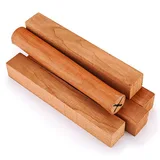
Woodcraft Cherry Wood Pen Blank, 5-piece, 3/4″ x 3/4″ x 5″ — $8.19 (5 blanks, 14.06 cubic inches total) — works out to $0.58/cu-in. Janka hardness 950 lbf, density 35.0 lb/ft³. Check current price on Amazon →
- Janka hardness: 950 lbf — softer than oak, harder than basswood, a genuine middle ground
- Density: 35.0 lb/ft³ — noticeably more heft than basswood without oak’s weight
- Grain: fine, straight, and even, described by The Wood Database as “one of the best all-around woods for workability”
- Color deepens from a light pinkish-brown to a richer reddish-brown with age and light exposure, no stain required
If basswood is the easiest wood to carve and oak is the cheapest, cherry is the one that splits the difference well enough that The Wood Database calls it flatly one of the best all-around woods for workability, full stop — not just for wands. At 950 lbf it’s noticeably firmer than basswood but still well short of oak, and its fine, straight grain means fewer surprise hard spots or tearout than walnut’s occasionally irregular figure.
The other reason carvers reach for cherry specifically is the color: it starts a light pinkish-brown right off the blank and darkens to a deep reddish-brown over months of handling and light exposure, with no stain needed. That’s a real, checkable property, not folklore — it’s just what cherry heartwood does as it oxidizes.
Pros:
- The best combination of “easy to cut” and “fine, even grain” of any hardwood in this lineup
- Color deepens naturally over months of handling, so a cherry wand actually looks different a year in without refinishing
- Machines and hand-carves predictably — fewer surprise tearout spots than walnut or oak
Cons:
- Staining cherry unevenly can cause blotching — if you do finish it with a stain rather than just oil or wax, use a sanding sealer or gel stain first
- At $0.58/cu-in it costs about 20% more per cubic inch than oak for a wood that’s actually softer
- Less dramatic grain figure than walnut, olive, or purpleheart if you want a wand with visual flash
Main drawback: it’s a genuine step up in cost over oak per cubic inch for a wood that’s actually softer, so pick it for the finish and color, not for a lower price.
4. Hard Maple — Best for a Pale, Light-Colored Wand
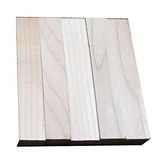
North American Maple Hardwood Turning Pen Blanks, 5-pack, 3/4″ x 3/4″ x 4″ — $7.00 (5 blanks, 11.25 cubic inches total) — works out to $0.62/cu-in. Janka hardness 1,450 lbf, density 44.0 lb/ft³. Check current price on Amazon →
- Janka hardness: 1,450 lbf — the second-hardest domestic wood in this lineup, after oak
- Density: 44.0 lb/ft³ — the heaviest of the non-exotic picks
- Grain: fine and even, mostly straight, with minimal natural figure unless you seek out curly or birdseye stock
- Stays pale cream-to-white with age instead of darkening the way cherry and walnut do
Hard maple is the pick if the aesthetic you’re after is pale and understated rather than warm brown — it’s one of the only woods in this set that doesn’t darken meaningfully with age, so a maple wand looks close to the same in five years as it does fresh off the blank. At 1,450 lbf it’s the second-hardest domestic species here, just behind red oak, so expect real resistance from hand tools.
The Wood Database rates it fairly easy to work with hand and machine tools despite the density, which tracks with why it’s a default choice for cutting boards and butcher blocks — a surface that has to survive constant wear. That same toughness is exactly what makes it a slower carve than cherry or basswood.
Pros:
- Stays light-colored permanently, useful if you want a wand that reads as bone, ivory, or antler rather than brown wood
- “Fairly easy to work with both hand and machine tools” despite being denser than cherry or walnut
- Very stable once dry — less prone to warping than oak
Cons:
- At 1,450 lbf it’s noticeably harder than cherry or walnut, so a hand-only carver will work more for the same amount of material removed
- Can scorch or burn under fast power-tool cuts, per The Wood Database — keep hand tools sharp and power tools slow
- Plain, minimal figure unless you specifically buy curly or birdseye maple stock, which costs more
Main drawback: it’s noticeably harder to hand-carve than cherry or basswood, so budget more time (and hand strength) if you’re working with a knife instead of power tools.
5. Black Walnut — Best for Rich Color and Grain Character
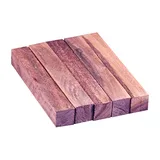
Black Walnut Wood Turning Pen Blanks, 5-pack, 3/4″ x 3/4″ x 5″ — $12.00 (5 blanks, 14.06 cubic inches total) — works out to $0.85/cu-in. Janka hardness 1,010 lbf, density 38.0 lb/ft³. Check current price on Amazon →
- Janka hardness: 1,010 lbf — close to cherry, well under oak or maple
- Density: 38.0 lb/ft³
- Grain: normally straight with real color depth, ranging from medium red-brown to a rich chocolate brown
- Small mill-sourced from salvage and sustainably harvested trees per the listing
Walnut is the pick for anyone who wants a genuinely dark, dramatic-looking wand without reaching for an exotic species — its color runs from medium reddish-brown to a deep chocolate that no domestic wood in this comparison matches without staining. At 1,010 lbf it carves close to as easily as cherry, and The Wood Database describes it as typically easy to work as long as the grain stays straight and regular.
That last caveat matters: walnut is genuinely more prone to irregular or figured grain than cherry or maple, and when that happens, planing or carving against the grain direction can tear rather than cut cleanly. Look over the blank before you start — a piece with visible swirl or curl is going to fight you more than a straight-grained one, even though both are technically the same species.
Pros:
- The richest natural color of any domestic wood in this lineup — deep chocolate brown with no stain needed
- “Typically easy to work provided the grain is straight and regular”
- Takes a finish exceptionally well and polishes to a nice satin sheen
Cons:
- Nearly double the cost per cubic inch of oak or cherry
- Irregular or figured grain (which walnut is prone to) risks planer tearout — inspect the blank before you commit to a design that follows the grain tightly
- Walnut dust is a known irritant to eyes, nose, skin, and lungs — wear a dust mask when sanding, per the manufacturer’s own listing
Main drawback: at $0.85/cu-in it costs nearly double oak or cherry, and that premium is purely for color and grain character, not for any gain in hardness or ease of carving.
6. Olive Wood — Best for Dramatic Grain Figure
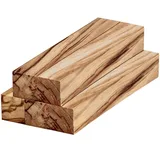
Spiareal Olive Wood Pen Blanks, 5-pack, 3/4″ x 3/4″ x 5″ — $14.99 (5 blanks, 14.06 cubic inches total) — works out to $1.07/cu-in. Janka hardness 2,710 lbf, density 61.2 lb/ft³. Check current price on Amazon →
- Janka hardness: 2,710 lbf — roughly 2.2x harder than oak and 6.6x harder than basswood
- Density: 61.2 lb/ft³ — one of the heaviest picks here, second only to ebony
- Grain: straight, interlocked, or wild depending on the individual blank; cream background with dramatic dark streaking
- “High movement in service and is considered to have poor stability,” per The Wood Database — let a blank acclimate before final carving
Olive earns its spot for grain figure alone — the cream background streaked with dark, wild grain lines is the most visually distinctive wood in this whole lineup, and no two blanks look quite the same. But that same wild, interlocked grain is exactly what The Wood Database flags as the reason it’s difficult to work by hand: the fibers change direction inside the blank, so a cut that’s clean in one spot can tear out two inches later for no visible reason.
It’s genuinely better suited to a lathe than a knife — The Wood Database specifically notes it turns superbly, which is a different skill than freehand carving. If you’re set on hand tools only, expect to carve slowly, take light passes, and reverse your cutting direction often to work with the grain wherever it changes.
Pros:
- The most visually dramatic natural grain figure of any pick in this comparison — every blank looks genuinely different
- “Turns superbly” on a lathe if you’re shaping the wand that way instead of by hand
- Very hard and dense, so a finished olive wand resists dings that would mark basswood or even cherry
Cons:
- Difficult to work by hand specifically — density plus interlocked grain means real tearout risk with a knife or gouge
- Poor dimensional stability means a blank can move after carving if it wasn’t fully acclimated first
- Third-most expensive per cubic inch of the 8 species here
Main drawback: this is the hardest wood in this comparison to hand-carve well, not just to cut — its wild grain causes tearout that a lathe handles far more gracefully than a knife does.
7. Purpleheart — Best for a Vivid Colored Wand
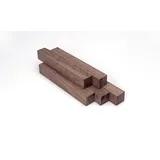
Exotic Wood Zone Purpleheart Pen Blanks, 5-pack, 3/4″ x 3/4″ (4″–6″ length) — $15.45 (5 blanks, roughly 14.06 cubic inches total (seller lists 4-6 inch length range per blank)) — works out to ~$1.10/cu-in. Janka hardness 2,520 lbf, density 56.4 lb/ft³. Check current price on Amazon →
- Janka hardness: 2,520 lbf — over 6x harder than basswood
- Density: 56.4 lb/ft³
- Grain: usually straight, sometimes wavy or irregular, with a medium texture and good natural luster
- Fresh-cut wood is a dull grayish-brown that oxidizes to vivid purple within days of exposure to light and air, then continues to darken toward a deep purple-brown over months
Purpleheart is the one pick here that does something no amount of stain can replicate on the other 7 species: a fresh-cut blank starts a dull brown and visibly shifts to a saturated violet-purple within days of exposure to light, which is a real chemical reaction in the wood’s extractives, not a dye. At 2,520 lbf it’s genuinely hard, so pair it with sharp tools — The Wood Database specifically warns that a dull or overheated blade will gum up with resin the wood exudes when cut.
It’s usually straight-grained, which keeps it more predictable than olive despite being nearly as hard, but it will still moderately dull your edge faster than any of the domestic species above. Expect to resharpen more often mid-project if you’re doing this entirely by hand.
Pros:
- The only wood in this comparison with a genuinely vivid, non-brown natural color — no dye or stain involved
- Usually straight-grained despite the hardness, so tearout is less of a surprise than with olive
- Kiln-dried per the manufacturer, which reduces the risk of movement after carving compared to air-dried exotic stock
Cons:
- Purpleheart exudes a gummy resin when cut with dull or overheated tools, which clogs blades and complicates the cut
- Moderately dulls cutting edges faster than the domestic woods in this list — keep your knife or gouges freshly sharpened
- The vivid purple color continues to darken with UV exposure over time, eventually settling into a deeper brownish-purple rather than staying bright violet forever
Main drawback: the color that makes it worth buying fades from vivid violet toward a duller purple-brown with UV exposure over time, so a finished wand kept in direct light will look noticeably less dramatic in a year or two than the day you carved it.
8. Gaboon Ebony — Best Premium Splurge
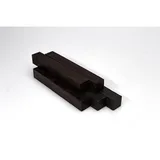
Exotic Wood Zone Ebony Pen Blank, 5-pack, 3/4″ x 3/4″ x 6″ — $18.95 (5 blanks, 16.875 cubic inches total) — works out to $1.12/cu-in. Janka hardness 3,080 lbf, density 60.0 lb/ft³. Check current price on Amazon →
- Janka hardness: 3,080 lbf — the hardest wood in this comparison, 7.5x harder than basswood
- Density: 60.0 lb/ft³ — second only to olive for weight
- Grain: fine and even with very high natural luster; near-black color
- Listed by the seller as “Indian Ebony,” but the botanical name given — Diospyros crassiflora — is actually Gaboon (Central African) ebony, not the Indian species (Diospyros ebenum or D. melanoxylon); worth knowing before you search for care instructions by species name
Ebony is the splurge pick, and it earns that label honestly: at 3,080 lbf it’s more than 7 times harder than basswood and the single hardest wood in this comparison by a wide margin. The Wood Database doesn’t hedge on this one — it’s described flatly as difficult to work due to its extremely high density, with a real dulling effect on cutting edges. A hand-only beginner should not start here.
One thing worth flagging for buyers: this specific listing is marketed as “Indian Ebony,” but the botanical name the seller provides — Diospyros crassiflora — is the species The Wood Database catalogs as Gaboon (Central African) ebony, a different tree from true Indian ebony. It’s still genuine, high-quality ebony either way, but if you go looking for species-specific care or finishing advice, search under Gaboon ebony, not Indian.
Pros:
- The most premium, dramatic material in this comparison — near-black with a natural luster no finish fully replicates
- “Finishes well, and polishes to a high luster” once shaped
- Extremely dense and durable — a finished ebony wand will outlast every other pick here for dent resistance
Cons:
- The hardest wood to hand-carve in this entire lineup, full stop — The Wood Database calls it “difficult to work due to its extremely high density”
- Dulls cutting edges fast; expect to resharpen far more often than with any other pick here
- Most expensive per cubic inch of the 8 species compared
Main drawback: this is not a first-blank wood. If you haven’t successfully carved a full wand shape out of basswood or cherry first, ebony will mostly teach you how often a dull blade needs resharpening.
How We Picked These
We haven’t hand-carved all 8 of these species ourselves for this article, so we’re not going to claim we did. Here’s exactly what this comparison is built from:
- Hardness and density figures come from The Wood Database, the trade-standard reference woodworkers and turners cite for Janka hardness, weight, and workability notes on named species.
- Prices and ASINs were pulled live via the Amazon Creators API this session (August 2026) — every price shown reflects an active buy-box listing checked the same day this article was published, not a cached number from months ago.
- Cost-per-cubic-inch math is shown under each pick so you can check it yourself: it’s simply (price) ÷ (blank width × blank depth × blank length × pack count).
- Workability descriptions are drawn directly from The Wood Database’s own language for each species, not generic adjectives we made up, and quoted where we’re repeating their wording.
Where we don’t have first-hand carving time on a specific species, we say so rather than inventing a testing claim. If you’ve carved several of these and your experience disagrees with a spec here, the comment section is the place to tell us — wood is a natural material and individual blanks vary. This wand build sits in our broader Woodworking Projects collection if you want more hand-tool builds like it.
What to Consider When Buying Wand Wood
Hardness and Workability
Janka hardness measures the force needed to embed a steel ball halfway into a wood sample — it’s the single best available proxy for “how hard is this to carve.” The 8 species above span nearly 7.5x from basswood (410 lbf) to gaboon ebony (3,080 lbf). If you’re carving with hand tools only and this is your first project, start well under 1,000 lbf.
Grain Figure and Color
Straight, fine grain (basswood, cherry, hard maple) is more forgiving and more predictable to carve than wild or interlocked grain (olive, and walnut when it’s figured). Wild grain looks more dramatic in the finished piece but tears out more easily mid-cut, so it rewards a slower, more attentive carver over a beginner rushing to finish.
Weight and Balance
Density ranges from 26 lb/ft³ (basswood) to 61.2 lb/ft³ (olive) across these 8 species — more than double. A longer wand in a dense wood like ebony or olive will feel noticeably front- or back-heavy depending on where you taper it, while the same length in basswood or cherry stays light throughout.
Blank Size and How Much Wood You Need
Most of the pen-blank-format products above are 3/4″ x 3/4″ square and 4″–6″ long. A typical hand-carved wand runs 10″–15″, so plan to either buy a longer single blank, glue-splice two shorter blanks end to end, or start from a board (like the basswood pick above) and rip your own length. Check the exact dimensions on the listing before buying — they vary by seller even within the “pen blank” category.
Moisture Content and Wood Movement
Every listing above specifies kiln-dried or air-dried stock at roughly 6-9% moisture content, which is the normal range for ready-to-carve hardwood. Olive is specifically flagged by The Wood Database as having poor dimensional stability, meaning a finished piece can move slightly after carving if the blank wasn’t fully acclimated to your shop’s humidity first — let any blank sit indoors for a few days before final shaping.
Tool Difficulty and Sharpening
The harder the wood, the more often you’ll need to resharpen a knife or gouge mid-project. Purpleheart adds a second wrinkle: The Wood Database notes it exudes a gummy resin when cut with a dull or overheated blade, which can gum up your edge faster than the hardness number alone would suggest. Keep a sharpening stone on hand for anything above about 1,500 lbf.
Price Per Cubic Inch vs. Price Per Blank
Don’t compare blanks by sticker price alone — a $7 pack of 5 short maple blanks and a $15 pack of 5 longer purpleheart blanks aren’t the same amount of wood. The comparison table above normalizes every pick to cost per cubic inch specifically so you can compare a 6-piece pack against a single board on equal footing.
Finish Options
Basswood and maple take paint and light stains evenly because of their pale color and minimal figure. Cherry and walnut look best with just an oil or wax finish that lets their natural color develop rather than a heavy stain. Purpleheart’s vivid color will fade toward brown-purple with UV exposure regardless of finish, so a UV-resistant topcoat slows but doesn’t stop that shift.
Domestic vs. Exotic Sourcing
Basswood, red oak, cherry, maple, and walnut in this comparison are all domestic North American species, generally the more sustainable and easier-to-replace choice. Olive, purpleheart, and ebony are imported exotics; ebony in particular comes from slower-growing tropical trees, so buying from a seller who states kiln-drying and sourcing practices (as the listings above do) is worth the small extra diligence. If you’re weighing two lighter domestic options for a different project, our birch vs. poplar comparison covers a similar hardness range to basswood and cherry.
How to Carve a Wand from a Blank
This is the general process regardless of which species you pick — harder woods just mean more passes and more resharpening at each step.
- Mark your taper. Draw a centerline down the blank, then mark the handle and tip diameters and connect them — most wands taper from about 1/2″ at the grip to 1/4″ or less at the tip.
- Rough out the shape. Use a knife or drawknife to remove the bulk of the waste wood outside your taper lines, working with the grain direction rather than against it to avoid tearout.
- Round the profile. Work the squared blank into a round or octagonal cross-section, checking the taper against your marks as you go.
- Refine and smooth. Switch to a smaller detail knife for the final shaping, then sand progressively from a coarse grit up to at least 220 for a finish-ready surface.
- Add any details. Grip texture, carved bands, or an inlay all go in before finishing, not after.
- Seal the wood. A wipe-on oil (for cherry, walnut, olive) or a few thin coats of shellac or poly (for basswood, maple) protects the wood and brings out the grain and color.
Frequently Asked Questions
What is the best wood for a wand?
Basswood is the best overall choice for hand-carving, at 410 lbf Janka hardness and about $0.48 per cubic inch — it removes material with the least resistance of any wood in this comparison. If durability matters more than ease of carving, red oak costs almost the same per cubic inch at nearly 3x the hardness.
What size wood blank do I need to carve a wand?
Most finished wands run 10″–15″ long. The 3/4″ x 3/4″ pen-blank format used by most picks above is the right cross-section, but check the length — many are sold at 4″–6″, so you may need to glue-splice two blanks or buy from a longer board like the basswood pick.
Is basswood or oak better for a beginner carving a wand?
Basswood, for a true first attempt. At 410 lbf it’s less than a third as hard as red oak (1,220 lbf), so mistakes cost less time and a dull knife still makes progress. Move to oak once you’ve finished at least one full wand shape and want more durability in the final piece.
Can I carve a hardwood wand like walnut or oak with hand tools only?
Yes, all 8 species here are carved by hand regularly — but expect noticeably more resistance and more frequent resharpening above about 1,000 lbf. Purpleheart, olive, and ebony in particular will dull a blade fast enough that a mid-project sharpening stop is normal, not a sign you’re doing something wrong.
What wood is hardest to carve into a wand?
Gaboon ebony, at 3,080 lbf, is the hardest of the 8 species in this comparison — The Wood Database describes it as difficult to work by hand due to its extremely high density. Olive (2,710 lbf) is a close second, made harder still by its wild, interlocked grain, which causes tearout on top of the raw hardness.
Do different wand woods actually have different magical properties?
We can’t verify that, and we’re not going to pretend otherwise — those associations come from folklore and literary traditions (the Harry Potter wandlore system among the best known), not anything measurable. What is measurable is exactly what this article compares: hardness, grain, weight, and price. If you want the folklore and symbolism side specifically, we cover that separately in what an ash wood wand is said to mean.
Final Thoughts
For most hobbyist carvers, basswood is still the right place to start: at $0.48 per cubic inch and 410 lbf Janka hardness, it’s both the cheapest way to practice and the easiest wood in this entire 8-species comparison to actually finish a wand in. Once you’ve carved one, the other 7 species here give you a real, priced path to upgrade — harder and heavier with red oak or hard maple, richer in color with cherry or walnut, or genuinely dramatic with olive, purpleheart, or gaboon ebony.
For a deeper look at one specific species used in wandmaking, see our guide to mahogany wood wands, or step back to the broader types of wood guide if you’re still deciding what to build next. For carving technique specifically, our full guide to carving wood by hand and how to learn wood carving both go deeper than the quick steps above.
Sponsored / affiliate links. As an Amazon Associate I earn from qualifying purchases. I may earn additional commission from eligible campaigns.