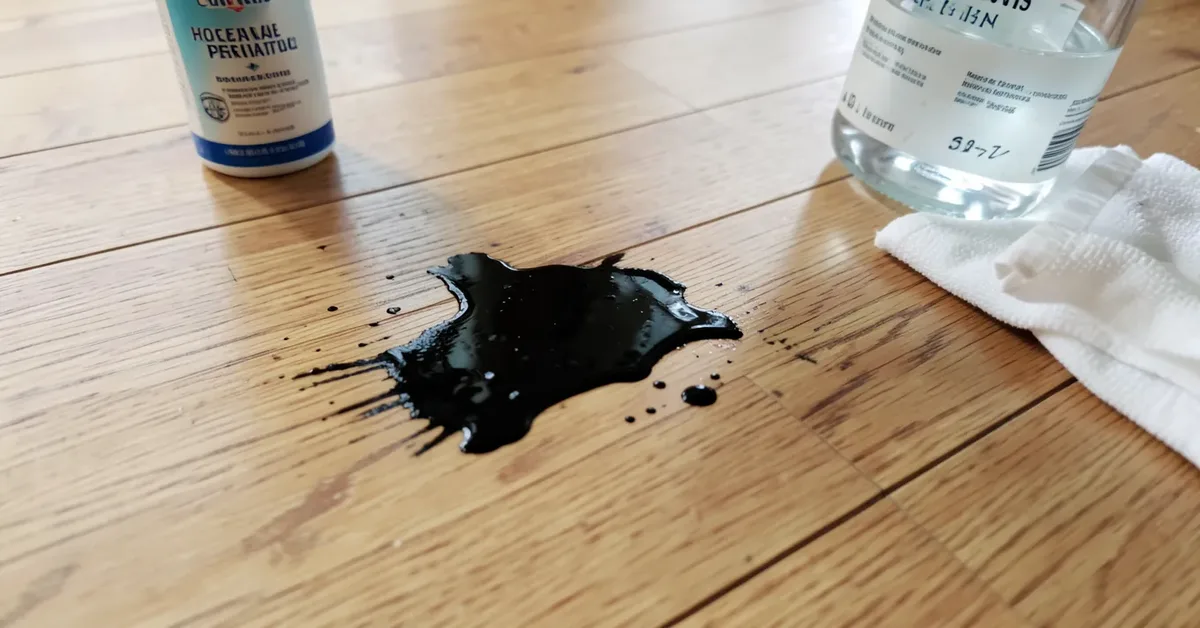
Black Marks on Hardwood Floors: What Causes Them and How to Fix Each Type
Most black marks on hardwood floors are a water/tannin stain, which forms when moisture sits on the wood long enough to react with natural tannins and iron trace minerals, turning the area dark gray to black. The fix for that specific type is hydrogen peroxide, applied directly and left to sit – but black spots can also mean mold, pet urine staining, or a surface residue that never even penetrated the wood, and each of those needs a different fix. Here’s how to tell which one you’re dealing with and treat it correctly instead of reaching for hydrogen peroxide on a problem it can’t actually solve.
What’s Actually Causing the Black Mark?
Best Cleaner Before Treating a Stain
 |
Bona Hardwood Floor Cleaner Spray (32 oz) – $8.97 Cleans surface dirt and old wax off first, which the hydrogen peroxide treatment below needs to actually reach the stain.
|
| Appearance | Likely Cause | Fix |
|---|---|---|
| Dark gray-black, flat to the surface, sharp edges tracing an old spill | Water/tannin stain (a true iron-tannate reaction inside the wood) | Hydrogen peroxide, oxalic acid, or sand and refinish for deep stains |
| Black or dark green, fuzzy or slightly raised texture, musty smell | Mold or mildew growth | Diluted mold-safe cleaner first, ventilate the area, hydrogen peroxide once mold is killed |
| Dark rings, often near baseboards or in a pet’s regular spot, ammonia smell | Pet urine soaked into the wood | Enzymatic pet stain cleaner first, then hydrogen peroxide or wood bleach for what remains |
| Black smudges that wipe or buff off entirely | Surface residue (old wax, marker, rubber transfer) that never penetrated the wood | Mineral spirits or a dedicated floor cleaner, no bleaching needed |
The quickest field test: dab a cotton swab with mineral spirits on an inconspicuous edge of the mark. If it lightens or wipes away, you’re dealing with surface residue, not a true stain, and none of the bleaching methods below are necessary.
Why Hydrogen Peroxide Works on Water Stains
A true black water stain in hardwood forms through a specific chemical reaction: tannic acid naturally present in the wood (more in oak and walnut, less in maple and pine) combines with trace iron – from old nails, floor fasteners, or minerals in the water itself – to form iron tannate, a dark compound that’s chemically similar to the pigment in traditional iron-and-vinegar wood ebonizing. Hydrogen peroxide works because it’s an oxidizer that breaks that compound back down, lightening the stain from the inside rather than just covering it. That’s also why the fix takes patience: you’re reversing a chemical reaction, not lifting a surface stain, so it can take several applications over multiple days on a stain that’s been sitting for months or years.
How to Remove a Water/Tannin Stain
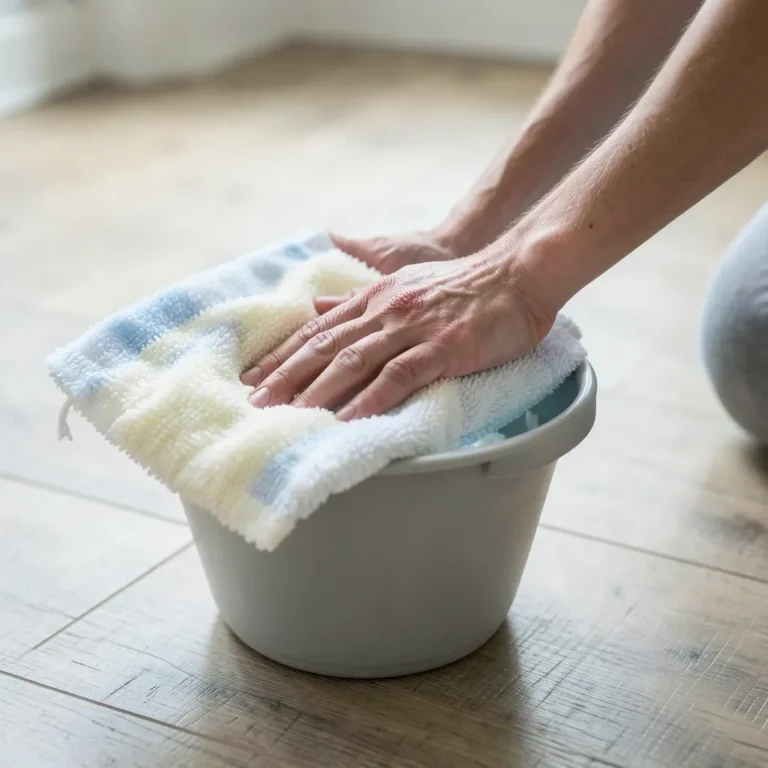
- Clean the area first with a wood-safe hardwood floor cleaner and let it dry completely – peroxide won’t penetrate through surface dirt or old wax.
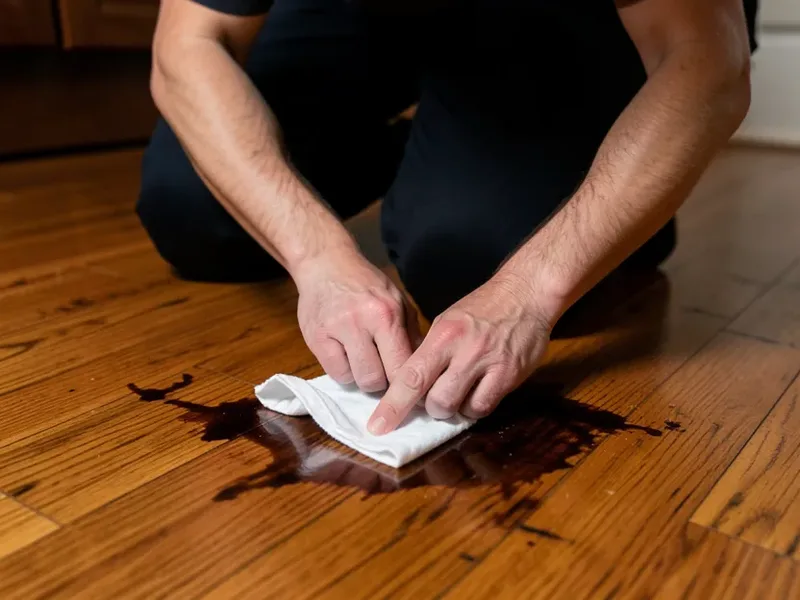
- Soak a cotton ball or cloth in 3% hydrogen peroxide (the standard drugstore concentration) and lay it directly over the stain.
- Cover with plastic wrap to slow evaporation and leave it for several hours, or overnight for a stubborn stain.
- Remove, let the wood dry fully, and check the result. Light stains often lighten noticeably in one application; darker or older stains need repeat treatments.
- For a stain that won’t budge after 3-4 applications, move up to a stronger 12% “salon strength” peroxide, or try a dedicated wood bleach (a two-part oxalic-acid-based product), following the product’s own safety instructions and ventilation requirements.
If It’s Mold Instead of a Water Stain
Mold needs to be killed before you bleach anything, or you’re just lightening the color while leaving live spores in the wood. Ventilate the room, wear gloves and a mask, and clean the area with a mold-specific cleaner or a diluted vinegar solution before doing any hydrogen peroxide treatment. If the mold has a soft, spongy feel rather than just surface discoloration, the wood underneath may already be structurally compromised and cosmetic bleaching won’t fix the underlying problem – that’s a sign the board itself may need replacing, similar to rot.
When Sanding and Refinishing Is the Better Option
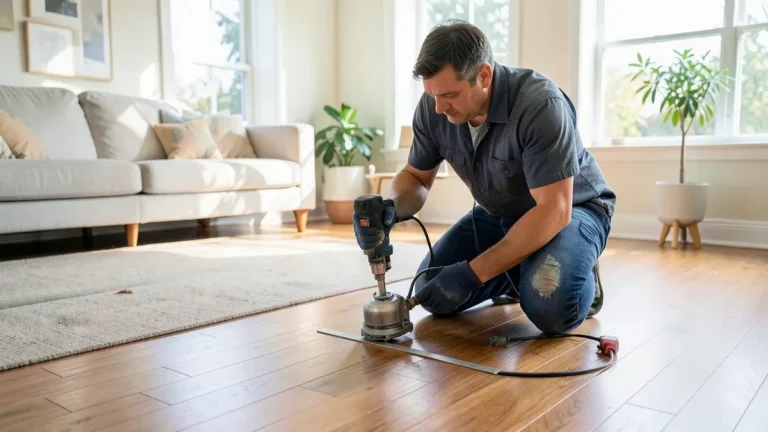
Bleaching has a limit: an iron-tannate stain that’s penetrated deep into the wood fibers, especially on an older floor with a thin remaining wear layer, may never fully lighten no matter how many peroxide applications you run. If a stain remains visibly darker than the surrounding floor after several rounds of treatment, sanding down to bare wood and refinishing that section (or the whole room, for a seamless color match) is usually faster and more reliable than continuing to chase it with chemicals. This is also the only real option on engineered hardwood with a very thin veneer, where aggressive sanding risks cutting through to the substrate – check remaining wear-layer thickness before committing to a full sand.
Preventing New Black Marks
- Wipe up spills the same day, not the same week – the iron-tannate reaction needs sustained moisture contact, so a quick wipe-up prevents most stains before they start.
- Use furniture coasters or felt pads under planters, vases, and anything else that can trap moisture against the floor.
- Keep indoor humidity in a normal range; chronically damp conditions are what let mold get a foothold in the first place.
- Wipe up pet accidents immediately and treat with an enzymatic cleaner, since urine that’s allowed to dry and re-wet repeatedly is one of the hardest stains to fully bleach out later.
When to Call a Professional
Call a flooring professional if the stain covers a large area, if you’re not confident distinguishing surface mold from structural rot, or if the floor is engineered hardwood and you’re unsure how much wear layer is left before sanding becomes risky. A professional can also handle whole-room refinishing more evenly than a DIY spot-sand, which matters if the stained section is in a highly visible area.
Frequently Asked Questions
What causes black marks on hardwood floors?
Most black marks are a water/tannin stain caused by moisture reacting with tannic acid and trace iron in the wood. Black marks can also be mold, dried pet urine, or surface residue like old wax or marker that never penetrated the wood at all.
How do you get black marks off hardwood floors?
For a true water stain, soak the area with 3% hydrogen peroxide, cover with plastic wrap, and let it sit for several hours to overnight, repeating as needed. Surface residue that isn’t a real stain often wipes off with mineral spirits instead.
What does black mold look like on hardwood floors?
Mold typically looks fuzzy or slightly raised rather than flat, often has a musty smell, and tends to spread from an area with chronic moisture exposure. A true water/tannin stain, by contrast, is flat, sharply edged, and odorless.
How do you fix black water stains on hardwood floors?
Hydrogen peroxide is the standard fix, since it chemically breaks down the iron-tannate compound causing the stain rather than just covering it. Stubborn or old stains may need several applications, a stronger concentration, or a dedicated wood bleach; deeply penetrated stains sometimes require sanding and refinishing instead.
Bottom Line
Identify the mark before you treat it – hydrogen peroxide is genuinely effective on real water/tannin stains but won’t fix mold on its own or dissolve surface residue that never penetrated the wood in the first place. Match the fix to the actual cause and most black marks come out without ever needing to sand.
Sponsored / affiliate links. As an Amazon Associate I earn from qualifying purchases. I may earn additional commission from eligible campaigns.