Interior vs Exterior Stain: 5 Real Differences From the Labels
An exterior stain is not just a stronger interior stain. The labels show that exterior products add UV protection and a mildewcide, apply to unsealed weathered wood, and follow different coat rules, while VOC content does not separate the two. Use the wrong one and it fails fast. This guide compares label and data-sheet facts from Minwax and Behr, and shows what to buy for each job.
Interior vs Exterior Stain: The Short Answer
Best Interior Stain Pick
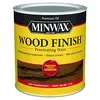 |
Minwax Wood Finish Oil-Based Stain, Dark Walnut, 1 Quart ($13.88) A penetrating, semi-transparent oil stain that Minwax labels for interior use only, so it is the right tool for furniture, cabinets and trim but not for decks or fences.
|
Use an interior stain on wood that lives indoors and gets sealed with a clear finish, and an exterior stain on anything exposed to sun and rain. The table below uses real numbers from the Minwax and Behr sheets, so you can see the split for yourself instead of trusting a rule of thumb.
| What you compare | Interior stain (Minwax Wood Finish 250 VOC) | Exterior stain (Behr semi-transparent) |
|---|---|---|
| Where the label says to use it | Interior only | Unsealed exterior wood: decks, railings, shakes, siding, fences, patio furniture |
| UV and mildew claims | None on the product page | Acrylic: enhanced UV protection, mildew resistant finish. Oil: dirt and mildew resistant finish |
| Film or topcoat | Penetrating, then finish with a clear protective topcoat | Penetrating, meant to be the finish; no topcoat step |
| Coats | One coat, then wipe off the excess | Acrylic: two thin coats. Oil (No. 4600): one coat only |
| VOC | 250 g/L | Oil (No. 4600): under 250 g/L |
| Spreading rate | 200 sq ft per gallon | Oil: 350 to 400 sq ft per gallon |
| Weather limits when applying | Not a weather product | Acrylic: 35 to 90 F. Oil: 40 to 90 F, and no rain within 4 hours |
Sources: the Minwax Wood Finish 250 VOC product page, the label text for Behr Premium Semi-Transparent Waterproofing Stain and Sealer (100% acrylic), and Behr’s technical data sheet for Semi-Transparent Waterproofing Stain and Sealer No. 4600 (alkyd oil). They are two different Behr products, so the coat rules are not a typo.
Difference 1: UV Protection
Sunlight is what an exterior stain has to survive. Behr’s acrylic label lists enhanced UV protection as a headline feature, and its warranty text admits that color fading and slight natural graying of the wood may still occur, especially under foot traffic and heavy weather. The Minwax interior page lists no UV feature at all, which makes sense for a stain that lives indoors under a clear topcoat.
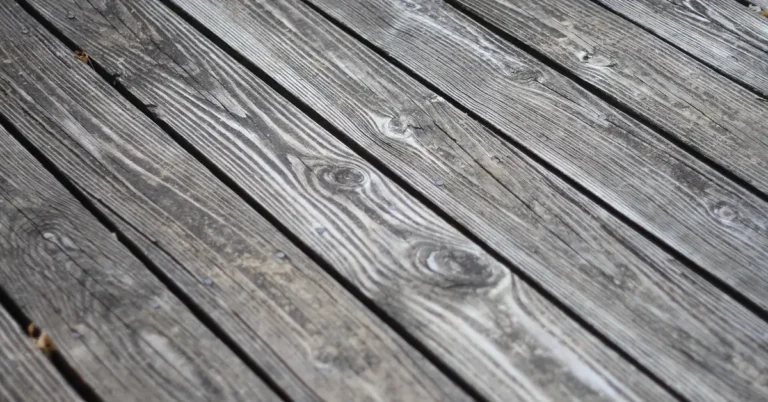
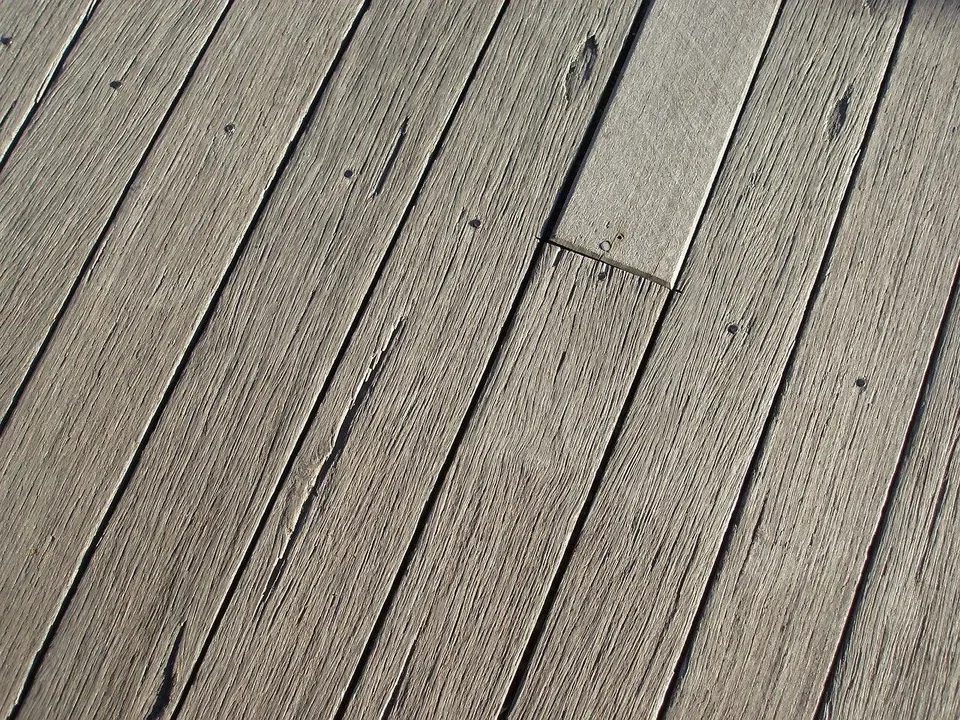
Unprotected exterior boards show the alternative. They dry out, check and turn gray, as in the photo below. Our comparison of transparent vs semi-transparent deck stain goes deeper on how much pigment you need for sun protection.
Difference 2: Mildewcide, and What It Cannot Do
Exterior stains carry a mildewcide because damp, shaded wood grows mold. But read the fine print. Behr’s own label says that while the product contains a mildewcide, it will not prevent mildew growth, and it says the benefit only works if all existing mildew is removed before you apply. In other words the additive helps the coating resist mildew, it does not replace cleaning.
That is why the Behr sheets call for a wood cleaner such as its No. 63 before staining, and why the oil-based sheet says any surface preparation short of total removal of the old coating will compromise the service length of the system. An interior stain does not come with this step because indoor wood is not sitting wet.
Difference 3: Film, Topcoat and How Coats Are Counted
This is the difference most articles skip. Both of these stains are penetrating, but they are used differently. Minwax says to finish every project with a clear protective topcoat such as fast-dry polyurethane or Polycrylic, so the stain provides color and the clear finish provides protection. The Behr exterior stains are the protection: there is no topcoat step, and the sheets warn about too much product.
- Behr acrylic label: two thin coats, back-brush to avoid puddles, and over-application leads to surface failure including peeling and cracking.
- Behr oil data sheet: do not apply more than one coat, and excess left on the surface results in a tacky finish.
- Minwax interior: one coat, wipe off the excess, then seal with a clear finish.
Notice that even two exterior products disagree on coats, so the only safe rule is to read the can you actually bought. Piling on extra coats to get a darker color is a classic way to make an exterior stain peel.
Difference 4: Weather Limits and Timing
Exterior stain has an application window because it dries outdoors. The Behr acrylic label says to apply between 35 and 90 F, keep the temperature above 35 F for the next 12 hours, and expect rain resistance after 4 hours. The oil data sheet narrows it to 40 to 90 F and says not to apply if rain is expected within 4 hours. Both call for dry wood, and the oil sheet gives a moisture target of under 20 percent.
Cure time is also worth planning for. Both Behr sheets list 72 hours for a full cure, and the oil sheet lists 24 hours before foot traffic, so a deck stained on Saturday should not host a Sunday party. The acrylic label also cautions that stained surfaces may become slippery when wet. Our step-by-step deck staining guide walks through the prep and timing.
Difference 5: What the Wood Has to Look Like First
Behr’s exterior stains are written for unsealed wood: the acrylic label covers new to moderately weathered wood with up to 10 years of exposure, and the oil data sheet covers new to slightly weathered wood with up to 5 years. The oil sheet also gives a water-drop test. If water sprinkled on the surface soaks in quickly the wood is ready; if it beads up, let the wood weather at least two weeks and test again.
That test works on any bare board, and it is a useful habit indoors too, because a sealed surface will not take stain evenly. For the indoor side in more detail, including types, blotching and topcoats, see our interior wood stain guide.
Myth Check: Exterior Stain Is Not Simply Stronger Interior Stain
The old advice says exterior stain has more chemicals and interior stain is safer. The data sheets do not support a clean split. Minwax’s interior Wood Finish 250 VOC lists 250 grams per liter, and Behr’s oil-based exterior stain sheet lists under 250 grams per liter. VOC content depends on the product and the regulations where it is sold, so the honest answer is to compare the numbers on the cans.
What does differ is the additive package and the instructions. Exterior stains add UV protection and a mildewcide and tell you how to prep weathered wood; interior stains skip those and rely on a topcoat. Safety is a separate question: any oil-based stain needs ventilation, and our page on how long wood stain fumes stay toxic covers cure times indoors.
Can You Swap Them? What to Do in Each Case
- Interior stain outside: not recommended. Minwax’s page says interior only and gives no UV or mildew claim. Our page on using interior stain outside covers what is missing in detail.
- Exterior stain inside: the sheets give only exterior directions and no indoor use, so check the label and safety data sheet before trying it.
- A porch or covered patio: treat it as exterior. Wind-blown rain and sun still reach the wood.
If you are unsure whether oil or water-based stain suits an outdoor project, our guide to oil vs water based deck stain compares durability and cost, and the wood finishing guide places stain among the other finishes.
Quick Buying Checklist
- Find the where-to-use line on the can: interior, exterior, or both.
- Look for UV and mildew language if the wood will be outside.
- Check whether the label wants a topcoat (indoor stains) or limits extra coats (many exterior stains).
- Compare the VOC figure in g/L on the label rather than assuming.
- Check the application temperature range before you buy for a cold weekend.
- Buy a small can and test on scrap or a hidden spot first.
Frequently Asked Questions
Can I use interior stain for exterior wood?
It is not a good idea. Minwax labels its Wood Finish 250 VOC stain for interior use only and tells you to seal it with a clear topcoat, and nothing on that product page promises UV or mildew protection. Outdoors, use a product whose label lists exterior wood, such as a deck, fence and siding stain.
Can I use exterior stain indoors?
The label decides. Behr’s exterior semi-transparent stain sheets are written for unsealed exterior wood such as decks, fences, shingles and patio furniture, and they give no indoor instructions, so there is no manufacturer backing for using it inside. Check the can and the safety data sheet before you bring an exterior product into a living space.
Is there a difference between interior and exterior polyurethane?
Yes, in the same way stains differ: clear finishes are also sold for interior-only or for interior and exterior use, and the label says which. Read the where-to-use line, because a topcoat rated only for indoors is not built for rain and sun.
Is exterior stain higher in VOC than interior stain?
Not by rule. The Minwax interior stain and Behr’s oil-based exterior stain sheet both list a 250 g/L ceiling. VOC content depends on the product and on local regulations, so compare the number on each can instead of assuming exterior means stronger.
Do I need a topcoat over exterior stain?
Usually the opposite. Behr’s penetrating exterior stains are meant to be the finished coating, and their sheets warn that applying too much causes tackiness or peeling. Indoor stains such as Minwax Wood Finish are meant to be sealed with a clear protective topcoat.
Can you use wood stain on interior wood?
Yes. Interior stains are made for furniture, cabinets, doors, trim and floors. Sand the wood, apply the stain, wipe off the excess, and seal it with a clear finish.
Bottom Line
Match the stain to where the wood lives. Indoors, use an interior-only stain like Minwax Wood Finish and seal it with a clear topcoat. Outdoors, use a product whose label lists UV protection and mildew resistance, follow its coat count exactly, and clean the wood first. Do not rely on a VOC number to tell them apart.
Sponsored / affiliate links. As an Amazon Associate I earn from qualifying purchases. I may earn additional commission from eligible campaigns.