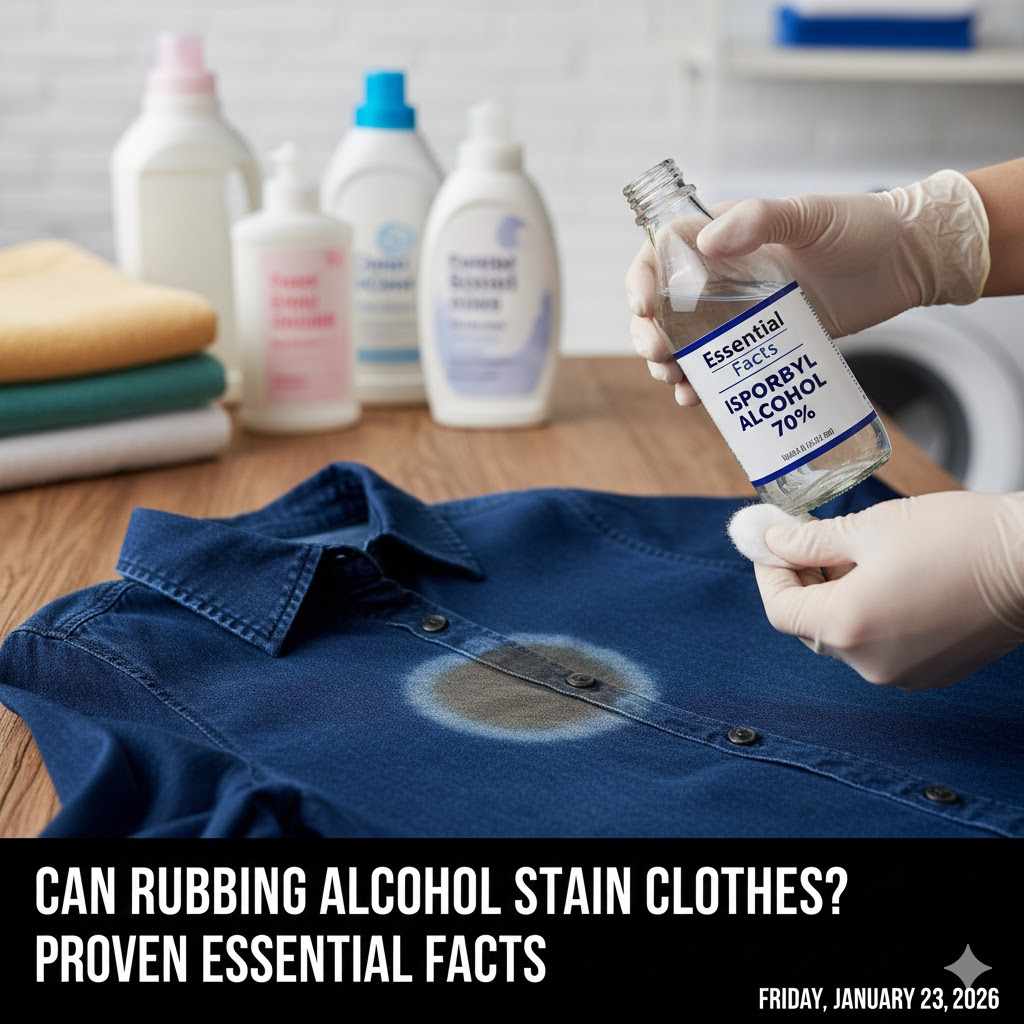
Can Rubbing Alcohol Stain Clothes? Proven Essential Facts
Rubbing alcohol itself doesn’t typically “stain” clothes by adding color. However, it can act as a powerful solvent that removes dye from certain fabrics, leaving a discolored or bleached spot that looks like a stain. This effect is most common on delicate synthetics, silk, and wool. Always test on a hidden area first!
Hello, fellow makers! Md Meraj here, your friend in the workshop. Whether we’re covered in sawdust or dealing with a messy spill, knowing how to care for our gear and clothes is part of the craft. I’ve often reached for a bottle of rubbing alcohol to clean a sticky tool or a stubborn stain. But it leads to a big question: is it safe for our clothes?
It’s a frustrating moment. You try to remove a small ink mark, only to create a bigger, discolored patch. Don’t worry, you’re not alone in this! Many of us have faced this problem. I’m here to walk you through everything you need to know, simply and clearly. We’ll explore when to use it, what to avoid, and how to protect your favorite shirt. Let’s get this sorted out together.
When we’re in the middle of a project, spills happen. A permanent marker rolls off the bench, a bit of sap gets on your sleeve, or a grease smudge appears out of nowhere. Rubbing alcohol often seems like the perfect quick fix. But does it help or harm? Let’s break down the real story.
What is Rubbing Alcohol and How Does It Work?
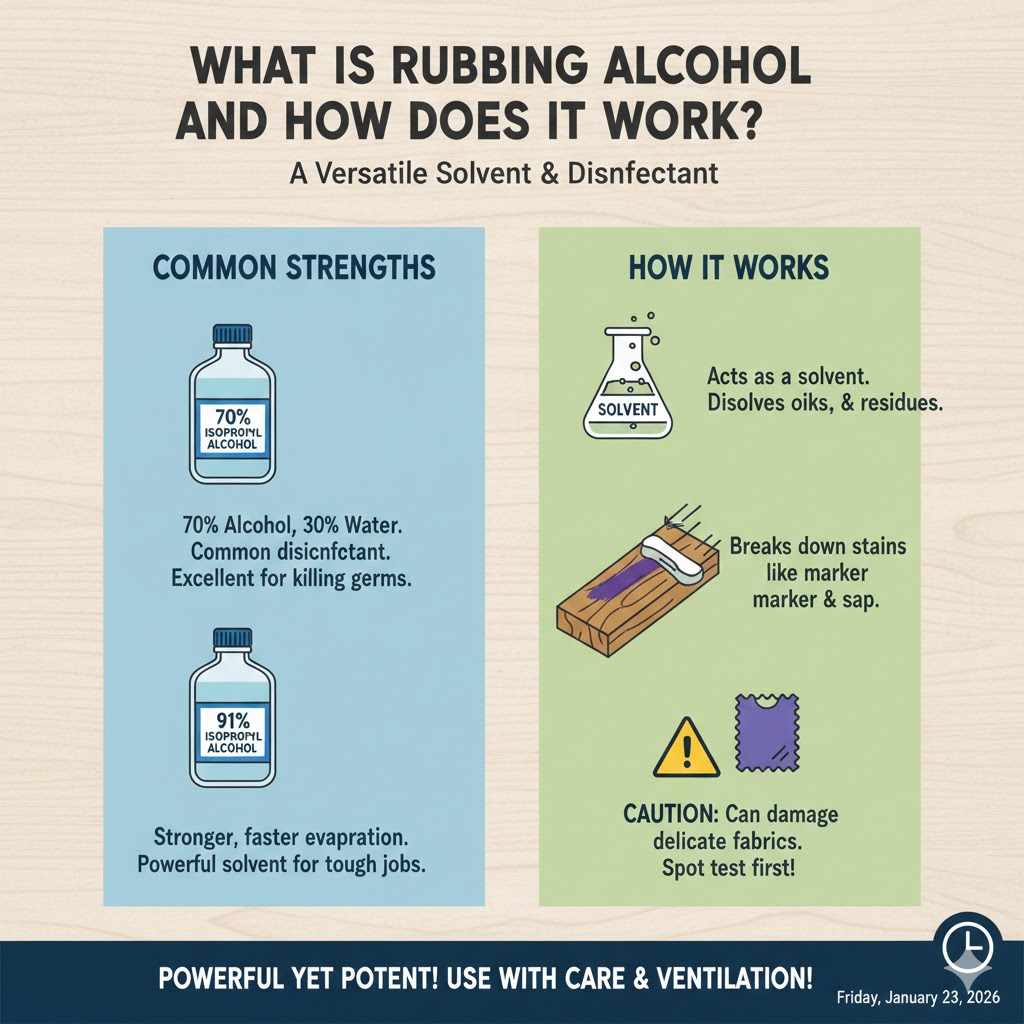
First, let’s understand our tool. The rubbing alcohol you buy at the store is typically isopropyl alcohol mixed with water. You’ll usually see it in two common strengths:
- 70% Isopropyl Alcohol: This means it’s 70% alcohol and 30% water. This is the most common type and is excellent for disinfecting.
- 91% Isopropyl Alcohol: A stronger concentration that evaporates faster. It’s a more powerful solvent.
The magic of rubbing alcohol comes from its ability to act as a solvent. A solvent is a substance that can dissolve other substances. Think about how sugar dissolves in water. In the same way, rubbing alcohol is great at dissolving oils, inks, and sticky residues. This is why it’s so effective at cleaning things like permanent marker stains or tree sap. But this superpower is also where the potential for fabric damage comes from.
The Real Question: Does it Stain or Does it Bleach?
Here’s the most important fact to understand: rubbing alcohol doesn’t contain any dyes or pigments, so it cannot leave a traditional, colored stain behind. When you see a lightened or discolored spot on your clothes after using alcohol, it’s not because the alcohol added a stain. It’s because the alcohol removed something—specifically, the dye from the fabric.
Think of it like using a chemical paint stripper on a piece of furniture. The stripper doesn’t stain the wood; it removes the finish. Rubbing alcohol can do the same thing to the dye that gives your clothes their color. This is technically called dye bleeding or color loss, but to most of us, it just looks like a permanent stain.
Why Does Rubbing Alcohol Remove Dye?
The dyes used to color fabrics are complex chemical compounds. Some dyes are more stable and permanent than others. Rubbing alcohol, as a powerful solvent, can break down the bonds holding less stable dye molecules to the fabric fibers. Once these bonds are broken, the dye dissolves into the alcohol and is lifted away from the fabric, leaving a faded or bleached-out spot.
This is especially true for fabrics colored with certain types of dyes that are not as “colorfast,” meaning they are more likely to run or fade when exposed to chemicals or even hot water.
Which Fabrics Are Most at Risk?
Not all fabrics are created equal when it comes to handling rubbing alcohol. Some materials are tough and can take it, while others are delicate and will be damaged almost instantly. Knowing the difference is key to avoiding a laundry disaster.
I’ve put together a simple table to help you identify which fabrics are generally safe and which you should be very careful with. Before you do anything, though, always remember my golden rule: test on a hidden spot first!
Fabric Sensitivity to Rubbing Alcohol
| Fabric Type | Risk Level | Why It’s at Risk |
|---|---|---|
| Cotton & Linen | Low | These natural fibers generally hold dye well. Most cotton and linen garments can handle a spot treatment with alcohol without losing color. |
| Polyester & Nylon | Low to Medium | Most modern polyesters are dyed in a way that makes them very colorfast. However, older or cheaper polyesters might still be vulnerable. A spot test is smart. |
| Rayon & Viscose | High | These are semi-synthetic fibers made from cellulose. They are known for not being very colorfast and can easily lose their dye when exposed to alcohol. Avoid using it on these fabrics. |
| Acetate | Very High | Acetate can actually be dissolved by strong solvents like acetone, and rubbing alcohol can cause permanent damage and color loss. Never use rubbing alcohol on acetate. |
| Silk & Wool | High | These natural protein fibers are often colored with delicate acid dyes that can be stripped away by alcohol, leading to irreversible color loss. It can also make the fibers brittle. |
| Denim | Low | Denim is a sturdy cotton fabric. While it’s generally safe, keep in mind that indigo dye can sometimes bleed, so dabbing gently is important. |
Always check the care label inside your clothes! It’s your best guide to understanding what your garment is made of. If the label says “Dry Clean Only,” it’s best to leave any stain removal to the professionals.
How to Safely Use Rubbing Alcohol for Stain Removal
So, you’ve got a tough stain like ink, grass, or grease on a sturdy fabric like cotton. Rubbing alcohol can be your best friend if you use it correctly. Follow these steps carefully to get the stain out without damaging your clothes.
Step 1: Check the Care Label and Fabric Type
Before you do anything, look at that little tag on the inside of your garment. Is it cotton? Polyester? Or is it something delicate like rayon or silk? If it’s a high-risk fabric, stop right here and consider a different cleaning method or a trip to the dry cleaner.Step 2: Perform a Spot Test
This is the most critical step. Find a hidden spot on the garment, like an inside seam, the hem, or the inside of a pocket. Apply a small drop of rubbing alcohol with a cotton swab. Wait a minute or two, then blot the spot with a clean white cloth. If any color comes off onto the cloth, or if the spot on the fabric looks faded, do not proceed! It means the dye is not stable.
Step 3: Prepare Your Workspace
Lay the stained area of your garment flat. Place a clean, white cloth or a thick stack of paper towels under the stain. This will prevent the stain and the alcohol from bleeding through to the other side of the fabric.
Step 4: Apply the Rubbing Alcohol
Get a clean white cloth, a cotton ball, or a cotton swab. Dampen it with rubbing alcohol. Do not pour the alcohol directly onto the stain, as this can cause the stain to spread. Gently dab the stain, working from the outside edge toward the center. This helps contain the stain and prevents it from getting bigger.
Step 5: Blot, Don’t Rub
As you dab, you should see the stain transferring from your clothes onto the cloth or cotton ball you are using. Replace the cloth or cotton ball as it gets dirty. Avoid rubbing or scrubbing aggressively, as this can damage the fabric fibers and spread the stain.
Step 6: Rinse the Area
Once the stain is gone, or you’ve removed as much as you can, rinse the area thoroughly with cool water. This will wash out any remaining alcohol and dissolved stain residue. The U.S. Centers for Disease Control and Prevention emphasizes the importance of rinsing with clean water to remove germs and chemicals, a principle that applies here as well.
Step 7: Wash as Usual
After rinsing, launder the garment according to its care label instructions. Before you put it in the dryer, check to make sure the stain is completely gone. The heat from a dryer can set a stain permanently, making it nearly impossible to remove later.
What If Rubbing Alcohol Did Damage My Clothes?
It can be disheartening to find a faded spot on your favorite shirt after trying to clean it. Unfortunately, once the dye is gone, it’s usually gone for good. You can’t put it back. But don’t throw the item away just yet; you might have a few options.
- For Small Spots: You can sometimes touch up a very small spot with a matching fabric marker. This works best on dark, solid-colored fabrics.
- Embrace a New Look: If the garment is a solid color and you’re feeling crafty, you could try dyeing the entire garment a new, darker color to hide the damage. This can be a fun project in itself!
- Seek Professional Help: In some cases, a professional tailor or dye specialist might be able to re-dye the garment for you, but this can be expensive.
The best solution, of course, is prevention. That’s why the spot test is your most important tool!
Safer Alternatives for Stain Removal
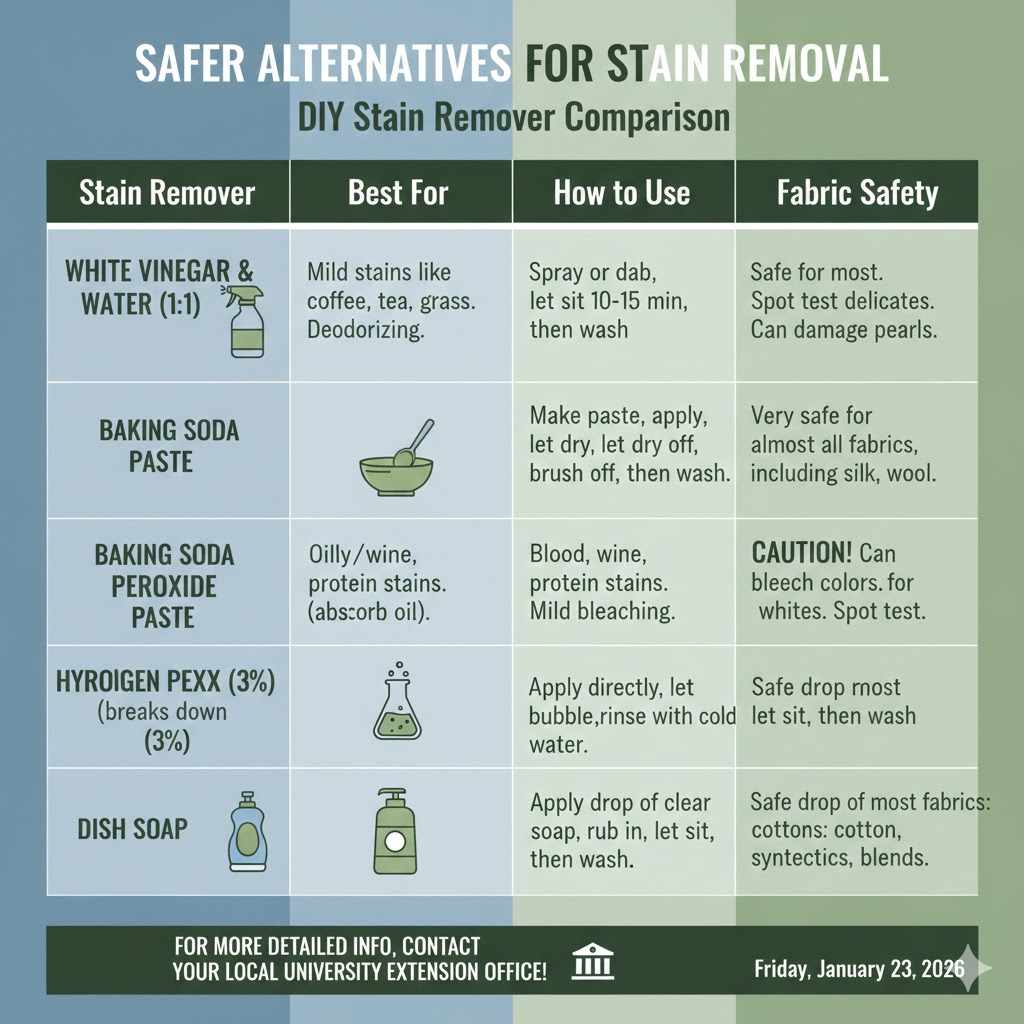
If you’re dealing with a delicate fabric or you’re just not comfortable using rubbing alcohol, there are plenty of other effective and safer options for tackling common stains. Here’s a quick comparison of some popular DIY stain removers.
DIY Stain Remover Comparison
| Stain Remover | Best For | How to Use | Fabric Safety |
|---|---|---|---|
| White Vinegar & Water (1:1) | Mild stains like coffee, tea, and grass. Also great for deodorizing. | Spray or dab onto the stain, let sit for 10-15 minutes, then wash. | Generally safe for most fabrics, but spot test on delicates. Can damage natural pearls or beads. |
| Baking Soda Paste | Oily or greasy stains. Works by absorbing the oil. | Make a paste with water, apply to the stain, let it dry completely, then brush it off before washing. | Very safe for almost all fabrics, including delicates like silk and wool. |
| Hydrogen Peroxide (3%) | Blood, wine, and other protein or plant-based stains. It has a mild bleaching effect. | Apply a small amount directly to the stain, let it bubble, then rinse with cold water. | Use with extreme caution! It can bleach colored fabrics. Best for whites only. Always spot test. |
| Dish Soap | Grease and oil stains. Excellent at breaking down lipids. | Apply a drop of clear, non-bleach dish soap, gently rub it in, let it sit, then wash. | Safe for most fabrics, including cotton, synthetics, and blends. |
For more detailed information on specific stains, your local university extension office is a fantastic resource. For example, the University of Illinois Extension’s “Stain Solutions” guide offers proven methods for almost any stain you can imagine.
Frequently Asked Questions (FAQ)
1. Can rubbing alcohol remove color from clothes?
Yes, absolutely. Rubbing alcohol is a solvent that can strip the dye from certain fabrics, especially delicates like rayon, silk, wool, and some synthetics. This results in a faded or bleached-out spot. This is why a spot test on a hidden area is essential before you use it.
2. What stains does rubbing alcohol work best on?
Rubbing alcohol is most effective on solvent-based stains. This includes permanent marker, ink (like from a ballpoint pen), grass stains, tree sap, and some types of grease or oil. It works by dissolving the stain, allowing it to be lifted from the fabric.
3. Is 70% or 91% isopropyl alcohol better for clothes?
For stain removal on clothing, 70% isopropyl alcohol is generally recommended. It is slightly less harsh than the 91% concentration, giving you more control and a lower risk of damaging the fabric dye. The higher water content in the 70% solution also helps in dissolving some stains without evaporating too quickly.
4. How long can you leave rubbing alcohol on a stain?
You should not leave rubbing alcohol to sit on a stain for a long period. The process should be active—dabbing and blotting to lift the stain. Letting it soak for more than a few minutes increases the risk of it dissolving the fabric’s dye. Once the stain is removed, you should immediately rinse the area with cool water.
5. Can I use hand sanitizer instead of rubbing alcohol on clothes?
It’s not recommended. While many hand sanitizers contain alcohol, they also have gels, moisturizers, fragrances, and other ingredients. These additives can leave their own residue or stain on your clothing, making the problem worse. Stick to pure isopropyl alcohol for stain removal.
6. Will rubbing alcohol damage denim?
Denim is made from sturdy cotton, so it’s generally one of the safer fabrics for spot treatment with rubbing alcohol. However, the indigo dye used in blue jeans can sometimes bleed. You should still perform a spot test and use a gentle dabbing motion to avoid creating a light spot.
7. Does rubbing alcohol disinfect clothes?
Yes, 70% isopropyl alcohol is an effective disinfectant that can kill bacteria and viruses on surfaces, including fabrics. You can lightly spritz it on clothes to sanitize them, but be aware of the risk of color loss on certain materials. Always let the alcohol dry completely, as it is flammable when wet.
Final Thoughts From the Workshop
So, can rubbing alcohol stain clothes? The simple answer is no, it doesn’t add a stain—but the more important answer is that it can definitely cause damage by removing color, which looks just like a stain.
Like any powerful tool in our workshop, rubbing alcohol is incredibly useful when used correctly but can cause problems if handled without care. Your best defense is knowledge: know your fabric, always do a spot test, and use a gentle hand. By following these simple steps, you can confidently tackle tough stains without fear of ruining your favorite work clothes.
Remember, every project and every repair is a chance to learn and build your skills. Keep trying, stay safe, and don’t be afraid to tackle those little challenges that come your way, whether it’s in the workshop or the laundry room. Happy making!