Can Water Stain Leather? Proven, Essential Solutions
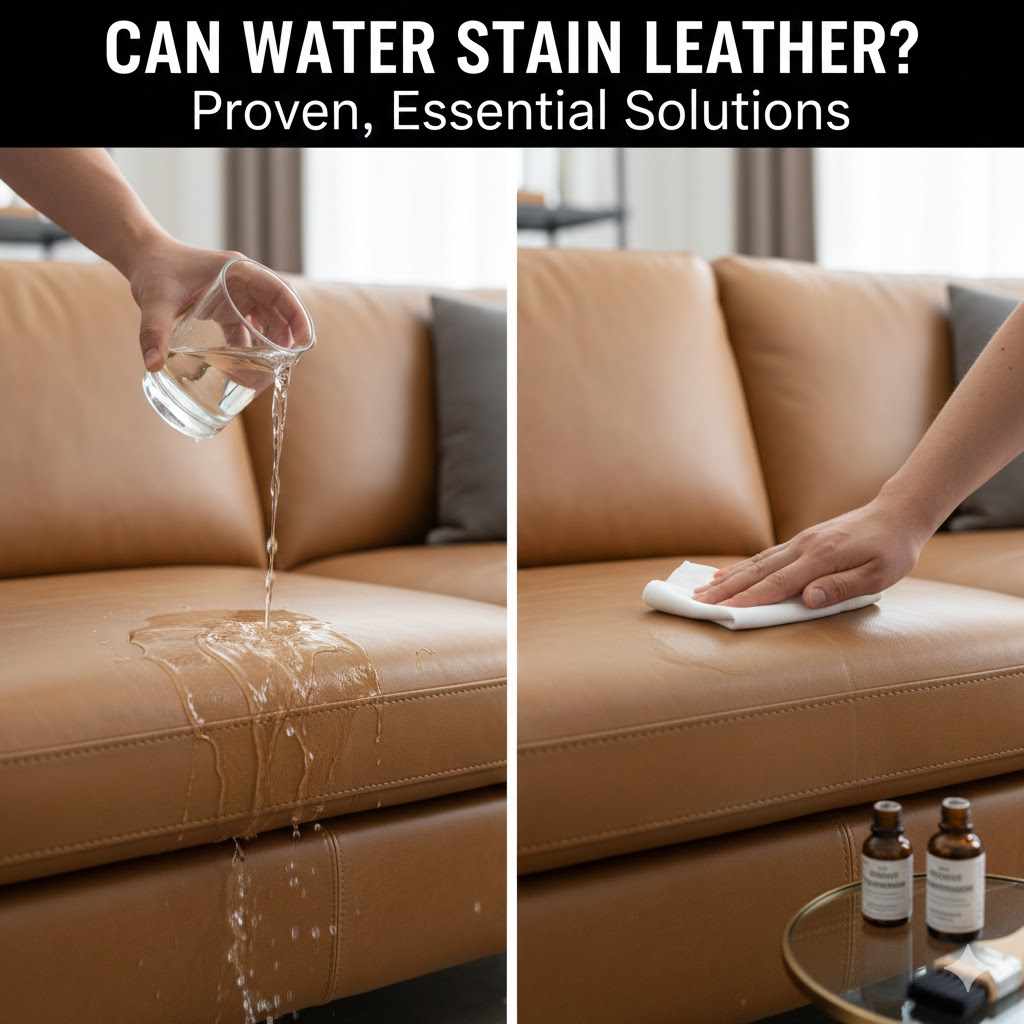
Yes, water can stain leather, especially unfinished or absorbent types. The stain is not from the water itself but from minerals and impurities left behind as it dries. These can displace the leather’s natural oils, causing discoloration. Thankfully, most water stains are treatable with the right approach for your specific leather.
There’s nothing quite like the panic of watching a water droplet land on your favorite leather jacket or bag. You wipe it away quickly, but a dark spot remains. It’s a frustrating moment we’ve all faced. Many people believe that once water stains leather, the damage is permanent. But I’m here to tell you that’s usually not the case.
Caring for leather might seem complicated, but it’s much simpler than you think. With a little patience and the right know-how, you can handle those pesky water marks like a pro. In this guide, I’ll walk you through everything you need to know, from identifying your leather to removing stains and preventing them in the future. Let’s get that leather looking its best again!
Why Does Water Stain Leather? It’s Simpler Than You Think
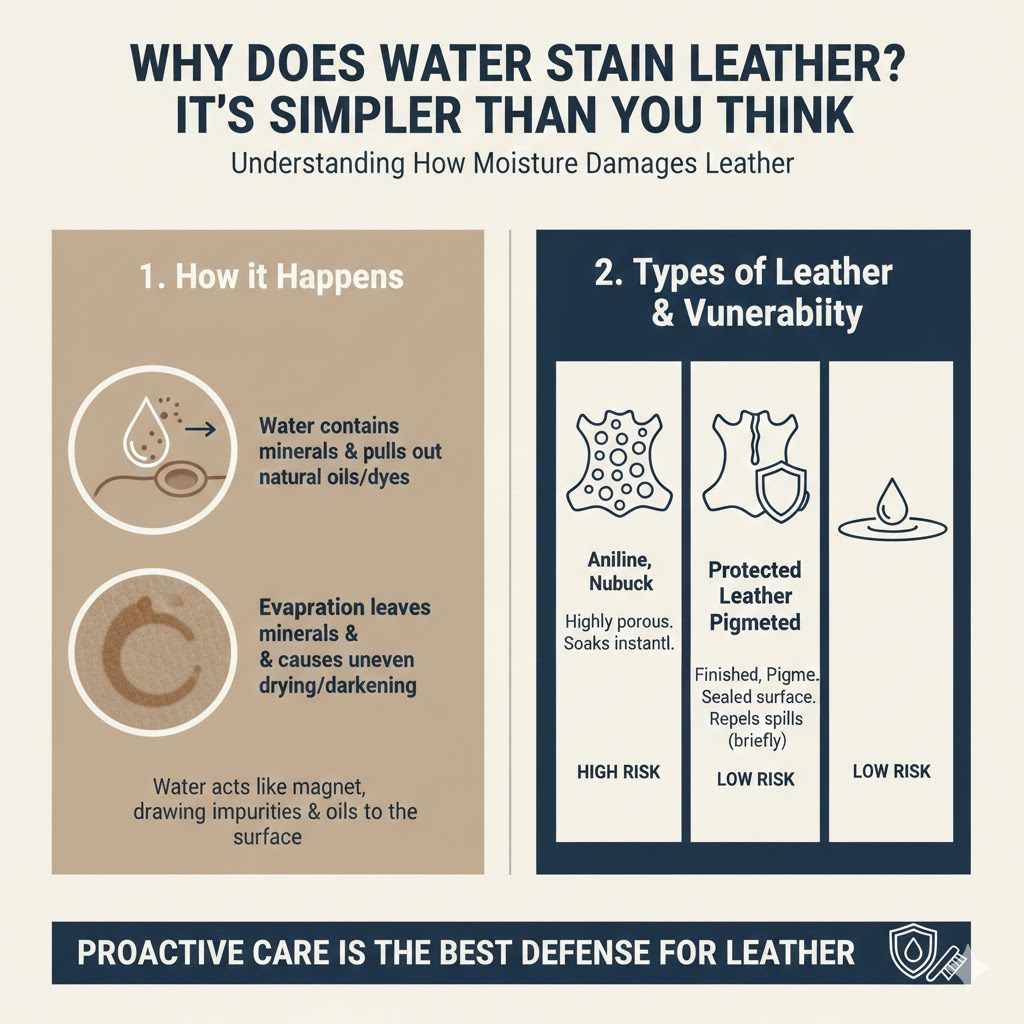
Before we jump into fixing the problem, it helps to understand why it happens. Think of leather as skin—because that’s what it is! It’s a natural material full of tiny pores. When water gets into these pores, it can do a couple of things.
First, as the water evaporates, it can draw some of the leather’s natural oils and dyes to the surface. When these oils dry unevenly, they create a visible ring or dark spot. Second, the water you spill isn’t perfectly pure. It contains tiny minerals. After the water itself disappears, these minerals are left behind, causing a light-colored or crusty-looking stain.
Untreated or “naked” leathers, like aniline, suede, or nubuck, are much more porous. They soak up liquids instantly, making them more prone to staining. Finished or protected leathers have a sealant on top, which gives you a few precious moments to wipe away a spill before it soaks in.
First, Identify Your Leather Type: This Is a Crucial Step
You wouldn’t use the same cleaner on a glass window and a wooden table, right? The same logic applies to leather. Using the wrong method can make a stain worse. Before you do anything, take a moment to figure out what kind of leather you’re working with. It’s the most important step for getting a great result.
The easiest way to test is with a tiny drop of water in a hidden spot, like an inside seam. How the water reacts tells you everything you need to know.
| Leather Type | How to Identify It | The Water Drop Test |
|---|---|---|
| Finished Leather | Often has a slight sheen and a uniform color. Feels smooth and consistent. This is the most common type used for furniture, car seats, and durable bags. | The water droplet will bead up on the surface and sit there for a while before slowly soaking in. This type is the easiest to clean. |
| Aniline / Unfinished Leather | Looks and feels very natural and soft. You might see natural grain variations. Often used for high-end furniture and luxury goods. It’s sometimes called “naked” leather. | The water will soak in almost immediately, leaving a dark spot. This leather is very absorbent and needs gentle care. |
| Suede or Nubuck | Has a soft, fuzzy, or velvety texture. It does not have any shine. Suede is made from the underside of the hide, while nubuck is from the outer side but sanded for texture. | Water will soak in instantly and darken the material. These types require a special, water-free cleaning process. |
Immediate Action: What to Do When Water Spills on Leather
A fresh spill is much easier to handle than a set-in stain. If you can act quickly, you might prevent a stain from forming at all. Here’s your emergency action plan:
- Blot, Don’t Rub! Grab a clean, dry, and soft cloth (microfiber is perfect) and gently blot the wet spot. Press down to absorb the liquid. Wiping or rubbing will only spread the water and push it deeper into the leather’s pores.
- Work from the Outside In. When blotting, start at the outer edge of the spill and work your way toward the center. This helps prevent the stain from spreading and creating a larger ring.
- Let It Air Dry. Once you’ve blotted up as much water as possible, let the leather air dry naturally. Never, ever use a hairdryer, heat gun, or direct sunlight. Heat can warp and shrink the leather, causing permanent damage and making the stain worse. Patience is key here.
For many minor spills on finished leather, these steps might be all you need. If a mark remains after it’s fully dry, don’t worry. Move on to the stain removal steps below.
Step-by-Step Guide: How to Remove Set-In Water Stains
So, the spot has dried and left a mark. It’s time to get to work. Remember to use the right method for your leather type and always test any cleaner or technique on a hidden area first.
Solution 1: Treating Finished Leather (The Most Common Type)
Finished leather is durable and its protective coating makes it more forgiving. The goal here is to gently rehydrate the area and blend the edges of the stain.
- Tools Needed: Two soft microfiber cloths, a small bowl of distilled water (distilled water has no minerals, so it won’t leave new stains), and a quality leather conditioner.
- Dampen a Cloth. Lightly dampen a soft cloth with the distilled water. It should be damp, not dripping wet. Wring it out thoroughly.
- Wipe the Surface Gently. Starting from the center of the stain, gently wipe outward toward the edges. Use light, circular motions. The idea is to feather the edges of the stain to make them blend with the surrounding leather.
- Dampen the Entire Panel (If Needed). If the stain is stubborn, you may need to dampen the entire panel of leather, from seam to seam. This ensures the entire section dries evenly without leaving new water lines. Wipe the whole area with your damp cloth in a single, even layer. It sounds scary, but it’s a pro technique for getting a uniform finish.
- Let It Dry Naturally. Place the item in a well-ventilated room away from heat and sunlight. Let it dry completely. This could take several hours.
- Apply Leather Conditioner. Once the leather is 100% dry, it’s time to restore its moisture. Water can strip the natural oils. Apply a small amount of leather conditioner to a clean, soft cloth and gently rub it into the entire surface in a circular motion. This rehydrates the leather and restores its supple feel and color. Let it sit for about 30 minutes, then buff off any excess with another clean cloth.
Solution 2: Removing Stains from Unfinished or Aniline Leather
This type of leather is much more sensitive. Since it absorbs water instantly, you must treat it very carefully. We’ll use a similar “even-wetting” method as above, but with extreme care.
- Tools Needed: A soft cloth, a sponge, distilled water, and a high-quality cleaner and conditioner specifically made for aniline leather.
- Apply a Leather Cleaner First. Before trying water, it’s worth trying a cleaner designed for aniline leather. Apply a small amount to a sponge, work it into a foam, and gently blot the stained area. Follow the product’s instructions carefully. This alone may lift the stain.
- Prepare for the Even-Wetting Method. If the cleaner doesn’t work, proceed to the water method. Dampen a clean sponge with distilled water. Squeeze it out until it’s barely wet.
- Wipe the Entire Surface. Just like with finished leather, you must moisten the entire panel from seam to seam. This is even more critical on aniline leather. Use long, even strokes to apply a very light, consistent layer of moisture. Do not scrub or oversaturate the leather. The goal is a uniform dampness.
- Blot Away Excess Moisture. Immediately after, take a dry, clean cloth and gently blot the entire surface to remove any excess water.
- Air Dry and Condition. Let the item air dry completely, away from heat. It will likely look darker while damp. Once it is fully dry, apply a specialized aniline leather conditioner to restore the essential oils and protect the finish.
Solution 3: Tackling Water Stains on Suede and Nubuck
Remember, for suede and nubuck, water is the enemy. The approach here is mechanical, not liquid-based. You’ll be using abrasion to lift the stain and restore the texture.
- Tools Needed: A suede eraser (or a clean pencil eraser in a pinch) and a suede brush with soft bristles (often brass or nylon).
- Ensure It’s Completely Dry. This is non-negotiable. Working on damp suede will make the problem worse and can ruin the texture.
- Use the Suede Eraser. Gently rub the stained area with the suede eraser. This works by lightly abrading the surface and lifting the stained fibers. Apply light pressure and check your progress frequently.
- Brush to Restore the Nap. After using the eraser, the suede’s texture (the “nap”) might look flat or matted. Use the suede brush to gently fluff up the fibers. Brush in a few different directions to restore its original look and feel.
- For Stubborn Stains. If the stain persists, a commercial suede cleaner might be necessary. Always follow the product’s instructions and test it on an inconspicuous spot first.
Prevention is Your Best Tool: How to Protect Your Leather
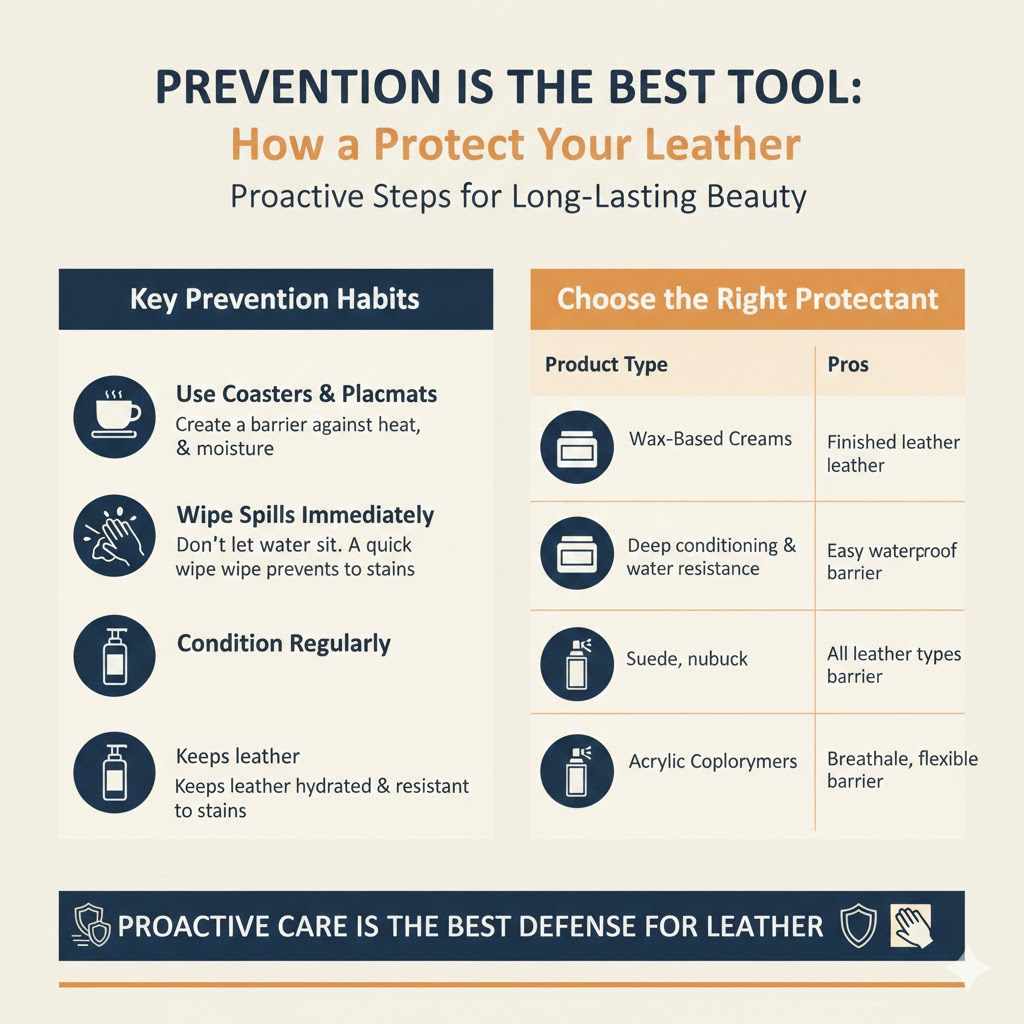
Fixing a stain is great, but avoiding it in the first place is even better. Protecting your leather creates an invisible barrier that repels water and stains, giving you more time to clean up spills. Conditioning regularly also keeps the leather healthy and hydrated, making it naturally more resistant.
For a deep dive into leather preservation, the U.S. National Park Service offers excellent guidelines on leather care that underscore the importance of proper conditioning.
Choosing the right product is key, as different protectants work best for different leather types.
| Protectant Type | Best For | Pros | Cons |
|---|---|---|---|
| Wax-Based Creams/Conditioners | Finished leather (shoes, boots, durable bags). | Offers deep conditioning and excellent water resistance. Adds a nice, subtle shine. | Can darken lighter-colored leather slightly. Not suitable for suede or nubuck. |
| Silicone-Based Sprays | Suede, nubuck, and some finished leathers. | Easy to apply and creates a highly effective waterproof barrier. Dries clear and doesn’t change the texture. | Can clog the leather’s pores over time if over-applied. Needs to be reapplied periodically. |
| Acrylic Copolymers Sprays | All leather types, including aniline, suede, and nubuck. | Creates a breathable, flexible barrier without sealing the pores. Maintains the leather’s natural look and feel. | May offer slightly less heavy-duty waterproofing than silicone but is better for the leather’s health. |
No matter which product you choose, always apply it to a clean, dry surface. Follow the instructions and reapply every few months or as needed, especially for items you use frequently.
Frequently Asked Questions (FAQ)
Can I use rubbing alcohol to remove a water stain from leather?
It’s best to avoid rubbing alcohol. While it can lift some stains, it’s extremely harsh and will dry out the leather, stripping its natural oils and color. This can cause cracking and permanent damage that is much worse than the original water spot.
Will a water stain on a leather couch go away on its own?
Sometimes, very minor water spots on finished leather may fade over time as the oils in the leather redistribute. However, most stains, especially on absorbent leather, will not disappear without treatment. It’s better to address them properly.
What is the difference between a leather cleaner and a leather conditioner?
A leather cleaner is like soap; its job is to remove dirt, grime, and stains from the surface. A leather conditioner is like a moisturizer; its job is to restore the natural oils, keeping the leather soft, supple, and protected from drying and cracking.
How often should I condition my leather items?
For items that see regular use, like a daily handbag or a favorite jacket, conditioning every 3-6 months is a good rule of thumb. For leather furniture, once or twice a year is usually sufficient. Conditioning more often is necessary if the leather is exposed to lots of sun or dry air.
Can I use household products like vinegar or olive oil on leather?
Please don’t! Vinegar is acidic and can damage the leather’s finish. Olive oil and other food-based oils do not absorb properly, can turn rancid over time creating a bad smell, and will attract more dirt, ultimately making the problem worse.
Is it possible to remove an old water stain from leather?
Yes, it’s often possible to remove or at least significantly improve an old water stain. The process is the same as for a newer stain, but it might take more patience and a couple of attempts to get the best result. Conditioning after treatment is especially important for older, dryer leather.
Why did the water leave a white, chalky stain?
A white or chalky stain is usually caused by minerals (like salt or calcium) in the water. This is common with hard tap water or winter salt stains on shoes. The cleaning techniques described above should help remove these mineral deposits.
Taking Care of Your Leather is a Skill You Can Master
That water spot that once looked like a disaster is now something you can confidently handle. By understanding your leather, acting quickly, and using the right gentle techniques, you can tackle almost any water-related mishap. Remember the golden rules: blot, don’t rub; always test in a hidden spot; and let it dry naturally.
But more importantly, a little prevention goes a long way. Regularly conditioning and protecting your leather not only saves you from future stains but also extends the life of your favorite items, keeping them beautiful for years to come. Think of it not as a chore, but as a simple act of craftsmanship—caring for quality materials so they can serve you well. Now you have the knowledge and the confidence to do it right.