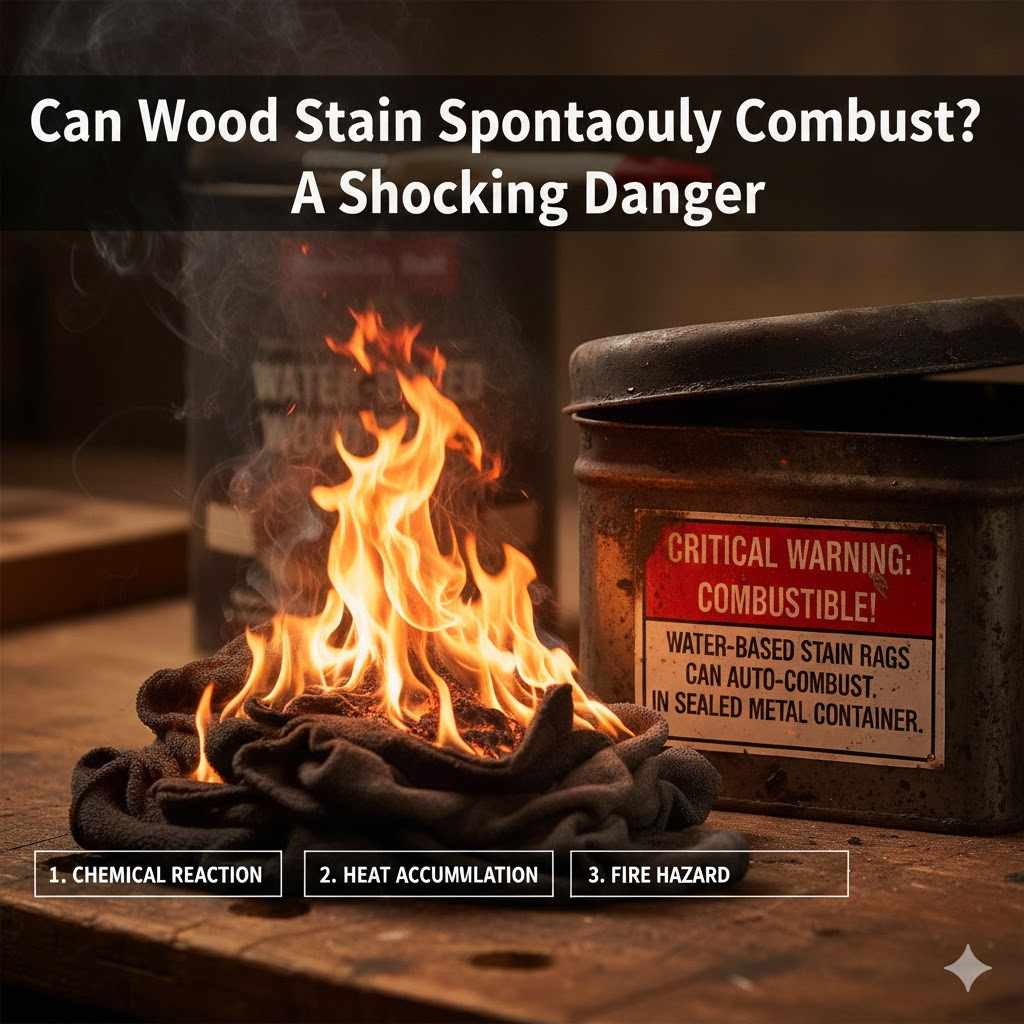
Can Wood Stain Spontaneously Combust? A Shocking Danger
Yes, rags soaked with oil-based wood stain can spontaneously combust. This happens when the oils oxidize, generating heat. If the rags are bunched up, this heat can build to a point where the material catches fire on its own, without any spark or flame. Proper drying and disposal are essential for safety.
Hello, fellow creators! It’s Md Meraj, your guide in the wonderful world of woodworking. Today, we’re going to talk about something incredibly important—a hidden danger that many DIYers don’t know about. You’ve just finished applying a beautiful stain to your project, it looks fantastic, and you’re feeling proud. You wipe up the excess with a rag, toss it aside, and move on. But what if I told you that simple, discarded rag could burst into flames all by itself?
It sounds like something out of a movie, but it’s a very real phenomenon called spontaneous combustion. It’s a scary thought, but don’t worry. Understanding how it happens is the first step to preventing it, and I promise it’s easy to stay safe once you know the rules. In this guide, I’ll walk you through exactly what spontaneous combustion is, why it happens with certain stains, and the simple, step-by-step process to dispose of your rags safely. Let’s make sure every project you build is not only beautiful but also created in a safe workshop.
What is Spontaneous Combustion? A Simple Explanation
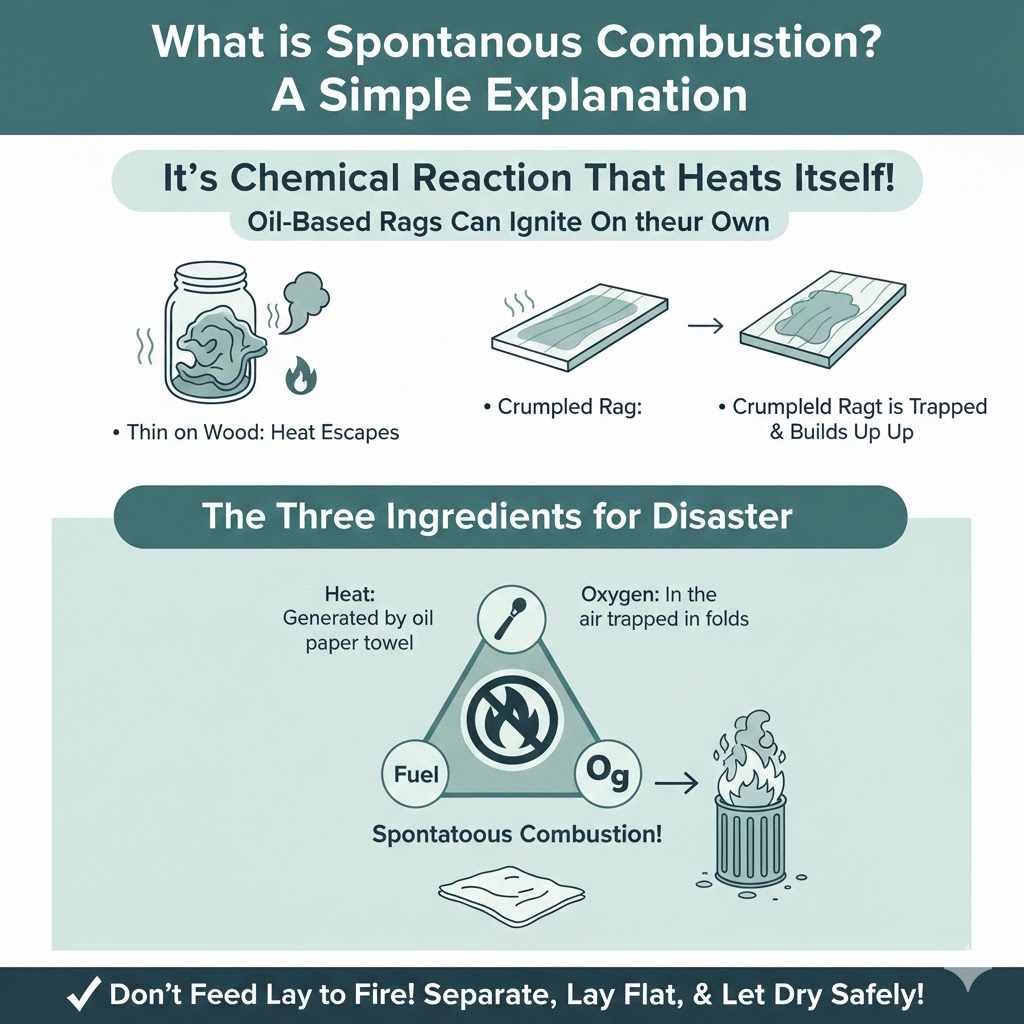
Spontaneous combustion is when something catches fire without any external flame or spark. It literally heats itself up until it ignites. Now, this doesn’t happen to everything. Your cotton shirt won’t just burst into flames. The danger comes from a specific chemical reaction, and in our workshop, the main culprits are rags soaked in oil-based finishes.
Think of it like this: a tiny, invisible fire is happening all the time. This “fire” is a chemical reaction called oxidation. When you apply an oil-based stain, the oil cures and hardens by reacting with oxygen in the air. This process releases a small amount of heat. When the stain is spread thinly on a piece of wood, that heat simply drifts away into the air. It’s harmless.
The problem begins when you have that same oil-soaked rag crumpled up into a ball. Now, all that oil is reacting with oxygen in a tight, concentrated space. All the little bits of heat it produces are trapped. The rag acts like an insulator, keeping the heat in. The temperature starts to climb, slowly at first, and then faster and faster. If it reaches the ignition point of the cotton rag (around 400°F or 204°C), the rag will start to smolder and then catch fire. All on its own.
The Three Ingredients for Disaster
For spontaneous combustion to occur with a stain-soaked rag, you need three key ingredients to come together. It’s like a recipe for a fire you never want to make. Let’s break them down so you can see how easy it is to remove one of the ingredients and prevent the danger entirely.
- Fuel: This is the material that will burn. In our case, it’s the rag itself, often made of cotton or paper towels. It could also be the fine sawdust on the rag.
- Oxygen: This is readily available in the air all around us. The oil-based finish needs oxygen to start the chemical reaction that produces heat.
- Heat: This is the critical piece of the puzzle. The oil’s curing process (oxidation) generates the initial heat. When trapped, this heat builds upon itself, creating a runaway reaction until the fuel source ignites.
When you wad up an oily rag and toss it into a bin, you are creating the perfect environment. You have the fuel (the rag), plenty of oxygen trapped in the folds, and a process that generates and insulates its own heat. It’s a fire waiting to happen, sometimes in just a few hours.
Which Products Carry a Spontaneous Combustion Risk?
The most important thing to learn is which products are dangerous and which are safe. The risk isn’t from the “stain” part of the product but from the type of oil used as its base. Generally, any finish that cures through oxidation is a potential hazard. These are most commonly oil-based products.
Water-based stains and finishes, on the other hand, are generally safe. They dry through evaporation—the water simply turns to vapor and leaves the finish behind. This process doesn’t generate heat, so there is no risk of spontaneous combustion. That’s why it’s so critical to read the label on your can of stain or finish!
Here is a handy table to help you identify high-risk versus low-risk products. Always check the cleanup instructions on the can; if it says “soap and water cleanup,” it’s likely water-based. If it requires mineral spirits or paint thinner, it’s oil-based and you need to be cautious.
| Product Type | Risk Level | Why? |
|---|---|---|
| Oil-Based Wood Stain | High Risk | Cures through oxidation, which generates significant heat. This is the most common source of spontaneous combustion fires in workshops. |
| Linseed Oil (Boiled or Raw) | Very High Risk | A natural drying oil that oxidizes very rapidly. Linseed oil is notorious for causing spontaneous combustion. According to the National Fire Protection Association (NFPA), it is a leading cause of these fires. |
| Tung Oil | High Risk | Another natural drying oil that cures through oxidation and generates heat. Handle rags with the same care as linseed oil. |
| Oil-Based Varnish & Polyurethane | High Risk | These products contain drying oils and solvents that create heat as they cure. Rags soaked in them are a significant fire hazard. |
| Water-Based Stains & Polyurethane | No Risk | These products dry through water evaporation. No heat-generating chemical reaction occurs, so there is no risk of spontaneous fire. |
| Shellac | No Risk | Shellac is dissolved in alcohol. It dries as the alcohol evaporates, which is a cooling process. No risk of spontaneous combustion. |
| Latex Paint | No Risk | Similar to water-based finishes, Latex Paint dries through evaporation and does not pose a spontaneous combustion risk. |
How to Safely Dispose of Oily Rags: A Step-by-Step Guide
Alright, now for the most important part: the solution! Preventing a fire is actually very simple, and once you get into the habit, it will become second nature. There are two primary, expert-approved methods for safely handling your used oil-soaked rags. Let’s go through them step-by-step.
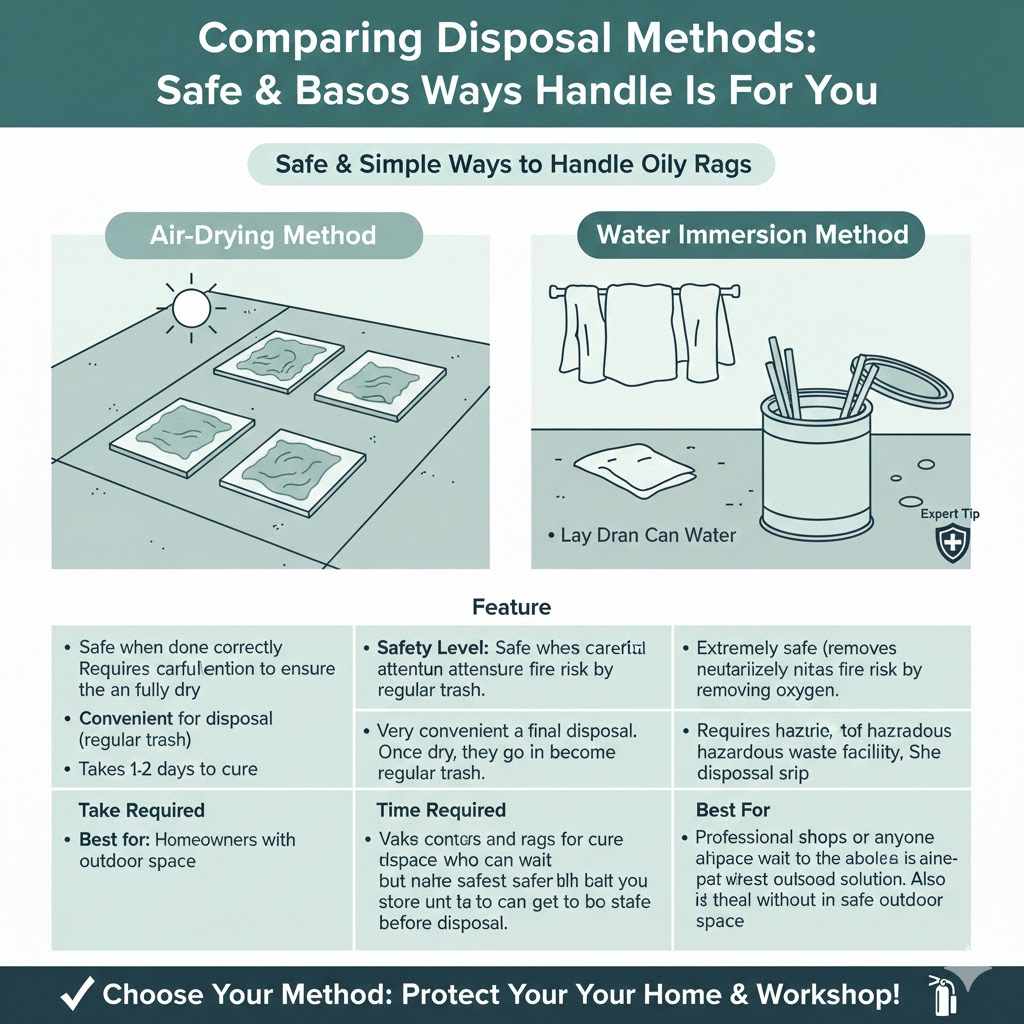
Method 1: Drying The Rags Flat (The Air-Drying Method)
This method works by preventing heat from building up in the first place. By laying the rags flat, you allow the heat from the oxidation process to safely escape into the air. The oil will cure and harden, and the rag will become stiff and brittle, rendering it safe.
- Find a Safe Space: You need a well-ventilated area that is away from any buildings, combustible materials, or direct heat sources. A concrete patio, a gravel driveway, or a patch of bare dirt works great. Do not do this inside your garage, workshop, or home!
- Lay Rags in a Single Layer: Unfold each rag completely and lay it out flat on the ground. Do not let them overlap or bunch up. If you have many rags, give them some space. You can also hang them on a clothesline or over a metal railing, as long as they are separated and away from flammable materials.
- Let Them Dry Completely: This is the crucial step. Let the rags sit until they are completely dry, stiff, and crispy. This can take 24 to 48 hours, depending on the temperature and humidity. The rag should feel brittle and snap if you try to bend it. Once it’s in this state, the oil has fully cured, and the fire risk is gone.
- Proper Final Disposal: Once the rags are fully cured and hard, they are considered regular solid waste. You can now safely throw them in your household trash bin without any risk of fire.
Method 2: Soaking in Water (The Water Immersion Method)
This is arguably the most foolproof method, as it completely eliminates one of the key ingredients for combustion: oxygen. By submerging the rags in water, you prevent the oil from reacting with the air, stopping the heat-generating process dead in its tracks.
- Get a Proper Container: Find an empty metal container with a tight-fitting metal lid. An old paint can works perfectly for this. Do not use a plastic container, as some solvents can degrade plastic, and it offers no fire protection.
- Place Rags Inside: Put your used, oily rags into the metal container.
- Add Water and Seal: Fill the container with enough water to completely submerge all the rags. To be extra safe, you can add a little bit of soap or detergent, which helps break down the oils. Press the lid on tightly to create an airtight seal.
- Contact Your Local Waste Facility: The water-and-oil-soaked rags are now considered hazardous waste. You cannot just throw this can in the trash. You need to take it to a local hazardous waste disposal facility. You can find your nearest facility by checking your local government’s website or using a resource like the Environmental Protection Agency (EPA) guide for household hazardous waste.
What You Must NEVER Do With Oily Rags
Knowing what not to do is just as important as knowing the right steps. Avoiding these common mistakes will keep you and your home safe. Take a moment to commit these to memory.
- NEVER bunch them up or throw them in a pile on the floor or a workbench.
- NEVER throw them directly into a trash can or dumpster, even if it’s outdoors.
- NEVER store them in a plastic bag, a cardboard box, or any unsealed container.
- NEVER leave them in a hot place, like in direct sunlight, in a car, or near a furnace or water heater.
- NEVER put them in a laundry machine with other clothes. The oil can contaminate other items and create a fire risk in the dryer.
Comparing Disposal Methods: Which One Is for You?
Both air-drying and water immersion are safe and effective methods. The one you choose might depend on your situation, how many rags you have, and your access to hazardous waste disposal sites. Here’s a quick comparison to help you decide.
| Feature | Air-Drying Method | Water Immersion Method |
|---|---|---|
| Safety Level | Safe when done correctly. Requires careful attention to ensure rags are fully dry. | Extremely safe. Immediately neutralizes the fire risk by removing oxygen. |
| Convenience | Very convenient for final disposal. Once dry, they can go in the regular trash. | Requires a trip to a hazardous waste facility, which can be less convenient. |
| Time Required | Takes 1-2 days for rags to cure and become safe for disposal. | The risk is neutralized instantly, but you need to store the can until you can get to a disposal site. |
| Best For | Homeowners and DIYers with outdoor space who can wait for rags to dry before disposal. | Professional shops or anyone wanting the absolute safest, most immediate solution. Also ideal for those without a safe outdoor space for drying. |
Frequently Asked Questions (FAQ)
1. Can water-based stain rags spontaneously combust?
No, they cannot. Water-based stains and finishes dry through evaporation. The water turns into vapor and leaves the binder and pigments behind. This process does not create heat, so there is absolutely no risk of spontaneous combustion with rags used for water-based products. You can safely dispose of them in your regular trash once they are dry.
2. How long does it take for oily rags to catch fire?
There is no exact timeline, as it depends on many factors like the type of oil, the ambient temperature, humidity, and how tightly the rags are wadded. However, it can happen surprisingly fast. Fires have been known to start in as little as 2-3 hours, while others might take 10-15 hours. The safest approach is to assume the danger is immediate and handle them properly right after you finish your project.
3. Is it safe to reuse staining rags?
You can reuse rags for a short period during a project. For example, if you are applying multiple coats of stain over a few hours. To store them safely between coats, place them in a sealed metal can of water. This prevents them from starting to cure. However, once a rag has been used with an oil-based product and has started to dry, you should not try to reuse it. Let it fully dry and harden using the air-drying method and then dispose of it.
4. Does the brand of oil-based stain matter?
No, the brand does not matter. The risk comes from the type of oil in the product, not the manufacturer. Whether it’s a high-end brand or a generic store brand, if it is an oil-based product that cures through oxidation (especially one with linseed or tung oil), the risk of spontaneous combustion is the same. Always read the product label for its base and cleanup instructions.
5. Can I just burn the oily rags in a fire pit to get rid of them?
It is strongly advised not to do this. Burning them can release harmful and toxic fumes into the air from the solvents and chemicals in the stain. Furthermore, a balled-up, oil-soaked rag can ignite very aggressively and uncontrollably, creating a flash fire. Stick to the recommended safe disposal methods of air-drying or water immersion.
6. What are the first signs of spontaneous combustion?
Often, there are no visible warning signs before a fire starts. The process happens inside the pile of rags. You might notice a strong, oily, or “hot” smell if you are nearby, which is a sign of rapid oxidation. The rags might feel warm to the touch (do not handle them if you suspect this!). The first visible sign is usually wisps of smoke, which are quickly followed by smoldering and then open flames.
7. Where can I find my local hazardous waste disposal facility?
The best place to start is your city or county’s public works or sanitation department website. They usually have a dedicated page with information on where to take household hazardous waste (HHW). You can also use online search terms like “[Your City] hazardous waste disposal” to find locations and hours of operation.
Conclusion: Craft with Confidence and Safety
Learning about spontaneous combustion can be a bit of a shock, but it’s a danger that you now have complete control over. The threat isn’t in the can of stain; it’s in the carelessness of leaving a crumpled, oily rag to its own devices. By simply laying your rags flat to dry or submerging them in water, you completely remove the risk and ensure your workshop remains a safe and creative space.
Woodworking is such a rewarding craft. It’s about taking raw materials and shaping them into something beautiful and useful with your own two hands. Part of that craftsmanship is respecting your tools, your materials, and the process itself. And a huge part of the process is safety. Now you have one more essential safety skill in your toolbelt. So go ahead, stain that next project with confidence, and always remember to take care of your rags when the job is done. Happy (and safe) building!