Can You Glue Acrylic to Wood? Best Adhesive by Project Size
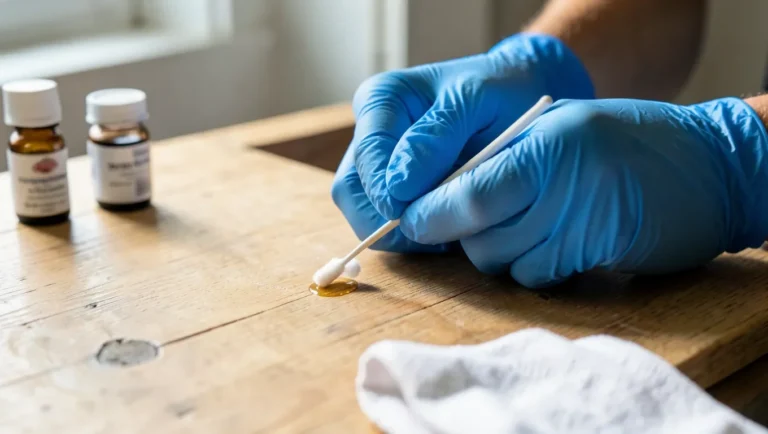
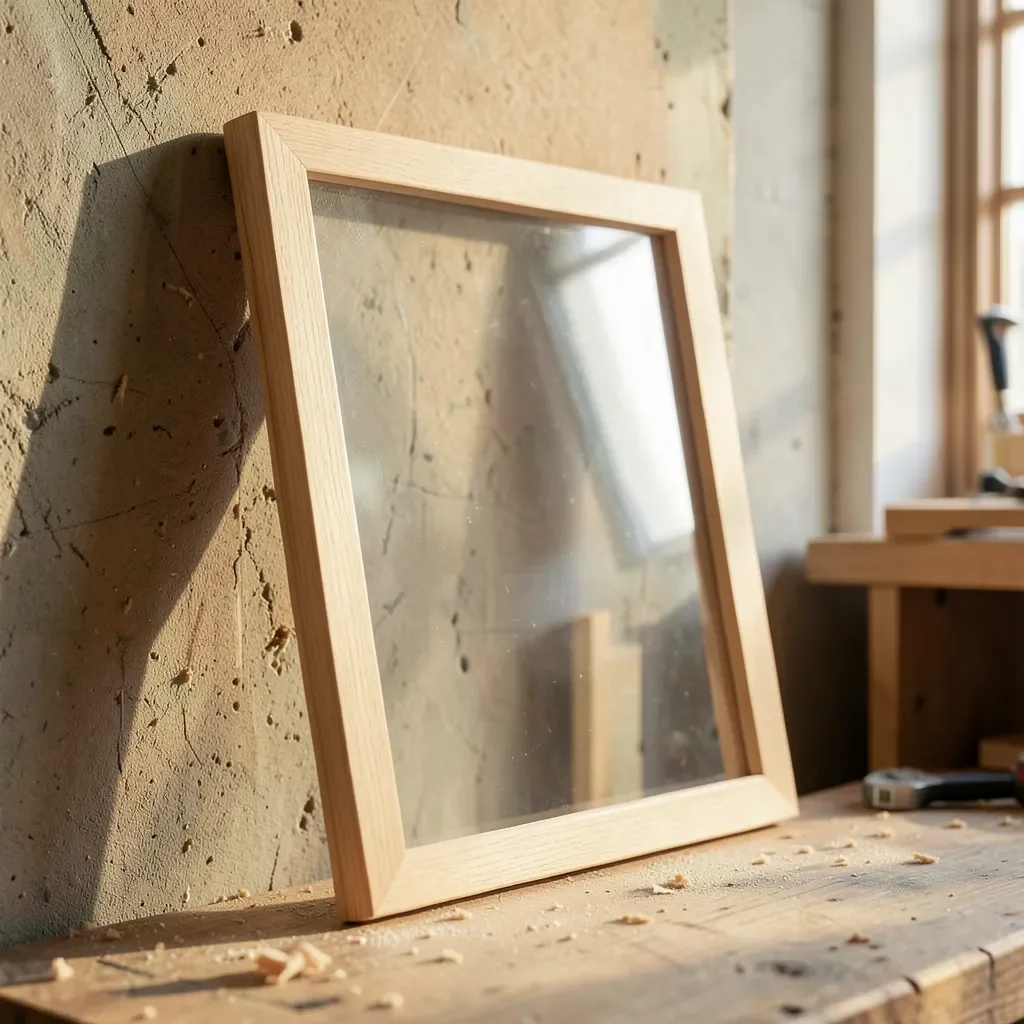
Yes, acrylic glues to wood – but the right adhesive depends on project size, not just strength. Acrylic expands and contracts with temperature far more than wood does, so a rigid glue like epoxy or cyanoacrylate can crack a large panel or haze the acrylic’s surface as the two materials move at different rates. This guide covers which adhesive fits small crafts versus large signs, the crazing risk with super glue, and step-by-step application.
Best Adhesive by Project Size
Best Pick for Acrylic Sign Panels
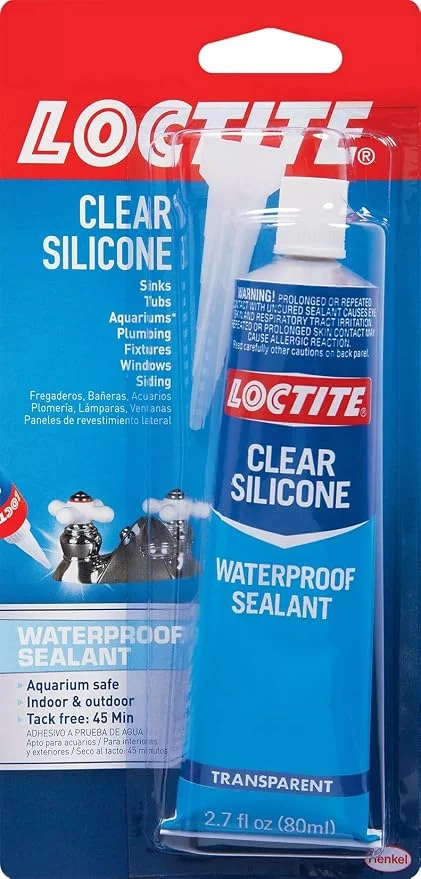 |
Loctite Clear Silicone Sealant (2.7 fl oz) – $6.48 Stays flexible after curing, so it absorbs acrylic’s larger thermal expansion instead of cracking – the right call for sign panels, display cases, or anything larger than a small craft piece.
|
| Project | Best Adhesive | Why |
|---|---|---|
| Small craft piece, indoor | Cyanoacrylate (super glue) | Fast bond for light, small parts – but can haze the acrylic edge |
| Cabinet door insert, indoor | Epoxy | Strong, gap-filling, rigid – fine when the acrylic piece is small and fully supported |
| Sign panel, outdoor or large | Clear silicone adhesive | Stays flexible so it absorbs the acrylic’s expansion/contraction without cracking |
| Display case, large flat panel | Clear silicone adhesive | Same flex advantage; also won’t show through clear acrylic when cured |
The size threshold matters more than most guides admit: a 2-inch acrylic accent glued with epoxy will likely never show a problem, but a 2-foot acrylic sign panel glued rigidly to a wood frame can crack at the glue line within a season or two as temperature swings push the two materials against each other.
Why Cyanoacrylate (Super Glue) Can Ruin Clear Acrylic
Cyanoacrylate cures through a chemical reaction that gives off vapor as it sets, and that vapor reacts with acrylic’s surface to leave a visible white haze or crazing – a network of fine surface cracks – around the glue line. On colored or frosted acrylic this may not show, but on clear acrylic used for a window, display case, or sign face, that haze is permanent and impossible to sand out without leaving a cloudy patch. If you use super glue on acrylic at all, keep it to edges that won’t be seen, apply it sparingly, and never use it near a visible face. (If you’re removing an old failed glue-up first, see how to unglue super glue from glass for the same solvent-softening approach.)
Surface Prep That Actually Matters
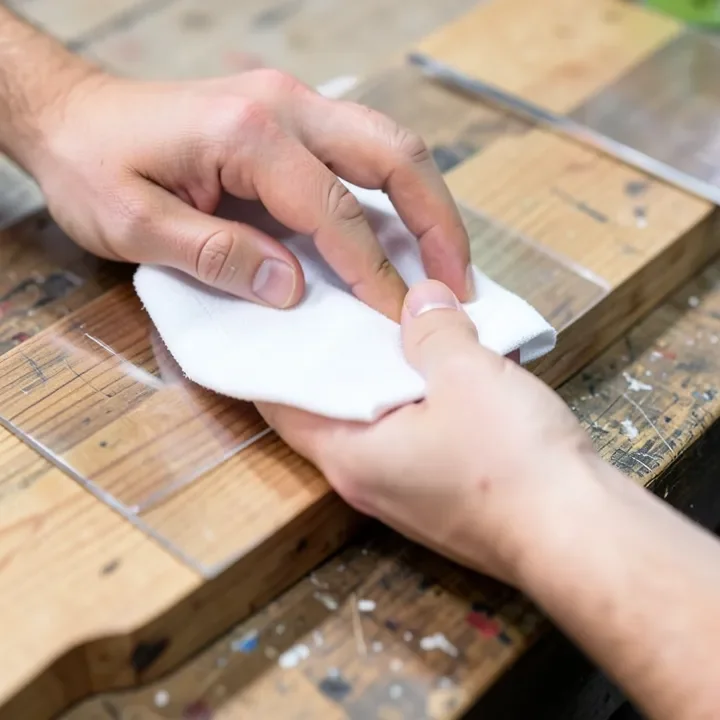
- Wipe the acrylic with isopropyl alcohol, not glass cleaner – ammonia-based cleaners can also craze acrylic over time
- Leave the acrylic’s protective masking film on until right before gluing to avoid scratches
- Lightly sand the wood (not the acrylic bonding face, unless you’re using epoxy) with 150-grit to open the grain for better mechanical grip
- Test-fit dry first – epoxy and silicone both set fast enough that repositioning after the fact can lift a partial bond
Step-by-Step: Gluing Acrylic to Wood
- Clean both surfaces with isopropyl alcohol and let them dry fully.
- For panels over about 6 inches on a side, choose clear silicone adhesive; for small indoor pieces, epoxy or cyanoacrylate is fine.
- Apply adhesive in a thin, even bead or layer – silicone in particular should not be globbed on, since a thick bead takes far longer to cure and can trap solvent underneath.
- Press the pieces together and hold with light clamping pressure (spring clamps or painter’s tape work better than C-clamps, which can crack acrylic if over-tightened).
- Wipe away squeeze-out immediately with a lint-free cloth – cured silicone and epoxy are both much harder to remove from acrylic without scratching it.
- Let it cure fully per the product label (silicone: 24 hours; epoxy: check the specific product, often 4-24 hours) before handling or hanging the piece.
Common Mistakes to Avoid
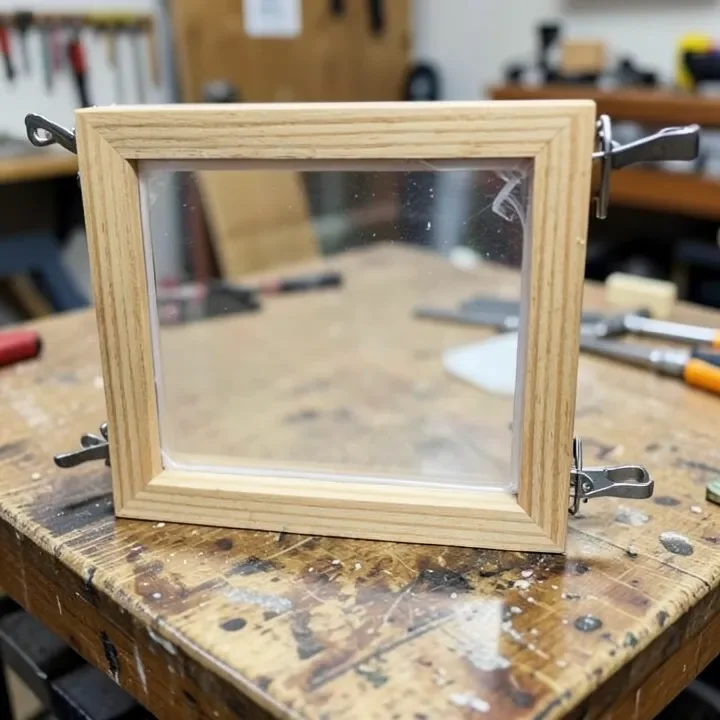
- Using epoxy or super glue on a large outdoor sign panel – the temperature-driven expansion mismatch will eventually crack the bond or the acrylic itself
- Cleaning acrylic with ammonia-based glass cleaner, which contributes to the same crazing effect as cyanoacrylate vapor
- Clamping too tightly – acrylic is brittle under point pressure and can crack at the clamp contact spot
- Skipping a dry fit, which is the easiest way to catch a misalignment before the adhesive sets
Frequently Asked Questions
Can you glue acrylic to wood?
Yes. For small indoor pieces, epoxy or cyanoacrylate work well. For sign panels or anything over about 6 inches, use a flexible clear silicone adhesive so it can absorb acrylic’s larger thermal expansion without cracking.
What glue should you use for an acrylic wood sign?
Clear silicone adhesive is the standard choice for acrylic sign panels because it stays flexible as the acrylic expands and contracts with temperature – a rigid glue like epoxy can crack the panel over repeated seasons.
Does super glue damage acrylic?
It can. Cyanoacrylate’s curing vapor reacts with acrylic’s surface and leaves a white haze or fine surface cracking (crazing) around the glue line, which is permanent on clear acrylic.
Will epoxy work to bond acrylic to MDF or OSB?
Yes, epoxy bonds well to both acrylic and MDF or OSB for small to medium pieces. For a large panel, switch to clear silicone for the same expansion-mismatch reasons that apply to solid wood.
How long does glue need to cure before hanging an acrylic sign?
Let clear silicone cure a full 24 hours, and check the specific product label for epoxy, which can range from 4 to 24 hours depending on the formula, before hanging or handling the piece.
Match the adhesive to the size of the acrylic piece, not just the strength you want: epoxy and cyanoacrylate for small indoor pieces, clear silicone for anything larger or outdoor-facing. Clean with isopropyl alcohol rather than ammonia-based cleaners, clamp gently, and let the bond cure fully before the piece takes any load.
Sponsored / affiliate links. As an Amazon Associate I earn from qualifying purchases. I may earn additional commission from eligible campaigns.