Can You Glue Plywood to Plywood for Cabinet Boxes? Tips
Yes, on cabinet boxes, glue alone can hold long plywood edge joints when the parts clamp tight and the joint has plenty of surface area; for shelves, case tops, and stressed repairs, I add a dado or rabbet. Weak joinery lets boxes rack, sags panels, and turns a quick build into a rebuild. This guide compares glue-only joints, dados, rabbets, and epoxy or polyurethane fixes for plywood cabinets.
Can you glue plywood to plywood for cabinet boxes?


Yes, but only when the joint is tight, flat, and backed by enough glue area. Plywood is thin veneers stacked with alternating grain direction, so it behaves differently from solid stock, especially at the edge. On cabinet boxes, glue alone is most reliable on long, well-fit face-to-face or edge-to-edge assemblies with solid clamping.
When glue alone is enough
Glue alone is reasonable when cabinet parts meet cleanly, the fit is close, and the box shape already resists racking. Standard PVA is the normal choice for indoor furniture and cabinetry in dry rooms. On cabinet-grade plywood with tight plies and minimal voids, a thin complete glue film can bond well if the edge is sealed only after assembly.
That said, plywood edges soak up glue faster than faces, and voids at the edge can weaken the bond. Plywood also has weaker screw bite at the edge than on the face, so glue-only construction needs careful clamping and careful layout. If the parts are bowed, the fit is loose, or the box will carry shelves and heavy loads, joinery should carry more of the job.
When the joint needs help from joinery
A dado or rabbet can do more than add glue area. It locates the part, resists shear, and helps keep the cabinet square while the glue cures. A glued dado is often what turns a weak edge into a strong joint, especially on shelves, case bottoms, and back panels. The back panel should be captured in a rabbet or dado to resist racking.
For cabinet carcasses, the goal is not to let glue do all the structural work. Good joinery shares the load, cuts down on clamp trouble, and lowers the chance of a joint slipping before cure. Glue is the bond. The joinery is the stop sign.
Glue alone vs joint support: what changes the result
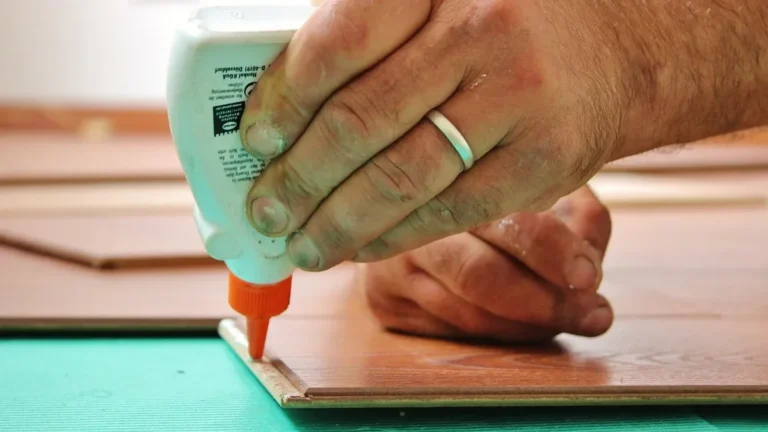
PVA wood glue, water-resistant PVA, polyurethane glue, and epoxy each behave differently on plywood. The right choice depends on fit, moisture, and whether the edge is sound. A glue line can be excellent and still fail if the joint has gaps, the edge is dusty, or the clamps leave pressure uneven.
- PVA wood glue: best for tight-fitting joints, water cleanup, dry interior use, thin complete glue film.
- Water-resistant PVA: better for humid interior use, kitchens and baths, moisture resistance, not the same as full waterproof.
- Polyurethane glue: moisture-cure, expands/foams, can shift alignment, works with imperfect fits.
- Epoxy: gap-filling, bonds damaged edges, rebuilds strength, useful for voids and repairs.
According to Is 1/2 Plywood Good for Cabinets? 7 Tough Truths & Fixes — The article cites APA Load-Span Tables for 1/2-inch Group 1 sanded plywood.
What is the strongest plywood cabinet joint?
A well-fit dado or rabbet is often among the strongest practical plywood cabinet joints, with a lock rabbet also performing well when the machining is accurate. A simple butt joint can work, but it depends much more on glue quality, clamp pressure, and backup from screws or fasteners. For cabinet boxes, strength and alignment usually travel together.
Butt joint
A butt joint is usually the simplest and one of the weaker common cabinet options. It can be fine for light-duty boxes, but it offers less glue area and little mechanical help. On plywood edges, that matters because the edge can drink glue quickly and leave a starved joint if the fit is poor.
Dado joint
A dado joint is one of the best choices for cabinet shelves and sides because it gives wide glue area and strong shear resistance. It also locates the part automatically, which helps keep the box square. When the groove is cut cleanly, the panel sits in a cradle rather than hanging on glue alone.
Rabbet joint
A rabbet joint is excellent for cabinet boxes, especially at corners and around back panels. It gives alignment help and more glue area than a plain butt joint. It is easier to cut than some alternatives, and it often gives enough support for carcass assembly when paired with good clamping.
Lock rabbet
The lock rabbet adds more interlock than a plain rabbet, so it resists slipping during clamp-up and can improve long-term joint integrity. It takes more setup, but it can be a very strong choice for cabinet corners where the builder wants both alignment and a larger bonding surface. If you want a decorative corner instead, see whether you can dovetail plywood without heavy chip-out.
Do you need waterproof glue for kitchen or bath cabinets?
Not always. Dry interior cabinets usually do fine with standard PVA, while kitchens and baths often call for water-resistant PVA. Waterproof-rated glue makes more sense where wet/dry cycling, leaks, or periodic standing water are real risks. Glue choice matters, but it cannot rescue a poor joint or a badly sealed cabinet edge.
Dry interior cabinets
For dry rooms, standard PVA wood glue is still the default choice. It cleans up with water, grabs well on tight joints, and cures into a reliable bond for cabinet boxes that will live indoors. Cabinet-grade plywood with sealed edges still needs careful fitting, but it does not need a waterproof adhesive just because it is plywood.
Humid rooms
In kitchens and baths, water-resistant PVA is a better fit because humidity and occasional splash exposure are part of the job. It is not the same as full waterproof glue, so it should not be treated as a cure-all. The real defense is sound joinery, sealed edges, and a finish that keeps moisture from reaching the panel core.
Areas that may see standing water
Standing water changes the equation. A sink cabinet with a leak, a garage cabinet on a damp floor, or any box that may be repeatedly wet needs more than basic interior glue. Waterproof-rated glue can help, but the wood itself still matters; standing water risks delamination, especially at exposed edges and damaged seams.
Plywood-to-plywood joint decision table
This table compares the common plywood-to-plywood cabinet joints by the factors that actually matter in a cabinet box: strength, clamping difficulty, fit tolerance, moisture suitability, and failure risk. The ratings are practical, not lab values, and they assume cabinet-grade plywood, careful cutting, and proper edge prep.
| Joint | Strength | Clamp needs | Fit tolerance | Moisture suitability | Failure risk |
|---|---|---|---|---|---|
| Butt joint | Moderate to low | High, even pressure needed | Low | Dry interior only unless repaired or sealed well | Higher if racking or gaps are present |
| Dado | High | Moderate | Moderate | Good in dry and humid interiors with proper finish | Lower when cut accurately |
| Rabbet | High | Moderate | Moderate | Good in dry and humid interiors | Lower than butt joint |
| Lock rabbet | High | Moderate | Low to moderate | Good in dry and humid interiors | Lower, but machining errors can hurt fit |
| Biscuit-assisted joint | Moderate | Moderate | Moderate | Good in dry and humid interiors | Moderate if used as the only reinforcement |
| Dowel-assisted joint | Moderate | Moderate | Low | Good in dry and humid interiors | Moderate, depends on layout accuracy |
| Pocket-screw plus glue | Moderate | Low to moderate | Moderate | Dry interior best | Moderate, especially near plywood edges |
| Epoxy repair | High for damaged areas | Low to moderate | High | Best for repairs and voids | Lower on damaged edges, higher if the substrate is rotten |
How much clamp pressure do plywood cabinet joints need?
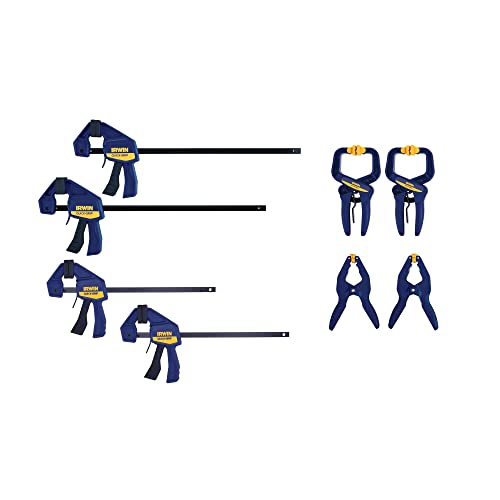
Plywood cabinet joints need even pressure, not brute force. Tight is good; over-squeezed is bad. The clamp job is to bring the faces together, hold alignment, and leave a thin glue line without starving the joint. Edge and center support matter because plywood can bow between clamp points if the spacing is poor.
Even pressure
Use enough clamps to keep the joint flat along its length. A few strong spots can pull the parts out of line while the rest of the joint stays loose. For long cabinet sides, clamp both ends and support the middle so the panel does not crown or dip.
Avoid glue starvation
Glue starvation happens when the pressure gets so heavy that too much adhesive squeezes out. The joint may look neat, but it can be weak. With PVA, a thin complete glue film is the goal. With polyurethane, the foaming can make people overclamp or underclamp, both of which cause trouble.
Should I use dados or rabbets for cabinet boxes?
Yes, in many cabinet boxes you should. Dados are better for shelves and interior partitions because they give broad support and strong shear resistance. Rabbets are often better for corners and back panels because they help with alignment and let the box go together more cleanly. Both are stronger than a plain butt joint.
Choose dados for shelves and partitions
Use dados where the panel needs to sit in a captured groove. That turns a weak edge into a supported part of the carcass. It is especially useful when the shelf carries load, because the load transfers into the side panel rather than relying mostly on glue and fasteners.
Choose rabbets for corners and backs
Rabbets are a good fit for cabinet corners and for trapping the back panel. The back panel should be captured in a rabbet or dado to resist racking, and that matters more than many builders expect. A captured back often makes the whole box feel stiffer than extra fasteners would.
Where cabinet-box glue joints fail in the shop
Most failures come from fit and prep, not from the glue label. Dust, sealed surfaces, glue starvation, and warped parts cause more trouble than adhesive chemistry alone. Plywood edges are especially unforgiving because they absorb fast, may hide voids, and give weaker screw bite than the faces.
Dust and sealed surfaces
Plywood faces that are finished, painted, waxed, or heavily sealed bond poorly. Dust does the same thing. Clean, bare wood is the target. If the cabinet has been prefinished, rough it only where the bond will live, and be careful not to sand through a veneer.
Warped panels and misaligned corners
Warped parts try to spring out of square while the glue cures. That is where dados and rabbets earn their keep. They hold alignment before the clamps do. Pocket screws, biscuits, and dowels can help position parts, but they should not be mistaken for the kind of shear support a well-cut dado provides.
Glue squeeze-out and clamp sequence
Too much squeeze-out can leave the glue line starved. Too little clamp pressure leaves gaps. Apply adhesive evenly, assemble in the right order, and bring the box together before the glue starts to skin over. A quick dry fit saves more cabinet boxes than any fancy adhesive ever will.
Choose glue alone if… / Choose a dado or rabbet if…
Choose glue alone when the joint is long, tight, and fully supported by the cabinet design. Choose a dado or rabbet when the panel carries load, the box must stay square, or the joint includes a shelf, back, or corner that benefits from mechanical location. Epoxy is for damage and voids, not routine carcass assembly.
Choose glue alone if…
- The plywood is cabinet-grade with tight plies and minimal voids.
- The joint fits tightly and clamps evenly without forcing parts into alignment.
- The cabinet is for a dry room and the surfaces are bare, clean, and sound.
- The bond area is long enough that glue is not carrying the entire structure by itself.
Choose a dado or rabbet if…
- The part is a shelf, bottom, partition, or back panel that helps resist racking.
- The fit needs alignment help during clamp-up.
- The cabinet will live in a kitchen, bath, or other humid room.
- You want the joint to carry shear load instead of asking the glue line to do everything.
Choose epoxy repair if…
- The edge is crushed, voided, or missing material.
- You need to rebuild strength before reassembling the box.
- The joint has gaps that normal PVA should not be asked to fill.
- Previous damage has left the plywood edge unreliable for a normal glue-up.
Frequently asked questions
Is PVA glue strong enough for plywood cabinets?
Standard PVA is strong enough for many indoor cabinet jobs, especially when the joint is tight and the box is well supported by dados or rabbets. It is the normal choice for dry rooms. It is less forgiving on loose plywood edges, so it should not be asked to bridge bad gaps.
What joint is strongest for plywood cabinet boxes?
A well-fit dado or rabbet is usually the strongest practical choice for most plywood cabinet boxes. Both add glue area and help keep the parts square during assembly. A lock rabbet can be very strong too, but only when the machining is accurate and the fit is controlled.
Do I need waterproof glue for kitchen cabinets?
Usually not for the whole cabinet, but water-resistant PVA is a better fit than standard PVA in kitchens and baths. Waterproof-rated glue makes more sense where wet/dry cycling or standing water is likely. Even then, sealed edges and sound joinery matter more than the label on the bottle.
Will polyurethane glue work on plywood edges?
Yes, polyurethane glue can work on plywood edges, especially where the fit is imperfect or the wood has some moisture. It cures with moisture and can foam and expand in the joint. That expansion can also shift alignment, so it needs careful clamping and should not be used as a fix for poor layout.
Is epoxy better than wood glue for plywood cabinets?
Epoxy is better when the edge is damaged, voided, or too irregular for a normal wood-glue joint. It can bridge voids and rebuild strength. For clean, tight cabinet joints, wood glue is usually simpler and more appropriate. Epoxy is a repair tool first, not the default cabinet adhesive.
Sponsored / affiliate links. As an Amazon Associate I earn from qualifying purchases. I may earn additional commission from eligible campaigns.