Can You Glue Painted Wood? What Actually Holds and Peels
You can glue painted wood only when the paint is sound and you scuff it to a dull, scratchy surface; for any load-bearing joint, strip to bare wood first. If you skip that step, the glue often bonds to the paint film, not the wood, and the repair peels off with the finish. This guide shows how to tell paint failure from glue failure, when sanding is enough, and when stripping is the only fix.
Can you glue painted wood at all?
Yes, but only in the right case. Painted wood can be bonded when the paint film is fully cured, firmly attached, and the joint is lightly loaded in shear. If the repair must carry real stress, especially on a chair, rail, or end-grain joint, bare-wood prep is the safer choice.
When paint is the weak layer, not the glue
The question is not whether adhesive can stick to paint. The real question is whether the paint can stay stuck to the wood while the joint is loaded. A sound coating can be a temporary bonding surface for trim touch-ups or non-structural patches. Old paint often becomes the failure plane.
Latex and acrylic paints usually hold up better than chalky old finishes, but gloss level matters. Glossy enamel gives glue less tooth, and soft or under-cured paint can deform under clamp pressure. The bond then fails at the paint film, not at the adhesive line.
Why glue fails on painted surfaces
Glue on painted wood often fails for one simple reason: the adhesive bonds to the coating, while the coating is weakly attached to the wood. That is paint-to-paint or glue-to-paint bonding, not glue-to-wood bonding. The finish can peel cleanly if the paint is chalky, waxed, oily, or contaminated.
Wax, silicone polish, grease, and dust are common culprits. They block wetting and leave a weak boundary layer. A glossy enamel can also act like a release film unless it is deglossed first. If the old coating powders on your fingers, stop treating it as a reliable bond face.
Which glue sticks best to painted wood?
For painted wood, epoxy is often the most forgiving adhesive, but only after proper prep and only when the joint is more than purely cosmetic. PVA wood glue is generally best on bare, porous wood. Polyurethane and CA glue have niche uses, yet neither is a cure-all for structural painted joints.
Wood glue (PVA) on bare wood only
PVA wood glue needs clean, intimate wood-to-wood contact. It soaks into open grain and forms a strong bond there. Over intact paint film, it usually bonds to the coating instead of the wood, which is why it is a poor bet for painted parts unless you remove the finish at the joint.
For furniture repair, PVA is still the common choice when you can expose bare wood at both mating faces. That is the right move for broken chair parts, loose trim with hidden wood faces, and any joint where strength matters more than preserving paint.
Epoxy for mixed surfaces and small gaps
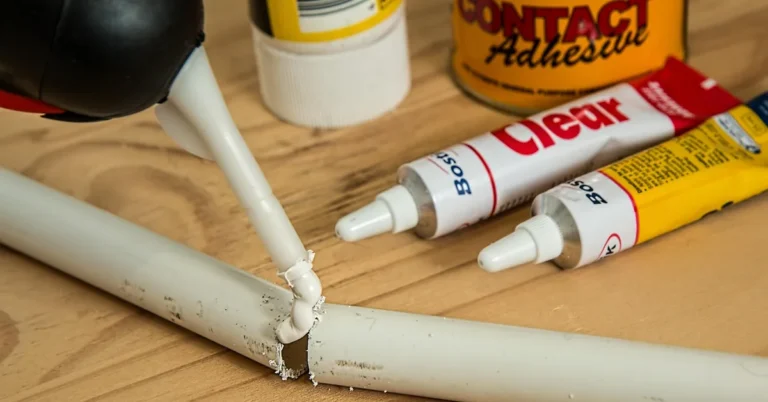
Epoxy is better at gap filling than PVA and can bond to sanded paint, bare wood, metal, and many other substrates. That makes it useful for mixed-surface repairs where some coating remains and some has been removed. It still needs sound surfaces, not loose paint.
Its tradeoff is cure time. Epoxy gives you more working time, but it also asks for patience before loading the joint. It is a reasonable choice for veneer patches, trim repairs, and non-mortise painted parts where a scuffed, stable coating remains.
Polyurethane glue and CA glue: where they fit and where they do not
Polyurethane glue is moisture-activated and can fill small gaps, though it does foam as it cures. That foam can push parts out of alignment and make cleanup annoying on painted surfaces. It can work in small, awkward repairs, yet it is not the first pick for a stressed painted joint.
Cyanoacrylate, or CA glue, grabs fast and can be handy for tiny chips, cracked moldings, and quick cosmetic fixes. It is a poor choice for structural painted joints. It is often paired with activator, which shortens open time even more and gives little room for correction.
When should you remove paint before gluing?
Remove paint whenever the joint must hold load, the coating is loose or chalky, or the previous finish is unknown. Bare wood is the safest target for PVA and the best long-term repair path for chairs, rungs, rails, and other parts that see repeated stress or movement.
Structural joints that need bare wood
Any butt joint, end-grain joint, or weight-bearing chair repair is usually better stripped back at the bond line. Those joints already have less glue area or poorer grain orientation. Asking them to rely on paint adds another failure layer.
Unknown coatings, soft paint, and loose edges
If you cannot identify the old finish, assume the bond is risky. Soft paint, gummy layers, and edges that lift under a putty knife are signs that stripping is wiser than trying to glue over the coating. The same applies to chalking and powdery residue.
Trim, veneer, and furniture repair cases
Trim touch-ups and veneer patches can sometimes use a scuffed paint film if the part is lightly loaded. A broken chair rail or drawer front corner usually cannot. Painted furniture parts that flex, rack, or take impact need a stronger strategy than surface bonding over old finish.
What prep actually improves the bond?
Good prep is about removing weak material and contamination, then creating enough tooth for the adhesive to grip. Cleaning comes first. Deglossing comes second. Remove paint at the failure point when the surface will not give you a stable bond face.
Cleaning and degreasing
Wipe away dust, grease, wax, and polish before any sanding. A solvent or cleaner that is safe for the finish should remove surface contamination, but the surface must dry fully before adhesive goes on. Skipping this step leaves the glue attached to grime.
Scuff sanding and the right grit range
For sound paint that will remain, scuff sanding usually means a medium-fine grit in roughly the 120 to 180 range. The goal is to dull the gloss, not to sand through every layer. If the finish is delicate, start finer and stop as soon as the shine is broken and the surface feels scratchy.
Exposing sound substrate at the failure point
Where the joint actually broke, remove paint down to solid wood if possible. That is the failure point and the place where the bond must be rebuilt. On repaired breaks, a small patch of bare wood on both sides of the joint usually beats a larger bond over questionable paint.
How do joint type and load direction change the answer?
Joint design often decides the outcome before adhesive choice does. Long-grain joints are forgiving. Butt joints are not. Peel loads pry coatings loose far more easily than shear loads, so the same glue can succeed in one setup and fail in another.
Butt joints, long-grain joints, and end grain
A long-grain joint gives glue plenty of fiber contact and is usually one of the easiest repair scenarios. A butt joint relies on a small face area and is weak even on bare wood. End grain drinks in glue unevenly and generally needs more careful prep, better fit, and often a different repair strategy.
Shear loads versus peel loads
Shear loads slide across the bond and are easier to resist. Peel loads pry from one edge and often start at the paint layer. A painted chair rung usually sees more peel and flex than a trim scarf joint, so the same surface prep may not fit both cases.
Why chairs and other stressed parts are different
Chair rails, ladder backs, and table aprons flex constantly. If the repair depends on paint staying bonded while the part moves, it is likely to fail. Those parts need bare wood, a well-fitted joint, enough clamp pressure for intimate contact, and full cure before use.
Decision table: choose bare-wood prep, scuff-and-bond, or full removal
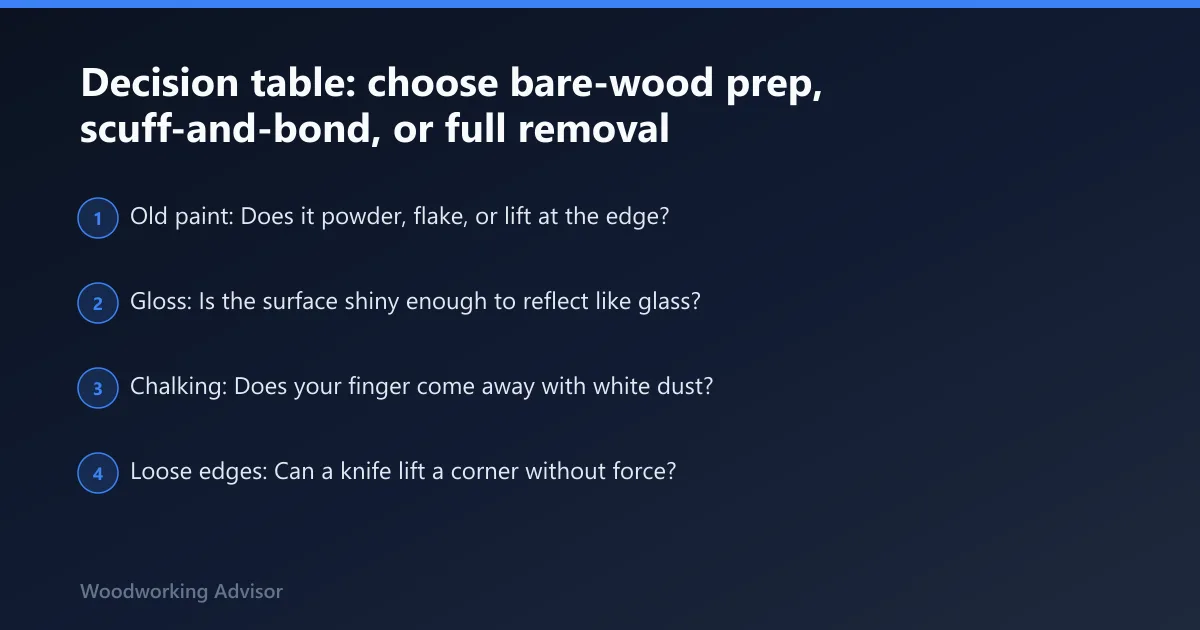
Use this table to match the surface condition and joint stress to the least-destructive repair that still has a realistic chance of holding.
| Paint condition | Joint type | Load direction | Recommended action |
|---|---|---|---|
| Fully cured, dull, hard, no loose edges | Long-grain trim joint | Mostly shear | Scuff-and-bond with epoxy after cleaning |
| Glossy enamel, hard but slick | Non-structural patch | Light load | Scuff-and-bond only if the paint is sound; otherwise strip locally |
| Chalky, powdery, or soft paint | Any joint | Any load | Full removal to sound wood |
| Paint lifting at edges | Butt joint or end grain | Peel or mixed load | Full removal to bare wood on both faces |
| Sound paint over bare wood on one side, unknown coating on the other | Mixed-surface repair | Mostly shear | Remove finish at the bond line; use epoxy only if a small paint remnant remains stable |
| Old latex over glossy enamel, or wax/silicone contamination suspected | Furniture stress point | Peel | Full removal and rebuild the joint on bare wood |
Paint condition checklist
- Old paint: Does it powder, flake, or lift at the edge?
- Gloss: Is the surface shiny enough to reflect like glass?
- Chalking: Does your finger come away with white dust?
- Loose edges: Can a knife lift a corner without force?
If any one of those applies to a stressed part, stripping is usually safer than bonding over the finish.
Frequently asked questions
Can you glue painted wood without sanding first?
Only in narrow cases, and even then it is a gamble. Without sanding, glue may bond to dust, gloss, or old finish instead of sound coating. If the part is structural, sanding is the minimum step; for stressed joints, bare wood is the safer target.
What kind of glue sticks to painted wood best?
Epoxy is usually the best of the common choices when paint must remain and the repair is light. It tolerates small gaps and mixed surfaces better than PVA. That said, no adhesive can rescue loose, chalky, or contaminated paint, and none should be trusted for major load-bearing joints over finish.
Why does glue peel off painted wood?
Because the weakest layer is often the paint film, not the adhesive. If the coating is glossy, chalky, soft, or contaminated with wax or silicone, the glue may hold to the film while the film releases from the wood. The failure then looks like a clean peel.
Should you remove paint before gluing wood?
Yes, whenever the joint must carry stress or the coating is questionable. Strip paint at the bond line if the part is a chair, rail, rung, or end-grain repair. For trim touch-ups or other light-duty fixes, a sound paint film may be acceptable after a light scuff.
Can PVA wood glue bond to painted surfaces?
It can stick to some painted surfaces, but that is not the same as a reliable repair. PVA works best on bare porous wood with clean wood-to-wood contact. Over intact paint, it usually depends on the coating staying attached, which is the wrong layer to trust for strength.
What grit sandpaper should you use before gluing painted wood?
For sound paint that will stay in place, 120 to 180 grit is a practical scuff range. The goal is to break the gloss and create tooth, not to polish or gouge the surface. If the coating is soft or flaky, sanding is not enough and removal is better.
The painted wood turtle is a reptile, not a repair method. It does, however, have a fitting name: painted surfaces can act like a shell, and once that shell starts to fail, the bond under it goes with it unless the repair is built on stable material.
Sponsored / affiliate links. As an Amazon Associate I earn from qualifying purchases. I may earn additional commission from eligible campaigns.