Can You Glue Wood to Carpet? Temporary vs Permanent Fixes
For short-term hold, use a removable adhesive or carpet tape; save more permanent flooring adhesive for wood that is meant to stay in place and carpet that is not expected to come back up. A weak bond can tear fibers, leave ridges, or give way under foot traffic. This guide compares temporary and permanent fixes, and helps you choose by carpet type, traffic, and removal plans.
| Decision factor | Can You Glue Wood to Carpet? Temporary | Permanent Fixes | Winner |
|---|---|---|---|
| Hold strength | Moderate at best; enough for light-duty trim or short runs | Higher when paired with mechanical fastening or a proper transition strip | Permanent Fixes |
| Removability | Easy to remove with less damage risk | Poor; residue, fiber pull, and threshold damage are common | Can You Glue Wood to Carpet? Temporary |
| Carpet damage risk | Lower, especially on low-pile carpet with tape or hot glue tacks | Higher, especially with plush carpet or latex-backed carpet | Can You Glue Wood to Carpet? Temporary |
| Best use case | Renters, test fits, light traffic, removable trim | Stair nosing, thresholds, and long-term installs on stable subfloor | Tie |
| Traffic tolerance | Low to medium only | Better for medium to high traffic when wood is also fastened mechanically | Permanent Fixes |
How the two approaches compare
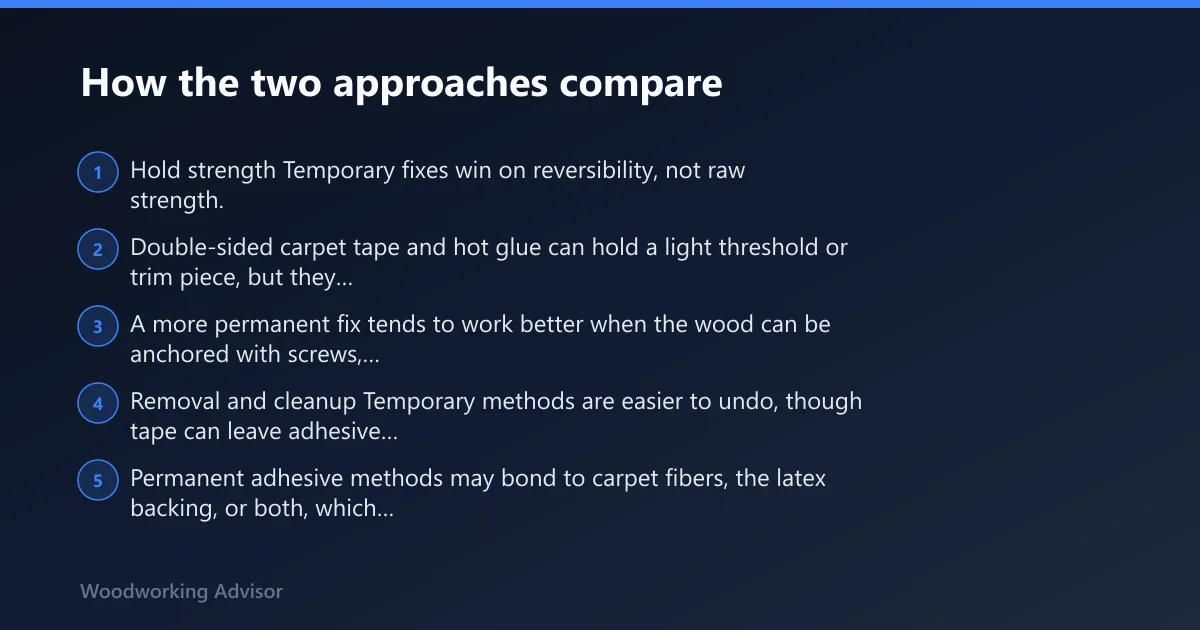


Hold strength
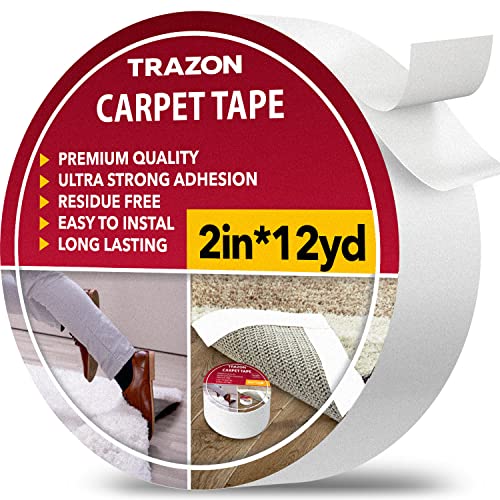
Temporary fixes win on reversibility, not raw strength. Double-sided carpet tape and hot glue can hold a light threshold or trim piece, but they are not well suited to repeated sideways stress. A more permanent fix tends to work better when the wood can be anchored with screws, nails, or a well-fitted transition strip.
Removal and cleanup
Temporary methods are easier to undo, though tape can leave adhesive residue. Permanent adhesive methods may bond to carpet fibers, the latex backing, or both, which can pull tufts or split backing layers during removal. If the wood may need to come out later, that risk should drive the choice.
Carpet damage risk
Plush carpet compresses under the wood and raises the chance of adhesive squeeze-out. Low-pile carpet is often more forgiving because it gives a flatter surface for bonding. Carpet backing matters too: latex-backed carpet can soften, delaminate, or grab adhesive in ways that make clean removal difficult.
What you’ll need
- Construction adhesive for permanent or semi-permanent holds
- Double-sided carpet tape in a width that matches the wood footprint
- Hot glue for small tack points during test fitting or light repairs
- Utility knife, scraper, and vacuum for cleanup and trimming
- Optional screws, finish nails, and anchors for mechanical fastening
- Optional transition strip, threshold, or trim stock sized to the opening
How to choose the right fix
Use the subfloor first to guide the method
Wood subfloors allow mechanical fastening more easily than concrete. Concrete usually pushes the decision toward adhesive or anchors, but moisture and flatness matter; an uneven or damp slab will weaken adhesive choices and can telegraph movement into the threshold.
Match the fix to carpet type
Low-pile carpet can sometimes accept tape under a narrow threshold or trim edge. Plush carpet is a poor candidate for direct glue because pile compression creates rocking, and the bond may sit on fibers instead of the backing. Latex-backed carpet often needs extra caution because adhesives can attack or separate the backing.
Decide based on future removal needs and traffic level
If the wood must come out later, choose tape, hot glue tacks, or a fastening plan that secures the wood to the subfloor rather than the carpet. For a long-term install in a traffic path, use a transition strip or threshold that is mechanically secured and trimmed to fit tightly against the carpet edge.
Decision matrix: temporary vs permanent methods
Use this before you commit. The right method changes with carpet pile, backing, and whether the wood needs to come out later.
| Method | Hold strength | Removability | Carpet damage risk | Best use case |
|---|---|---|---|---|
| Double-sided carpet tape | Low to medium | Good | Low to medium | Low-pile carpet, renter-friendly trim, short runs |
| Hot glue | Low | Good | Low if used sparingly | Small tack points, test fitting, temporary alignment |
| Construction adhesive | Medium to high on the wood side, weak on carpet fibers | Poor | High | Only when the wood will stay and the edge is already stabilized |
| Carpet tack strip | High at the carpet edge | Moderate | Medium | Holding carpet edges, not gluing wood directly to carpet |
| Mechanical fasteners | High | Moderate | Low to medium | Thresholds and transition strips on wood subfloors or with anchors |
| Transition strip | High when fitted and fastened correctly | Moderate | Low to medium | Long-term edge protection between carpet and wood |
How to attach wood to carpet without damaging it
- Vacuum the carpet edge and trim loose fibers with a utility knife so the wood sits flat.
- Test a hidden spot with your chosen tape or adhesive and wait for residue or fiber pull.
- Dry-fit the wood so it does not ride on the pile; if it rocks, reduce the underside profile or change to a transition strip.
- Use carpet tape or hot glue only at small contact points when you need a reversible hold.
- Switch to a tack strip, threshold, or mechanical fasteners if the piece will see daily traffic.
Construction adhesive is usually a last choice for direct contact with carpet. It can soak into the backing, cure unevenly, and lock the fibers to the wood in a way that is hard to reverse. That is why hidden-area testing matters before any full install.
How to stop a wooden threshold from shifting
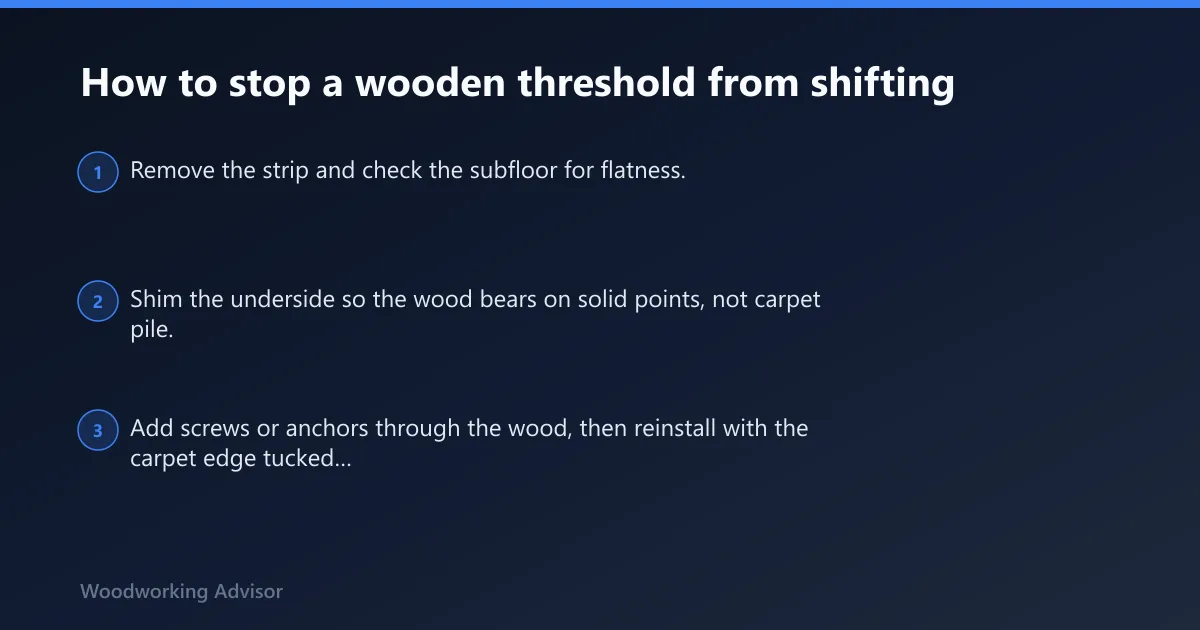
A shifting threshold usually needs better fit, not more glue. A tight trim fit, correct profile, and edge support do more than a bead of adhesive alone, especially on plush carpet where the pile compresses and rebounds underfoot.
Use trim fit and edge support
Choose a wood threshold or transition strip profile that bridges the carpet edge without floating on the pile. End caps, ramp profiles, and T-moldings are all different shapes, and the right one keeps the wood from rocking against the carpet face.
Add mechanical fasteners when the subfloor allows it
On a wood subfloor, finish nails or screws can secure the strip better than adhesive alone. On concrete, anchors may be needed if the threshold needs to stay put. If the installation will stay in place, mechanical fastening beats carpet-only bonding every time.
If that didn’t work, try this next
- Remove the strip and check the subfloor for flatness.
- Shim the underside so the wood bears on solid points, not carpet pile.
- Add screws or anchors through the wood, then reinstall with the carpet edge tucked cleanly beneath.
Common mistakes
Using construction adhesive on plush carpet
Plush pile compresses and spreads adhesive contact across fibers instead of the backing. That leads to weak support and ugly cleanup later. Use a transition strip or mechanical fastening instead.
Dust, loose lint, and carpet finish reduce hold. A test patch reveals residue, soft backing, or color transfer before the full install is committed.
Ignoring backing type, moisture, or pile compression
Latex backing can react badly to some adhesives, and moisture from a concrete slab can weaken the bond or create movement. If the wood sits over a damp or uneven base, the fix will fail faster.
Expecting glued wood to remove cleanly later
A strong adhesive can leave residue, torn fibers, or damaged trim behind. If the wood has to come out later, plan for cleanup and possible carpet repair from the start.
Prevention: keep the wood edge off the highest part of the pile and choose a profile that matches the carpet height before fastening anything.
Can you glue wood directly to carpet?
Usually no for a permanent hold. Glue can work for short-term tack points or a very light repair, but carpet fibers, pile compression, and backing sensitivity make direct bonding unreliable. Low-pile carpet gives the best chance for a temporary hold, while plush carpet is the worst candidate.
Why carpet is a poor permanent bonding surface
Glue sticks best to stable, flat material. Carpet moves, flexes, and sheds fibers under load. If the adhesive bonds to the pile instead of the backing, the joint fails early or damages the carpet during removal.
What is the best glue for wood to carpet?
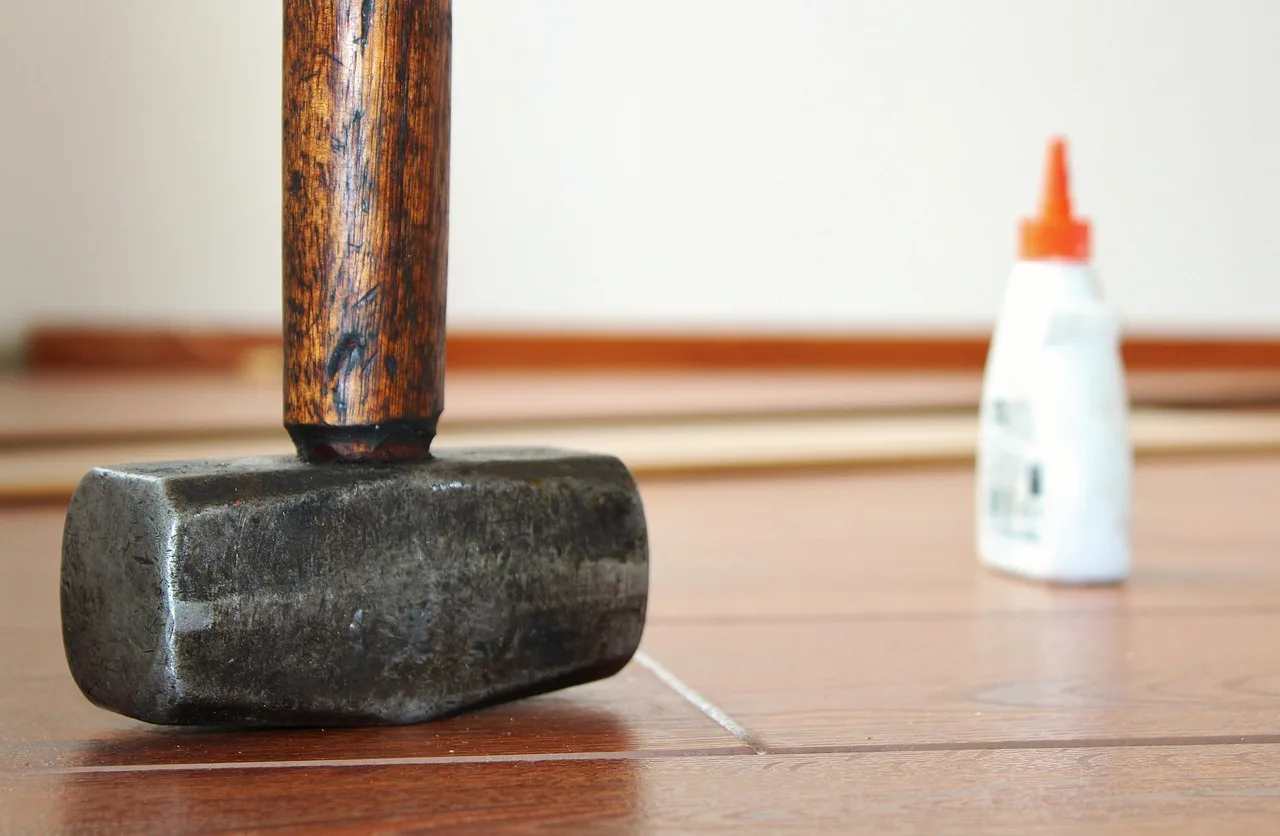
For temporary use, double-sided carpet tape is usually the cleaner choice, and hot glue works for tiny tacking points. For a permanent hold, construction adhesive is stronger on the wood side, but it is risky on carpet and should not be treated as a universal answer.
Construction adhesive
Construction adhesive generally offers stronger bonding, a longer cure time, and more flexibility than hot glue. It is hard to remove once cured, and it can bond aggressively to carpet backing or fibers, so it fits only narrow, stable use cases.
Double-sided carpet tape
Carpet tape gives a temporary hold, comes in several widths, and is usually easier to remove than cured adhesive. It still leaves residue sometimes, but it is a better fit for low-pile carpet and renter-friendly work.
Is a temporary fix better than a permanent fix for wood on carpet?
Temporary fixes are better when the wood may move again, the carpet is plush, or the space is rented. Permanent fixes are better only when the wood will stay, traffic is higher, and the threshold can be fastened to the subfloor or a transition system rather than the carpet alone.
When temporary wins
Temporary methods make sense for seasonal thresholds, trial fits, and repairs that may need future carpet replacement. They are also easier to remove without tearing backing or pulling pile.
When permanent wins
Permanent methods win when the wood is part of the floor edge itself, such as a threshold or transition strip that must resist daily traffic. In those cases, fasteners and proper trim fit matter more than adhesive alone.
How do you attach wood trim to carpet without damaging it?
Use the least aggressive method that still holds the trim in place: carpet tape for low-load work, a properly fitted transition strip for everyday traffic, or screws and finish nails when the subfloor allows it. Avoid flooding the joint with adhesive because it is harder to reverse and easier to ruin the carpet.
Where tack strip fits in
A carpet tack strip holds the carpet edge, not the wood itself. It belongs at the perimeter where the carpet needs to be secured and trimmed, usually just before a transition strip or threshold is installed.
How do you remove glued wood from carpet later?
Score the edge, lift slowly, and expect some residue or fiber pull if the bond was strong. Use a scraper for adhesive left on the wood or subfloor, then vacuum and inspect the carpet backing for damage before reinstalling anything.
Cleanup limits
Small residue can often be scraped or softened, but carpet fibers that were bonded into cured adhesive rarely return to perfect condition. If the backing delaminated or the pile tore, replacement of that section may be the only clean fix.
Verdict: Can You Glue Wood to Carpet? Temporary or Permanent Fixes?
Choose Can You Glue Wood to Carpet? Temporary if you need a renter-friendly hold for a light threshold, short run, or test fit on low-pile carpet, especially when you want the wood to come out later with less damage risk.
Choose Permanent Fixes if you are installing stair nosing, thresholds, or a long-term edge in a traffic path and can secure the wood with screws, nails, anchors, or a well-fitted transition strip on a stable subfloor.
Frequently asked questions
What can I use instead of glue to secure wood to carpet?
Use a transition strip, threshold, finish nails, screws, or anchors, depending on the subfloor. Mechanical fastening is the better long-term answer when traffic is heavy or the wood must stay in place.
How do I stop a wooden threshold from shifting on carpet?
Use the right profile, trim it to sit flat, and fasten it to the subfloor where possible. If the threshold still shifts, add screws or anchors rather than more adhesive, because movement usually means the fit is wrong, not just the glue.
Sponsored / affiliate links. As an Amazon Associate I earn from qualifying purchases. I may earn additional commission from eligible campaigns.