Can You Glue Wood to Vinyl? What Actually Works and Fails
For flexible vinyl, solvent-based contact cement is often the better choice, while rigid PVC may suit polyurethane or epoxy; in practice, clean prep matters because adhesives tend to perform poorly on dirty, plasticized, or moving vinyl. Bad matches fail by peeling, creeping, or telegraphing through the surface, wasting parts and time. I have seen repairs hold for a day, then let go cleanly along the edge. This guide explains which glue fits each vinyl type, what prep matters, and when mechanical fastening beats adhesive.
Can you glue wood to vinyl?


Yes, in some cases. The real question is whether the joint is cosmetic, lightly loaded, or expected to carry force while vinyl flexes or heats up. Wood bonds better to rigid PVC sheet or vinyl-coated parts than to soft flooring, trim, or plasticized vinyl that bends under normal use. I treat soft vinyl and structural load as a bad mix.
When the answer is yes
Wood to vinyl can work when both surfaces are clean, the load stays mostly in shear, and movement is low. That includes trim strips, small repair blocks, decorative panels, and certain laminate-style joins where the adhesive spreads the load across a broad flat area.
When the answer is no
It is a poor bet when the vinyl is soft, heavily plasticized, textured, oily, or part of a moving assembly. It also fails when the wood grain pulls moisture and moves seasonally, or when the joint sees peel forces such as a lifted edge or a handle being tugged outward. Those jobs need another plan.
What kind of bond you are really trying to make
Many failures come from treating every repair as structural. A cosmetic patch only needs the parts to stay aligned. A load-bearing attachment needs high shear strength, decent peel resistance, and enough flexibility to survive temperature changes without letting the glue line crack. I sort the job before I reach for glue.
Why most glues fail on vinyl
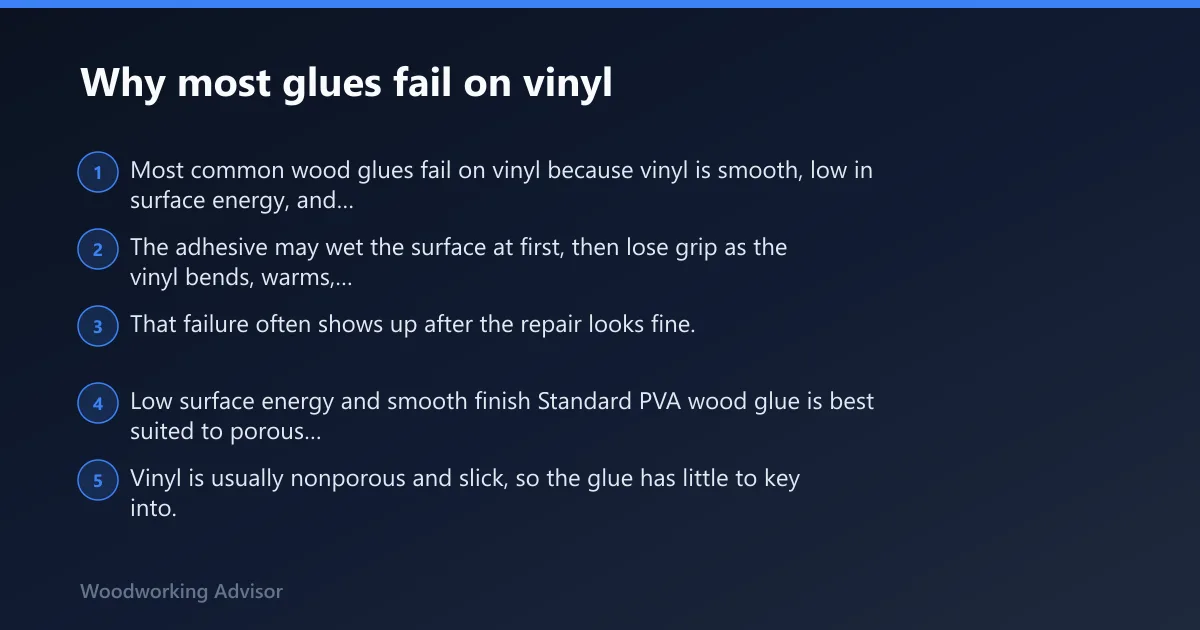
Most common wood glues fail on vinyl because vinyl is smooth, low in surface energy, and often flexible. The adhesive may wet the surface at first, then lose grip as the vinyl bends, warms, cools, or releases plasticizer into the bond line. That failure often shows up after the repair looks fine.
Low surface energy and smooth finish
Standard PVA wood glue is best suited to porous wood fibers. Vinyl is usually nonporous and slick, so the glue has little to key into. On a sealed or coated vinyl surface, the bond can look fine for a day and then let go with surprisingly little force. I have pried up test pieces with one finger.
Flexing, peel, and temperature movement
Many glue failures on vinyl are peel failures, not pure pull-apart failures. A rigid adhesive can hold well in a flat shear test, then snap loose when one edge lifts. Heat softens many vinyl parts and expands them enough to stress the glue line. That is where the bond usually starts to fail.
Why wood movement adds another failure point
Wood is not stable across seasons. Unfinished boards move more than sealed parts, and end grain absorbs and releases moisture faster than flat grain. If the wood and vinyl move in different ways, a stiff bond line gets worked from both sides. That is why a joint can fail months later.

What glue works best on wood and vinyl?
The best adhesive depends on vinyl type and joint movement. Epoxy suits rigid, well-prepped repairs. Polyurethane handles small gaps and benefits from clamping. Contact cement is better for broad, flat contact. CA glue is generally best for small fixes only. Construction adhesive fits some trim jobs, not high-stress bonds. I choose by movement first.
Epoxy adhesive
Epoxy is a two-part system that cures to a rigid bond and can fill small gaps. It can work on rigid PVC or hard vinyl surfaces if the surface is clean and lightly abraded where safe. It is less forgiving on flexing vinyl because the cured line does not move much. That stiffness helps on solid parts and hurts on soft ones.
Polyurethane adhesive
Polyurethane adhesive is moisture-cured and can bridge small gaps. It often works better than PVA on mixed materials because it tolerates imperfect fit, but it foams as it cures and can push parts out of alignment if clamping is weak. It suits trim and small repairs with solid pressure. I watch squeeze-out closely with this one.
Contact cement
Contact cement, solvent-based or water-based, is a pressure-sensitive bond used often for laminates and broad contact areas. It can perform well on vinyl when both surfaces are flat and well-matched. It is not the best choice for structural joints or narrow edge bonds that may peel. Flat work is where it earns its keep.
CA glue
Cyanoacrylate, or CA glue, cures fast and can rescue tiny chips, corner repairs, and tack points. It leaves a brittle glue line, so it is poor for flexible vinyl or anything that will be bent, slammed, or handled often. It is a spot-fix adhesive, not a general answer. I reach for it on small chips only.
Construction adhesive
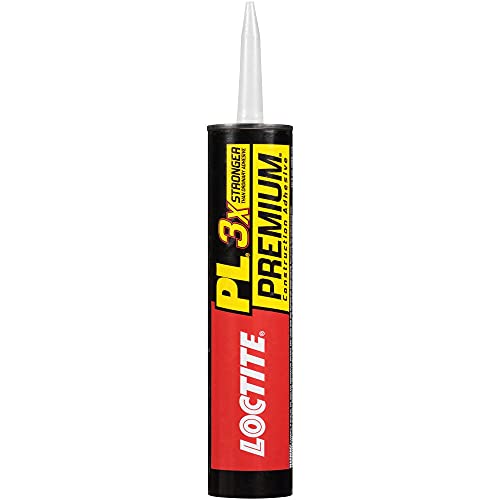
Construction adhesive can work for some trim and noncritical attachments when the manufacturer lists compatibility with PVC or vinyl surfaces. It usually needs a thick bead, good pressure, and time to cure. It is a practical option for hidden joints, but not for precise cosmetic seams. Use it where the joint will stay quiet.
Do you need to sand vinyl before gluing wood?
Sometimes, but only lightly and only if the surface can take it. Cleaning with isopropyl alcohol and removing oils matters more than aggressive sanding. Many vinyl finishes are thin or textured, and heavy abrasion can damage the surface, weaken the part, or make the repair more visible. Start gentle and stop early.
Cleaning with isopropyl alcohol
Start by removing dry dust, then wipe with isopropyl alcohol on a lint-free cloth. That removes grease, fingerprints, and many shop contaminants. Let the surface dry completely before adhesive is applied. Soap residue and silicone polish cause many bond failures on vinyl. I clean twice if the part has been handled a lot.
When light abrasion helps
Light scuffing can improve bond strength on rigid PVC, coated trim, or hard vinyl. Use a fine abrasive pad or very fine sandpaper, and stop as soon as the gloss is broken. The goal is dulling, not cutting through the layer. If I see color change, I stop.
When sanding can ruin the surface or make matters worse
Skip sanding on thin vinyl skins, decorative coverings, and soft flooring surfaces that show tool marks easily. If the vinyl is plasticized and flexible, sanding may expose a weaker layer underneath or create dust that does not clean out well. In those cases, clean and test first. I would rather keep the skin intact.
Surface prep and primers that improve bonding
Surface prep makes more difference than the glue label. Degreasing, dry fitting, and a test patch on a hidden spot matter before any full repair. For difficult plastics, an adhesion promoter or primer can help, but only if the product specifically lists vinyl or PVC compatibility. I trust a clean test piece more than a sales claim.
Degreasing and dry fit checks
Dry fit the parts before glue is opened. Check joint gap, squeeze-out path, and clamp access. Then degrease both surfaces, especially vinyl that has seen floor polish, hand oils, or silicone spray. A clean joint line often outperforms a stronger adhesive on a dirty one. That is workshop reality.
Always test on an inconspicuous area first. Let the sample cure long enough to judge the bond, then try to shear it and peel a corner. If the surface blisters, clouds, softens, or releases, stop and choose a different adhesive or a mechanical fastener. One small test can save the whole part.
When to use an adhesion promoter or primer
Use primers or adhesion promoters only when the manufacturer says they work on the exact substrate. Products for difficult plastics can help with certain PVC and vinyl surfaces, but they are not universal. Some primers improve wetting; others are meant for very specific bonding systems and topcoats. I match the primer to the glue, not the other way around.
Glue-selection matrix for wood-to-vinyl repairs
This matrix treats the job as a compatibility choice. Start with vinyl type, then ask whether the load is mostly shear or peel, how much movement the joint will see, and whether the repair is cosmetic, medium-duty, or structural. The wrong adhesive usually fails the same way every time. The pattern is easy to spot after a few jobs.
| Vinyl type | Load type | Movement level | Recommended adhesive class | Surface prep | Common failure warning signs |
|---|---|---|---|---|---|
| Flexible vinyl or vinyl flooring | Peel | High | Solvent-based contact cement for flat laminate-style contact; avoid rigid structural joints | Clean with isopropyl alcohol; light scuff only if allowed; test patch | Edge lift, creeping, softening, visible glue line through the finish |
| Flexible vinyl or vinyl flooring | Shear | Low to medium | Construction adhesive only for hidden, noncritical trim with listed compatibility | Degrease, dry fit, clamp evenly, allow full cure | Slow slip, bead squeeze-out, corner release, seasonal movement opening the joint |
| Rigid PVC sheet | Shear | Low | Epoxy adhesive | Alcohol clean, fine scuff, test patch, clamp | Bond fractures, chalky failure at the interface, brittle snap under shock |
| Rigid PVC sheet | Mixed shear and peel | Low to medium | Polyurethane adhesive | Alcohol clean, light abrasion, firm clamping | Foam push-out, joint drift, edge peel after cure |
| Vinyl-coated wood | Shear | Low | Contact cement or epoxy, depending on flatness | Clean carefully; avoid cutting through the coating; test spot | Coating lifts, bond fails at the coating layer, visible ridges |
| Unknown plasticized vinyl | Any | Medium to high | Small-repair CA only, or no adhesive until a test bond proves compatibility | Test patch first; do not assume sandability | Softening, whitening, peel-off, plasticizer bleed, delayed release |
How to clamp, cure, and avoid peel failure
Good clamp pressure matters, but so does the cure schedule. Many adhesives reach handling strength long before full cure. Temperature and humidity can slow or change the cure, and weak clamping can let peel forces start failure before the bond is ready. I leave extra time when the shop is cold.
Pressure and clamp setup
Use enough pressure to keep full contact, not so much that all adhesive is squeezed out. On broad surfaces, cauls help spread load and prevent dents. On flexible vinyl, clamps should hold alignment without bending the substrate into a new shape. A bent substrate invites failure later.
Handling strength versus full cure
Handling strength means the part can be moved carefully. Full cure means the adhesive has reached its designed bond strength. Those are not the same. A repair that seems solid after an hour may still fail if it is loaded, flexed, or cleaned too soon. I wait for the full cure window.
Temperature and humidity effects
Cool shops slow cure. Damp air can help polyurethane but hurt some contact cements and epoxy schedules. Read the product directions, then add time when the shop is cold or humid. A joint that cures too fast on the surface may stay weak inside. The outside can fool you.
How do you keep wood from peeling off vinyl?
Prevent peel by changing the joint design, not only the glue. Use the largest bond area possible, keep load in shear, avoid edge lifting, and reduce movement between parts. If the vinyl flexes visibly, add mechanical support or a hidden fastener instead of trusting glue alone. That fix holds up better in use.
Design the joint for shear, not peel
Shear loads spread across the bond line and are easier for adhesives to resist. Peel forces start at one edge and pry the glue loose. A wider overlap, larger footprint, or backing plate can help shift a peel problem toward a more manageable shear load. I change the joint before I change the glue.
Reduce movement before the glue goes on
If the vinyl is mounted to a substrate that flexes, repair the support or shorten the span. If the wood is thin and moves a lot, seal it first or redesign the piece. Glue cannot compensate for a joint that changes shape every time it is touched. Movement is the real enemy here.
Use mechanical fastening when the bond is asked to do too much
Hidden screws, brads, staples, or backing plates can carry the load while adhesive handles alignment. That approach is often better for unknown vinyl, soft trim, or repairs that face repeated pulling. Adhesive alone is rarely the safest answer for high-stress vinyl joints. I use fasteners when the joint gets abused.
Frequently asked questions
What glue works best on vinyl and wood?
There is no single best glue. Epoxy works well for rigid, well-prepped joints with little flex. Polyurethane helps when there is slight gap fill and solid clamping. Contact cement fits broad, flat contact on flexible vinyl. CA glue is only for tiny repairs. I pick the glue after I inspect movement.
Why does wood glue fail on vinyl?
Standard PVA wood glue is built for porous wood fibers, not smooth low-surface-energy vinyl. It often cannot get enough grip, and any flexing or peeling motion breaks the bond. Plasticizer migration and temperature changes can weaken the joint even if it seems fine at first. The failure is usually plain and fast.
Will epoxy stick to vinyl?
Epoxy can stick to some rigid PVC and hard vinyl surfaces if they are clean, lightly abraded where safe, and well clamped. It is much less dependable on soft or plasticized vinyl that flexes. A test patch is wise before committing to the full repair. I never trust epoxy on guesswork.
Can construction adhesive bond wood to vinyl flooring?
Sometimes, but only for noncritical trim or hidden attachments if the product lists vinyl or PVC compatibility. Vinyl flooring moves, and many construction adhesives are not built for repeated peel or flex. Use generous clamp time and expect full cure to take longer than handling strength. That patience matters on flooring jobs.
Sponsored / affiliate links. As an Amazon Associate I earn from qualifying purchases. I may earn additional commission from eligible campaigns.