Can You Melt Paraffin Wax In The Microwave? Safe Or Not?
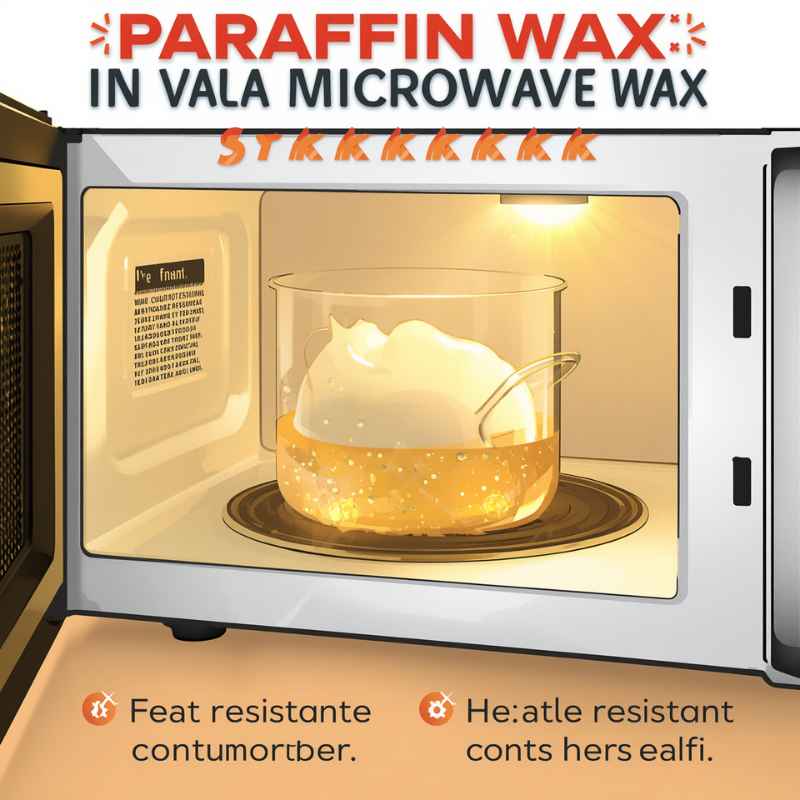
The short answer is that melting paraffin wax in the microwave is generally not recommended and can be unsafe. While it might seem like a quick method, the risk of overheating, fire, and uneven melting is very high. It’s better to use safer, more controlled methods.
Understanding Paraffin Wax and Microwaves
Paraffin wax is a petroleum byproduct. It melts at a relatively low temperature. This makes it seem like a good candidate for microwave heating.
Microwaves heat food by exciting water molecules within it. Paraffin wax has very little water. This means it heats unevenly.
It can create hot spots that are much hotter than the rest of the wax. These hot spots can easily reach their flashpoint. This is the temperature at which the wax can catch fire.
Microwaves also don’t have a precise temperature control for solids like wax. You set a time, not a temperature. This makes it hard to know exactly how hot the wax is getting.
The container you use also matters. Some containers can overheat or even melt themselves. This adds another layer of risk.
It’s a process that lacks the control needed for safe wax melting.
My Microwave Wax Mishap: A Cautionary Tale
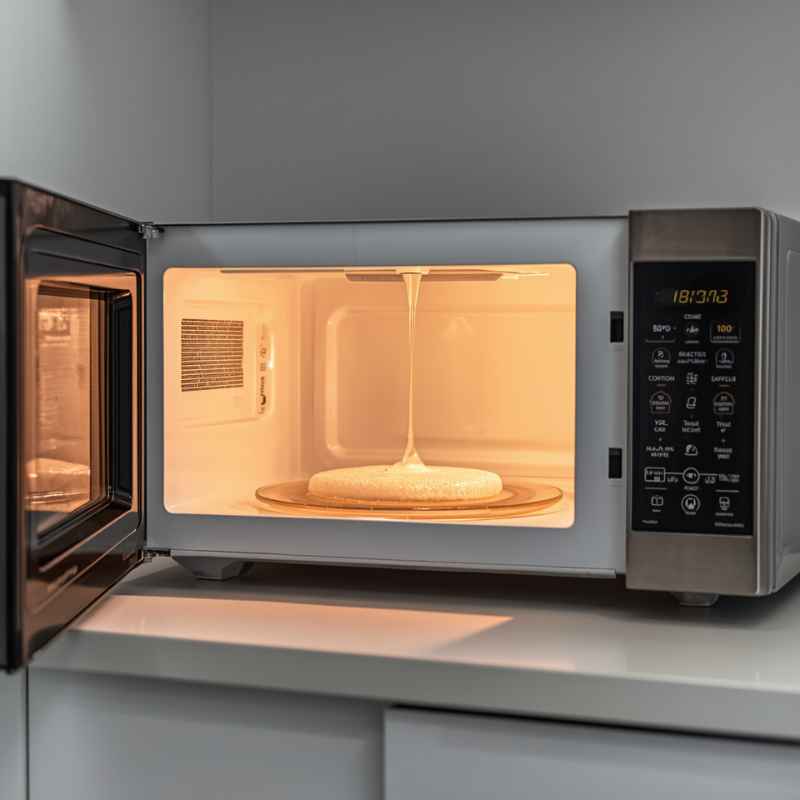
I remember this one time, I was trying to make some homemade candles for a friend’s birthday. I had this big block of paraffin wax and I was in a hurry. I thought, “Why not just pop it in the microwave?
It’ll be so much faster than the double boiler.” So, I broke off a chunk, put it in a microwave-safe bowl, and set the timer for a few minutes. I watched it through the glass door. At first, nothing seemed to be happening.
Then, I saw it. A small, almost invisible shimmer. It looked like steam, but wax doesn’t steam.
My heart sank. I quickly hit the stop button. A tiny puff of smoke came out of the bowl.
The wax was incredibly hot in one spot. It was bubbling fiercely right there. The rest of the wax was still solid.
It was a total mess. Thankfully, it didn’t catch fire. But the smell was awful.
It filled my kitchen with a chemical, burnt scent. I learned a big lesson that day. Some shortcuts are just not worth the risk.
My friend got store-bought candles that year.
Microwave Wax Melting: Key Risks
Uneven Heating: This is the biggest problem. Some parts get very hot, others stay cool.
Overheating: It’s easy to go too far. This can lead to fire.
Fire Hazard: Paraffin wax is flammable. Overheating is a direct path to a fire.
Container Issues: Bowls can crack or melt. Some plastics release fumes.
Toxic Fumes: Burnt wax or overheated plastic can release harmful smells.
Safer Ways to Melt Paraffin Wax
Since the microwave is a no-go, what are the safe alternatives? There are several methods that offer much better control. They help prevent accidents.
The most common and trusted method is using a double boiler. This involves two pots. One pot holds water.
The other pot, with the wax, sits inside the first one. The steam from the boiling water gently heats the wax.
You can buy specialized wax melting pots. These often have temperature controls. They are designed for this exact purpose.
This makes them a very safe option. Another method is using a slow cooker. You can set it to a low temperature.
This allows the wax to melt slowly and evenly. It’s a hands-off approach. Always keep an eye on the wax, no matter the method you choose.
Safety first!
Quick Guide: Double Boiler Method
- Get two pots. One should fit inside the other.
- Fill the bottom pot with water. About 1-2 inches is good.
- Place the wax in the top pot. Cut the wax into small pieces.
- Put the top pot inside the bottom pot. Make sure the water doesn’t touch the bottom of the top pot.
- Heat the water on medium-low. Let the wax melt slowly.
- Stir often. This helps it melt evenly.
- Never leave it unattended.
The Science Behind Uneven Heating
Why does paraffin wax heat so unevenly in a microwave? It comes down to how microwaves work. Microwaves produce electromagnetic waves.
These waves make polar molecules in food vibrate rapidly. This vibration creates heat. Water is a highly polar molecule.
Fats and sugars are also polar to some extent. Paraffin wax, however, is mostly made of nonpolar hydrocarbon chains.
These nonpolar molecules don’t vibrate much in a microwave. So, the wax doesn’t heat up evenly from the inside out. Instead, any tiny bit of moisture or impurities present can get superheated.
These spots become much hotter than the bulk of the wax. Think of it like trying to heat a solid block of butter in a microwave. Some parts might melt while others stay hard.
It’s not a uniform process. This uneven heating is the root cause of the safety issues.
Real-World Scenarios: When Wax Melting Goes Wrong
Imagine you’re a small business owner. You’re making artisanal candles. You want to offer a consistent product.
Your customers expect quality. If you try to melt wax in a microwave, you risk inconsistencies. One batch might be perfect.
The next might have burnt spots or smell funny. This can damage your brand’s reputation. Customers won’t trust your products if they aren’t reliable.
Or think about a parent doing a craft project with kids. Safety is the absolute top priority. Using a microwave for wax could lead to a burn.
It could even start a small fire. This would turn a fun activity into a scary event. The goal of crafting is enjoyment and creativity.
Unsafe methods introduce unnecessary danger. It’s better to stick to methods that are proven and safe for everyone involved.
Contrast: Microwave vs. Double Boiler
Microwave Method
Pros: Potentially fast (but risky).
Cons: High fire risk, uneven heating, hard to control temp, potential fumes.
Best For: Honestly, not recommended for paraffin wax.
Double Boiler Method
Pros: Gentle, even heating, excellent temperature control, very safe.
Cons: Takes a bit longer, requires more equipment.
Best For: Candles, soap making, crafts, any paraffin wax project.
Understanding Flashpoint and Fire Safety
Every flammable material has a flashpoint. This is the lowest temperature at which its vapors can ignite in the air. For paraffin wax, the flashpoint is typically around 390°F (200°C).
However, some types of paraffin can have lower flashpoints. When you overheat wax, especially in a microwave where hot spots can occur, you can reach this temperature very quickly.
Once the wax reaches its flashpoint, a spark or open flame nearby could cause it to ignite. Even without an open flame, the vapors themselves can combust. This is why it’s crucial to never leave melting wax unattended.
If a fire does start, smother it immediately with a lid or baking soda. Do NOT use water. Water can spread the fire.
Important Note: If you are melting wax for cosmetic purposes, the temperatures are much lower. For example, paraffin baths for hands and feet are typically around 120-130°F (49-54°C). This is well below the flashpoint.
The danger arises when attempting to melt larger quantities or when using methods that lack temperature control.
Paraffin Wax in Home Use: What to Know
Paraffin wax is used in many ways in American homes. Candle making is a big one. People also use it for certain craft projects, like creating molds.
In some cases, paraffin wax is used in skincare. This is often in professional spa settings for hand or foot treatments. The key to safe use, no matter the application, is understanding the material.
Paraffin is a hydrocarbon. It’s important to handle it with care. Always ensure good ventilation when melting wax.
This is true even with safe methods. Some people are sensitive to the fumes. For candle making, using fragrance oils requires specific guidelines.
Overloading the wax with fragrance can affect its burning properties. It can also increase flammability risks. Always follow manufacturer instructions for any additives.
Quick Scan: What to Watch For
Label Check: Always read the wax packaging. It may have specific melting instructions.
Ventilation: Melt wax in a well-aired room. Open a window if needed.
Cleanliness: Use clean containers and tools. This prevents contamination and potential hazards.
Temperature Tools: A candy thermometer or infrared thermometer is a good investment for accuracy.
Fire Extinguisher: Keep a Class B fire extinguisher handy when working with flammable materials.
When is Melting Paraffin Wax Okay?
Melting paraffin wax is perfectly fine when done using appropriate methods. The intention behind the melting matters too. Are you making candles?
Are you using it for a therapeutic hand dip? Or are you trying to speed up the process with a risky shortcut?
The safest scenarios involve controlled heat. This means methods like a double boiler, a dedicated wax melter, or a slow cooker on a low setting. These methods allow you to monitor the temperature.
They also heat the wax gently and evenly. This avoids the dangerous hot spots that microwaves create. If you’re unsure, always err on the side of caution.
Choose a method that gives you control.
Troubleshooting Common Wax Melting Issues (Safely)
Sometimes, even with safe methods, you might run into problems. One issue is wax taking too long to melt. This can happen if your heat source is too low or if you have a very large amount of wax.
Gently increasing the heat slightly or stirring more frequently can help. Just be patient. Rushing the process is where accidents happen.
Another issue might be clumping or uneven melting. This often happens if the wax pieces are too large. Try breaking the wax into smaller chunks or flakes.
This allows it to melt more uniformly. If you notice any strange smells or colors, stop immediately. It might indicate the wax is old, contaminated, or overheating.
Safely discard it and start with fresh wax.
My Experience with Wax Melters
After my microwave scare, I invested in a dedicated wax melter. It was a simple machine. It had a pot that sat on a heating element.
It also had a dial for temperature control. I was skeptical at first. Would it really be that much better?
The answer was a resounding yes.
I could set the temperature precisely. I’d set it to about 160°F (71°C) for my soy wax candles. It would hold that temperature steadily.
There were no sudden spikes or hot spots. The wax melted smoothly and evenly. It gave me so much more confidence.
I could focus on adding my fragrance oils and pouring. Not worrying about a fire starting. It made the whole process much more enjoyable and, more importantly, much safer.
It’s a small investment that pays off in peace of mind.
Wax Melting: Dos and Don’ts
DO: Use a double boiler or dedicated wax melter.
DO: Stir the wax often for even melting.
DO: Keep a thermometer handy to check temperature.
DO: Work in a well-ventilated area.
DO: Never leave melting wax unattended.
DON’T: Use a microwave to melt paraffin wax.
DON’T: Use water to extinguish a wax fire.
DON’T: Pour melted wax down the drain.
What About Other Waxes?
The concerns about microwaving paraffin wax also apply to other natural waxes like soy wax and beeswax. While they have different melting points and properties, they are all flammable. They can all heat unevenly in a microwave.
The risks of fire and uneven melting remain. Therefore, the advice to avoid microwaving them is also relevant.
Always use controlled heating methods for any type of wax you are melting for crafting or candle making. The principle is simple: if it can catch fire, use a method that minimizes that risk. A double boiler or a dedicated melter is always the safest bet for home use.
When to Seek Professional Help
If you are working with large quantities of wax, or if you are involved in commercial candle making or product creation, it’s wise to consider professional equipment. Industrial wax melters are designed for safety and efficiency. They often have advanced temperature controls and safety features.
These are built to handle higher volumes and consistent production.
For home use, if you find yourself frequently working with wax and want the highest level of safety and control, investing in a good quality wax melter or a heated pouring pot is a great idea. These tools are designed with the user’s safety in mind. They take the guesswork out of melting.
Frequently Asked Questions
Is it ever okay to put paraffin wax in a microwave?
No, it is not recommended to melt paraffin wax in a microwave. The risk of uneven heating, overheating, and fire is too high. Microwaves are not designed for melting flammable solids like wax safely.
What is the safest way to melt paraffin wax?
The safest ways are using a double boiler, a dedicated wax melter, or a slow cooker on a low setting. These methods provide gentle, controlled heat and allow for consistent temperature monitoring.
Can melted paraffin wax catch fire?
Yes, paraffin wax is flammable. If it is heated to its flashpoint (around 390°F or 200°C), its vapors can ignite. Overheating, especially in a microwave, significantly increases this risk.
What happens if you overheat paraffin wax?
Overheating paraffin wax can cause it to decompose, release toxic fumes, and potentially ignite, leading to a fire. It can also damage the wax, making it unsuitable for its intended use.
Can I pour melted wax down the drain?
No, you should never pour melted wax down the drain. It will solidify and clog your pipes. Allow the wax to cool and harden, then scrape it into the trash.
What temperature should paraffin wax be for candle making?
The ideal melting and pouring temperature for paraffin wax varies by manufacturer and specific type of wax. Generally, melting occurs around 120-140°F (49-60°C), and pouring temperatures can range from 140-185°F (60-85°C).
Conclusion
When it comes to melting paraffin wax, safety should always be your top priority. While the microwave might seem like a convenient shortcut, the risks involved are simply too great. Stick to proven, controlled methods like the double boiler or a dedicated wax melter.
These methods ensure even heating and prevent dangerous overheating. Your projects will turn out better, and you’ll keep your home safe.
Sponsored / affiliate links. As an Amazon Associate I earn from qualifying purchases. I may earn additional commission from eligible campaigns.