Beeswax Vs Carnauba Wax: Which One Is Actually Better?
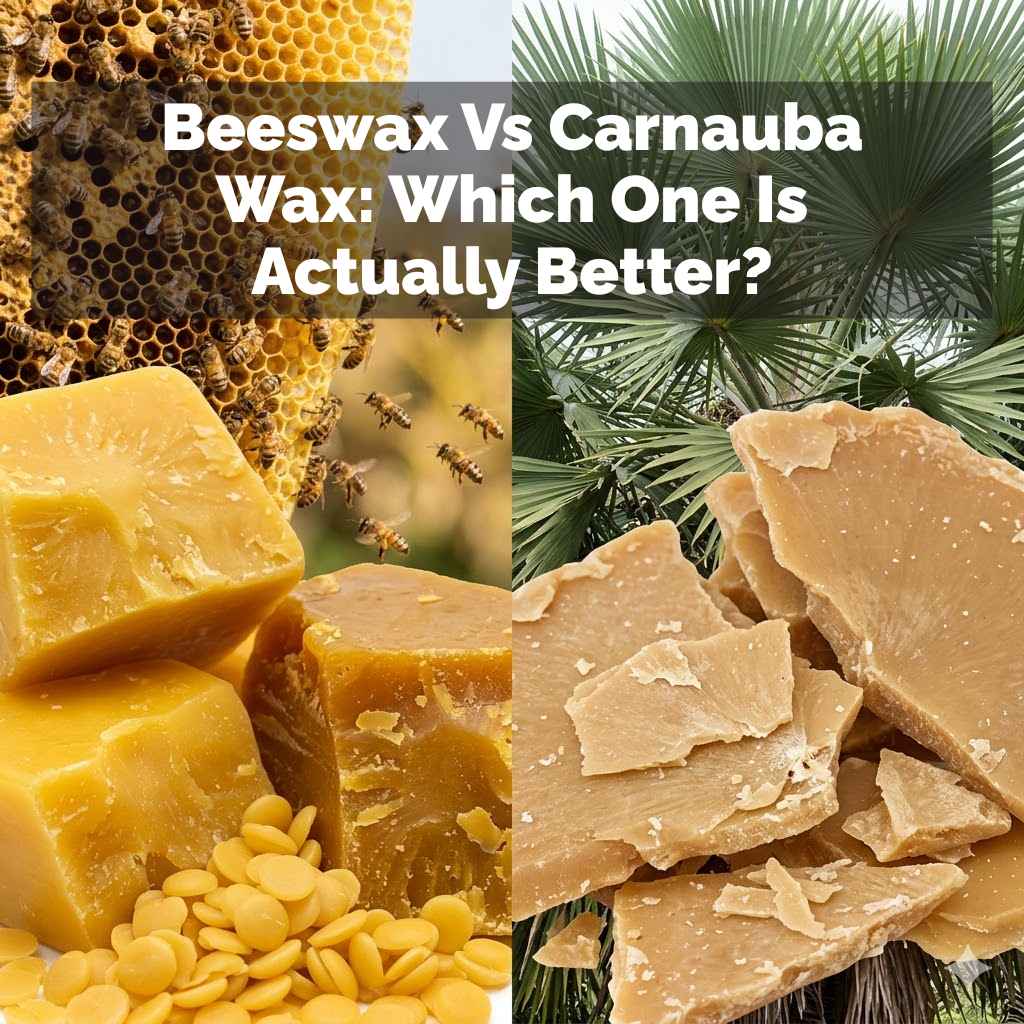
Beeswax and carnauba wax are both natural, but they come from different sources and have unique properties. Beeswax is made by honeybees. Carnauba wax comes from a palm tree. Each wax offers different benefits for shine, hardness, and use in products like wood polishes, lip balms, and candles. Knowing their differences helps you choose the best for your specific needs.
Understanding Beeswax


Beeswax is one of nature’s oldest known waxes. Bees make it from honey. They use it to build their honeycombs.
This wax is a complex mix. It has over 300 compounds. The main parts are esters.
These are fats and acids. It also has hydrocarbons and some alcohol. This mix gives beeswax its special feel and smell.
Raw beeswax is usually yellow. Its color can change. It depends on the flowers the bees visited.
It can be light yellow to dark brown. When it’s heated, it gets a nice, sweet smell. This smell is very pleasant.
It’s often used in cosmetics and food wraps because of this smell.
Beeswax is soft compared to carnauba wax. It melts at a lower temperature. This makes it easy to work with.
It’s often used in lip balms. It helps give them a smooth texture. It also makes them stay on your lips longer.
In candles, it burns cleanly. It also gives off a nice scent.
The look and feel of beeswax are also important. It gives a soft sheen. It’s not a super high gloss.
It’s more of a warm glow. This is great for furniture. It can protect the wood.
It also makes it look rich and natural. People love this soft, natural look.
Beeswax has been used for a very long time. Ancient Egyptians used it. They used it for mummification.
They also used it in art. Romans used it for writing tablets. It has a long history of uses.
This history shows how valuable it is.
Understanding Carnauba Wax
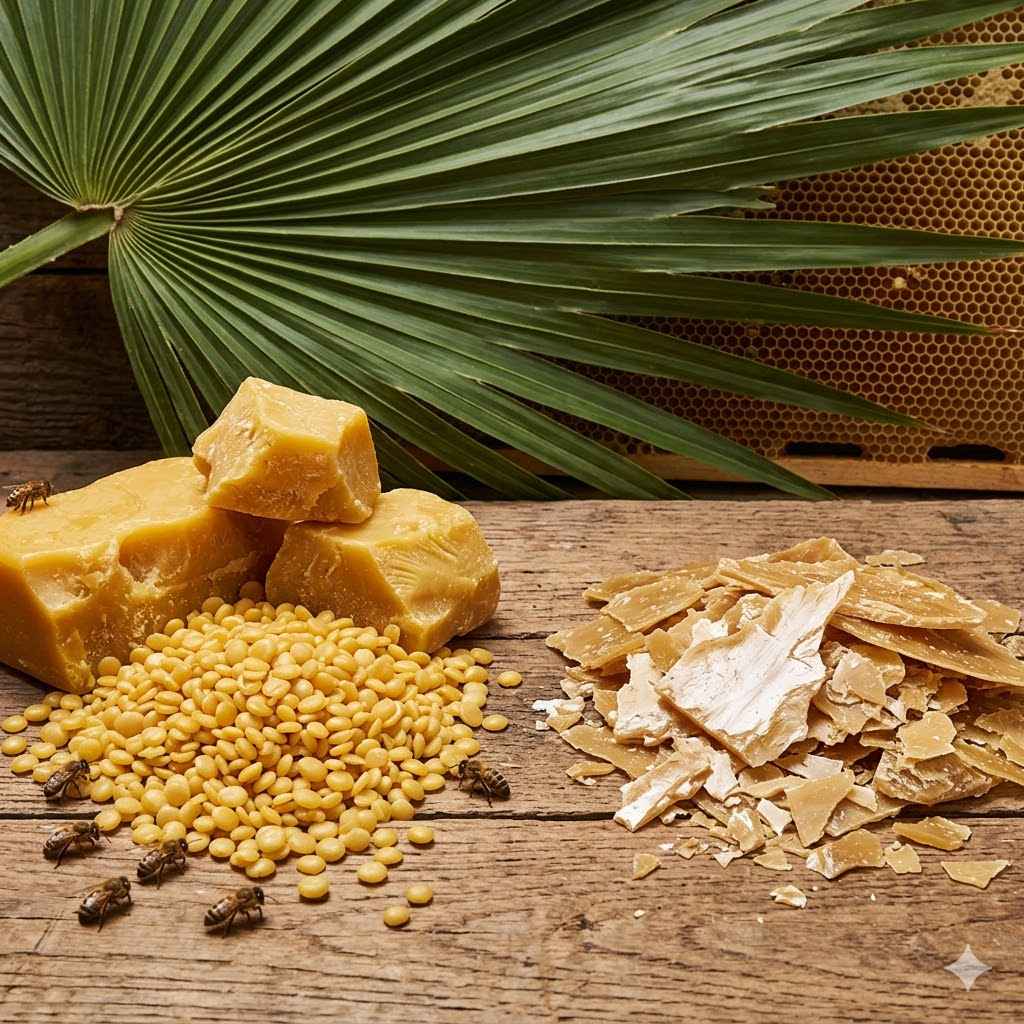
Carnauba wax is different. It comes from a palm tree. This tree is called Copernicia prunifera.
It grows in Brazil. The wax is on the leaves of this tree. It protects the leaves from the sun.
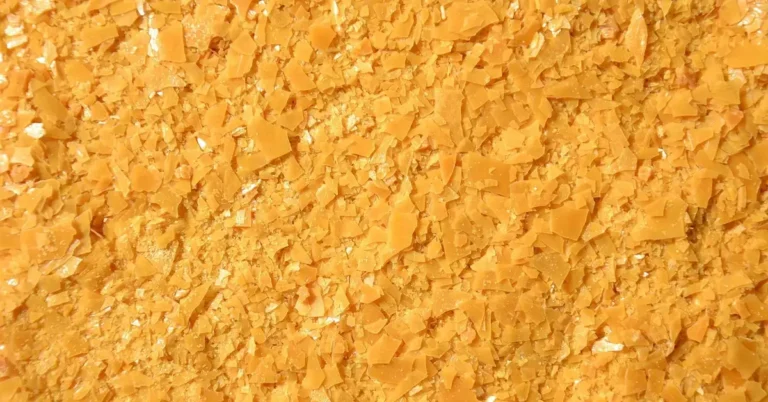
It keeps them from drying out. The tree makes this wax in thin flakes.
To get the wax, workers cut the leaves. Then they dry them. After drying, they beat the leaves.
This shakes off the wax flakes. The flakes are then melted and filtered. This makes the wax pure.
Carnauba wax is very hard. It’s one of the hardest natural waxes.
This wax melts at a much higher temperature. It’s harder than beeswax. It’s often called the “queen of waxes.” This is because of its hardness and shine.
It’s not very sticky. It’s smooth and has a natural gloss. This makes it perfect for things that need a durable shine.
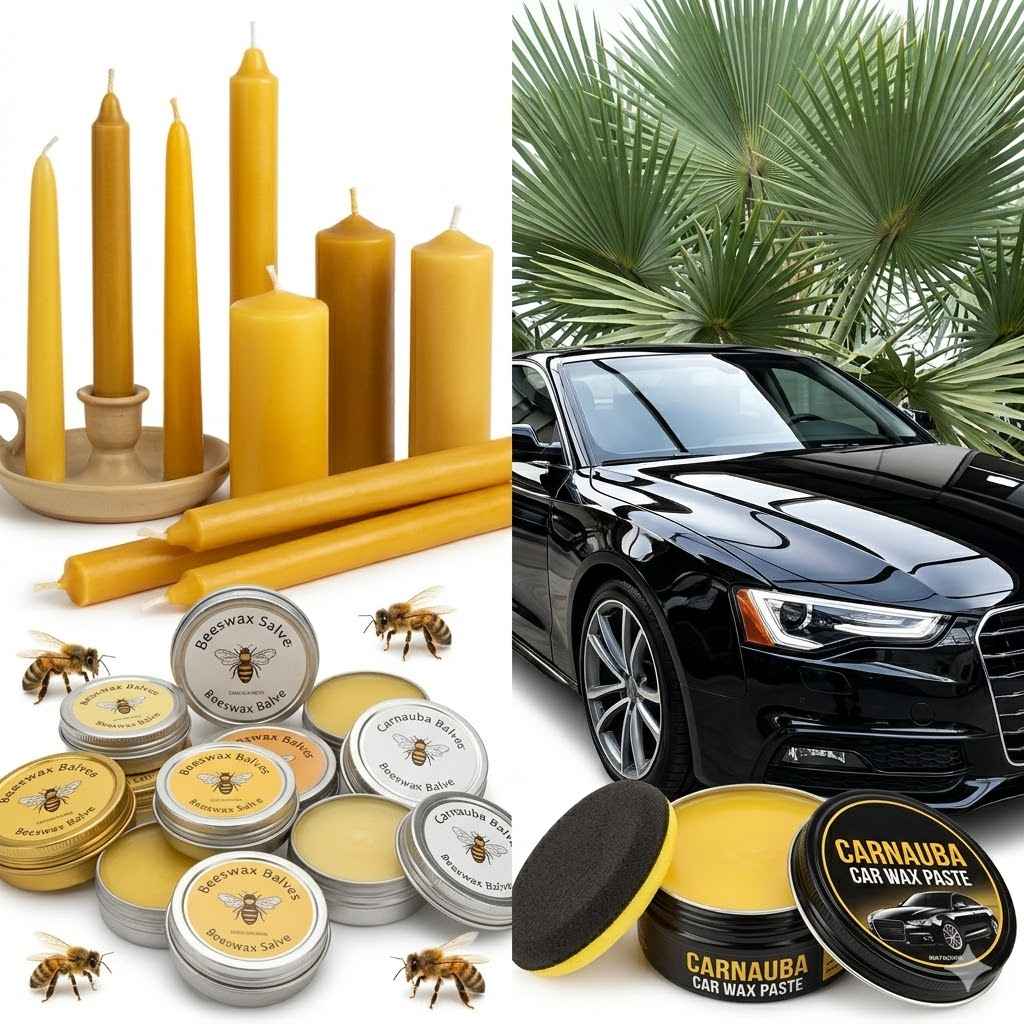
Carnauba wax is often used in car waxes. It gives a deep, long-lasting shine. It also helps protect the car’s paint from the weather.
In food, it’s used as a coating. It makes candies and fruits look shiny. It also stops them from drying out.
You might find it in some cosmetics too, like mascara. It helps make them waterproof.
The color of carnauba wax can vary. It’s usually yellow to light brown. The purest form is almost white.
It has a very mild scent. It’s not as strong as beeswax. This is good for products where you don’t want a strong smell.
Because it’s so hard, it’s often blended with other waxes. This makes it easier to use. It can make softer waxes harder.
This improves their durability. It’s a key ingredient for high-performance waxes.
Key Differences at a Glance
Source: Beeswax comes from honeybees. Carnauba wax comes from a palm tree.
Hardness: Carnauba wax is much harder than beeswax.
Melting Point: Carnauba wax melts at a higher temperature.
Shine: Carnauba wax gives a higher gloss. Beeswax gives a softer sheen.
Smell: Beeswax has a distinct, sweet smell. Carnauba wax has a mild scent.
Feel: Beeswax is slightly stickier. Carnauba wax is smoother.
Beeswax vs Carnauba Wax: Which is Better for Wood Polishes?
When finishing wood, you want something that protects and looks good. Both beeswax and carnauba wax are popular. They offer natural protection.
But they do it in different ways.
Beeswax is great for a soft, natural look. It fills tiny cracks in the wood. It gives a warm glow.
It’s easy to apply. You can rub it on with a cloth. It doesn’t change the wood’s color much.
It’s good for antique furniture. It feels nice to the touch.
I remember refinishing an old oak table. I wanted to keep its aged charm. I used a beeswax polish.
It brought out the grain. It didn’t make it look like new plastic. It felt smooth and protected.
The scent was lovely. It made the room smell like a cozy workshop. But it needed reapplication more often than a harder wax.
Carnauba wax is harder. It offers more protection. It can give a higher shine.
This makes it good for wood that sees a lot of use. Think of tabletops or cabinets. A polish with carnauba wax can resist water and scratches better.
It forms a tougher surface layer.
However, carnauba wax can be harder to work with. It’s so hard that it’s often mixed with softer waxes. This makes it spreadable.
A pure carnauba wax finish can sometimes look a bit more plasticky. It might not have the same warm feel as beeswax.
Many wood polishes use a blend. They use both beeswax and carnauba wax. This is the best of both worlds.
You get the ease of application and soft sheen from beeswax. You also get the hardness and durability from carnauba wax. The ratio of waxes changes the final result.
More carnauba means harder, glossier. More beeswax means softer, warmer.
For a project where durability is key, like a kitchen counter, you might lean towards carnauba. For a decorative piece, like a picture frame, beeswax might be perfect. Understanding this balance helps you choose the right polish or create your own.
Beeswax vs Carnauba Wax: Which is Better for Lip Balms and Cosmetics?
In lip balms and other beauty products, waxes are essential. They provide structure. They help the product stay on your skin.
They also seal in moisture. Both beeswax and carnauba wax are used. But they bring different qualities to the mix.
Beeswax is a star in lip balms. Its main job is to thicken. It makes the balm solid enough to hold its shape.
It also gives it that smooth glide when you apply it. Beeswax creates a barrier on your lips. This barrier helps protect them from wind and cold.
It locks in moisture. This prevents dryness.
I love making my own lip balm. Beeswax is my go-to base. I melt it down with oils like coconut or almond oil.
It’s so easy to mix. It gives the balm a nice, firm texture. It doesn’t feel greasy.
It has a subtle, pleasant smell. My lips feel so much better after using it. It’s also gentle on sensitive skin.
Carnauba wax is also used in cosmetics. It’s known for its hardness. In lip products, it can make them firmer.
This can be good if you want a very solid stick. It also adds a nice shine. This shine is often used in glosses or lipsticks.
It can also make products more water-resistant. This means your makeup might last longer.
However, carnauba wax can be too hard on its own for lip balm. If you use too much, the balm might feel waxy or drag on your lips. It doesn’t have the same soft, creamy feel as beeswax.
It’s often used in smaller amounts. It helps firm up products that use softer oils or butters.
It’s also a good vegan alternative. Many people want to avoid animal products. Carnauba wax is plant-based.
So, it’s a great choice for vegan cosmetics. It offers many of the same benefits as beeswax without using animal materials.
In makeup, carnauba wax is used in mascaras. It helps make them waterproof. It gives lashes a nice curl and volume.
It can also be found in foundations. It helps them stay put on the skin. It adds a smooth finish.
So, for a classic, soft, moisturizing lip balm, beeswax is often preferred. For a firmer product with more shine, or for vegan formulations, carnauba wax is a great choice. Often, a combination is used to get the best texture and performance.
Quick Comparison for Cosmetics
Beeswax:
- Adds softness and glide.
- Creates a protective barrier.
- Gives a natural, soft sheen.
- Good for moisturizing.
- Has a pleasant, distinct smell.
Carnauba Wax:
- Adds hardness and firmness.
- Creates a higher gloss.
- Good for water resistance.
- Excellent vegan option.
- Has a mild, subtle scent.
Beeswax vs Carnauba Wax: Which is Better for Candles?
When making candles, the wax is the main ingredient. It burns and gives off light and scent. Beeswax and carnauba wax can both be used.
But they have very different results.
Beeswax candles are very popular. They burn longer than many other waxes. They also burn brighter.
They give off a beautiful, warm light. A big benefit is how clean they burn. Beeswax candles release very few toxins.
Some people even say they help purify the air. They release negative ions. These ions can help clear dust and pollen.
The smell of beeswax is also a plus. Even when not burning, they have a sweet, honey-like aroma. When burning, this smell is subtle.
It’s not overpowering. It creates a cozy atmosphere. Beeswax candles can be yellow or dyed other colors.
But the natural yellow is very appealing.
My grandmother always had beeswax candles. They lit up her living room. The gentle light felt so calming.
The subtle honey scent was part of the room’s character. They burned for hours and hours. They were a simple luxury.
Carnauba wax is not commonly used for 100% wax candles. It’s very hard. This means it melts at a high temperature.
A pure carnauba wax candle would burn very hot. It might even be dangerous. It also doesn’t wick fuel (melted wax) very well on its own.
This makes it hard to get a steady flame.
Because of its hardness, carnauba wax is sometimes added to other waxes. It can make candles harder. This can help them keep their shape in warm weather.
It can also increase the burn time slightly. But it’s not the main wax for burning.
For a natural, clean-burning candle with a beautiful glow and subtle scent, beeswax is the clear winner. If you’re looking for wax to add hardness to another wax blend, carnauba might play a role. But for a pure candle experience, beeswax is king.
Beeswax vs Carnauba Wax: Which is Better for Food Wraps?
Natural food wraps are a great way to cut down on plastic. Beeswax wraps are very common. They are made by coating cotton fabric with beeswax.
Sometimes other oils and resins are added. These wraps are pliable. You can mold them with the warmth of your hands.
They stick to themselves and bowls.
The beeswax creates a breathable seal. This keeps food fresh. It’s good for fruits, vegetables, cheese, and covering bowls.
They are also reusable. You can wash them gently with cool water. Then you air dry them.
After about a year, they lose their stickiness. You can then compost them.
I’ve used beeswax wraps for years. They are fantastic for covering leftovers. They work great for wrapping half an avocado or a block of cheese.
They feel natural and smell nice. I find my food stays fresh longer than in plastic wrap. They are easy to clean and reuse.
It feels good to use something sustainable.
Carnauba wax is not typically used for food wraps. The main reason is its hardness. Beeswax is pliable and flexible.
This is essential for a food wrap that needs to mold and cling. Carnauba wax is too rigid. It would make the fabric stiff and brittle.
It wouldn’t conform to shapes well.
Also, beeswax has natural antibacterial properties. This can help keep food fresher. While carnauba wax is food-safe, it doesn’t offer the same kind of protective barrier for wrapping.
So, for natural, reusable food wraps, beeswax is the ideal choice. Its flexibility, sealing properties, and natural qualities make it perfect for this application. Carnauba wax simply doesn’t have the right physical properties for this use.
Food Wrap Material Comparison
Beeswax Wraps:
- Made with beeswax-coated fabric.
- Flexible and moldable.
- Creates a breathable seal for freshness.
- Reusable and compostable.
- Has natural antibacterial properties.
Carnauba Wax Wraps:
- Not suitable due to hardness.
- Would be brittle and stiff.
- Lacks the necessary pliability.
Real-World Context: Where You Find These Waxes
These two waxes show up in many places in our lives. It’s helpful to see them in action. This helps understand their roles better.
In the Kitchen
You’ll find beeswax in food wraps. It’s also sometimes used as a protective coating on cheeses. This stops them from drying out.
Carnauba wax is used more as a glaze. It makes candies shiny. Think of gummy bears or jelly beans.
It also coats some fruits like apples. This gives them a nice sheen and extends shelf life.
In the Bathroom
Lip balms are full of beeswax. It gives them body and protects your lips. Carnauba wax can also be in lipsticks.
It helps them stay firm and gives a nice finish. You might find both in skin creams. Beeswax adds a protective layer.
Carnauba wax adds firmness and shine.
Around the House
Furniture polishes often contain both. Beeswax gives that classic soft shine. Carnauba wax adds extra protection and gloss.
This makes the polish last longer. In wood conditioning products, beeswax is common. It nourishes the wood.
In Your Car
Car waxes heavily rely on carnauba wax. It’s prized for its ability to create a hard, durable shine. This protects the car’s paint from the elements.
Beeswax is rarely used in car waxes. It’s too soft and wouldn’t last.
For Crafts and Hobbies
Beeswax is popular for candle making. It burns cleanly and smells nice. It’s also used in making crayons.
Carnauba wax can be used in certain craft paints. It adds a bit of hardness and a matte finish.
Common Product Examples
Beeswax:
- Lip balms
- Furniture polishes
- Natural food wraps
- Candles
- Wood conditioners
- Hand creams
Carnauba Wax:
- Car waxes
- Candy coatings
- Fruit glazes
- Lipsticks
- Mascara
- Hard surface polishes
What This Means for You: Choosing the Right Wax
The biggest takeaway is that neither beeswax nor carnauba wax is universally “better.” They are better for different things. Your choice depends on what you want to achieve.
When to Choose Beeswax
- You want a soft, natural finish.
- You need a pliable, moldable wax.
- You’re making lip balms or skin products that need moisture.
- You’re making clean-burning candles.
- You want a pleasant, natural scent.
- You need a wax for reusable food wraps.
- You’re looking for a slightly sticky, emollient feel.
When to Choose Carnauba Wax
- You need a very hard, durable surface.
- You want a high-gloss finish.
- You’re making car waxes or hard floor polishes.
- You need a water-resistant product.
- You’re creating vegan cosmetics or products.
- You want to add hardness to a softer wax blend.
- You need a wax with a very mild scent.
When to Consider a Blend
Many products use a mix. This is often the smartest approach. For example, a furniture polish might have beeswax for its feel and scent.
It will also have carnauba wax for durability and shine. A lip balm might use beeswax as the base. A small amount of carnauba wax can be added to make it firmer and last longer.
Thinking about the desired texture is key. Beeswax is creamy and soft. Carnauba wax is hard and brittle on its own.
Think about the environment the product will be in. Will it be exposed to heat? Will it need to withstand wear?
These questions guide your decision.
Also, consider allergies or sensitivities. While both are natural, some people might react to one over the other. Always test a small amount if you have concerns.
Quick Fixes & Tips for Using Waxes
Working with natural waxes can be rewarding. Here are a few tips to make it easier.
Melting Waxes Safely
Always use a double boiler. Never heat waxes directly on a stove. Direct heat can cause them to burn or even catch fire.
A double boiler gently heats the wax. You can make one by placing a heatproof bowl over a pot of simmering water. Make sure the bowl doesn’t touch the water.
Measuring Waxes
When making recipes, precise measurements matter. Waxes are often measured by weight. This is more accurate than by volume.
A scale will give you the best results. This is especially true when blending waxes.
Adding Other Ingredients
When making balms or polishes, oils and butters are often added. Melt the waxes first. Then add the oils and butters.
Stir them until everything is smooth. Pour the mixture into your containers while it’s still warm. It will harden as it cools.
Testing Your Results
Before making a big batch, always test. Make a small sample. See how it feels and performs.
Does it have the right hardness? Is the shine what you expected? This helps you adjust your recipe.
It saves you from wasting materials.
Understanding Melt Points
Beeswax melts around 144-149°F (62-65°C). Carnauba wax melts much higher, around 172-182°F (78-83°C). This difference is important.
You’ll need to heat things up more for carnauba wax.
Storage
Store your wax creations in cool, dry places. Extreme heat can cause them to soften or melt. Light can also degrade some ingredients over time.
Keep them in airtight containers.
Frequently Asked Questions
Is beeswax or carnauba wax better for furniture?
For furniture, it depends on the finish you want. Beeswax offers a soft, natural sheen and is easy to apply. It’s great for bringing out the wood’s natural beauty.
Carnauba wax offers a harder, more durable finish with higher gloss. Many furniture polishes blend both waxes to get the best of both worlds: softness, protection, and shine.
Can I use carnauba wax on my lips instead of beeswax?
You can use carnauba wax in lip balms, but usually in small amounts. It’s very hard and can make a balm feel waxy or drag on the lips if used alone. Beeswax provides a softer, creamier texture and better moisturization.
Carnauba wax is often added to firm up lip balms made with softer oils or to create vegan versions.
Are beeswax and carnauba wax safe for consumption?
Yes, both beeswax and carnauba wax are considered food-safe. Beeswax is sometimes used as a coating for cheeses or fruits. Carnauba wax is widely used as a glaze on candies and fruits to give them a shiny appearance and prevent moisture loss.
Always ensure you are using food-grade versions for such applications.
How do I know if a product contains beeswax or carnauba wax?
You can usually find out by checking the product’s ingredient list. Look for “Cera Alba” or “Beeswax” for beeswax. Look for “Copernicia Cerifera (Carnauba) Wax” or simply “Carnauba Wax” for carnauba wax.
These are standard ingredient names.
Is carnauba wax a good vegan alternative to beeswax?
Yes, carnauba wax is an excellent vegan alternative to beeswax. Since beeswax is produced by honeybees, some people choose to avoid it for ethical or environmental reasons. Carnauba wax comes from a plant source and offers many similar properties, such as thickening and creating a protective barrier, making it a popular choice in vegan cosmetics and products.
Why does beeswax smell nice but carnauba wax has little to no smell?
The difference in smell is due to their composition. Beeswax is a complex mixture that includes volatile compounds from flower nectar and propolis, giving it its characteristic sweet, honey-like aroma. Carnauba wax, being derived from the leaves of a palm tree, has a much simpler chemical structure with fewer volatile aromatic compounds, resulting in a very mild or virtually odorless product.
Conclusion
Choosing between beeswax and carnauba wax is all about understanding their unique strengths. Beeswax offers warmth, flexibility, and a gentle touch. It’s perfect for things like lip balms, food wraps, and soft furniture finishes.
Carnauba wax brings hardness, shine, and lasting protection. It’s the go-to for car waxes and high-gloss polishes. Often, the best results come from blending them.
This way, you get the benefits of both. Now you know which wax fits your needs. You can confidently pick the right one for your next project.
Sponsored / affiliate links. As an Amazon Associate I earn from qualifying purchases. I may earn additional commission from eligible campaigns.